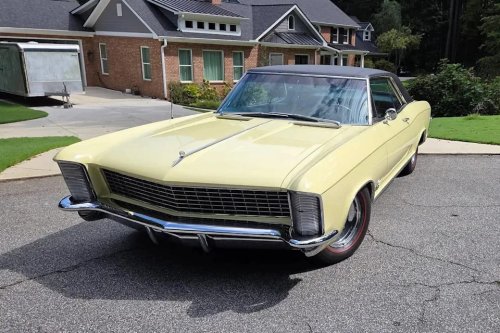
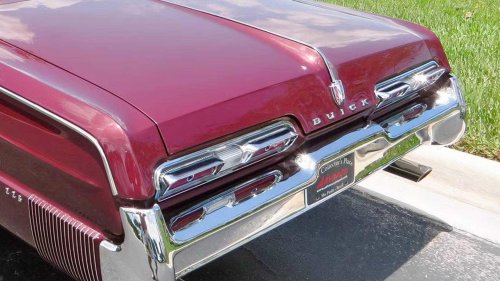
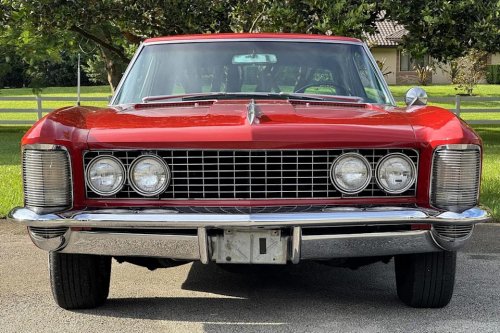
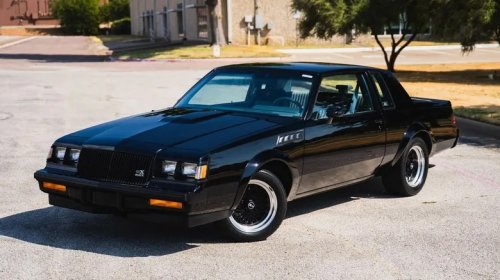
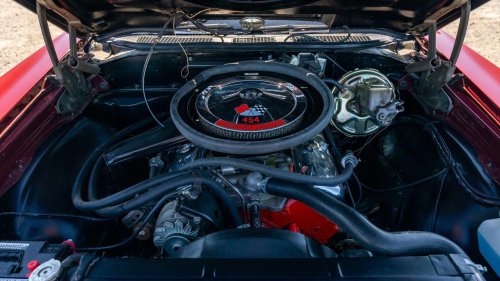
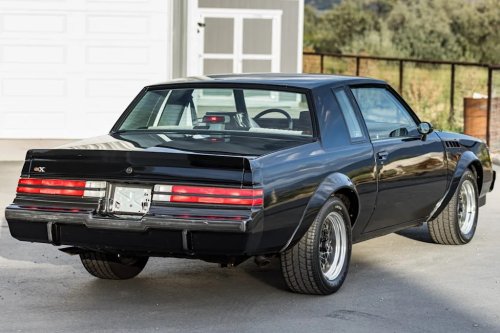
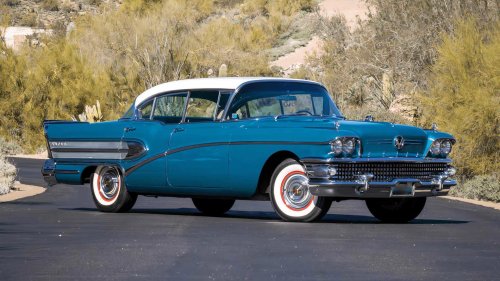
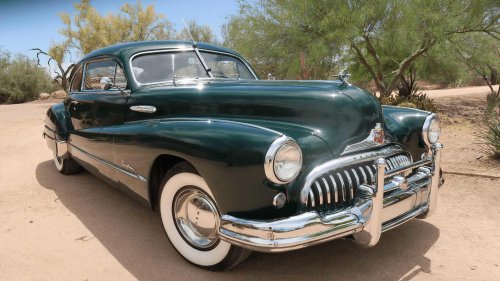
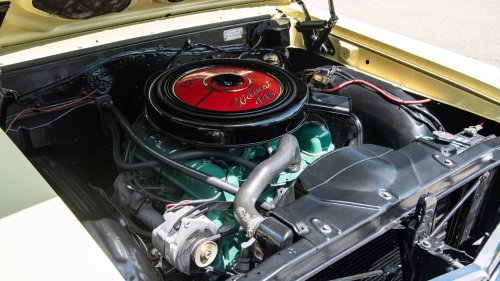
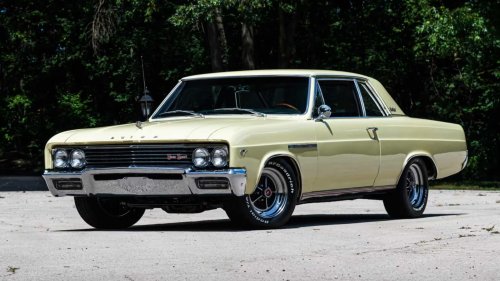
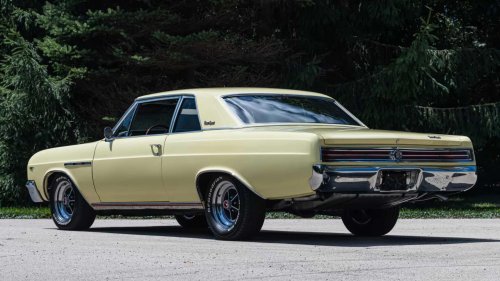
The small-block Chevy won the argument by volume, and it has not stopped winning since 1955. Walk into any swap meet, any engine builder's shop, or any online forum and the numbers tell the story: parts, knowledge, and community built around a single engine family over seven decades. That dominance is real and nobody serious is contesting it. What gets lost in that conversation is the engine that held the field before the small-block arrived, built torque figures that the Chevy V8 took years to match, and still turns up in hot rod builds today attached to a builder who knows exactly why they chose it. This engine wears a nickname it earned from the shape of its valves. Real builders know what it means. Before The Small-Block Chevy, There Was Already A Better Option Mecum In 1953, the options available to a hot rod builder wanting V8 power in a modern package were limited. The Ford flathead had been the staple of the scene for two decades and remained available, but it was long in the tooth and increasingly hard to make competitive. The Cadillac overhead valve V8, introduced in 1949, was modern and capable but heavy and expensive. The Chrysler Hemi, introduced in 1951, was extraordinary but complex and costly to build around. What arrived in 1953 from a manufacturer not previously associated with performance was a compact, lightweight, overhead valve V8 that fit in spaces where competitors would not, produced more torque per cubic inch than most of its contemporaries, and cost considerably less to acquire as a surplus unit than anything from Cadillac or Chrysler.The builder community noticed immediately. The engine was narrow. It was light relative to its displacement. It produced torque from low in the rev range in a manner that suited street driving and drag strip use simultaneously. The cam profiles Buick used to extract performance from the small-valve architecture were aggressive enough that the engine pulled hard from idle. Most Nailhead variants produced more than one pound-foot of torque per cubic inch of displacement, a figure that was exceptional for the era and made the engine genuinely competitive in performance applications despite its unusual valve geometry. The small-block Chevy arrived in 1955 and began its march toward ubiquity. But for two years, this engine had no serious competitor in the budget performance segment, and the reputation it built in that window lasted considerably longer. The Valve Design That Changed Everything Bring A Trailer The Nailhead's nickname comes from the appearance of its valves viewed from above. Where a conventional V8 of the era oriented its valves at an angle relative to the cylinder axis, the Buick engineers positioned the intake and exhaust valves nearly vertically, pointing almost straight up into the combustion chamber. The valves themselves were small relative to the engine's displacement: 1.875-inch intake and 1.5-inch exhaust on the later 401 and 425 engines, figures that the Curbside Classic technical analysis notes were substantially smaller than the valves on a much smaller-displacement Chevy V8. Viewed from above the open combustion chamber, those small vertical valves looked like a row of nails. The name was immediate and has never changed.The practical consequence of this design was a fundamental trade-off. Period engineering analysis confirms that the small-valve, vertically-oriented layout restricted top-end breathing, limiting maximum horsepower relative to what the displacement could theoretically support. What it delivered instead was low-end torque in quantities that exceeded most competitors of equivalent size, and an engine profile narrow enough to fit between frame rails that would not accommodate a wider unit. For a hot rod application, where torque at usable rpm matters more than peak horsepower at 5,500 rpm, and where frame clearance determines what fits in a given chassis, those two characteristics were precisely what builders needed. The design that limited the engine's outright power ceiling also made it one of the most practical performance options available in the early years of the overhead valve era. Meet The Buick Nailhead V8 Via: Mecum AuctionsThe 322 cubic-inch Nailhead debuted in 1953 in the Roadmaster, Century, and Super, producing 188 hp at launch. A smaller 264-cubic-inch version arrived in 1954 exclusively for the entry-level Special and ran through 1955 only. The 322 grew to 255 horsepower before being replaced by the 364 in 1957, which pushed output to 300 horsepower with the four-barrel carburetor and 330 horsepower in the Century high-performance specification. The 401 arrived in 1959 and became the standard big-block for all full-size Buicks from 1962, producing 325 horsepower in the Wildcat and marketed specifically as a "400" in the 1965 Skylark Gran Sport to satisfy GM's internal displacement restrictions on mid-size cars.The 425 followed in 1963, first as an option on the Riviera, then spreading to the Wildcat and Electra. With dual Carter AFB four-barrel carburetors, the 425 produced 360 horsepower at 4,400 rpm. The optional dual-quad setup was delivered in the trunk with the intake manifold, installed by the dealer rather than the factory. The 1965 Riviera Gran Sport with the 360 hp 425 and dual exhausts covered 0-60 in 7.7 seconds. The Wildcat GS with the same engine managed 0-60 in 6.5 seconds.The "Wildcat 465" designation that appeared on air cleaners across the 401 and 425 era caused decades of confusion. It referred not to engine displacement but to the torque rating, a decision that reflected Buick's deliberate choice to market these engines on their low-end pulling power rather than their peak horsepower. Technical documentation confirms the torque-first philosophy was genuine rather than promotional: the aggressive camshaft profiles required to make the small valves breathe effectively produced power curves weighted toward the bottom of the rev range, making the engine feel considerably stronger in real-world use than a simple horsepower comparison with contemporary small blocks would suggest. The Gasser Era And The Builders Who Proved It Via BaT The Nailhead's racing record is not comprehensive. It was never the dominant choice in drag racing once the small-block Chevy established its foothold in the builder community, and the small-valve architecture that gave it torque at low rpm also limited what the engine could do at high rpm where drag racing ultimately decided outcomes. What it produced instead was a specific group of builders who understood the engine well enough to extract competitive results from it, and whose builds demonstrated that the Nailhead's limitations were engineering problems with engineering solutions rather than fundamental barriers.Max Balchowsky built the Old Yeller road racing cars in Hollywood using Buick Nailhead power, running the engine in a series of sports car builds that competed across California in the late 1950s and early 1960s. Tommy Ivo learned his Buick engine-building knowledge at Balchowsky's shop, taking that knowledge into his own drag racing program. Ivo's Buick-powered dragsters competed seriously against Chevy and Ford-powered machines during the peak of the gasser era. Neither Balchowsky nor Ivo chose the Nailhead because it was the obvious choice. They chose it because they understood it, and the results validated the decision. That relationship between deep knowledge and competitive performance is the template that the current hot rod community applies to the engine today. Why Hot Rodders Still Hunt Them Via: Mecum Auctions The case for a Nailhead swap in a modern hot rod build rests on three specific arguments. The first is the engine's narrow profile, which allows it to fit in early chassis with tight frame rails where a wider big-block would require significant modification. The second is the forged rotating assembly that the factory installed across the Nailhead family, which provides a structurally sound foundation for a performance build without requiring replacement of the bottom end before any tuning work begins. The third is the torque curve, which remains a practical advantage in a street-driven rod where the engine spends most of its time below 4,000 rpm.The sourcing reality is manageable but requires homework. Specialist documentation confirms that the Nailhead family includes multiple variations across its thirteen-year production run that are not interchangeable: different blocks, different head configurations, different crankshaft and bearing specifications across the 322, 364, 401, and 425 families, and further variations within each displacement. An engine builder approaching the Nailhead for the first time needs to identify the specific year and variant before any teardown or parts sourcing begins.The 1959-1966 heads that cover the 364, 401, and 425 share port and valve dimensions and are broadly compatible across those displacements. Earlier heads from the 322 era are different in multiple specifications. Getting this identification right before purchasing or tearing down an engine is the difference between a straightforward build and an expensive parts problem. What One Is Worth Today Via: Mecum AuctionsThe Wildcat in good condition currently sits in the $18,000 range, making it one of the more accessible entry points for a big-block Buick with documented factory performance credentials. The Riviera commands a premium at every condition tier due to its collector following and the Gran Sport package's prestige. The 1965 Skylark Gran Sport, which used the 401 marketed as a "400" to satisfy GM's displacement restrictions, has developed its own separate following among Buick enthusiasts and trades accordingly.For builders sourcing a bare engine rather than a complete car, the 401 and 425 represent the most practical targets: broad compatibility across the 1959-1966 generation of heads and ancillary components, sufficient aftermarket support from specialist suppliers, and enough surviving examples in the used market to make sourcing a buildable core engine achievable without years of searching. The community around these engines is smaller than the small-block Chevy world and more knowledgeable for it. That combination of scarcity and expertise is exactly what the builder community that still hunts the Nailhead is looking for.Sources: Auto History Preservation Society, Underhood Service, Hagerty, Mecum, Bring a Trailer.



















 +30 others