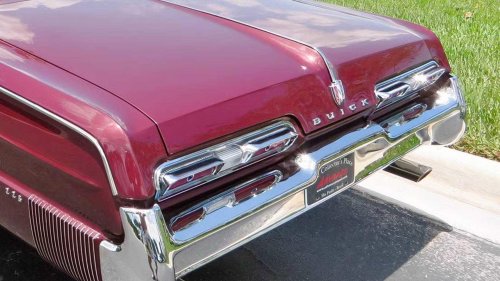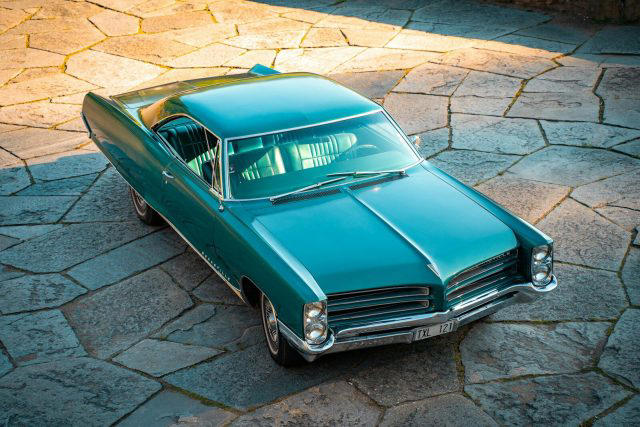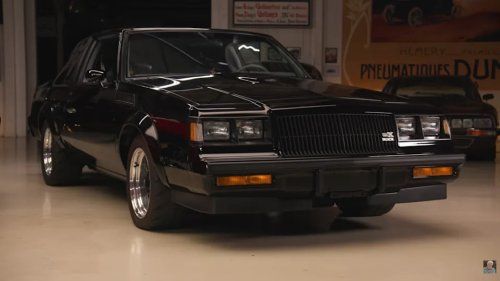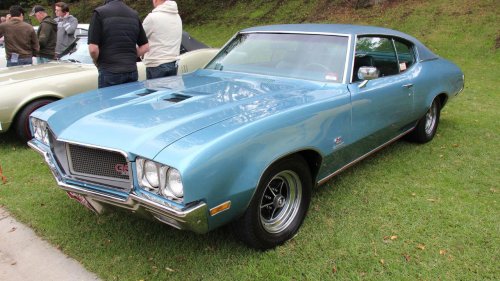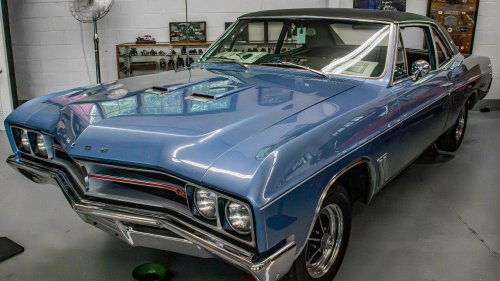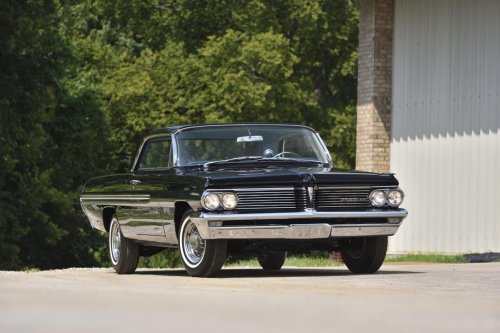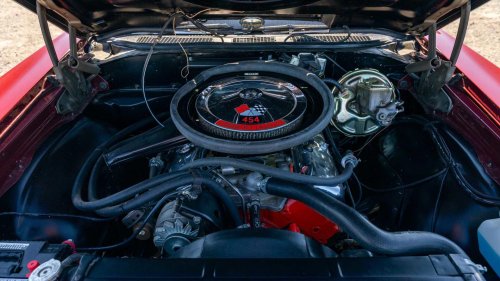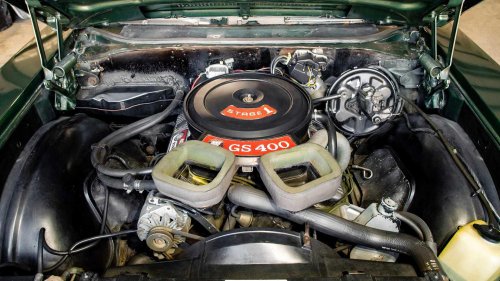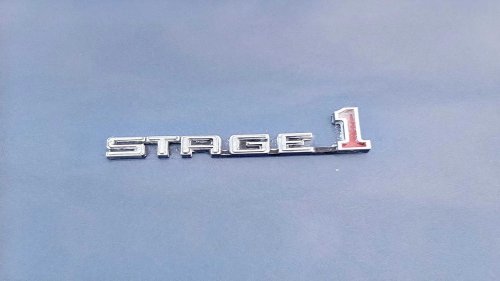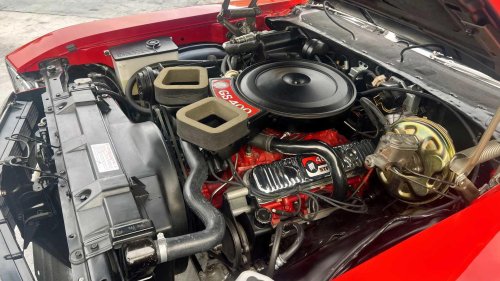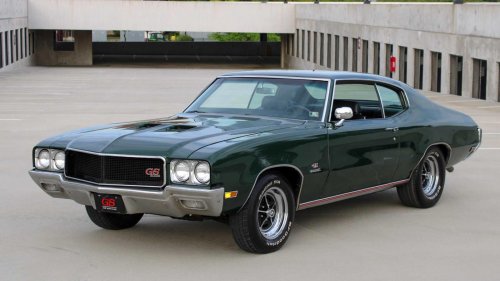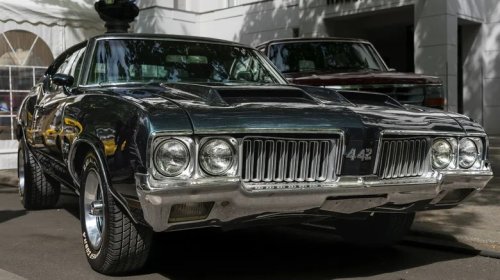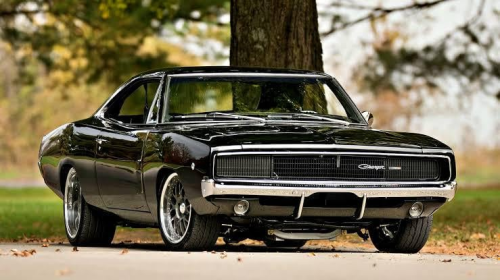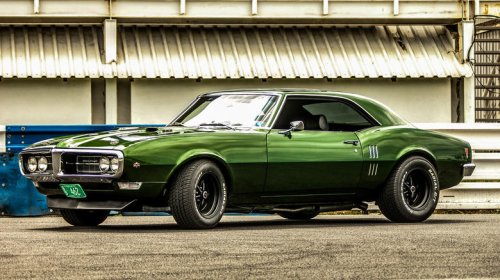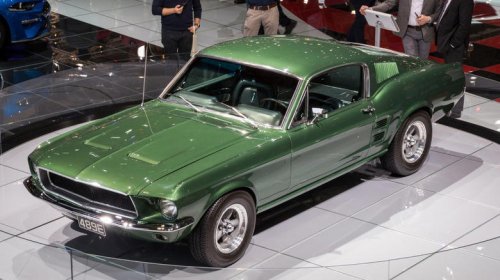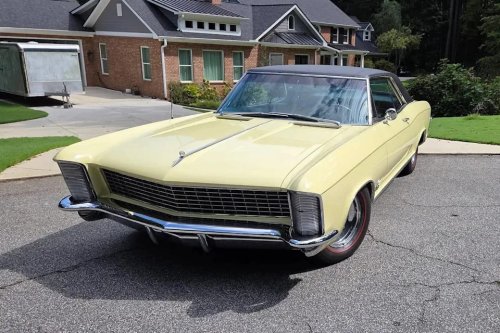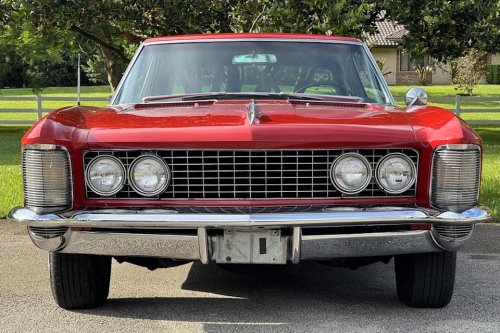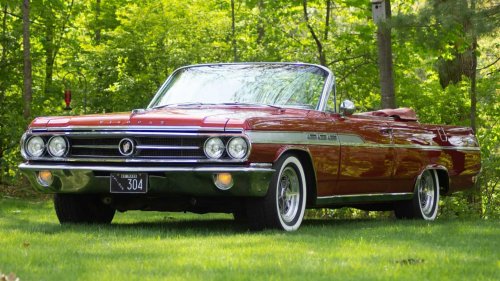
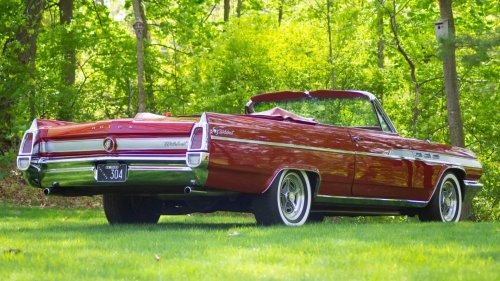
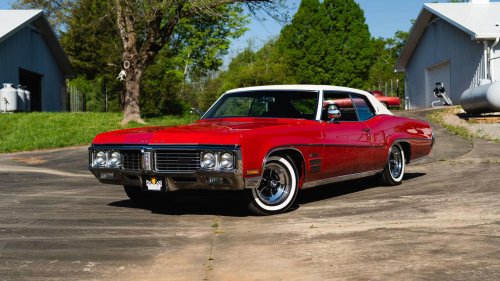
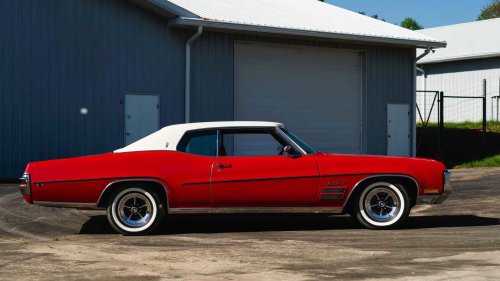
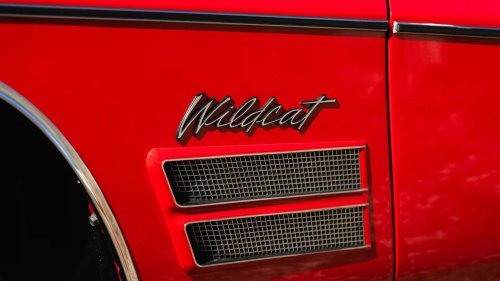
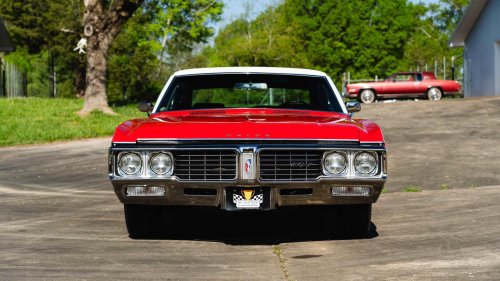
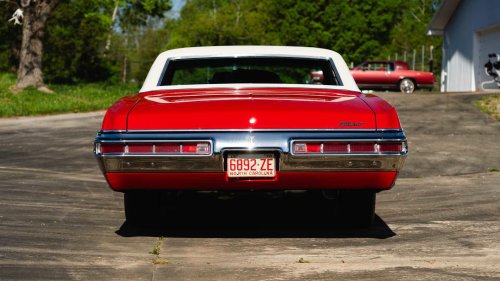
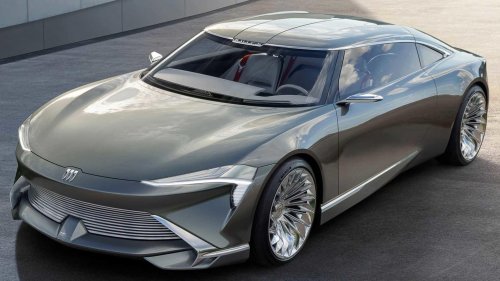



















During the golden age of the classic American muscle car, a couple of automakers stood out among the rest. Of course, these brands include names like Chevrolet, Ford, and Dodge. Other marques were also involved, including ones you wouldn't necessarily pin the word "muscle" to their descriptions. Mercury and Oldsmobile constitute some of these outliers, with models such as the Mercury Cougar XR-7 and the Cutlass-based Oldsmobile 442.Buick was another brand that you may not have expected to be involved in the great, classic American muscle car shootout. One of the brand's more famous muscle-bound models was the GS Stage 1, a Skylark-based performance car. However, Buick also produced another sporty model, one that's often overlooked during conversations of the good old days. It was the Wildcat, produced from 1963 to 1970. During that time, though, the model managed to build quite a name for itself. A Timely Replacement Bring A Trailer Key Points Regarding The Buick Wildcat Introduced in 1963 Replaced the Buick Invicta Spanned two generations A Gran Sport package was made available for the 1966 model year only Axed following the 1970 model year The Wildcat was born out of Buick's wild concept models of the 1950s, several of which bore the same name. When the production version finally arrived in 1963, Buick decided to give the Wildcat the Invicta's old spot in the lineup. A year prior, however, the Wildcat name was first introduced as a trim package for the Invicta, which provided upgrades such as Buick's 401 cubic-inch Nailhead V8 engine, bucket seats, and a console with a centrally mounted tachometer. The Invicta Wildcat was a successful option, so Buick decided to give the name its very own slot in its range.In order to set it apart from the rest of Buick's offerings at the time, designers gave the Wildcat its own special flair. For example, it received its unique logo, which was a drawn picture of a wildcat. In addition, the model borrowed several design cues from the flagship Electra 225, including the taillights. It also offered bucket seats as an option. In essence, Buick was attempting to distance itself from the boring Invicta, and the WIldcat was its ticket there.Bring A Trailer Because the Wildcat took the Invicta's slot, it was situated between the smaller and less-appointed Buick LeSabre, and the flagship Buick Electra 225. However, unlike the Invicta, the Wildcat's demeanor was marginally more sporty than its siblings. The only engine on offer, at least at first, was Buick's 401 CID Nailhead V8. Both a coupe and convertible were available upon the Wildcat's debut. A four-door sedan joined the fold in 1964, which was the first-gen Wildcat's final year of production. The Wildcat Pounces 1970_buick_wildcat_frontWhile the first-gen Wildcat had quite a bit of sportiness, the second generation variation took things to a new level. Introduced in 1965, the revamped Wildcat introduced a more serious design. A few new engines arrived throughout the second-gen Wildcat's tenure. GM's B-Body vehicle platform was still in use, having been carried over from the model's first generation. The size still managed to grow in length by about four inches, however.Bring A Trailer In 1966, Buick decided to inject even more sporting prowess into the Wildcat by introducing a Gran Sport (GS) version. Instead of the standard 401 CID Nailhead V8, the GS version boasted a 425 CID V8. You could have the Wildcat GS with either a 340-horsepower, two-barrel carburetor version of the 425 CID V8, or a four-barrel iteration producing 360 horsepower. Wildcats fitted with the latter engine option were coined "Super Wildcats," and came with a dual exhaust, heavy-duty suspension, a limited-slip differential (LSD), and special exterior decals.1967 marked the final year for the Buick 401 Nailhead CID V8, along with the discontinuation of the Wildcat GS. As for the Nailhead, it was replaced by the Buick 430 CID V8 in the Wildcat's engine offerings list beginning in 1968. Reportedly, the Nailhead engine was discontinued due to Buick favoring more traditional engine designs with larger valves, as the "Nailhead" nomenclature referred to the small size of the motor's intake and exhaust valves. The Wildcat's Pinnacle Year Bring A TrailerMuch like the rest of the American muscle car scene, the Buick Wildcat's most potent year was 1970. That year, General Motors got rid of an internal edict requiring its divisions to produce engines measuring 400 cubic inches or smaller for use in their midsize models. With the regulation gone, all GM brands began utilizing larger V8s for the segment. Buick's largest V8 engine ever mass-produced, a 455 CID V8, was made available for use within the Wildcat. We flesh out the '70 455 CID V8 Wildcat's basic specs in the table below:*Specs courtesy of AutoEvolution.com Current Pricing Bring A TrailerWhile it's not as glamorous as the Buick Electra 225, or as muscular-looking as the Buick GS Stage 1, the Wildcat, especially the 1970 model year, deserves your attention. It especially deserves your attention if you've gotten yourself a hankering for a muscle-bound Buick, but don't have the sort of scratch that a well-conditioned 1970 GS Stage 1 requires. In the table below, we'll showcase the 1970 Wildcat's current average pricing:*Pricing courtesy of Hagerty.com The End Of The Wildcat... Unless? Bring A TrailerFollowing the 1970 model year, Buick was finished with the Wildcat moniker. While it did breathe some new life into Buick's middle child spot, the writing was on the wall that the muscle car era was over. The models that weren't as popular as ones such as the Chevrolet Chevelle or the Pontiac GTO weren't going to survive without having a good amount of power at their disposal. Because of these revelations, Buick axed the Wildcat namesake.Replacing it was the Centurion, a model that was meant to, again, sit between the entry-level LeSabre and the flagship Electra 225. Because the days of power-obsessed brands were over, Buick's middle model was more of a luxury car, rather than the sporty Wildcat it replaced. However, the Centurion was very much a flop and was only on the market from 1971 to 1973. The Wildcat name briefly returned as a concept for a one-off, all-wheel-drive, twin-turbocharged sports car in 1985. The Wildcat Concept NetCarShowIn 2022, Buick resurrected the Wildcat nameplate for another concept model. The new concept wasn't meant to tease an upcoming production model. Instead, the Wildcat concept was a design study, showcasing where Buick was intending to take its styling in the near future, much like the original Wildcat concepts did back in the 1950s. The modern Wildcat concept was also supposed to build excitement for Buick's first-ever electric model to be introduced into the US, the Electra E5. However, due to current import tariffs levied on the Electra E-Series' country of production, China, Buick has indefinitely postponed the model's arrival in the United States.