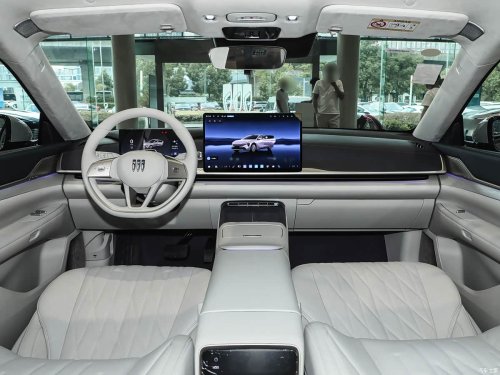
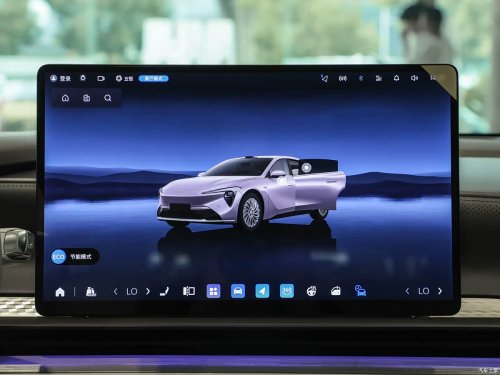
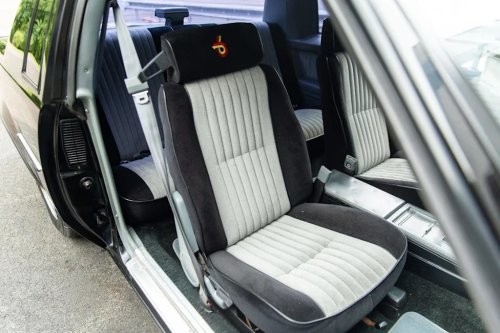
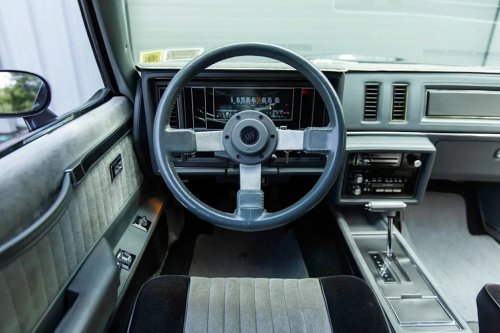
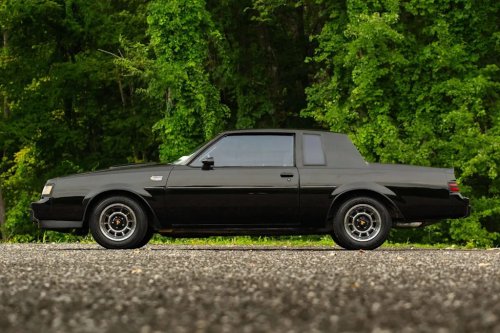
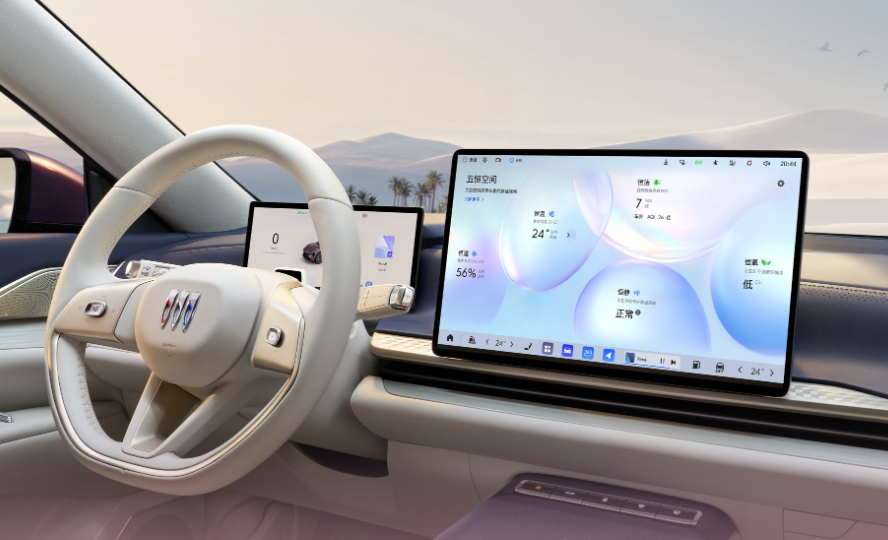
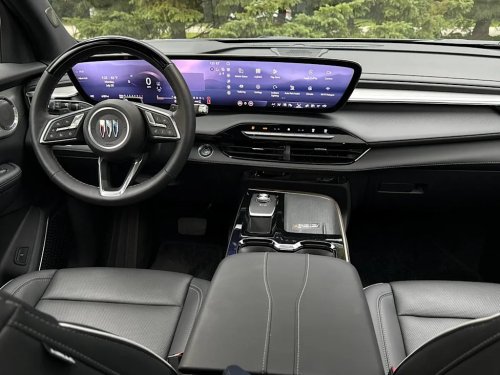
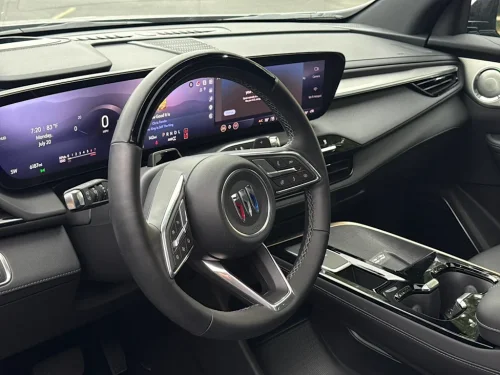
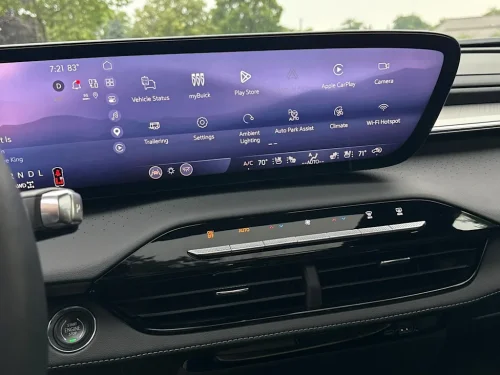
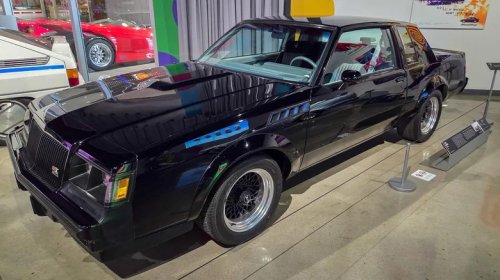
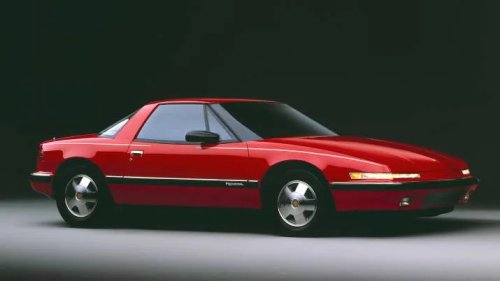
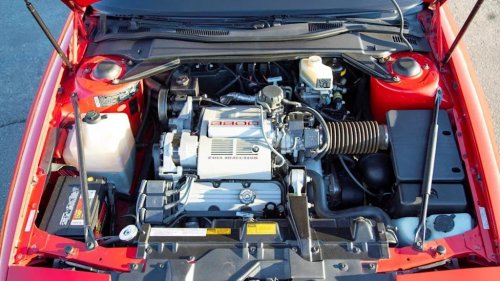
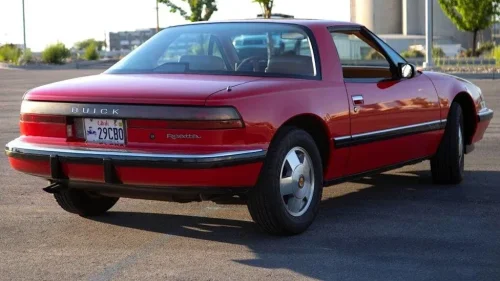
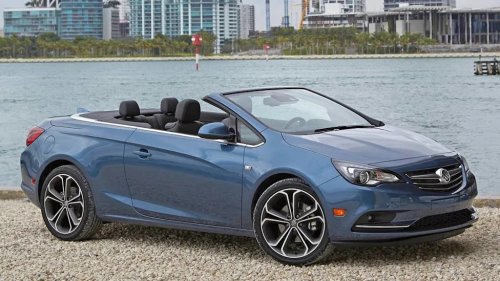
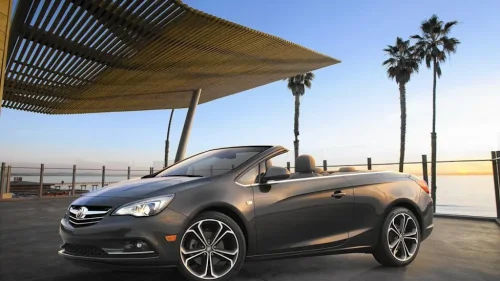
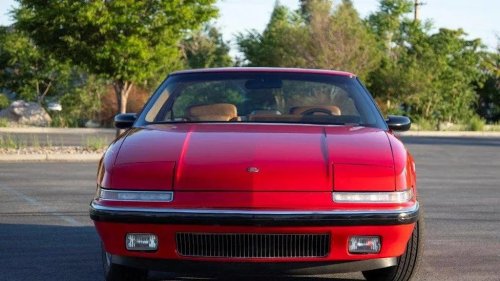
Autoblog and Yahoo may earn commission from links in this article.You can't find a modern vehicle without a touchscreen display or two, but the beginnings of touchscreen technology dates back nearly forty years ago. In 1988, Buick introduced the Reatta, an interesting vehicle in design alone. Inside, it featured a CRT display, one of the first production vehicles to make the leap and bring touchscreen technology to the road. Unfortunately for the Reatta, which saw just over 21,000 examples produced, consumers simply weren't ready for that kind of advanced technology.A tidbit, if you will. When I was 16 and looking for my first car, I nearly settled on a Reatta coupe. Its sleek, sporty design and interesting interior took hold of me instantly. Unfortunately, it was full of electrical issues that the seller had been unable to resolve. While they offered some money off, I ultimately passed on that red 1990 Buick Reatta, a decision I kick myself for whenever I hear mention of the nameplate.Hand built with a CRT touchscreenBuilt by hand at the Reatta Craft Center, now known as the Lansing Craft Center, the 1988 Buick Reatta came exclusively equipped with a 3.6-liter V6 engine paired to a four-speed automatic transmission. Total output sat at a healthy 165 horsepower and 210 lb-ft of torque that brought the two-seater grand tourer to 60 mph in around nine seconds or so. It earned an EPA-estimated 17 mpg in the city and 26 mpg on the highway.Cars & BidsFrankly, the powertrain is arguably the least interesting part of the Reatta, which is something you certainly don't hear everyday. Inside, the Reatta rocked out with twin bucket seats wrapped in leather upholstery. Behind them was a storage area with two lockable bins. In the center of the dashboard sat the real attraction: a CRT touchscreen display. It was the second Buick to offer such technology, following the 1986 Riviera. Marketed as the Electronic Control Center, it served as the hub for everything from the climate and radio controls to diagnostics for the electronics and sensors. AdvertisementAdvertisementInterestingly enough, drivers complained that utilizing the screen required them to take their eyes off the road. As a result, in 1990, Buick reworked the interior, bringing back more conventional push-button radio and climate controls. You can see the CRT touchscreen display in action in a 1988 Reatta in the video below.The Buick Reatta's advanced tech didn't stop with a touchscreen display. In 1989, the American marque offered keyless entry as a standard feature. It was also the only nameplate on the brand's range to feature pop-up headlights. In 1988, Buick produced 55 special edition examples of the Reatta, dubbed the "Select Sixties." They featured a black exterior, tan interior, and a unique insignia emblazoned on the hood. Two years later, Buick produced another 65 special edition models, this time with a white paintjob, red interior, and white bucket seats and wheels. Buick also offered a convertible bodystyle for the 1990 and 1991 model years.Cars & BidsView the 3 images of this gallery on the original articleThinking about selling your car? Get an instant cash offer online now. Click here to get started.Successor in spiritFollowing the discontinuation of the Reatta, Buick wouldn't offer a convertible for another 25 years. In 2016, the American automaker broke their silence and introduced the Cascada, a four-seater convertible that served as a successor to the Reatta, at least in spirit. There were plenty of differences between the two models, and it quickly became apparent that the Cascada was a successor to the Reatta in its convertible styling alone.General MotorsWhereas the Buick Reatta was built by hand at the Reatta Craft Center, the Cascada was engineered by Europe's Opel and built on a traditional assembly line in Poland. While the two-door, two-seater Reatta served more as a halo model for the Buick brand, the Cascada focused on offering a luxury experience. It also included a more practical folding soft top that could be raised and lowered in under 20 seconds.AdvertisementAdvertisementMuch like its predecessor, the Cascada was offered with a single powertrain configuration. Under the hood sat a 1.6-liter turbocharged four-cylinder engine mated to a six-speed automatic transmission. That combination generated 200 horsepower and up to 221 lb-ft of torque. The Cascada reached 60 mph in around nine seconds, the same as the Reatta.BuickUnfortunately for the Cascada, it also followed in the tire tracks of the Reatta. It saw a four-year run, ending production following the 2019 model year as the brand shifted to a lineup of crossovers and SUVs. Naturally, the Cascada's production doubled that of the hand-built Reatta, with 48,500 examples rolling off the production line.Shopping for a new car? Click here to get a great deal on your next vehicle. Powered by Carvana, no haggle pricing, 100% online.Final thoughtsSince the Reatta hit the market in 1988, touchscreens have only gotten larger. The 2026 Cadillac Escalade IQ, for example, features a 55-inch screen that stretches across the dashboard, while the Lincoln Nautilus can be optioned with a 48-inch panoramic display. Futuristic vehicles are often depicted with large screens, and, if the current state of automotive affairs is any indication, that may very well be where we're heading.Cars & BidsWhile the Reatta may have been an outlier from Buick, with touchscreen technology and a hand-built body, there's no debating that it was ahead of its time. Screens may be commonplace now, but in 1988, a display in the center of the dashboard was unheard of outside of futuristic concept vehicles. It's an interesting vehicle, to say the least, and one I may end up hunting down should I prove unable to stop kicking myself for passing it by.AdvertisementAdvertisementDisclaimer: Autoblog aims to feature only the best products and services. If you buy something via one of our links, we may earn a commission.This story was originally published by Autoblog on Jun 29, 2026, where it first appeared in the Features section. Add Autoblog as a Preferred Source by clicking here.



















 +22 others