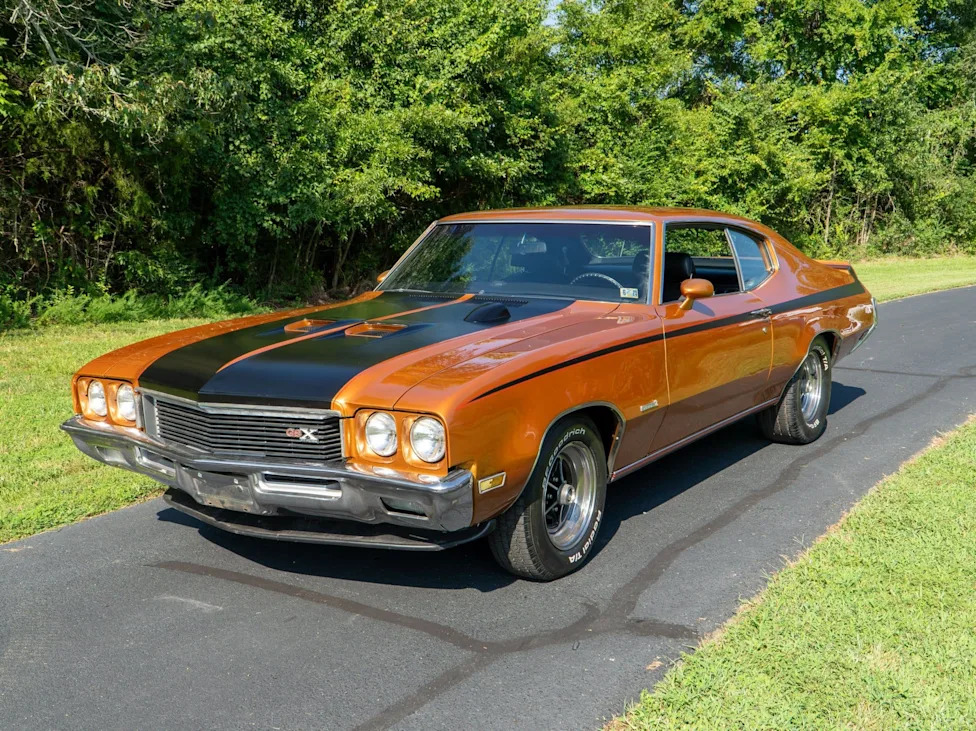
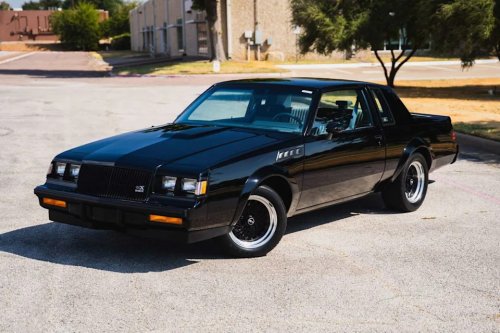
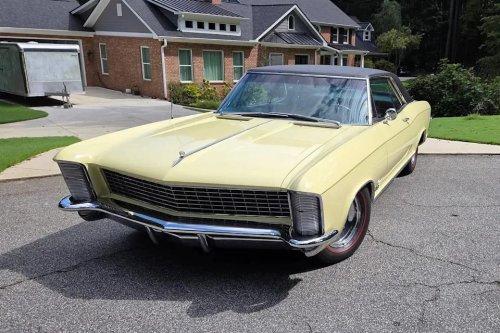
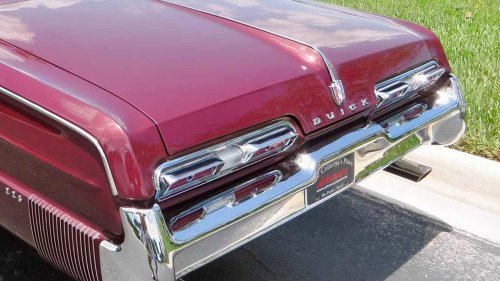
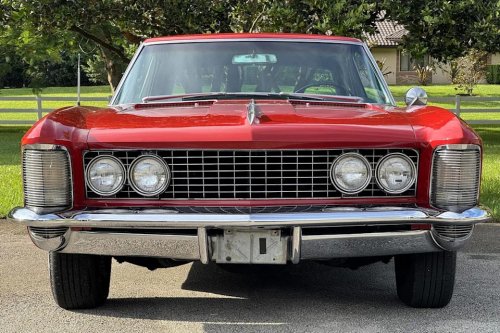
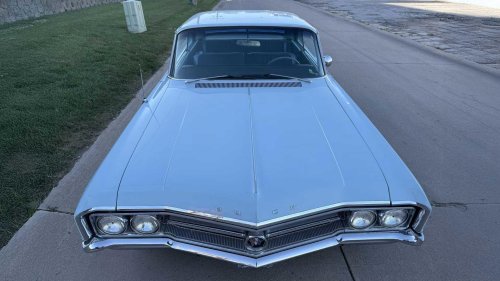
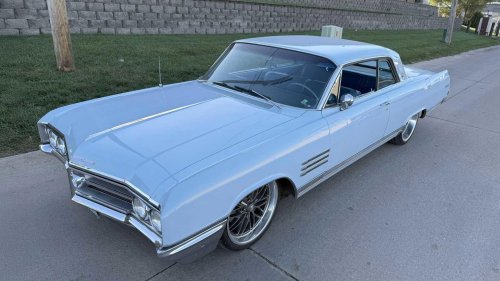
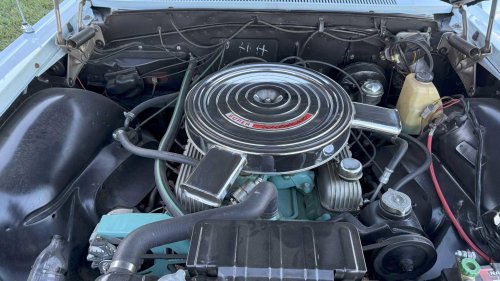
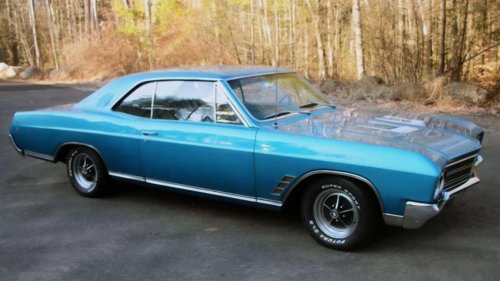
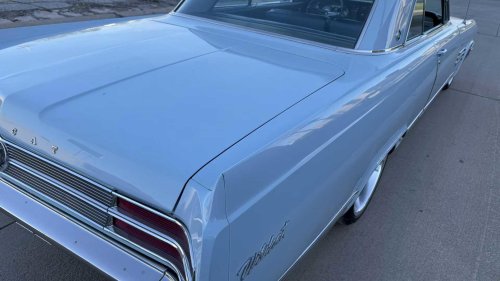
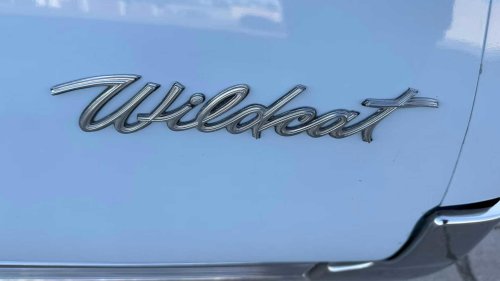
When gearheads argue about the greatest muscle machines of 1964 and 1965, the names come fast: GTO, Chevelle SS, 442, maybe a 426 Hemi car if someone's feeling ambitious. Nobody ever mentions a four-door Buick. That's the whole point.While Pontiac and Chevrolet were building street credibility with their mid-size heroes, Buick was quietly loading a 425-cubic-inch Nailhead with dual four-barrel carburetors and dropping it into a full-size four-door hardtop that looked exactly like your insurance broker's daily driver. The result was 360 horsepower in an anonymous luxury shell, a factory production option called the Super Wildcat, and one of the most underestimated sleepers Detroit ever produced.The GTO got the magazine covers. The Chevelle SS got the posters. The Wildcat got the Nailhead with dual quads, a four-door body that deflected every stoplight challenge before it started, and precisely zero marketing hype. Somewhere in all of that, Buick accidentally built the perfect sleeper. The Big-Inch Detroit Sedan Nobody Remembers Mecum In 1965, Buick moved the Wildcat off the LeSabre platform and onto the larger 126-inch Electra 225 chassis. That's not a minor footnote. It put the Wildcat on full-size iron, wider and more substantially built than the mid-size performance cars Pontiac and Chevrolet were flogging to performance buyers. While Chevy spent its ad budget on the Chevelle SS and Pontiac built mythology around the GTO, the Wildcat sat in Buick showrooms priced between $3,100 and $3,600, wearing a suit and pretending it wasn't carrying real performance under the hood.The base engine was already worth knowing: a 325-horsepower, 401-cubic-inch Nailhead V-8. But two 425-cubic-inch V-8s were also on the option sheet. The first was the single-carb Wildcat 465, named for its 465 lb-ft of torque, because Buick measured engines by what they pulled rather than what they peaked at the top of the rev range. That one made 340 horsepower. The second was the Super Wildcat, which took those same 425 cubes and ran them through two four-barrel carburetors.Buick's torque-naming convention is worth pausing on. In an era when Pontiac and Chevy were shouting horsepower numbers in the magazines, Buick was naming its engines after the figure that actually moves a heavy car down the road. That wasn't conservative. It was a different kind of performance confidence. But it also meant the Wildcat's performance story never got told in the language the muscle car crowd was listening to. Enter The Super Wildcat: Dual Quads, 360 Horsepower Mecum The dual-quad Super Wildcat engine option was available from 1964 through 1965, two consecutive model years in which Buick offered one of the most legitimately powerful big-block setups in a full-size American car and barely mentioned it. The 425-cubic-inch Nailhead with two four-barrel carburetors produced 360 horsepower from the factory. It also wore finned cast-aluminum valve covers with the Buick logo embossed on top, a detail that told a story under the hood to anyone who bothered to look.This was not a dealer modification or a backyard build. It was a factory production option, ordered through the standard channels and delivered from the plant as built. The four-speed manual transmission was available on Wildcats through 1965 as well, and pairing it with the dual-quad 425 in a four-door hardtop created one of the most quietly contradictory cars Detroit ever signed off on. Row gears in a full-size Buick four-door, from the factory. There's a certain kind of gearhead who reads that sentence and immediately understands why this car matters. Sleeper Credentials: The Car Nobody Clocked Mecum The 1965 Wildcat's styling worked against its performance identity, and not accidentally. Where the Chevelle SS announced itself with bucket seats, blacked-out hood trim, and a buyer demographic raised on performance advertising, the Wildcat in four-door hardtop form looked exactly like what the title said: a full-size Buick for someone who wanted a nicer LeSabre.There were no hood scoops. The Super Wildcat designation appeared on the engine, not the exterior. The car shared body lines with the LeSabre, rode the 126-inch Electra wheelbase, and appeared in the same brochure as the base models and the Deluxe trim line. Nothing external announced what was under the hood. For the buyer who knew what they were ordering, that anonymity was the entire point. For everyone else at the stoplight, it was just another full-size Buick.Buick's luxury brand positioning created the invisibility. The marketing never tried to compete with Pontiac's performance messaging, never ran ads comparing horsepower figures, never put the Wildcat on a drag strip in the magazine spreads. The GTOwas the car you bought to be seen going fast. The Super Wildcat was the car you bought to actually go fast and let the light settle the conversation. Under The Skin: What The Numbers Actually Show Mecum The performance data support the sleeper case. A 1964 Wildcat with the dual-quad 425 and four-speed manual ran to 60 mph in 7.5 seconds and through the quarter mile in 15.5 seconds at 89 mph. Contemporary road testing of the same configuration produced 7.7 seconds to 60 and a 16.0-second quarter at 87 mph. Call the real-world range 7.5 to 7.7 seconds to 60, depending on conditions. For a car weighing over 4,000 pounds in four-door hardtop trim, those numbers were competitive with the performance cars collecting all the magazine ink in those years.The chassis backed the engine. The full-frame 126-inch platform gave the Wildcat structural rigidity that the lighter unibody mid-size cars didn't match at the same weight. Heavy-duty suspension was available from the factory. Posi-traction was on the option sheet. The Super Wildcat was not built to be thrown around a road course; it was a fast full-size car engineered to be driven hard on public roads, and it was genuinely capable on those terms.Does the 425 Nailhead have the exotic reputation of a Hemi or a big-block Chevy? It doesn't. But 465 lb-ft of torque in a factory-spec full-size four-door is its own kind of argument, and the Wildcat made it quietly every time someone who didn't know better pulled up next to one at a light. The 1966 Gran Sport: The Coupe Gets The Badge 1966 Gran Sport For 1966, Buick pulled the dual-quad Super Wildcat option from the standalone order sheet. In its place came the one-year-only Gran Sport Performance Group, ordered through the A8/Y48 option code for $255. The package included heavy-duty suspension, dual exhaust, Posi-traction, a chrome-plated air cleaner, cast-aluminum rocker arm covers, and GS identification plates front and rear.The Gran Sport also brought back the dual-quad 360-horsepower upgrade, but only as a premium within the GS package itself. There was a critical limitation: the 1966 Gran Sport was available only as a sports coupe or convertible. The four-door hardtop was off the table. If you wanted the full-size sleeper sedan with the dual-quad Nailhead, 1965 was the last year. The Gran Sport moved the Wildcat's performance story into conventional two-door muscle territory, which made it a legitimate performance car but no longer a sleeper in any meaningful sense.Of the 1,244 Wildcat Gran Sports built in 1966, 242 were convertibles, and just 22 were Super Wildcats with the dual-quad upgrade. The rest ran the single-carb 340-horsepower 425. Fully restored 1966 Wildcat Gran Sport examples have sold at auction for more than $52,000. The Rarity Math And What Survivors Fetch Today Mecum The 22 confirmed dual-quad Super Wildcat Gran Sports from 1966 are the most precisely documented count within this model's rarity story. For the 1963 to 1965 four-door hardtops with the dual-quad option, detailed production breakdowns by body style and engine code aren't widely cataloged, which tells its own story about how seriously the performance market tracked these cars at the time. They weren't tracked because they weren't recognized as performance cars worth counting.Hagerty's valuation guides specifically flag the 360-hp 1965 Wildcat as the target configuration for serious enthusiasts. Surviving examples are genuinely scarce. These cars were driven hard when they were cheap, rarely preserved because nobody filed a full-size Buick under future collector car, and frequently traded or crushed before the hobby caught up with what they actually were. That trajectory is the classic barn-find scenario: an undervalued car with real credentials that slipped through the preservation cracks because its disguise was too convincing.Mecum The 1966 Gran Sport coupe carries stronger documented valuations because of its known production number and conventional two-door layout. But the four-door Super Wildcat from 1964 or 1965 is the rarer and more interesting find. When one surfaces with documentation and an intact dual-quad engine, the gap between what it's worth to a Nailhead partisan and what the open market currently prices it at is still meaningful.Full-size muscle never got the collector love that mid-size muscle did, and the Wildcat is the cleanest example of that long-running injustice. The GTO had better marketing. The Chevelle SS had better optics. The Super Wildcat had the Nailhead, the dual quads, and a factory-spec four-door body that nobody took seriously when it was new. Not enough people are hunting them now. Find one. It's worth the search.



















 +10 others