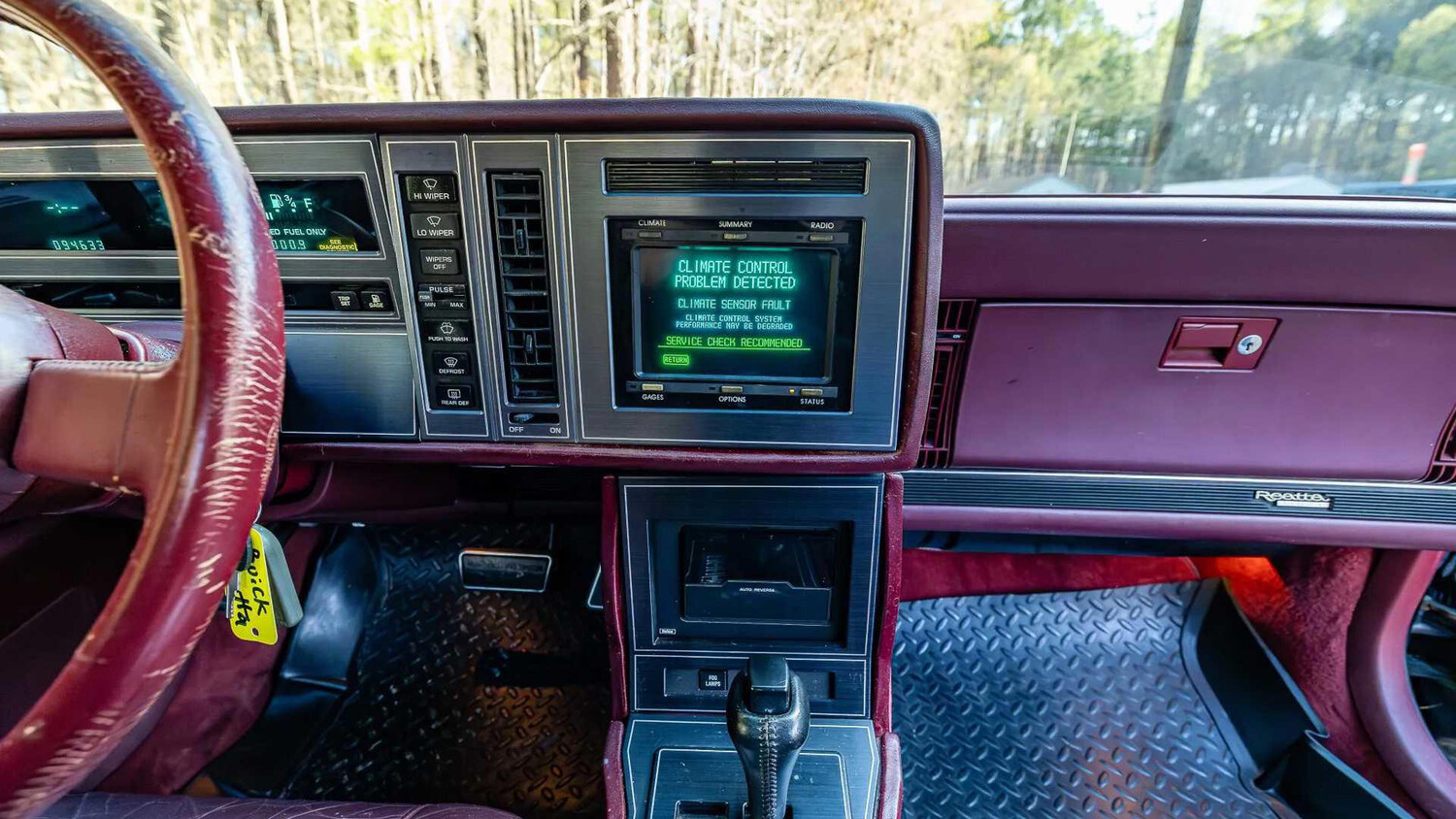
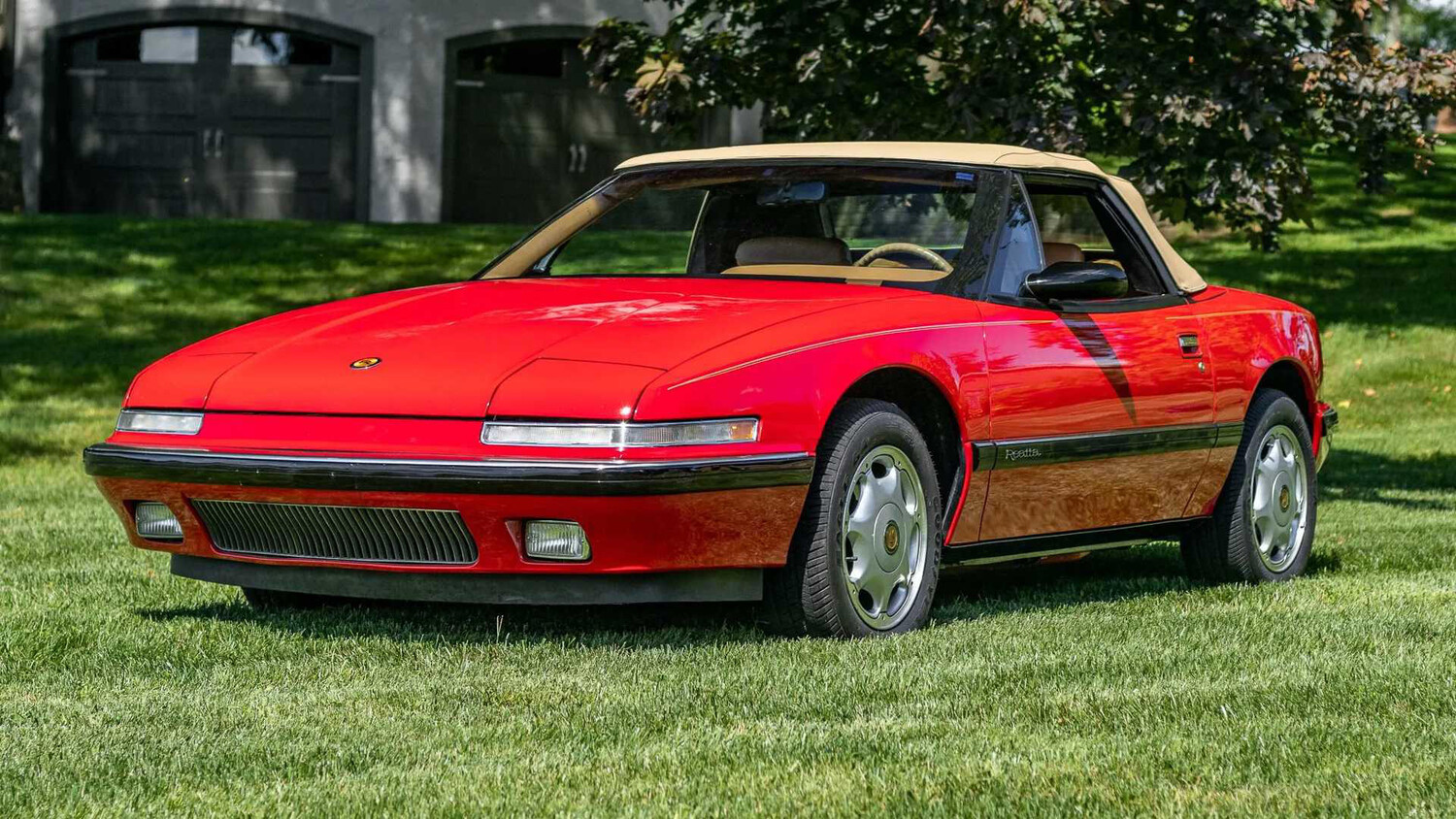
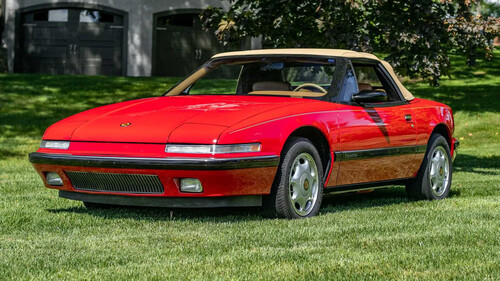
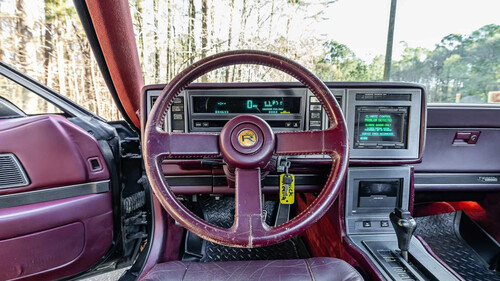
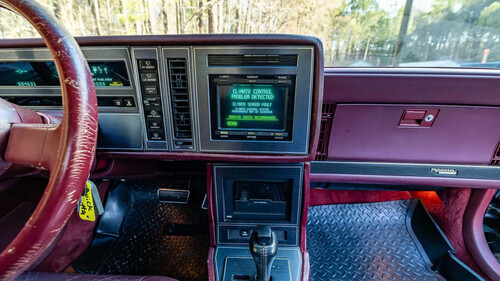
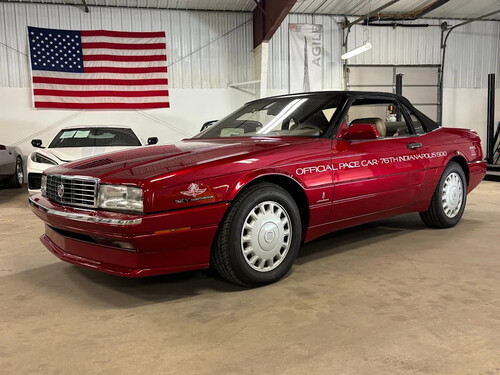
In August 1981, GM's Product Policy Group signed off on a hand-built, two-seat Buick that was supposed to sell 22,000 copies a year, post solid margins, and give the brand a legitimate halo car. The concept was clean: shorten the E-body platform, drop in a 3.8L V6, price it around $20,500, and let Buick have a prestige two-seater for the first time in decades.Six and a half years later, the car reached showrooms. It sold 21,751 examples in total across four model years combined.That's the Buick Reatta: a genuinely interesting car that arrived late, got positioned vaguely, and disappeared quietly in 1991. The convertible version didn't exist until the third model year. By March of that final year, GM was already shutting the whole program down. But those last-year drop-tops, all 305 of them, are starting to get noticed by the people who know what they're looking at. The name came from "reata," the Spanish word for lariat, with an extra T added for trademark purposes. Somehow, that small compromise feels like a preview of everything that followed. Seven Years From Green Light To Showroom Floor Bring A Trailer Concept approval came in August 1981 for a planned 1984 model-year debut. The Reatta would ride a shortened version of GM's E-body platform, the same architecture underneath the Cadillac Eldorado, Buick Riviera, and Oldsmobile Toronado. Wheelbase landed at 98.5 inches. Front-wheel drive, 3.8L V6, target price around $20,500. At 22,000 units annually, the math was designed to work, and it could have.Then GM went through a complex reorganization of its five car divisions, and the project got caught in the reshuffle. The 1984 launch slipped, and kept slipping.The Reatta finally arrived at dealers in January 1988, more than four years behind schedule.The $20,500 price target had drifted to roughly $25,000 at launch, and the market the car was originally designed to captivate had already shifted around it.Whether an earlier launch would have changed the outcome is an honest question. The mid-1980s weren't obviously easier territory for a premium Buick two-seater than the late 1980s. But arriving seven years after concept approval meant GM was essentially launching a car built around assumptions that were already a decade old. What They Built Inside The Craft Center Bring A Trailer Buick didn't assemble the Reatta on a conventional line. It was built at the Reatta Craft Centre in Lansing, Michigan, where specialized teams worked through a series of fixed stations rather than a rolling floor. After each team finished their portion of the assembly, robots moved the car to the next station. For a GM product in the late 1980s, that was an unusually deliberate way to build anything.From 1990 on, every Reatta came with a zippered owner's folio holding more than a manual and a flashlight: it contained a Craftsman's Log with the actual signatures of the supervisors who approved the car at each assembly stage. You knew exactly who built yours. That level of traceability was essentially unheard of in American volume production at the time, and it was a genuine point of differentiation that Buick apparently never figured out how to translate into a showroom. The Touchscreen Nobody Was Ready For The 1988 and 1989 Reattas shipped with the Electronic Control Center, a touchscreen interface that handled radio functions, climate control, a trip computer, an overspeed alarm, and direct access to the car's onboard vehicle diagnostics. The Reatta was only the second car in history to feature a touchscreen, right behind the 1986 Buick Riviera.Touchscreen vehicle diagnostics, in 1988, on a Buick. Let that land for a second.The ECC wasn't without problems. Writers who had already soured on the system in the Riviera brought those complaints to their Reatta coverage, and the reviews reflected it: mostly positive overall, but with the touchpad as the recurring gripe. Finicky doesn't mean wrong, though, and Buick had stumbled onto something genuinely ahead of its time.Bring A Trailer Then they pulled it. Starting with 1990 models, the ECC was replaced by conventional push-button stereo and climate controls, and the trip computer went with it. Whatever the reasoning—reliability, cost, or simply stopping the bad press—the most forward-looking piece of the Reatta's identity vanished before the convertible even arrived. A Brand That Didn't Know How To Sell It Bring A Trailer This is where the story gets uncomfortable. Buick's PR team understood the positioning problem well enough to put it into words. Product PR manager Larry Gustin described the challenge plainly: help media understand the Reatta was "neither a sports car nor a Corvette-like performer but a Mercedes SL-like luxury two-seater," built to look sporty while delivering a more elegant driving impression.That's a defensible concept. The execution was the problem. Buick in 1988 was selling Electras and Park Avenues to a buyer base that had been with the brand for decades. Those buyers weren't cross-shopping two-seaters. And buyers actively looking for a two-seater weren't walking into Buick dealerships expecting to find one. The Corvette crowd had no interest in a front-wheel-drive personal coupe. The Mercedes SL crowd wasn't cross-shopping Buick.Bring A Trailer So who was the Reatta buyer? Buick never had a clean answer, and the sales numbers say everything. The original target was 20,000 to 22,000 units per year. Total four-year production came to 21,751 combined. One year's worth of the original projection, spread across four model years. That's not a bad car; that's bad execution. One Year, 305 Convertibles, And A Cancellation Bring A TrailerThe convertible arrived for 1990, with the body designed by ASC. That first drop-top used a manually operated top. For 1991, Buick added power pull-down motors to tighten the rear bow and, quietly, made the Reatta the best-specified version it had ever been.The 1991 engine was the upgraded L27 3800 V6 rated at 170 hp, paired with an electronically controlled 4T60-E four-speed automatic. ABS arrived. New 16-inch wheels arrived. Automatic headlamps arrived. So did a cup holder, somehow absent throughout the car's entire run up to that point. The coupe is listed at $28,335. The convertible asked $34,995.On March 5, 1991, GM president Lloyd Reuss announced the cancellation.Of the roughly 1,516 total 1991 Reattas built before production ended, 305 were convertibles. Across all four model years, Buick built 19,314 coupes and 2,437 convertibles, 21,751 units combined. The Craft Centre that hand-built every one of them was then repurposed for a different program entirely. Why The Last-Year Cars Are Worth Watching Bring A Trailer The Reatta isn't pulling supercar money. Average auction prices across all years sit around $9,440. The 1991 models average closer to $12,536 at auction, with the high-water mark being a $38,500 sale for a 1991 convertible recorded in October 2022. The spread between an early-year coupe and a final-year drop-top is real, but the collector momentum right now lives more in enthusiast conversation than in confirmed, sustained price-surge data. It's anecdotal heat, not a verified market move. Yet.The rarest finds in the whole lineup are the Select Sixty editions: approximately 55 black-exterior, tan-interior coupes built for Buick's top 60 dealers in 1988, and 65 white convertibles with a red interior and white wheels in 1990. Hagerty identifies the Select Sixties as the most collectible Reattas from a valuation standpoint. For any example, regardless of trim, body integrity and corrosion are the primary things to scrutinize at purchase.Bring A Trailer But the case for the 1991 convertible is straightforward. It's the best-spec version of a hand-built American two-seater, produced in its final months before cancellation, with only 305 examples in existence and a Craftsman's Log in the glovebox from the people who built it. Gearheads hunting clean Brougham-era oddball-GM iron should have 1991 drop-tops on their radar before the rest of the market figures out what it's been ignoring.Buick didn't kill the Reatta because the car was bad. They killed it because they could never commit to an identity for it, and they never found the buyer they had imagined. That's a harder failure to come back from than a flawed product. The car deserved a real push. It got a Craftsman's Log and a quiet exit instead.Sources: Hagerty, Conceptcarz, Classic.com, Mac's Motor City Garage, Ascencione