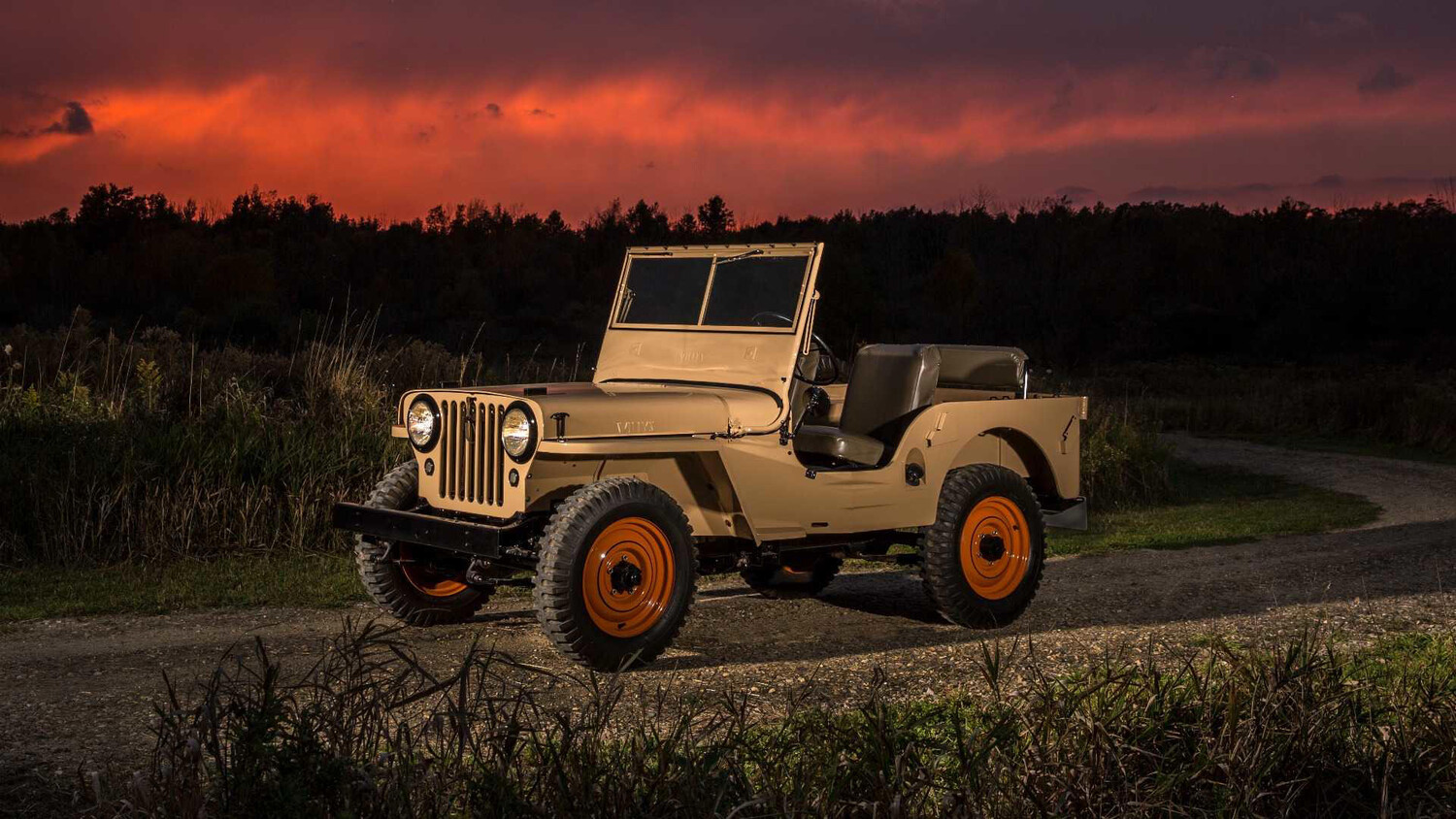
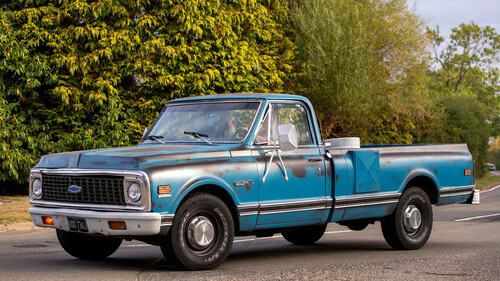
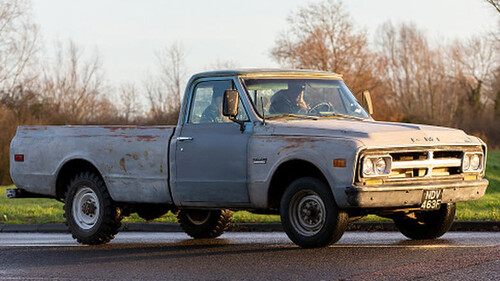
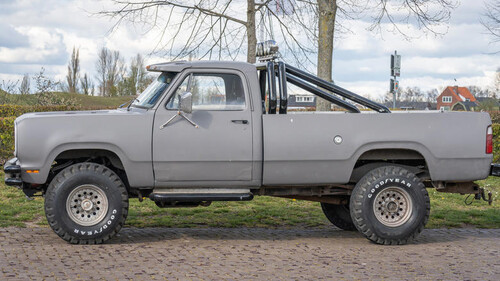
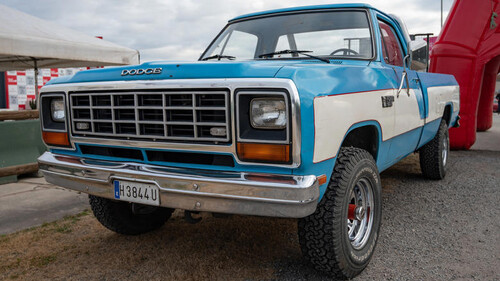
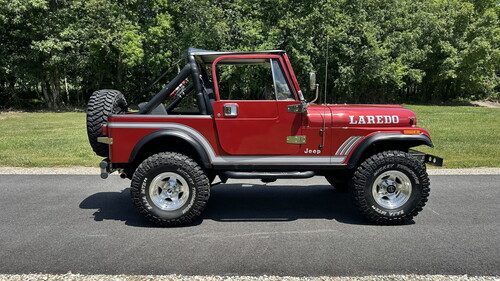
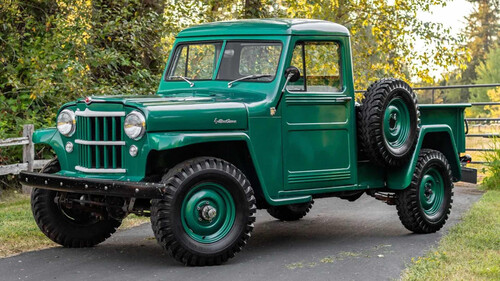
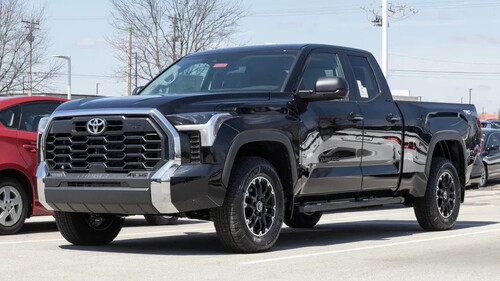
If we turn back the clock a few decades and take a look at what the pickup truck as a whole used to be, you'd be surprised at just how much the humble segment has changed. Before roughly the mid 1990s, the pickup truck was largely regarded as a work vehicle, and a work vehicle only. Few folks bought a pickup truck to be used as a daily driver, as these older models were typically single cabs, and boasted suspensions meant for heavy work, not for comfort whatsoever.However, despite pickups being much more rugged and simplistic in the past, loads of folks – this author included – are severely drawn to these older rigs. It's not easy to explain, since many of these trucks are old, broken down, and beaten-up. But there's no denying that these older models are full of personality and, in some cases, surprises. Speaking of the latter, one such older pickup truck called the Jeep Gladiator SJ-gen J Series, boasted a Buick V8 engine option for a brief time. While it sounds completely random, there were actually a few key reasons for this. The Old Gladiator's Buick-Bred Influence Bring A Trailer Quick Facts About The Buick-Powered Jeep Gladiator SJ-Gen J Series Buick engines began being offered in Jeep Gladiators in 1968 The motor was coined the "Dauntless" Buick's V8 option acted as a stop-gap solution Came as either a J2000 or J3000 model Dauntless-equipped Gladiators ceased production in 1971 The Jeep marque carries quite a lot of weight in both the off-roading world and the United States in general. The Jeep's rise to fame began all the way back during the start of World War II, when the US military was interested in an all-new light transport vehicle that could tackle pretty much anything thrown at it. A company called Willys won the government contract with its Quad prototype, which was then named the Willys MB once production began.Stellantis Once World War II ended and loads of GIs returned home, many had fond memories of the humble Army Jeep, and many desired one or themselves. So, in order to respond to a sharp increase in civilian demand, Willys began producing the CJ-2A, the first civilian Jeep model, which went into production in late 1945. It was almost entirely based on the original military model, with a few upgrades made for it to be considered roadworthy.Stellantis The CJ-2A was a hit, partly due to it being the first mass-produced Civilian four-wheel-drive vehicle. In its first full year on the market, Willys, reportedly, sold roughly 214,000 models at a time when post-War America was still trying to catch its breath. The Willys brand became a household name in the US, and it enjoyed a lot of popularity throughout the late 1940s and 1950s. Then, in 1962, Willys introduced its famous full-size pickup truck, the Gladiator. Somehow, Buick Enters The Fold Bring A TrailerIn 1963, Willys formally became Kaiser-Jeep, after American automaker Kaiser purchased the brand name a decade prior. However, this new brand name didn't affect the then-new Gladiator pickup truck, and production carried on as normal. However, by the late 1960s, Kaiser-Jeep was beginning to show signs of financial strain, and another company was lining up to take over. As many of you will know, this marque-in-waiting was called the American Motors Corporation, or AMC.Bring A Trailer Buyouts and mergers don't happen overnight, especially in the automotive industry. Mountains of paperwork, new production standards and procedures, and executive management all need to settle into the new way of life, and these aspects were also felt by the new Kaiser-Jeep/AMC merger. Again, model production remained steady as AMC's purchase of Kaiser-Jeep occurred, and changes began to take hold over the course of a few years.Bring A Trailer During this uncertain time, AMC had an issue regarding engines. Its Vigilante 327 CID V8 was in need of replacement, and the Kaiser-Jeep Gladiator needed a new, more powerful V8 to remain viable in the market. However, Kaiser-Jeep wasn't making new engines anymore and AMC wasn't in a position to develop its own during the merger, leaving the Gladiator's next V8 engine up in the air. Happily, though, the General Motors subsidiary, Buick, swooped in to save the day.Buick and Kaiser-Jeep/AMC struck up a deal to supply a number of its Dauntless 350 CID V8s for use within the Jeep Gladiator J Series models beginning in 1968. Some AMC aficionados will know of Buick's decision to sell the tooling and designs for its Dauntless V6, the early ancestor to the Buick 3800 V6, back in 1967, when the GM subsidiary figured there would be no need for a V6, as the height of the classic American muscle car era began to take off in full-force. Unlike the V6, the Dauntless V8 was built by Buick and then shipped to Kaiser-Jeep. The Ins And Outs Of The Dauntless V8-Equipped Gladiator SJ Bring A TrailerBuick's Dauntless V8 was offered across all the Gladiator's grades that were offered between 1968 and 1971; the short-wheelbase J2000, the J3000, and the long-wheelbase J4000. A camper version called the J3600 was also offered with Dauntless power. To complement the Buick-bred engine, General Motors supplied a three-speed Turbo-Hydramatic TH400 automatic transmission for use, along with a four-speed manual option.Bring A Trailer The Dauntless V8 itself was considered technologically advanced for its time. Despite sharing the same basic size as many other General Motors small block V8s at the time, the block itself was much different in terms of design. For example, it boasted the same exact cylinder bore measurement as the Buick Dauntless V6. Its piston stroke, however, remained unchanged from the Buick 340 CID V8. The Dauntless V8 block also utilized something called a "deep-skirt" design, meaning the engine block's walls extend to below the crankshaft's centerline, increasing rigidity and strength. It also used more nickel than most other engine blocks for even more durability.Bring A Trailer*Specs courtesy of CurbsideClassic.com The Dauntless Is Gone, But The Gladiator Returned Bring A Trailer By 1971, AMC's merger of the Kaiser-Jeep company had been completed, and there was no longer a need for outsourced engines, ending the Jeep pickup's use of the Dauntless V8. 1972 marked the final year of Jeep's use of the Gladiator namesake, with the truck now just going by "J Series". The J Series would live on alongside the compact Jeep Comanche pickup truck until 1988, with the Comanche calling it quits after 1992.Jeep However, come 2020, Jeep would resurrect the Gladiator namesake after nearly 50 years. This new Gladiator was based on the Jeep Wrangler JL platform, and featured numerous upgrades and options, allowing buyers to tailor the truck to their near-exact specifications. Unfortunately, the new-age Gladiator hasn't enjoyed as much success as Jeep would have hoped for. While the model will continue to be produced, a planned plug-in hybrid version called the 4xe has been canceled due to low consumer interest.These days, the Gladiator is a long way from its rather bare-bones, Buick-powered roots.