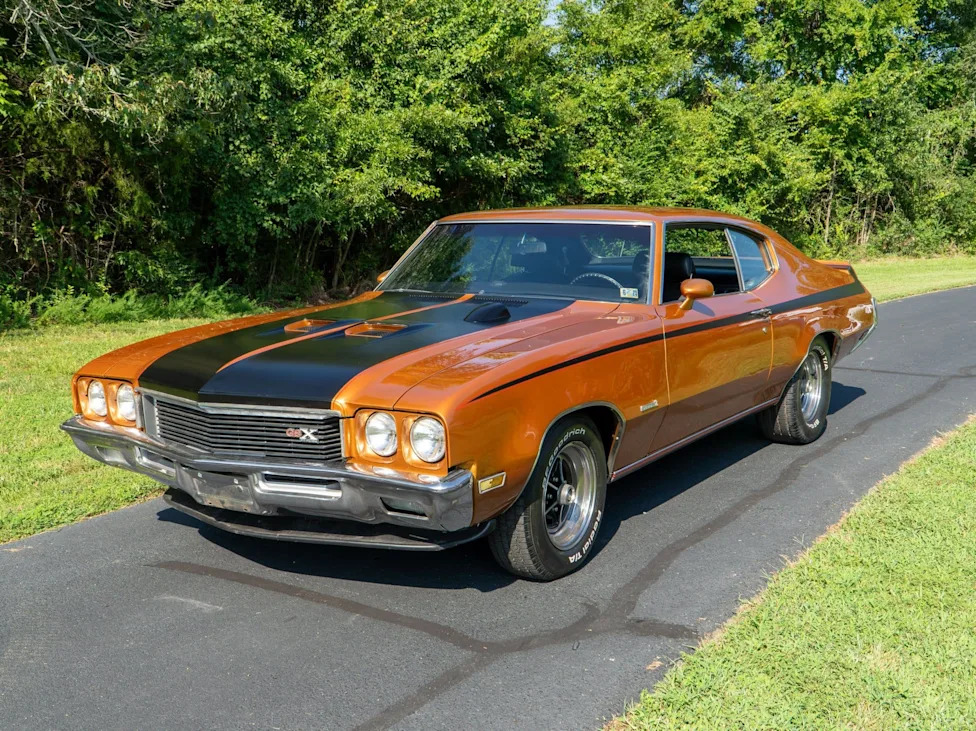
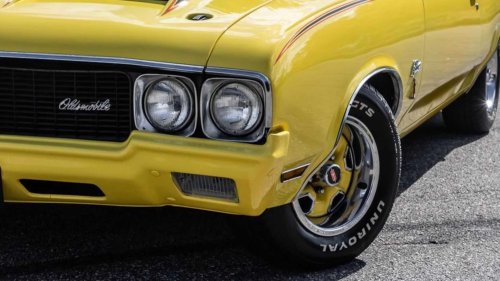
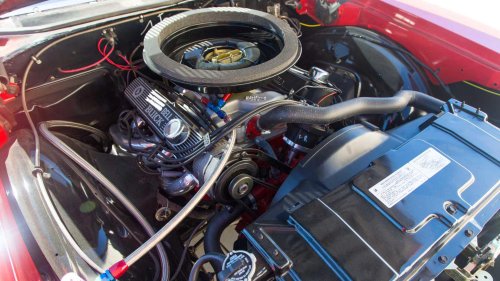
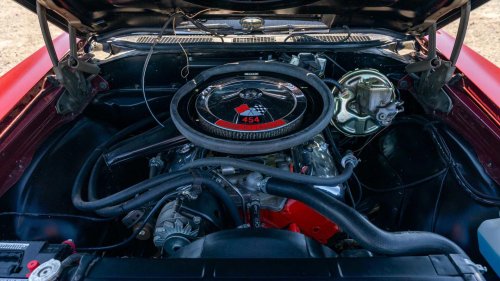
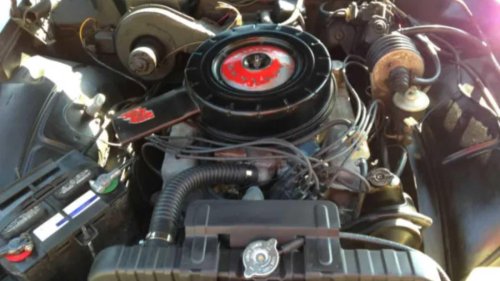
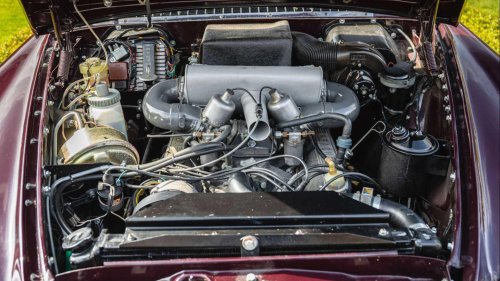
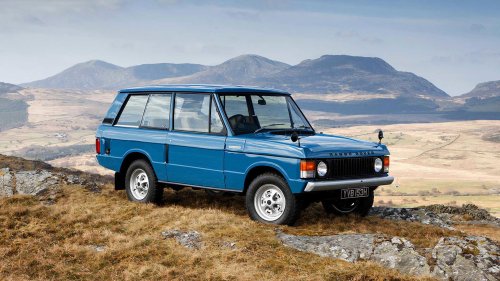
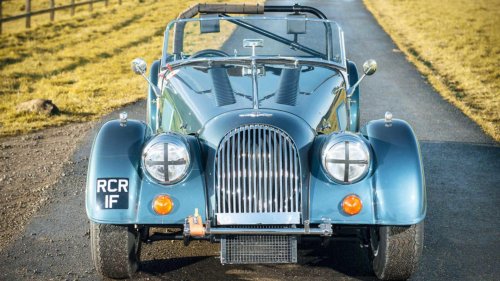
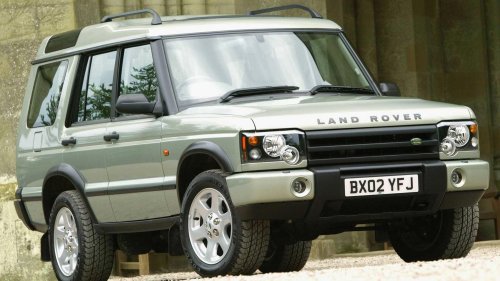
Few engines seem as British as the V8 under the hood of a Range Rover Classic. After all, this motor would eventually define decades of British V8 motoring and find its way into iconic cars like the Morgan Plus 8 or the TVR Griffith. Yet few people realize that this supposedly British icon wasn't homegrown at all.It started out as a compact General Motors experiment in lightweight engineering before its fate took a significant twist. Buick developed this engine in the early 1960s as something advanced and unusually light for those times. But when the Detroit company walked away from this aluminum engine, Rover saw its chance. A Detroit Engine That Britain Turned Into A Legend Bring a TrailerBritish car manufacturers have used American V8s before, so the story of the Rover V8 is not entirely odd. It is, however, strange to see how the engine took on an entirely different challenge as soon as it crossed the pond.After all, Buick intended this 3.5-liter V8 to live aboard GM's compact Y-body cars like the Buick 215,Pontiac Tempest, or Oldsmobile F85. It was exceptionally light for a mass-produced V8, with the Museum of American Speed suggesting that it weighed only 318 lbs.Buick clearly thought this engine could give the company V8 capability, but without the extra weight that you'd normally associate with this type of engine. Aboard a car like the Buick Special, this V8 produced 155 horsepower and 220 pound-feet of torque, and other higher-output versions could reach as much as 200 hp.While Buick was working on the Special, Oldsmobile was fitting the engine into a slightly more exotic and turbocharged Jetfire creation, which was then able to produce 215 hp from its 3.5-liter displacement.For all its potential lightweight benefits, however, this aluminum V8 came with a cost. It was expensive to manufacture, and aluminum production was especially tricky back in that era due to the type of casting technology available. GM eventually decided to go back to the iron blocks that had been so successful for it, but as it did so, Rover saw an opportunity and dived right in. Rover Bought The Tooling And Recast The Engine For Its Own Future Iconic AuctioneersRover clearly had big ambitions for the Buick engine and was not going to treat it as a short-term stopgap. Instead, it purchased the rights and the production tooling for its British adventure, eventually reworking the design for long-term use across the Atlantic.Rover signed the deal with GM in January 1965 after a long negotiation, but it stuck to its guns during contract negotiation because it knew its older six-cylinder engines were running out of development room. It needed something that would power its cars without a big increase in weight, to give them the refinement and performance that the British public was calling for.The first vehicle to use this lightweight V8 engine was Rover's P5B in 1967. Some people believe the B suffix was a nod to Buick but either way, the engine immediately altered the character of this stately sedan. The P5B could rely on a smooth aluminum V8 instead of an aging straight-six, and it had the type of torque that transformed it into a more effortless modern car.In 1968, Rover followed up with the P6 3500, using the same essential engine in a more advanced sedan body and this car became one of the defining British executive cars of the time.Rover was happy with its initial success and doubled down on its V8 investment. The basic architecture remained a 90-degree pushrod V8, but Rover also experimented with carburation, fuel injection, and emissions control, and offered different capacities. This led to 3.9, 4.0, 4.2, and 4.6-liter versions in both mainstream Rover and Land Rover vehicles.The engine also turned out to be particularly flexible in terms of its power output, ranging from approximately 150 hp (tracing back to its Buick days) to more than 200 hp in the later factory Land Rover applications. So, this imported V8 turned out to be compact and flexible enough to work in sedans, SUVs, and even sports cars. Range Rover Made The Buick V8 Matter Globally Land Rover In 1970, Rover opened a new chapter for its American V8 engine when it launched the original Range Rover. Here was a vehicle that combined off-road ability with on-road comfort and delivered long-distance performance in a way that few British vehicles had been able to achieve before. On board the early Range Rover was the 3.5-liter, 135-hp Buick-derived aluminum V8, paired with a four-speed manual gearbox, permanent four-wheel drive, and a two-speed transfer case.As it turned out, the engine was the perfect choice for this type of vehicle. After all, a heavy or lazy engine would not have been ideal for a vehicle that still had to cruise comfortably on highways when it was not doing its off-road work. The aluminum V8 kept the weight in check and gave the Range Rover enough performance to be credible as a road car. It was light, mechanically simple, torquey, and well-matched to the Range Rover's particular mission.In the Range Rover, the company wanted a vehicle that was, in part, a comfortable Rover sedan but with the off-road ability of a traditional Land Rover. Some people believe this was the template for the eventual luxury SUV, but in 1970, the template included only two doors and rudimentary interiors.The V8 did give the trailblazing Range Rover a relaxed stride and turned the Range Rover, which might otherwise have been better suited to farm tracks, into a new category of vehicle. And with that type of success, it's no surprise that Land Rover stuck with the engine for decades to come. The Range Rover Classic eventually used 3.9- and 4.2-liter versions, but later Discovery and Range Rover models were still using the engine in 4.0- and 4.6-liter displacements well into the new century. For example, the 2003 to 2004 Land Rover Discovery sold in North America had a 4.6-liter version of the V8, rated at 217 hp and 300 lb-ft of torque. Morgan And TVR Turned It Into Britain's Small-Volume Muscle Engine Iconic Auctioneers As the V8 continued to enjoy success in the world of Rover, it started its second life with some low-volume sports carmakers. Those cottage manufacturers badly needed an engine that had relatively low weight, compact dimensions, and strong torque. They also wanted a power plant with good support and a strong supply chain.Morgan was the first company to do a deal with Rover when it used this V8 engine in its Plus 8. This arrived in 1968 and turned out to be the fastest-accelerating British production car of its time. Buyers could choose a 3.5-, 3.9-, or 4.6-liter V8 engine, and this proved revolutionary in a car as lightweight as a Morgan. Many feel that this alloy V8 engine gave the Plus 8 much of its character, and that this engine was a far better choice than some other four-cylinder unit.TVR took the idea to another level with its Griffith and Chimaera models, eventually enlarging the capacity to 5.0 liters for serious performance. For example, TVR's Chimaera 400 HC featured a 4.0-liter alloy V8 that could get to 60 mph in 4.6 seconds, producing 275 hp and 305 lb-ft of torque. And with this, the engine had adopted yet another new personality and became a raw, loud, and even slightly unruly performance weapon. Americans Forgot The V8 That Britain Kept Improving Land Rover It's intriguing that an engine that would become so successful in Britain became largely unknown in the US. In the UK, the engine became an institution, powering everything from luxury 4x4s to executive sedans, and from kit cars to genuinely serious sports cars. It also outlived several of the companies or corporate structures that used it, including British Leyland and MG Rover, and through all the melee, the V8 kept on finding its work.While the V8 had plenty of staying power and was generally dependable, it certainly wasn't bulletproof. Later 4.0- and 4.6-liter Land Rover versions are known for issues like head gasket trouble or slipped cylinder liners, especially if their owner had been less than attentive. And while the engine's basic design is certainly rebuildable and durable, you could still run into challenges with its later and higher-capacity versions. The Engine That Crossed Oceans And Changed Sides GM simply couldn't make this lightweight engine work alongside its manufacturing economics and chose to move in another direction. But Rover clearly saw the engine's potential and eventually turned it into one of the country's most important powerplants.It would help transform Rover sedans, really put the Range Rover on the map, and allow small companies like Morgan and TVR to build their own success stories. Few engines have crossed the Atlantic and been able to reinvent themselves so comprehensively, especially as its originator just couldn't make it work.



















 +46 others