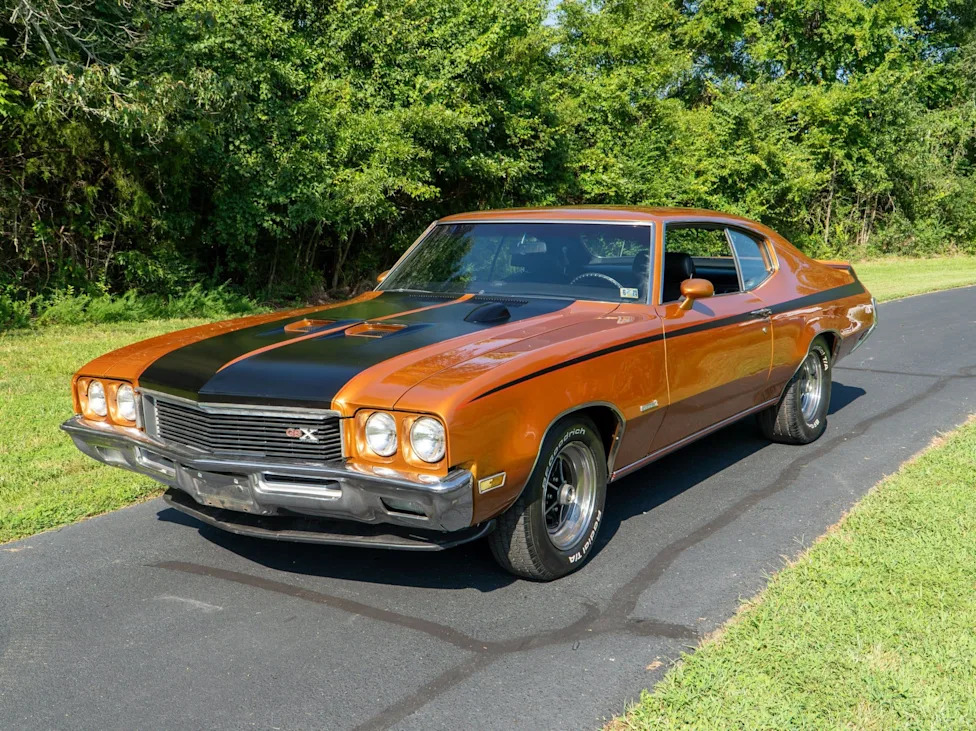
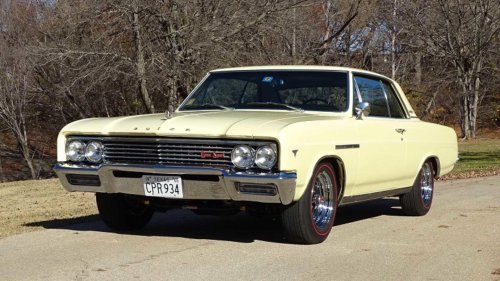
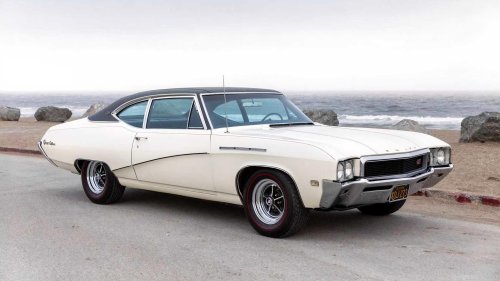
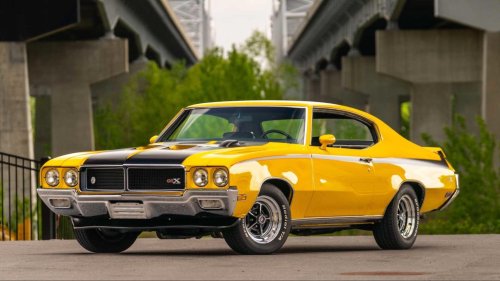
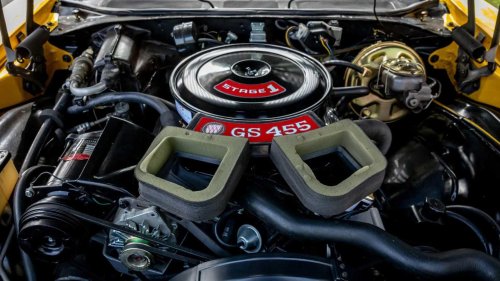
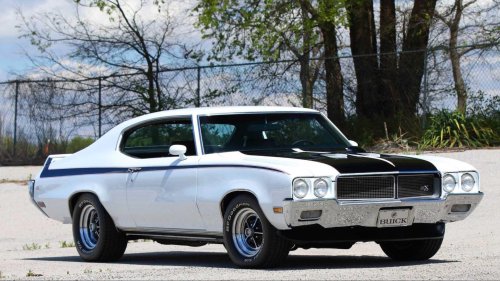
You don’t get to be a GM sports car and drive faster than a Corvette. Some of the most promising concept cars the company ever built wound up canned and forgotten about because they dared to challenge Zora Arkus-Duntov’s brainchild. No less than three GM brands tried to do just that in the 1950s, only one of them survives today. Coincidentally, it’s the same brand that managed, if ever so briefly, to be just as fast as a Corvette in the early ‘70s. Believe it or not, the answer is Buick. Buick in the Late 1960s: A Silent Muscle Car Hero Bring a TrailerIn most official retellings of the first muscle car renaissance, it’s Pontiac and their GTO that officially ushered in the era in 1964. By most accounts, that’s not an inaccurate assumption. But right there alongside John DeLorean’s Pontiac, sandwiched between the working-class hero Chevrolet and the CEO shot-caller Cadillac, was Buick, and they had their own flavor of muscle car style.Underneath, the entire GM platform was divided into a series of chassis codes, each catered to vehicles of different sizes and weights from the smallest compacts to giant muscle cars. Such was the way American OEMs padded their lineups in those days, with different badges competing by offering bespoke powertrains and features.Buick was no different at the turn of the 1960s, with GM stalwarts like the A, B, and C body platforms spawning classics like the Special, the Wildcat, and the Electra. At the heart of every Buick was an in-house developed engine that you couldn’t find in a Chevrolet or a Pontiac. Buick brought the V6 to the American passenger car scene in the early ‘60s, but they also had their own proprietary small-block and big-block V8s. The Perfect Corvette Killer, From the Rib of the Skylark Bring A TrailerFrom all of GM’s platforms, perhaps none gave more certified classics than the A body. Brought back from the dead in 1964 after the platform sun-set in 1959, it got straight to work from the get-go by underpinning the Pontiac GTO, the Oldsmobile Cutlass, and later, the Cutlass Supreme. Chevy too used the post ‘64 A platform to usher in the Chevelle and the El Camino, and Buick? It not only spawned the plucky Special, but the aggressive Skylark.In 1968, the Skylark emerged with an all-new body sporting larger dimensions, quad headlights, and a sporty semi-fastback styling language. Before the rollout of the new body style, GM sold the rights to Buick’s old V6 to Kaiser to use in their Jeep lineup. That meant a Chevy straight-six was the new base engine. But up the range, all you got was Buick’s own in-house designed V8, available in small blocks or big blocks, ranging from 350-cubic inches (5.7-liters) up to a gargantuan 455 cubic inches (7.5 liters).With all that displacement, all the pieces were in place for a motor that made more low-end torque than most people knew what to do with. But particularly “spicy” performance variant based on the Skylark’s architecture stood above them all in the torque department, something so insane, it made full-on sports cars nervous. 1970 Buick GSX Stage 1: Supercar Fast, At Least in a Straight Line MecumAh, the GSX. It’s what happens when a reserved and docile gentleman’s cruiser evolves into something optimized for the hardest launch possible. Sharing the same basic architecture as the Skylark, the GSX 86’d the wood grain, the plush carpets, and essentially everything that made it more refined than a Chevrolet in the name of saving weight.Under the hood, none other than the biggest V8 Buick ever built, the iconic 455 big-block, was available with or without a Stage 1 performance package that added a functional cold-air intake system, a hood-mounted tachometer, black racing striped, and heavy-duty suspension with a posi-traction rear axle for a bit more competency in the corners. A special prototype was unveiled at the 1970 Chicago Motor Show, decked out in a vibrant Mother of Pearl paint job and a few one-off exterior trim pieces.But the production Stage 1 GXS was no-less striking, its prominent, aggressive rear wingand black striping acting as a compelling foil to GM’s other stylized muscle cars from Chevy, Pontiac, and Oldsmobile. Measured in gross power and torque, with the engine out of the car, on a dyno stand and with open headers, Buick famously under-reported 360 horses at the crank. In reality, it was closer to 375 horses, and some even reported as much as 425. But that’s not the Stage 1’s most impressive statistic. Diesel Levels of Low-End Torque, A Drag Racer’s Dream 1970 Buick GSX Stage 1Bring a TrailerHow does 510 lb-ft of torque at 2,800 RPM sound to you? Thanks to larger valves with high-flow heads, a more aggressive camshaft profile, plus a four-jet Rochester Quadrajet carburetor, such a figure really wasn’t all that unbelievable. It made Mopar 426 Hemis and GM Big Block 454s seem tame by comparison, and the results really showed at the drag strip.Let’s forget about just muscle cars for a second, and expand our scope to the quickest foreign exotics from the earliest days of the supercar. With a zero-to-60 sprint as low as 5.5 seconds with a turbo 400 automatic gearbox, a four-speed manual was only .3 of a second slower. At least over the quarter mile, a Stage 1 GSX was just as fast, if not faster, than a Lamborghini Miura P400s or a Ferrari 365 GTB/4 Daytona.Yeah, what was that about the Corvette again? Suddenly the claim doesn't sound so silly. Of course, the Buick had close to double the torque of a supercar. So against moreapples-to-apples fare like the Chevy Chevelle SS, the Dodge Charger 440, or the Shelby Mustang GT500, the group made for some real fireworks racing at strips across America. At the End of the Day, Still a Buick MecumNot one to give up the suave “gentlemanly” alternative gimmick that made Buick famous, the GSX was closer to a modern-day sports coupe than a Spartan muscle car. The interior featured blacked out vinyl seat upholstery trimmed in Black Madrid or Laredo-grain, a soft touch-wrapped 15-inch Rallye steering wheel, adjustable front seats, power locks, and optional air conditioning. Sound deadening was paramount to the Buick experience, and thicker layers of it sat between the occupant’s feet and the front firewall.For what’s still an American muscle car, the Stage 1 Buick GSX was a remarkably refined machine. One that could’ve held its head up high against anything then built in Italy, Germany, Britain, or here at home. Only 400 Stage 1 GSXs were built in 1970, 491 in Saturn Yellow, and 187 in Apollo White, all accented by black stripes along the sides and down the length of the hood.With that kind of rarity, and even in the shadows of the above-mentioned Shelby, genuine Stage 1 GSXs are six-figure collectors items that go for big money at auctions. As recently as January 2025, a pristine Apollo White example sold at Barret Jackson for a healthy $236,500. It’s one of the most valuable classic Buicks not to hail from the ‘80s-coded Grand National lineup, and it proves once again that Buick used to be a cool brand, nothing at all like it is now.



















 +31 others