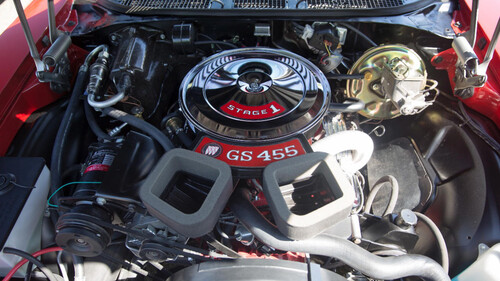
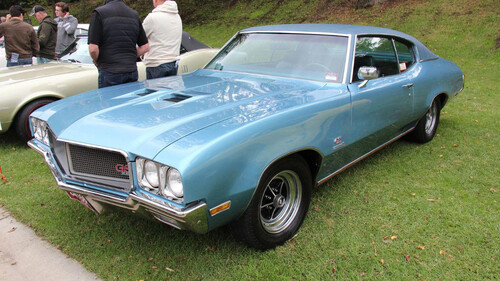
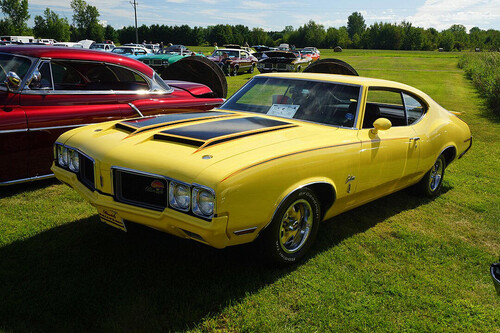
The 1970 Buick GSX Delivered More Power Than Buyers ExpectedThe 1970 Buick GSX arrived at the height of the muscle car horsepower wars with a spec sheet that already looked outrageous. Many buyers soon discovered that Buick had been conservative with its numbers, and the GSX was even more forceful than the brochures suggested. That gap between advertised output and real-world performance helped turn a limited-production option package into one of the era’s most mythologized street machines. More than half a century later, the GSX still stands as a rare case in which a brand known for quiet comfort built a car that could embarrass the loudest competitors. The story of how Buick’s engineers created a torque monster while marketing kept the official ratings in check explains why this one-year wonder looms so large in muscle car history. Buick’s unexpected muscle move By 1970, Detroit’s performance race was in full swing. Chevrolet had the Chevelle SS 454, Pontiac sold the GTO Judge, and Oldsmobile offered the 4-4-2. Buick, often associated with older, more affluent buyers, had already surprised the market with the Gran Sport line. The GSX package took that foundation and pushed it to an extreme that few expected from the brand. Built off the Skylark GS 455, the GSX option package transformed the car visually and mechanically. Buyers received a bold rear spoiler, front air dam, hood tachometer, functional hood scoops, and heavy striping that erased any hint of anonymity. Inside, the car retained Buick’s more upscale trim, which made the performance lurking under the hood even more startling to drivers who associated big power with bare-bones interiors. Central to the GSX identity was the 455 cubic inch V8. In standard GS 455 form it was already strong, but the Stage 1 engine offered with the GSX carried a hotter cam, better breathing, and revised carburetion. On paper, Buick rated the Stage 1 at 360 horsepower and 510 pound-feet of torque, figures that already put it among the most muscular production cars of its time. The torque king of 1970 Contemporary and modern analyses have emphasized that the GSX was not just powerful, it was a torque leader. Period tests and later technical breakdowns show that the Stage 1’s 510 pound-feet at a relatively low rpm gave it a distinct edge in real-world acceleration compared with many high-revving rivals. One detailed comparison of 1970 muscle cars has identified the Stage 1 as the only factory model of the era that produced more torque than the celebrated Chevelle SS 454 LS6, which was rated at 500 pound-feet, placing the Buick at the top of the heap for twist among showroom machines of its day, according to torque rankings. That advantage mattered on the street. While some competitors needed high revs and ideal traction to deliver their best numbers, the Buick’s broad torque band meant effortless thrust from low speeds. Owners reported that the car would surge forward with minimal throttle, and magazine tests recorded quarter-mile times that rivaled or beat more heavily hyped models. The GSX’s reputation as a torque king has only grown as those figures have been revisited and compared with factory literature from the period. Buick’s chassis engineers backed up the engine with hardware that could cope with the output. The GSX package added heavy-duty suspension components, quick-ratio steering, and larger anti-roll bars. Combined with the car’s relatively refined ride, the result was a muscle car that could cover ground quickly without feeling crude or nervous, which appealed to the more mature buyers Buick often attracted. Underrated horsepower and cautious marketing Where the GSX story gets especially interesting is in the gap between its advertised horsepower and what many testers and historians believe the engine actually produced. The Stage 1’s 360 horsepower rating has long been regarded as conservative. Several dyno-based estimates and period test results suggest that the real figure was higher, with some analyses pointing to output comfortably above 400 horsepower when measured with less restrictive accessories and exhaust. That understatement did not happen in a vacuum. Insurance companies were beginning to penalize high advertised horsepower, and manufacturers were aware that aggressive ratings could attract unwanted scrutiny from regulators. Buick, which had a reputation to protect as a builder of premium, comfortable cars, had extra incentive to keep the official numbers within a seemingly reasonable band. Understating the GSX’s true potential allowed the company to sell a very fast car without drawing the same level of attention that surrounded some rival models. The torque figure was harder to hide. At 510 pound-feet, the Stage 1 specification already pushed the envelope, and even cautious marketing could not disguise the car’s off-the-line ferocity. Some road tests recorded zero to 60 mph times in the low 6-second range and quarter-mile passes in the mid 13s, performance that aligned more with the behavior of a 400-plus horsepower machine than the brochure’s 360-horse rating. Design that broadcast intent Although Buick positioned itself as a more reserved brand, the GSX did not shy away from visual drama. The car initially came in two high-impact colors, Saturn Yellow and Apollo White, each paired with contrasting stripes that ran along the sides and over the trunk. The hood featured bold black accents and functional scoops that fed the big 455. A front chin spoiler and large rear wing gave the GSX a purposeful stance that set it apart from regular Skylark and GS models. Inside, the GSX balanced performance cues with Buick’s traditional comfort. Bucket seats, a center console, and full instrumentation were common, but the materials and detailing were closer to a luxury coupe than a stripped drag special. This blend of refinement and aggression set the GSX apart from rivals that often sacrificed comfort for straight-line speed. That combination also hinted at Buick’s broader strategy. The company wanted to reach younger buyers who craved performance while reassuring existing customers that they were still purchasing a Buick, not a bare-knuckle hot rod. The GSX became a rolling statement that the brand could do both. Production rarity and collector appeal Despite its performance potential, the GSX remained rare. The package was expensive, and Buick’s core audience was not as heavily invested in quarter-mile bragging rights as the customers flocking to Chevrolet or Plymouth showrooms. Production numbers stayed low, which has only amplified the car’s mystique in the decades since. Surviving examples, especially Stage 1 cars with original drivetrains and documentation, now command strong prices at auction and in private sales. Collectors prize the GSX not only for its scarcity but also for its unique position as a high-torque, luxury-leaning muscle car from a brand that did not typically chase street-racing glory. The perception that Buick underrated the engine has become part of the sales pitch, with many listings emphasizing the car’s real-world performance over the official specifications. Restorers and enthusiasts also value the GSX as a snapshot of a brief window before tightening emissions rules and insurance costs reshaped the market. The 1970 model year is often cited as a high-water mark for factory muscle, and the GSX sits near the center of that narrative as a car that pushed right up to the limits of what was feasible for a mainstream manufacturer. How the GSX reshaped Buick’s performance identity The GSX did more than deliver straight-line thrills. It helped reframe what a Buick could be. Before the Gran Sport era, the brand’s image centered on quiet, comfortable transportation for middle and upper-middle class buyers. With the GS and GSX, Buick showed that it could engineer genuine performance without abandoning its emphasis on refinement. That dual identity influenced later products. Throughout the 1980s, cars like the Grand National and GNX carried forward the idea of a Buick that looked relatively restrained but delivered serious speed. Those turbocharged models leaned more on stealth than the loud graphics of the GSX, yet the underlying formula of big torque, strong acceleration, and a more upscale cabin traced back to the 1970 experiment. The GSX also demonstrated that engineering teams inside a conservative brand could build something that matched or exceeded the output of more overtly sporty divisions. That internal competition across General Motors helped push performance development in subtle ways, as each division looked for an edge within corporate limits on displacement and shared platforms. Modern echoes in Buick’s performance efforts Buick has revisited the Gran Sport concept in the modern era, though never with the same raw excess as the GSX. A notable example arrived when the company introduced the Regal GS in the early 2010s. That car used a turbocharged four-cylinder engine rather than a big-block V8, but it carried the GS badge and targeted buyers interested in a more athletic Buick. Early previews described the Regal GS as a sport sedan with a 2.0-liter turbocharged engine, all-wheel drive, and performance tuning that aimed to reconnect the brand with its enthusiast heritage, as highlighted in coverage of the Regal GS. The Regal GS did not attempt to outgun rivals on sheer power the way the GSX once had. Instead, it leaned on chassis tuning, torque-rich turbocharging, and a more aggressive appearance package to signal its intent. In that sense, it echoed the GSX’s strategy of combining performance with comfort, even if modern regulations and market expectations demanded a very different technical approach. Other recent Buicks have featured sport-oriented trims and turbocharged engines, but none have matched the GSX’s singular focus on dominating torque figures. The company’s shift toward crossovers and electric concepts suggests that a direct spiritual successor is unlikely in the near term, which only enhances the 1970 car’s status as a one-of-a-kind effort. Why the GSX still fascinates enthusiasts Several factors keep the GSX at the center of enthusiast conversations more than fifty years after its debut. The first is its performance story. The idea that a Buick could quietly out-torque a Chevelle SS 454 and rival many of the most famous muscle cars of the era still surprises casual fans. Detailed retrospectives on the Stage 1 engine’s output and the car’s quarter-mile performance have reinforced that impression, with some analyses describing the GSX as the torque benchmark of its generation, a view reflected in modern looks back at the 1970 GSX. Rarity is the second factor. Limited production, combined with the attrition that affects all classic muscle cars, means that well-preserved GSX examples are seldom seen outside of shows and high-profile collections. That scarcity contrasts with the broader recognition of its performance, creating a mystique that more common models can rarely match. Finally, the GSX embodies a particular kind of American automotive optimism. It arrived at a moment when engineers could still prioritize power and speed with relatively few constraints. Within a few years, emissions regulations, fuel crises, and rising insurance costs would reshape the industry. The GSX stands at the edge of that transition, a car that pushed the big-block formula to its practical limit just before the rules changed. More from Fast Lane Only Unboxing the WWII Jeep in a Crate 15 rare Chevys collectors are quietly buying 10 underrated V8s still worth hunting down Police notice this before you even roll window down *Research for this article included AI assistance, with all final content reviewed by human editors.