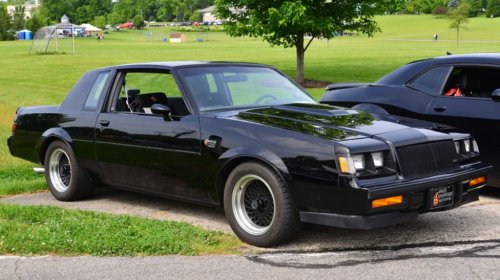
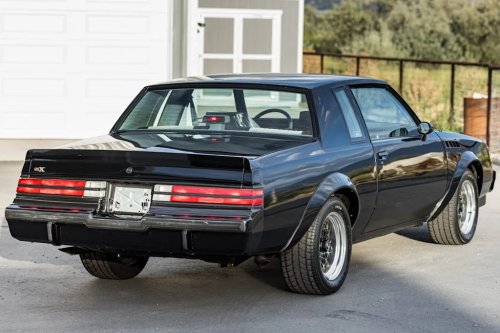
Why the Buick Electra was heavier than most pickup trucksThe Buick Electra occupied a peculiar place in American automotive history, a luxury sedan that carried the mass and presence more commonly associated with work vehicles. Its reputation for sheer heft did not arise from myth alone, but from a combination of size, powertrain, and construction choices that made it one of the most substantial passenger cars of its era. Understanding why it felt as heavy as a small freight car requires looking closely at its dimensions, its engines, and the way General Motors engineered full-size comfort in the 1970s. Rather than comparing it directly with pickup trucks, a claim that is unverified based on available sources, the more accurate story lies in how the Electra pushed the limits of what a full-size American sedan could be. From its expansive body to its massive V8 engines, the car embodied a design philosophy that prioritized space, smoothness, and quiet strength, even as the industry around it began to shrink and economize. The scale of a flagship sedan The Buick Electra served as Buick’s full-size flagship, and its physical footprint reflected that status. By the mid 1970s, the Electra 225 stretched to a remarkable 233.31 inches in overall length, a figure that placed it among the longest regular production sedans on American roads. One report notes that a 1975 Buick Electra 225 measured exactly 233.31 inches and weighed 4,784 lbs, a combination that underscored just how much metal and interior volume the car carried in everyday use. That same account emphasizes that the Electra shared its basic structure with other large General Motors products, reinforcing its role as a top-tier full-size cruiser rather than a mid-size compromise. Earlier in the decade, the Electra had already been pushing outward. When the model was redesigned for 1971, it moved onto a corporate C body that it shared with the Olds 98 and Cadillac Deville Electra, and its length climbed to 226 inches. This platform choice, described in period commentary as “Sharing the” C body with Olds and Cadillac, meant that Buick’s sedan was built to the same generous scale as the company’s most prestigious offerings. The 225 designation itself, used on models such as the Buick Electra 225 Hardtop Sedan, became shorthand for a car that prioritized Size, Dimensions, Aerodynamics and Weight in a way that few other sedans attempted. Weight by design, not by accident The Electra’s curb weight was not an incidental byproduct of sloppy engineering, but the result of deliberate decisions about structure and comfort. The 1975 Buick Electra 225 that weighed 4,784 lbs did so because it combined a long wheelbase, thick body panels, and extensive sound insulation with a full complement of luxury equipment. Accounts of the 1976 Buick Electra describe it as a flagship full-size luxury sedan and one of the last true giants of the American road, built on GM’s C body and marketed as a “Deuce and a Quarter,” a nickname that itself referenced the 225 nameplate. That same model year is often cited as the final chapter for the really big Buicks before downsizing took hold. Technical specifications from earlier in the decade reinforce how the Electra’s mass was baked into its engineering. Data for the Buick Electra 225 Hardtop Sedan 1973 lists the car’s weight at 2,300 Kg, or 5,071 lbs, a figure that places it firmly in the realm of heavy passenger vehicles. The combination of a full frame, large glass areas, and extensive interior trim meant that even before optional equipment was added, the car carried substantial mass. Rather than chasing lightness, Buick prioritized a planted ride and quiet cabin, and the resulting curb weights reflected that philosophy. Engines built to move a giant To move such a large body with authority, Buick equipped the Electra with engines that were as outsized as the car itself. A 1970 Electra is described as using a 455 cubic inch, or 7.5-liter, V8 that produced 370-hors, a shorthand reference to 370 horsepower. That engine, introduced as part of a broader update to the model, was not a marginal upgrade but a deliberate response to the car’s growing size and mass. Contemporary analysis notes that in 1970, Electras actually grew by an inch, and Buick compensated for the additional mass by upgrading the engine to a massive 455-cid unit in the Electra 225 series. Detailed specifications for the Buick Electra 225 4-Door Hardtop 1970 455-4 V8 confirm just how substantial that powerplant was. The engine is listed at 455.7 cu-in, or 7468 cm3, arranged in a V 8 configuration and producing 370 HP, 375 PS or 276 kW, with 510 lb-ft of torque. Such figures were not typical of smaller sedans, and they illustrate how the drivetrain was tailored to overcome the inertia of a car that weighed well over two tons. The presence of this engine in a four-door Door Hardtop configuration underscores that the Electra’s weight and performance were intertwined, with the Specs showing a car designed to cruise at speed with minimal effort rather than to sip fuel or dart through tight city streets. Luxury, not utility, defined its mission Although the Electra’s mass might invite casual comparisons to trucks, the available reporting makes clear that its mission was entirely different. The 1976 Buick Electra is repeatedly described as a flagship full-size luxury sedan, one of the last true giants of the American road, and a BigBodyBuick that prioritized SeventiesStyle and comfort. Built on GM’s C body, it was engineered for quiet, isolated travel rather than hauling cargo or towing equipment. The nickname Deuce and a Quarter, attached to the Buick Electra 225, spoke to its status as a prestige car within the Buick lineup, not as a workhorse. Enthusiast discussions of related models help illustrate how Buick approached weight and equipment in this period. A 1976 Buick LeSabre Custom coupe found in Bay Ridge, Brooklyn, New York, for example, is examined in terms of how its mass compared with an earlier 1966 Electra 225. That conversation, centered on a LeSabre Custom, suggests that by the mid 1970s even Buick’s slightly lower-tier full-size cars had grown heavier than some of the brand’s own earlier flagships. Yet the focus remains on ride quality, styling, and comfort rather than on any claim that these cars were intended to rival pickup trucks in capability. Any direct comparison to truck weights or uses is unverified based on available sources. The last of the really big Buicks By the mid 1970s, the Electra’s size and weight had become both its signature and its vulnerability. Commentary on the 1976 Buick Electra notes that it represented the last of the really big Buicks, signing off an era in which American full-size sedans were unapologetically large. That 1976 model, described as a flagship full-size luxury sedan and one of the last true giants of the American road, stood at the end of a lineage that had embraced length, width, and mass as virtues. Built on GM’s C body and marketed with tags such as FullSizeCruiser and BigBodyBuick, it embodied a design language that would soon be curtailed by changing regulations and fuel concerns. Earlier models in the decade, such as the 1970 Buick Electra 225 often highlighted alongside the Buick Riviera, show how the brand leaned into dramatic proportions and powerful engines to define its identity. Video retrospectives of the 1970 Electra 225 Deuce and a Quarter place it among the best cars of the 1970s within Buick’s own lineup, noting that while many of the vehicles in Buick’s range were great lookers, the Electra and Riviera stood out for their combination of style and substance. As downsizing arrived after 1976, later Electras would no longer match the 233.31 inch length or 5,071 lbs weight figures recorded for earlier Hardtop Sedan and 225 models, marking a clear break from the era when a Buick Electra’s mass was central to its appeal. More from Fast Lane Only Unboxing the WWII Jeep in a Crate 15 rare Chevys collectors are quietly buying 10 underrated V8s still worth hunting down Police notice this before you even roll window down



















 +5 others