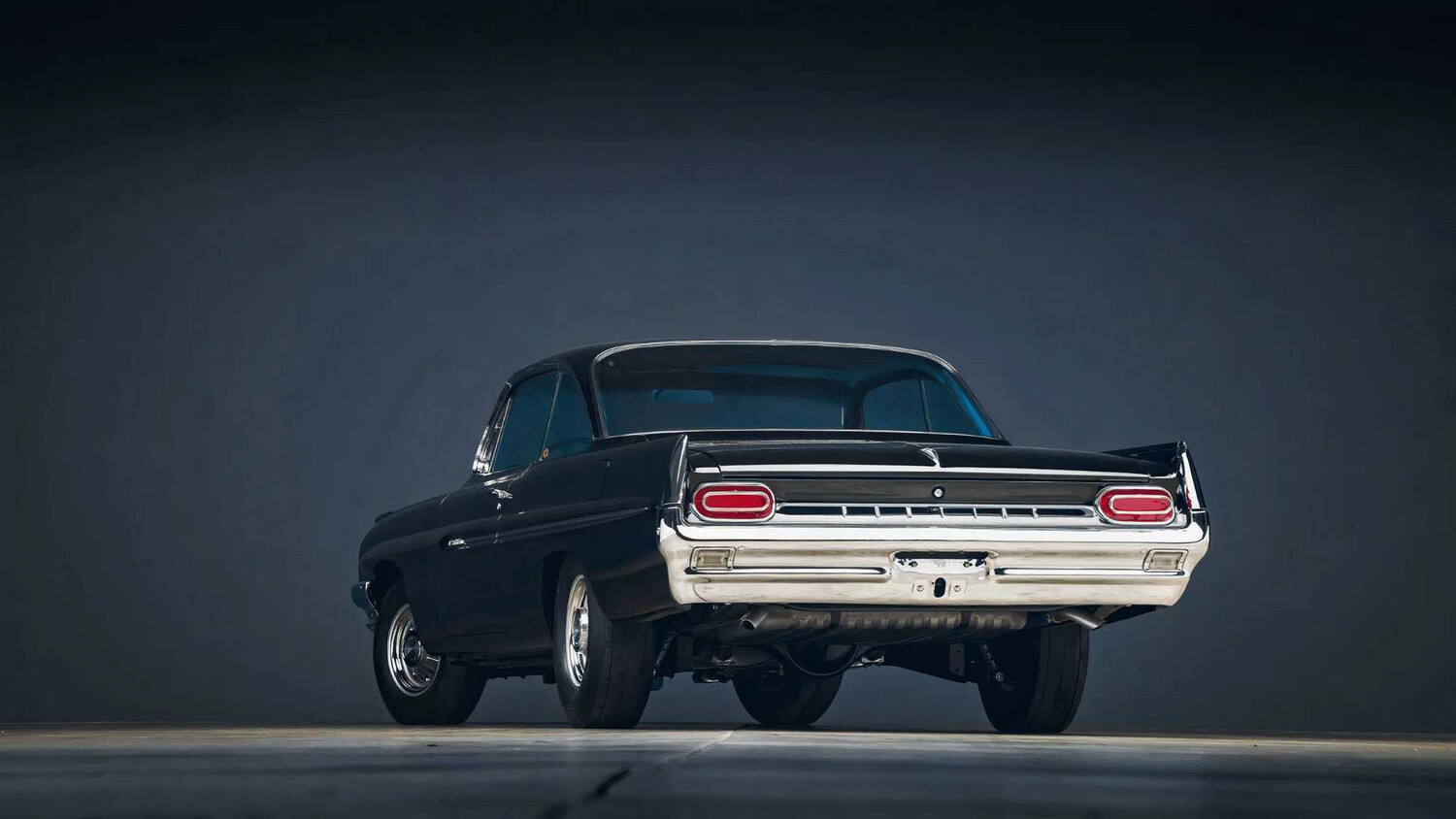
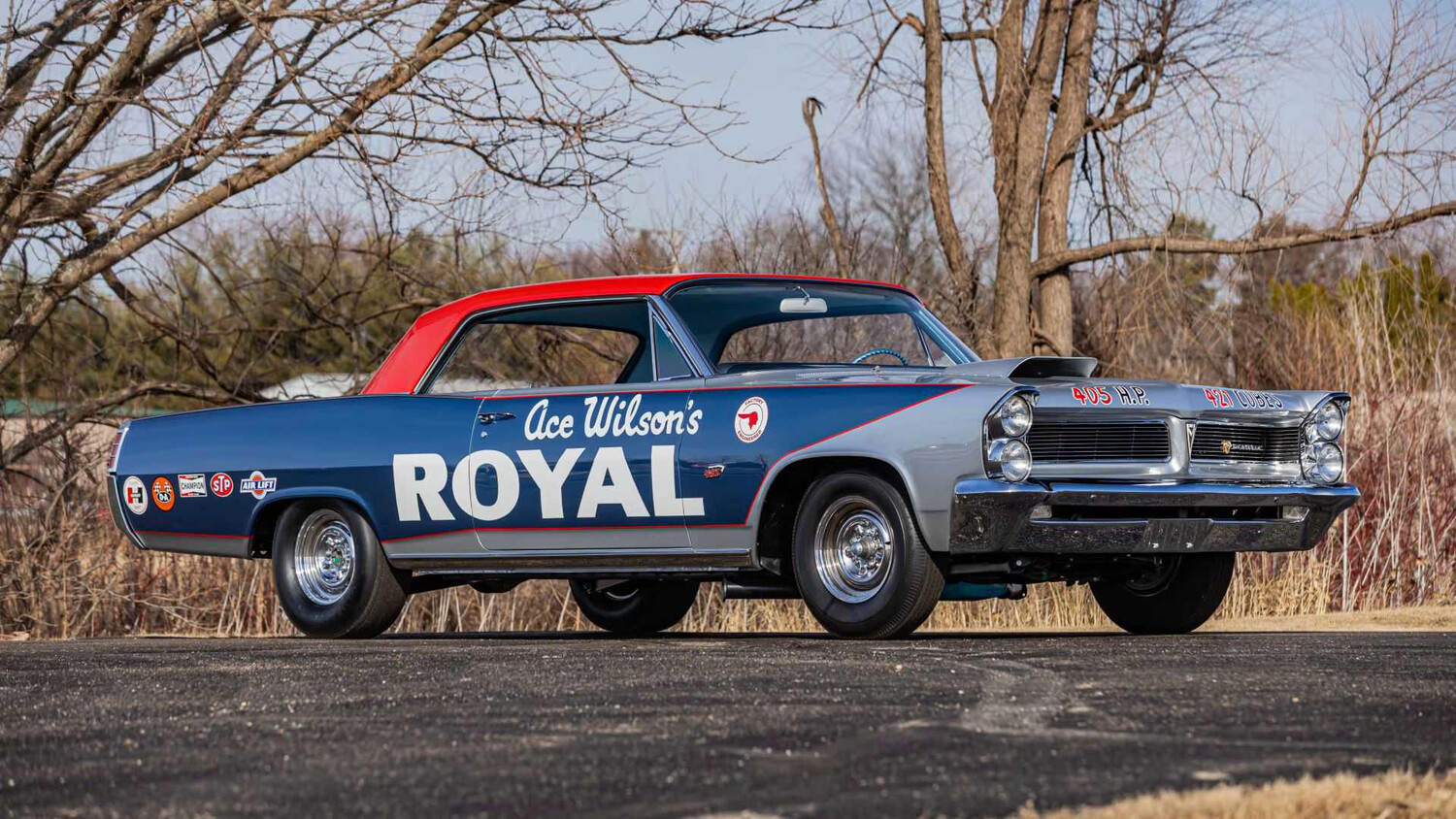
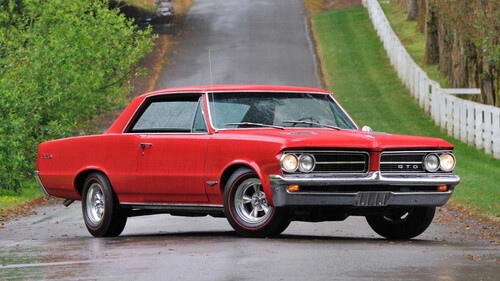
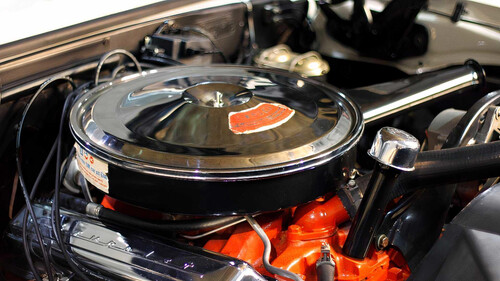
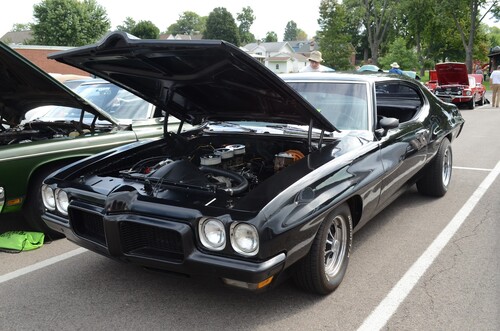
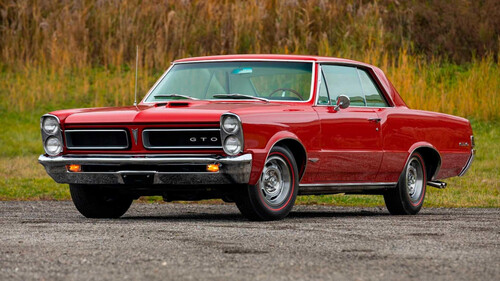
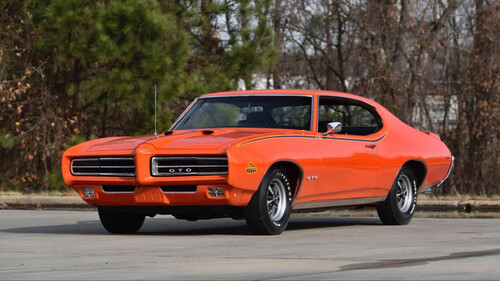
With a reputation as little more than an in-between brand to bridge Chevy and Buick, there was no indication whatsoever that Pontiac brand would one day champion the first great muscle car revolution. Most say that changed with the GTO, and they wouldn’t be wrong. But if you look a little deeper, there were hints and signs even years before. This is the story of a pre-GTO Pontiac that met the same muscle car standards. Pontiac: One Decade, Two Very Different Brands JOHN LLOYD via Wikimedia Commons At the turn of the 1960s, Pontiac underwent one of the most peculiar transformations in the history of the automobile. If you were to take a Pontiac engineer working for GM in 1959 and send them in a time machine a decade later, what they'd see would make their slack jaws hit the floor. Because right around the turn of the decade, something remarkable happened at Pontiac.Often, this shift is credited to The Real Story Of How John DeLorean Started The Everlong Muscle Car War In America fold in the summer of 1956. But that only tells a small part of the story, one that involves a classic case of an in-house corporate takeover. Alongside DeLorean were GM stalwarts Pete Estes and Semon "Bunkie" Knudsen, two hard-nosed veterans who provided the intellectual muscle DeLorean needed to enact his vision. Estes was a former Oldsmobile man, who oversaw the development and launch of the Rocket V8 engine. Meanwhile, Knudsen was the son of a three-star Army General and a former GM President in his own right.That kind of talent pool was no match for the old guard at Pontiac, often content selling re-badged Chevrolets with little more than thicker carpets, nicer upholstery, and a few token trim pieces to separate them. The takeover was complete by the turn of the 1960s, just in time for the drag racing revolution that preceded the muscle car movement on the streets.But how would this corporate shake-up lead to one of the fastest cars ever to leave a GM factory? A Proto Muscle Car, Forged Through Drag Racing Bring A TrailerIt wouldn't take long for Pontiac's new triumvirate to start shifting its ambitions as an automaker. Gone were the chromed “silver streak” motifs along the center of the hood, stretching to the back of the trunk. Famously, Bunkie Knudsen compared them to “old man suspenders.” Gone too was the antiquated, '50s-coded styling—the very thing making Pontiac look like a brand for pensioners.In its place was a combination of aggressive, wide-track styling and the famous "stacked headlights" for a contemporary look. But before that, OEM-sponsored drag racing was all the rage. By the early '60s, Pontiac had a production-ready foundation practically begging for the biggest engine they could shove under its hood.Its underpinnings were based on General Motors’ B body platform that formed the backbone of nearly half of its whole fleet. Per a 1963 report from the New York Times, 1963 was the second-most productive year for the American auto industry in history to that point. But Pontiac's answer to Chrysler's dominance would push the boundaries of what was legally sellable—and barely legal at all. Pontiac's Answer: A 421 Super Duty V8 in a Drilled Frame Via Mecum Auctions The B body was nothing short of an original ‘60s drag racing icon, frequently appearing at strips across the US even well before that decade. But an official Pontiac-sanctioned drag car? That sounds like heaven on a frame. Pontiac needed just that to counter the RB-block “Max Wedge” Chrysler V8s dominating sanctioned drag racing in the early ‘60s. With 425 horsepower at the crank, the Plymouth Belvederes, Savoys, and Sport Furys they found themselves bolted into were pulling mid-12-second quarter mile times.Did we mention this is the early 1960s? That’s an unfathomable amount of straight-line speed, and with Pontiac’s ambitious leadership, GM was primed to counter with the B body Catalina. At the time, the Catalina was like any other GM B body, a handy V8-powered runabout available with two or four doors, and as a hardtop, a convertible, or a station wagon. Sharing a lineage with the Pontiac Ventura and 2+2, most Catalinas left the factory packing a 389-cubic-inch, 6.4-liter V8 exclusive to the Pontiac family.But with the bored-out 421-cubic-inch (6.9-L) "Super Duty" Pontiac V8, things were much less pedestrian. Intended for drag racing, the Pontiac team requisitioned a small number of B body frames, cut 130 holes in non-load-bearing sections of the chassis. Such was the length Pontiac was willing to go in the name of saving weight, and with a alloy cast block, four-bolt main bearings, and a forged crankshaft, connecting rods, and pistons, the pairing of a "Swiss cheese" chassis to a total dragon of an engine was bound to be fireworks. Race Car Fast, But Not for Long Mecum With hero drivers like Arnie “The Farmer” Beswick and Jim Wangers at the wheel, these Swiss cheese Catalina Super Duty drag cars ran quarter mile times as low as 12.27 seconds in NHRA competition. In private testing under ideal conditions with prepped drag surfaces, times were as fast as a scarcely believable 11.7 seconds at 119 mph. That’s a modern-day BMW M3 or Charger Six Pack Scat Pack fast, at a time when the current US President was John F. Kennedy! It was utter madness, and it netted Jim Wangers first place at the 1963 NHRA US Nationals.Had GM not decided to cut the cord on OEM-supported drag racing on January 24, 1963, a small production batch of exactly 14 Swiss cheese Catalinas with drilled frames would've been followed up by something even faster and crazier. Instead, that one-time run carried on, racing under sponsorship financing even into the early muscle car years. Even while GM wanted absolutely nothing to do with them, these cars continued to maintain success at what many argue was the height of American drag racing’s popularity.Later, Swiss cheese Catalina drivers like Arnie Beswick moved on to forced induction with his supercharged 1964 GTO, called the Mystery Tornado, and his 1963 blown LeMans, the Tameless Tiger. The pair is credited with helping found the funny car discipline, and it all started with an unsuspecting Catalina. Ultra-Rare, and Ultra-Expensive Today, only nine Swiss cheese Super Duty Catalinas are accounted for. The others have long since been wrecked, or even worse, left to rot in sheds for decades. One example, which once called the iconic Royal Oak Pontiac dealership home, sold at Mecum’s Indianapolis auction in 2025 for an unreal sum of $742,500. Truth be told, even at that price, it’s probably an appreciating asset. Another example, owned by none other than Mickey Thompson himself and restored by the artisan restoration specialist Scott Tiemann, sold at Mecum Indy 2025 for a healthy $473,000.A handful of others, and we really do mean a handful here, remain in private collections, appreciating value in a way only atruly groundbreaking and special American caris able to. Aside from the blistering speed and the stories of the people who drove them, these Catalinas stack value like most folks stack pancakes, and their significance can be summed up by what they influenced later on. Would there be a GTO without a Swiss cheese Catalina? There’s an argument to be made that one was influenced by the other.