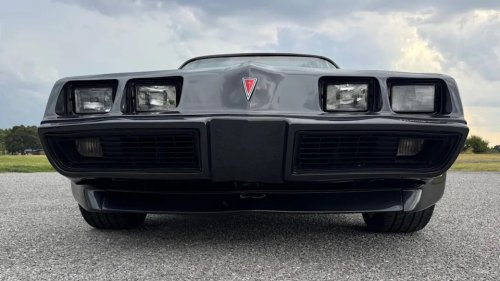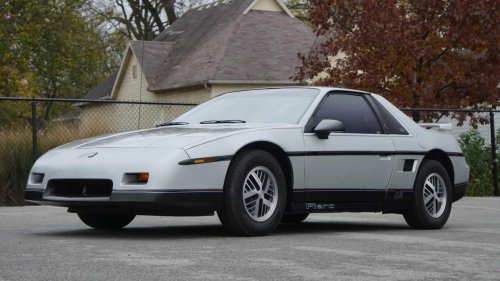
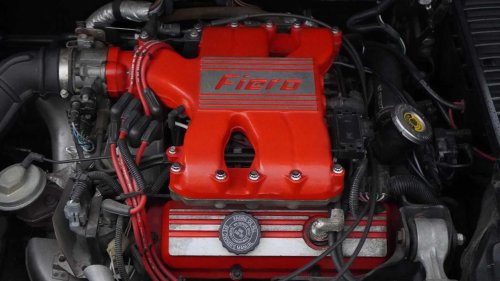
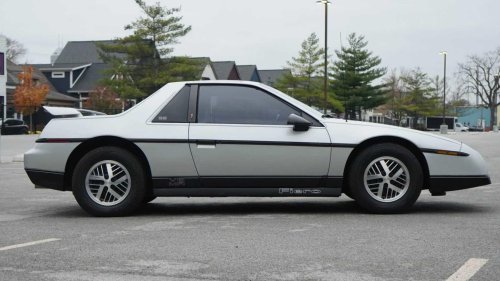
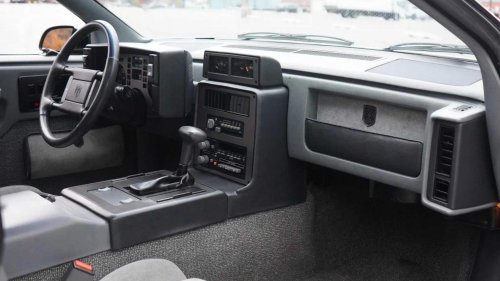
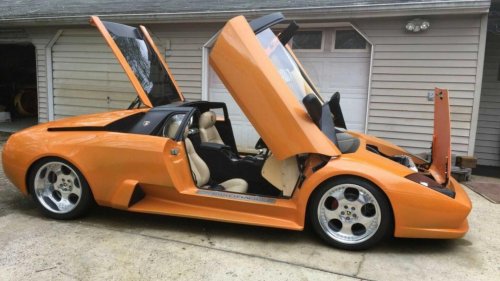
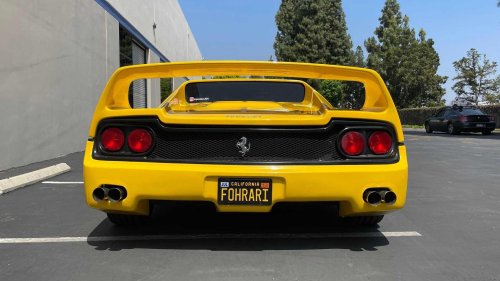
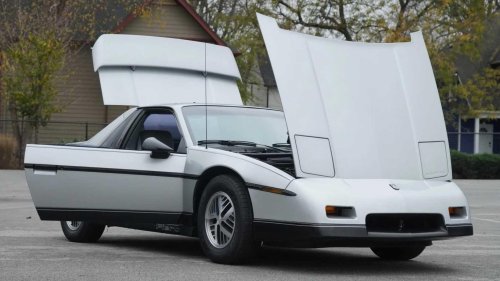
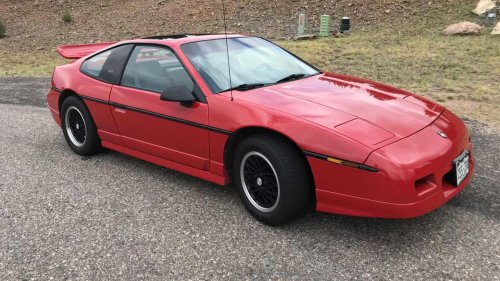



















Jump LinksThe Identity Crisis At Birth It Does Not Stop There...How much is a Fiero car worth?Why did Pontiac Fiero fail?Is a Fiero a Ferrari?Is the 1984 Pontiac Fiero a rare car?The Pontiac Fiero was meant to be America's competitor to the Toyota MR2. As the first mid-engine, rear-wheel-drive car from GM, it was also meant to change the sports car game for America. With so much pressure on Pontiac to get it right, where did it all go wrong?Here is everything you need to know about the 1984–88 Fiero car, from its shaky launch to becoming a platform for people to experiment on, quite literally. It's worth in today's market may surprise you!As with any used car purchase, your results may vary and CarBuzz advises used-car buyers to do due diligence before buying. What Kind Of Car Is The Fiero? The Identity Crisis At Birth 1984-1988 Pontiac FieroIn 1978, Pontiac came up with an idea to make a mass-produced mid-engine, rear-wheel-drive sports car code named 'Project Pegasus.'However, with the Chevrolet Corvette C4, GM already had a sports car in its stable. Also, if the Fiero turned out to be incredible, it could severely hurt the Corvette's sales.Despite the concerns from Chevrolet, in 1984, the Fiero was finally given the go-ahead - however, with some major changes to the car and its branding. The head designer, Hulki Aldikacti, was forced to make do with whatever he could find to put together the Fiero, so long as it was already being made by GM at the time. The Fiero's development was budgeted at $400 million, and Hulki's dreams of powering it with a V6 were downsized to an inline-four.The Fiero was marketed as an economical commuter that also happened to be rear-wheel drive and have two seats, which did not really work in its favor in the long run. Surprisingly, being underpowered at launch and a parts-bin hash of everything General Motors, the Fiero did well in terms of sales in its first year. Pontiac sold around 137,000 units, but sales quickly declined due to numerous factors. The introduction of a V6 engine in 1985, as originally intended, was expected to help the Fiero. However, by that time, the damage was already done. Pontiac Fiero: All But One Ingredient Needed For A Fast Sports Car pontiac fiero engineOne of the main issues with the Fiero was its engine. The LR8 inline-four "Iron Duke," especially, was prone to catching fire, ironic for a car called the Fiero - which may sound like fire in English, but actually means proud or bold. The main issue was the downsizing of the oil pan to fit components into the mid-engine layout. Being tightly packaged already led to overheating, and with smaller oil pans, less oil circulated the engine. To add insult to injury, GM never changed the oil dip stick to compensate for the smaller oil pans. So, owners never got an accurate oil measure reading to stop their car from combusting.The engine, when it did work, was severely underpowered as well. GM introduced the V6 with the Pontiac Fiero GT trim in 1985 to combat this issue. At the same time, the inline-four got a better five-speed Isuzu manual transmission to improve drivability and fuel economy. The V6 engines got a Getrang five-speed manual option in 1986, and it became the most desirable engine and gearbox combination. There was a three-speed automatic gearbox also on offer, but it was never sought-after or suited to the car. Looks Can Be Deceiving - Fiero Design Bring A TrailerThe early Fiero was plagued by cost-cutting, especially when it came to its aesthetics - exterior and interior. Usually, sports cars would get unique suspension setups, interiors, and components. The Fiero got none of that. It shared its front suspension with the Chevrolet Chevette and GM reused the suspension geometry and even the braking system. The rear suspension was adapted from X-body cars such as the Oldsmobile Omega and Chevrolet Citation. GM used front-drive suspension parts at the rear of the Fiero to further cost-cut. While the design was mostly unique, it still shared parts with other GM cars. The side mirrors, door handles and lighting components were all carry-overs, but that is not extremely out of the ordinary even today.pontiac fiero interior The interior was also a combination of everything GM had on sale in the 80s. The steering wheel and switch gear were shared with the Pontiac Firebird and Chevrolet Cavalier. The gauge cluster and HVAC controls were also found in the Pontiac Sunbird and Chevrolet Citation. Part-sharing is not uncommon on lower production volume sports cars. However, GM wanted this car to be mass-produced in relatively large numbers, which makes the severity of parts sharing a tactical cost-cutting method that ultimately backfired. There Is An Impostor Under The Fiero's Skin Pontiac Fiero Lamborghini You might be wondering what the Lamborghini Murcielago, Diablo, and Miura have to do with this write-up. Well, as it turns out, the Fiero became the perfect test bed for replica cars. They never needed to have the same performance as the car they were trying to imitate, which worked well for the Fiero. They just had to look the part. Keen-eyed viewers can already identify the plethora of differences between these remakes and the actual cars, but it just goes to show that people took the philosophy of a RWD mid-engine car, and made the Fiero look that much cooler for a fraction of the cost of the actual Italian supercar. It Does Not Stop There... Pontiac Fiero Ferrari F50 Replica Arguably the most famous brand plagued by the Fiero replica crisis was Ferrari. Usually, the level of convincing needed to prove that it is not Maranello designed is quite low. However, sometimes, like in the case of the 355 look-alike, it is harder to notice the faults. An Italian businessman tried his best to convert his Fiero into a budget 355, so much so, in fact, that the police had to carry out a background check to prove that it was registered as a Fiero. The Fiero Was A Car Destined To Fail Bring A Trailer While the Fiero sold well in its first year, that was the extent of its success. With dwindling numbers in 1985 all the way to 1988, Pontiac decided to end its production in 1988. A number of factors influenced this decision: The marketing around the car promoted it as a sports car, but it was meant to be an economical commuter with parts from non-sporty GM cars, such as the brakes and suspension. The flammable inline-four engine in its first year destroyed the car's reputation, even though the V6 and cooling changes later prevented the car from combusting. GM never wanted the car to rival the Corvette from its launch, and the parts-binning made sure it never felt as purpose-built and premium as Chevrolet. The mid-engine rear-wheel-drive formula would not be used on another mass-produced car until the C8 Corvette in 2019. The 1988 Fiero had solved most of the troubles of the early Fieros. While it was still far from being athletic, and it had a cheap feeling, it was still a viable competitor to the Toyota MR2. With its end in 1988, GM left us with the biggest "what-if" in recent history. What if the Fiero was still on sale till General Motors dissolved Pontiac in 2010? Would it have influenced other manufacturers to try the RWD mid-engine layout before 2019? Should You Buy A Fiero Today? Bring a Trailer So, even after all that the Fiero has endured, do you want to own a piece of automotive history? Lucky for you, most Fieros that come up for sale are the later 1987–1988 cars that have ironed out most of the reliability issues. The V6 manuals usually range from $8,000 to $12,000 in price. The inline-fours are significantly cheaper - closer to the $5,000 mark. On BringATrailer, a 1987 Pontiac Fiero with V6 and 73k miles sold for $8,200. An inline-four 1988 Fiero with 121k miles sold for $4,100.Entering into Fiero ownership is relatively inexpensive. However, we recommend spending that little bit more on the V6 if you intend on driving it. For show and display, a plethora of replica cars also come up for auction, with a varied range of costs depending on the handiwork of the maker of said replica. A Lamborghini Countach replica with a supercharger once sold for $17,750. FAQs How much is a Fiero car worth? The Fiero powered by the inline-four engine is worth around $4,000, while the V6 is worth around $10,000. Why did Pontiac Fiero fail? The Pontiac Fiero failed due to several factors such as reliability issues, marketing failures, overuse of shared parts with other brands. Is a Fiero a Ferrari? The Fiero was used as a base car to create replica Ferraris, but it was never a Ferrari itself. Is the 1984 Pontiac Fiero a rare car? The 1984 Fiero is the least rare out of its entire production cycle, with GM selling around 137,000 units.