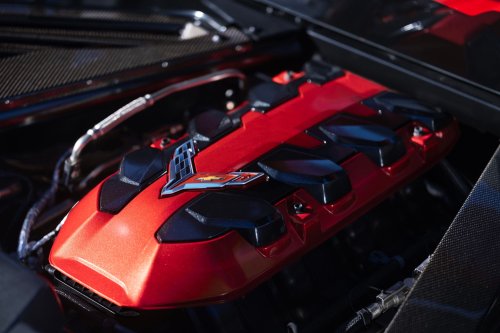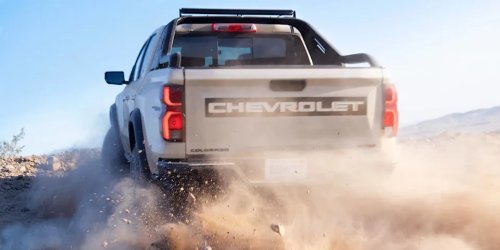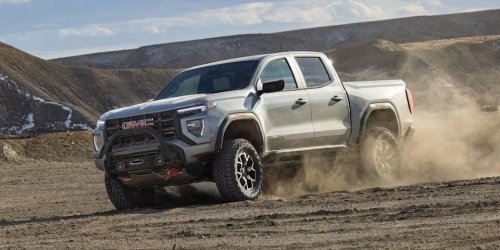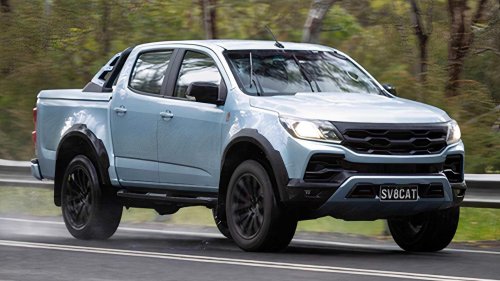
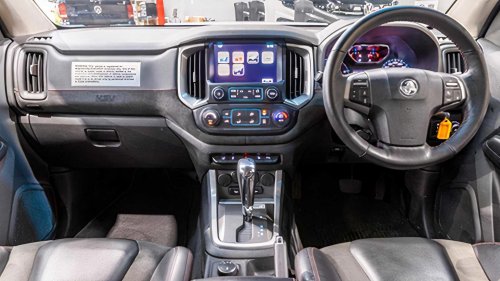
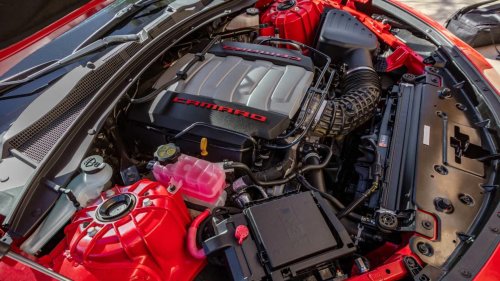
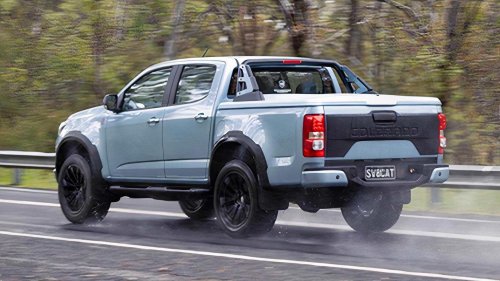
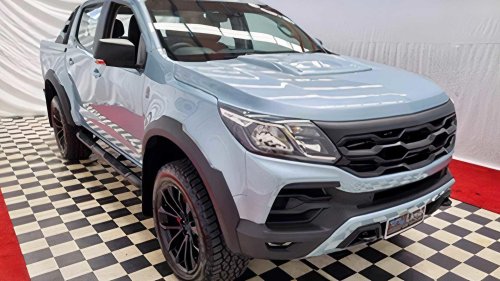
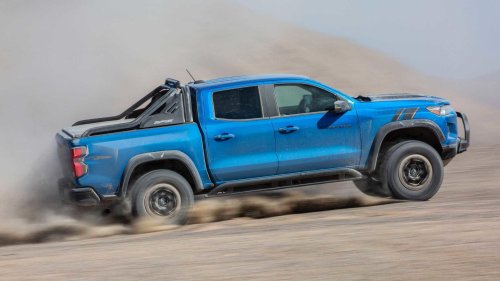















The trusty pickup truck is one of the most revered forms of vehicle in the United States, with various shapes and sizes of the category leading the way when it comes to the sales charts. They can be used as hardened work vehicles that spend all day transporting heavy stuff around, before then loading up the family and heading out to a charming restaurant in the evening. Plus, if you opt for something like a Ford Ranger Raptor, it can also embarrass serious sports cars at the lights.When it comes to performance-focused trucks, Ford has tended to lead the way with its Raptor range, which encompasses both the mid-size Ranger and the full-size F-150. Ford's biggest rival, General Motors, has tended to leave Ford to it when it comes to handing out extreme pace to its truck range. This very nearly changed in 2021, though these plans were ultimately scuppered at the last minute. GM's Australian Arm Developed A Raging V8 Truck Walkinshaw PerformanceThe story begins in 2020, when an Australian automotive performance operation named Walkinshaw Performance was working on a special version of the Holden Colorado, the Aussie-badged version of the US-spec Chevrolet Colorado. Walkinshaw had forged a strong partnership with GM over the preceding decades, with the outlet having run Holden's factory V8 Supercars team until 2017. The squad was run by Walkinshaw's Holden Special Vehicles subsidiary, which also developed a range of production cars for the GM-owned brand over the years.This continued even after Holden took its racing backing elsewhere, and eventually the company's ambitions of building a performance-focused version of the Colorado midsize truck were greenlit. Ford was set to release a second-gen version of its Ranger Raptor in Australia for 2022, so Holden and Walkinshaw spied a chance to beat the blue oval to market with its own 'Ute' offering.Named the HSV Colorado SportsCat V8, the machine was being developed and ultimately readied for a 2021 release. It was set to cost around 80,000 Australian dollars, around $60k in US currency, and would be equipped with a commanding V8 engine. Tragically, this never came to pass. GM Cutbacks Stopped The SportsCat Dead In Its Tracks Walkinshaw PerformanceAny chances of the Aussies getting a Ranger Raptor rival ended in early 2020, when GM announced that it was axing the Holden brand due to financial cutbacks. GM would instead begin offering Chevrolet vehicles in the country, which would be imported the same way its contemporary models were. The brand was largely left alone to develop its own Aussie-specific offerings until 2017, when financial troubles led GM to stop this practice, and instead order the brand to sell rebadged GM international models instead.At the same time, GM's Thailand factory that constructed the Colorados destined for Australia was sold off. As a result, the vehicle was removed from sale in the nation, with the Silverado full-size model the only pickup truck to survive the process. This meant the SportsCat project died along with it, ending any chances of seeing a production version reach showrooms. The worst thing is that, had it sold well, there could have been a chance it would have reached the US at some point. The SportsCat V8 Wasn't Any Old Powerplant Bring A TrailerWe reckon that the SportsCat would have had a decent shot at succeeding in the US due to its V8 engine, especially given its Ranger rival only had an EcoBoost V6 at its disposal.While the twin-turbocharged six-pot is undoubtedly a very capable powerplant, it's not a throaty naturally aspirated V8, is it? Yep, the SportsCat hid a 6.2-liter NA LT1 V8 under its hood, which was usually found powering the Chevrolet Camaro SS. It produced a commanding 460 horsepower in the Colorado SportsCat, which was five more than the Camaro due to using a performance exhaust featured on the C7 Chevy Corvette.This was also a stiff 55 more than the Raptor could muster. Mated to it was a 10-speed automatic transmission borrowed from the Camaro ZL1, which shared the engine's grunt through the Colorado's part-time four-wheel drive system.For when the go-faster juice was being channeled to the rear wheels only, a Helical limited-slip differential was on hand to prevent either wheel spinning up and throwing the power away. In testing, it was found that the truck could blast through the 60 mph barrier in comfortably under five seconds. The SportsCat Wasn't A High-Riding Sports Car Walkinshaw PerformanceWhile the SportsCat was graced with the awesome LT1 V8 from one of the most capable muscle cars in the world, Walkinshaw elected to take more of a sensible route when it came to setting up the truck. Rather than head down the path of a proper sports truck, the Colorado's underpinnings were largely left alone. Its front and rear leaf spring setup was retained rather than being replaced by a more capable multi-link suspension configuration, while the dampers were tuned to offer a softer ride to improve comfort.Keeping the leaf springs also preserved the Colorado's durability, which Walkinshaw favored over making it drive more like a true performance machine.It got an uprated braking system, though those who drove the prototype reported that the pedal feel wasn't particularly progressive, which took away from driver engagement. The steering also lacked feel, illustrating Walkinshaw's approach to building a traditional everyday truck, but with an insane engine pushing it along. Think of the SportsCat as more of a muscle truck, and you're pretty much on the money. One Lucky Owner Managed To Get Their Hands On One Lloyds AuctionsWhile most Australian drivers never got the chance to own a Colorado SportsCat of their own, one deep-pocketed owner managed to secure the only such example in existence. Following the cancellation of the project in 2020, Walkinshaw elected to auction off the only production-ready machine that it managed to get finished. Aside from being extremely rare as the only completed Colorado SportsCat, it was also prolific due to being the last vehicle ever produced by the HSV operation before its closure, making it a key piece of history.The truck was eventually sold in December 2021 for a price of $205,000, or around $145,000 in US money. Considering the vehicle would have retailed for $80k had it made production, and that it was the only one of its kind ever produced, it's not a bad deal. Give it a couple of decades, and it's likely the last HSV machine ever made will be worth a fair chunk more than that. Americans Eventually Got A Taste Of A Performance Colorado ChevroletWhile it's a shame that we never got to taste the fruits of a V8-powered Colorado, Chevy at least does offer a more performance-focused version of the Colorado stateside. Named the ZR2, this mid-size truck is angled at being an off-road specialist, as opposed to taking care of business on terra firma. Its turbocharged 2.7-liter inline-four engine doesn't provide the same level of drama versus the LT1 V8 that was set to be used in the SportsCat, but its 310 hp and 430 lb-ft of torque output is more than enough to keep it moving at pace through the great outdoors.Alongside this, the Colorado ZR2 gets a range of extras that further boost its chances when taking on rougher terrain. A three-inch lift kit affords it crucial extra ground clearance, while a high-performance suspension setup – including Multimatic-developed DSSV dampers – is also included for the price. The latter components provide amazing off-road compliance due to the cylindrical sleeves they use, which can better regulate the flow of fluid than traditional dampers. This helps prevent the truck from bottoming out on hard landings, while also preventing the dampers from overheating and becoming less effective.In addition, the ZR2 gets tougher plastic body moldings, which can better defend the body from impacts as you go about winding up Mother Nature.With a base MSRP of $50,700, it's also a damn sight cheaper than an American-bound V8 Colorado would have been. Still, if Holden and Walkinshaw managed to get an LT1 V8 working sweetly under the hood of a Colorado, there's no reason why some independent performance operations in the US couldn't produce their own version...Sources: Holden.