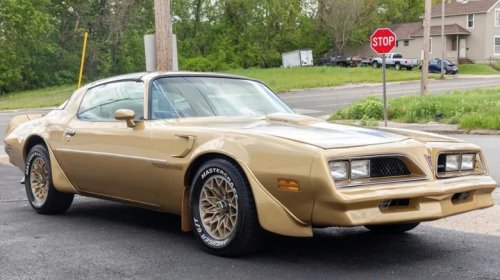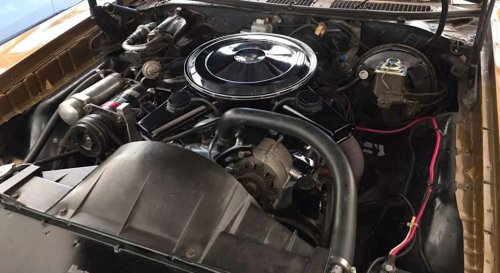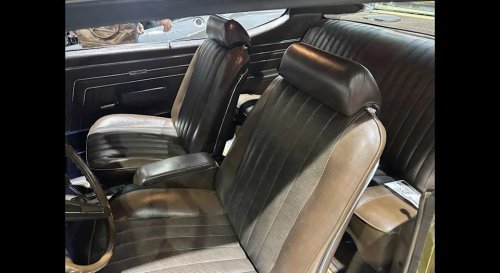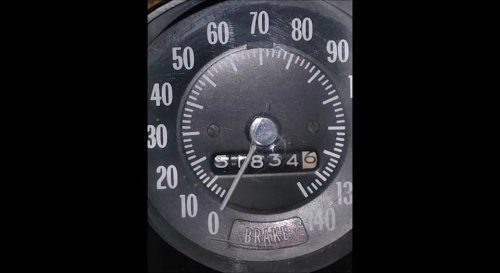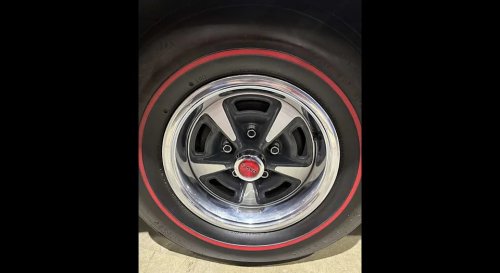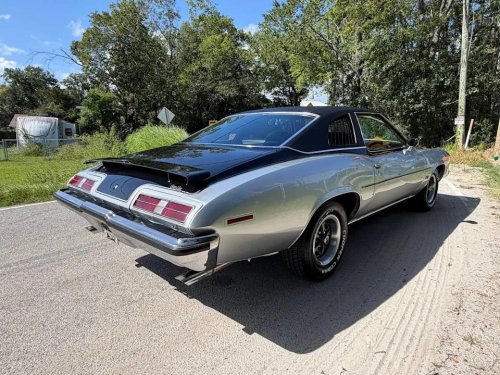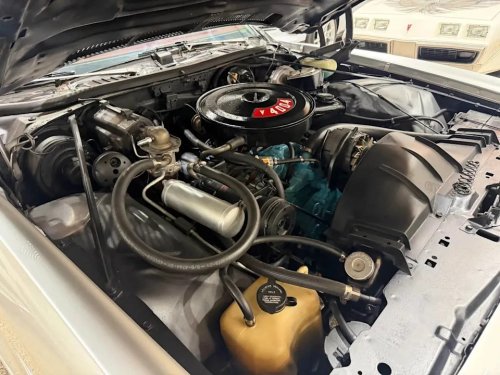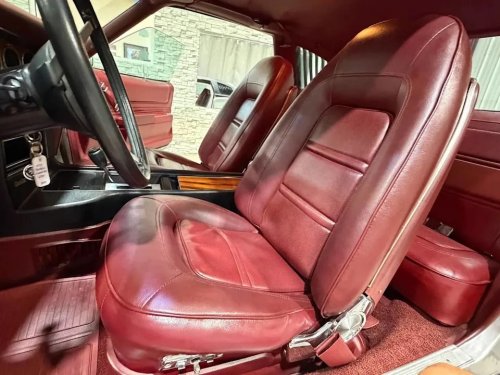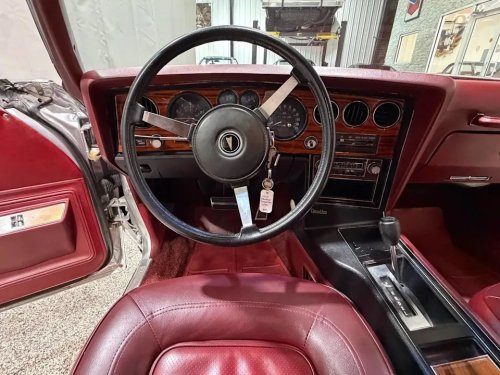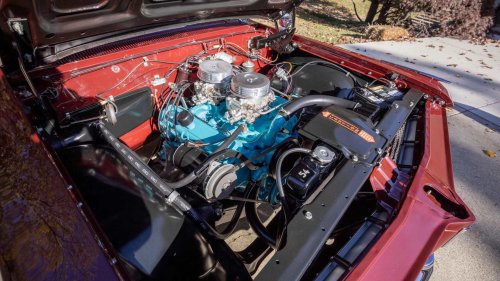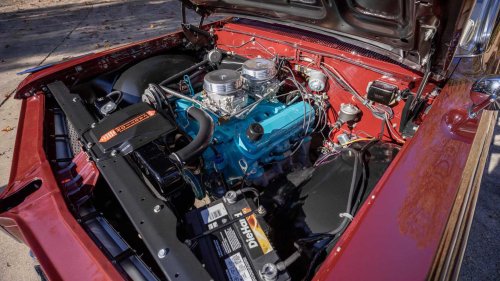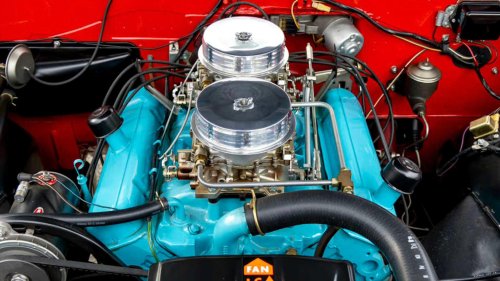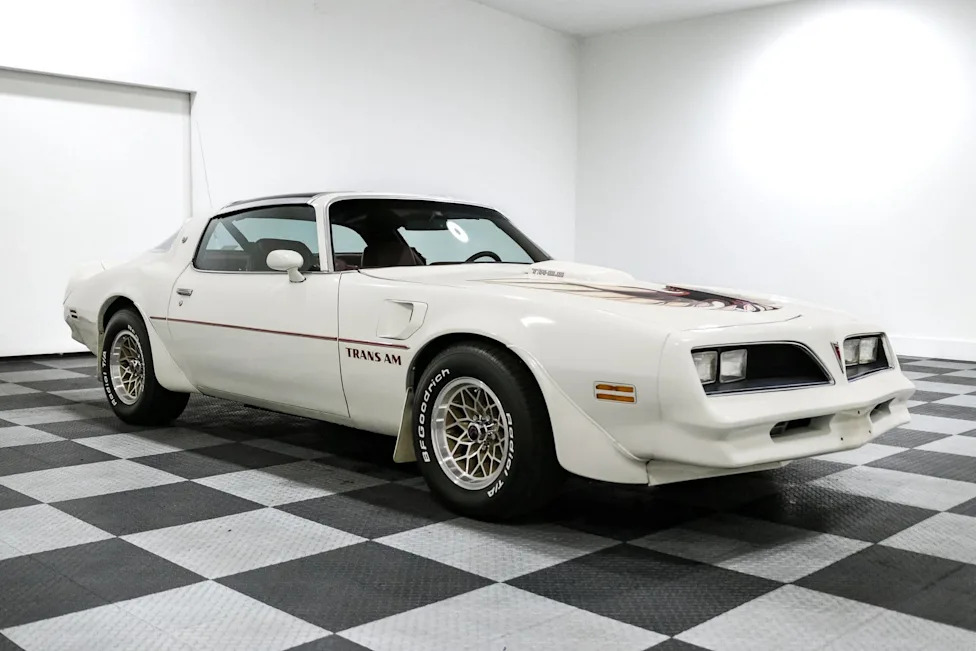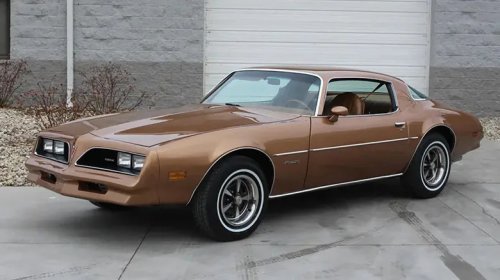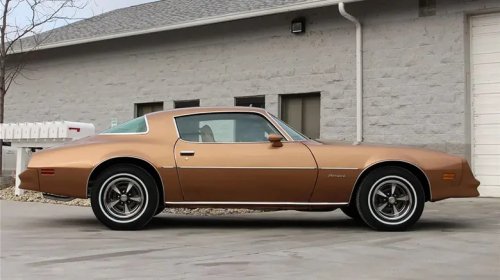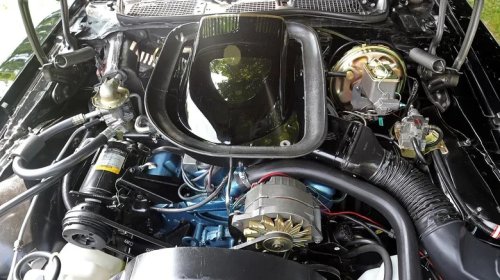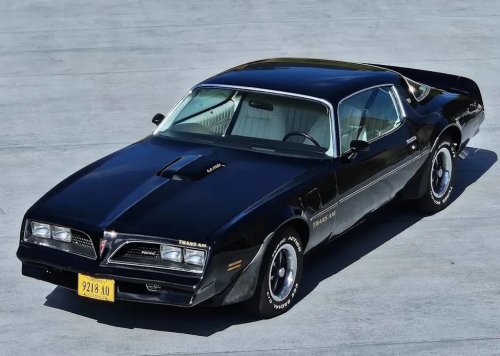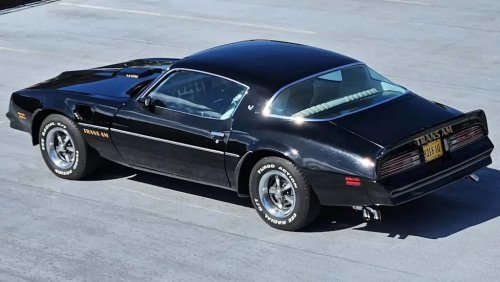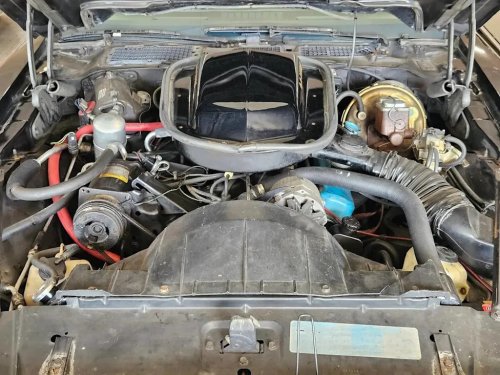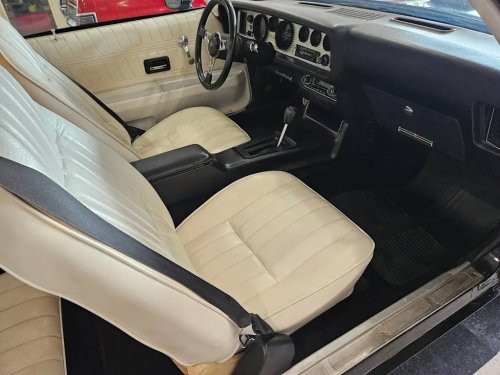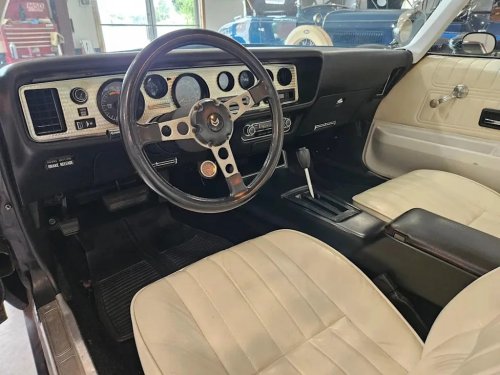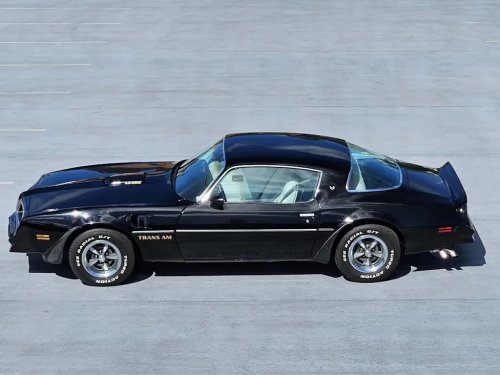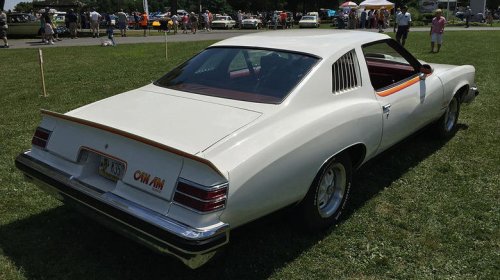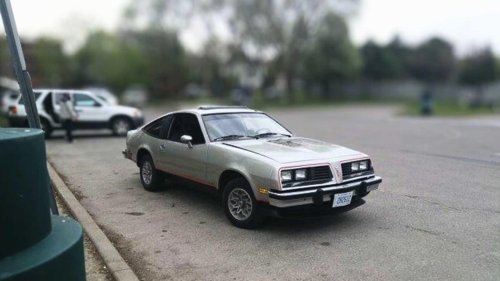
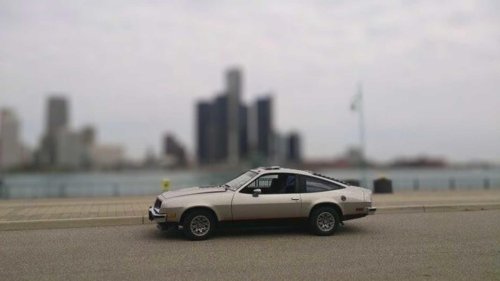
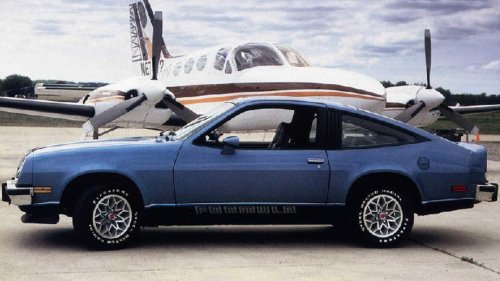
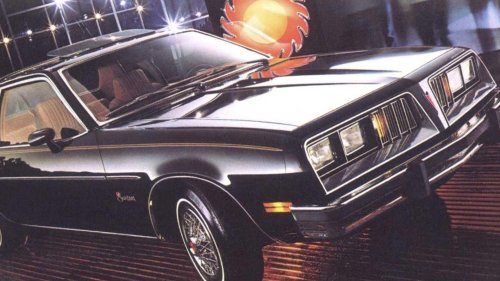
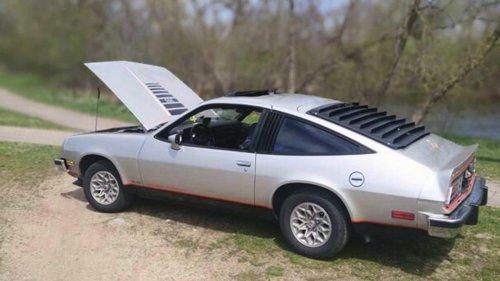



















The 1970s and 1980s were a weird time for the American auto industry, given that the government and public alike were growing fed up with the V8. While it represented power and excitement in the 1980s, events like the global oil crisis and the ever-growing concern over the ozone layer meant attitudes toward them soured in the 1970s. By the end of the decade, the vast majority of brands were transitioning towards smaller engines, threatening the very existence of the configuration.This phenomenon was illustrated by the Pontiac Sunbird, which received a V8 option for its 1978 model year. The option was set to be short-lived though, with General Motors soon electing to tread down a different path. Chevy's 5.0L V8 Was Brought Along To Add Some Verve To The Sunbird EG Auctions The Pontiac Sunbird was unleashed in 1975 as essentially a rebadged version of Chevrolet's forgettable Monza, with the Sunbird positioned as the sportier version of Chevy's offering. Designed to take on the likes of Ford's venerable Mustang, the Sunbird was aimed at those who wanted something that looked pretty cool, but also didn't cost the earth. This more affordable approach was evident from the engines made available when the car went on sale in 1976, with a small naturally aspirated inline-four being standard, and an NA V6 being the performance option.Feeling the car needed a bit of extra spice sprinkled over the top, Pontiac decided to knock on sibling Chevrolet's door and ask very nicely to borrow its 5.0-liter V8. It accepted Pontiac's request, and the engine started being offered as an option for the 1978 Sunbird. The coupe and hatchback versions of the model were equipped with the powerplant, with the station wagon version retaining the two smaller engines as the only dishes on the menu. The V8 Didn't Last Long EG Auctions Ultimately, buyers were faced with a blink-and-you'll-miss-it scenario, as the V8 was discontinued after just two-and-a-bit years on sale. The second-generation Sunbird made its debut in 1982, and General Motors elected to go down a different road when it came to which engines would power its range. As a result, the V8 could only be had under the hood for two years. This was a letdown for those who longed for the days of having a chunky V8 shoehorned into a smaller car. Especially as the engine boosted the performance of the machine by a decent margin. The V8 Brought Some Needed Muscle To Pontiac's Subcompact Coupe PontiacWhile the range-topping V6 engine of the Sunbird's first two years on sale could only bring 110 horsepower to the table, the V8 managed to boost things considerably. Though, perhaps not quite as much as you'd think, with 145 hp being the final figure. An extra 35 hp doesn't seem huge considering the extra size of the engine, but in reality the addition of the V8 soundtrack also helped enhance the entire experience. The vehicle was made available with either a three-speed automatic or four-speed manual gearbox, which channeled the V8's might to the rear wheels.To add further value to the more expensive V8 option – which pushed the price of the Sunbird worryingly close to its Firebird big brother – Pontiac beefed up its underpinnings. The V8 Sunbird Handled Better Than Its Lighter Counterparts Pontiac Of course, shoving a big V8 out front has a bit of an effect on a car designed to take lighter four or six-pot offerings. The Sunbird was thus equipped with beefed-up suspension to help keep it on the straight and narrow, while the rear arrangement was upgraded to a torque-arm format. This reduced squat under acceleration, and helped the Sunbird put its new-found grunt onto the road without turning to face the opposite direction.Alongside these upgrades, the V8 Sunbird was also graced with stronger front and rear anti-roll bars, which helped induce a bit of extra responsiveness when the car was pushed. That said, you'd still have been better off opting for the Firebird if you wanted a true performance Pontiac, seeing as it was designed to take the full-fat V8 options in the first place.In addition, the Firebird was also much cooler, and not that much more expensive in the grand scheme of things. The Era Of Smaller Engines Saw The V8 Ripped From The Sunbird ToyotaUltimately, the changing US automotive industry meant that the V8 option was not long for this world on the options sheet of the Sunbird. Japanese manufacturers like Toyota and Mitsubishi started to swarm the US market as the 1980s got underway, with the marques finding success by offering smaller and more efficient four and six-cylinder powerplants with its cars. The American brands quickly realized that this was the way forward, at least while V8s remained heavy, inefficient and relatively underpowered compared to what the Japanese brands were extracting from their smaller units.Pontiac dove fully into the Japanese approach to making an affordable subcompact machine, and ditched both the V6 and V8 options when the time came to introduce the second-gen Sunbird in 1982. While the NA I4 engine remained as the entry-level choice, the more powerful models now came sporting turbocharged I4s. Not only were they much lighter than the late 1970s V8, which lowered the total weight of the car alongside improving weight distribution, but they also gave nothing away from a power standpoint.The unit kicked out 150 hp, five more than the V8 managed. In addition, the unit was also more fuel efficient and cheaper to maintain versus the V8, leaving the eight-banger completely in the shade. In a cheaper model like the Sunbird, these elements simply made the turbo I4 option a much more realistic and convenient option. Good Luck Finding A V8 Sunbird On The Used Market EG Auctions Of course, Pontiac wouldn't have ditched the V8 Sunbird if it was selling like hot cakes, but this was far from the case. It's thought that production numbers for the vehicle never broke into the four-figure range, but the relative lack of performance and style when compared to more prolific muscle cars has done little to push its value through the roof. Examples that do come up rarely eclipse the $10,000 mark, though particularly good ones with low mileage on the odometer can attract more than this.You'll have to really do some digging to track one down though, as a result of their extreme rarity. Still, if you are lucky enough to find one in decent shape, you'll save plenty of cash when compared to a Firebird of the same vintage. Classic.com reports that the average sale price of the model currently stands at $54,476. That said, you'd at least be able to make use of that fake Smokey and the Bandit mustache you've had hidden away in the drawer for the last 10 years.Sources: Pontiac.