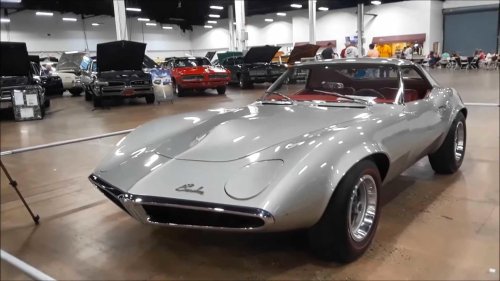
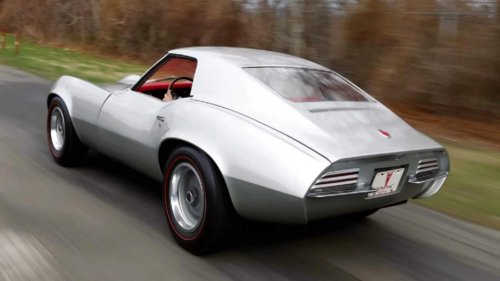
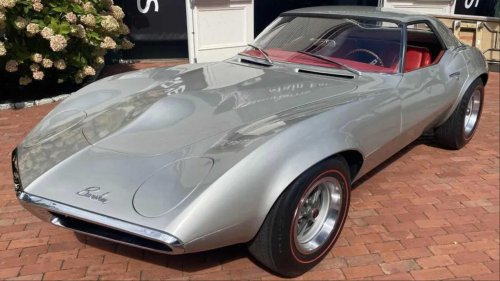
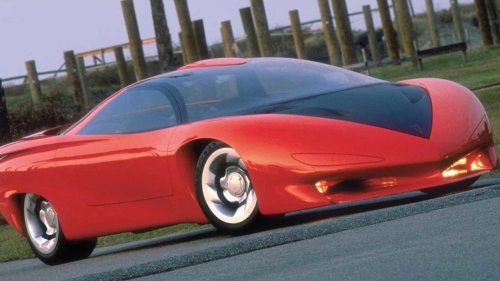
In the mid-1960s, General Motors found itself facing an unexpected internal battle. Pontiac, eager to redefine its image, quietly developed a sleek and powerful sports car designed to rival, or even surpass, Chevrolet's iconic Corvette. The project showcased cutting-edge styling, nimble handling, and an approachable price point. This formula was meant to captivate younger drivers and challenge the automotive status quo.Yet this promising challenger never reached the showroom. GM's own corporate politics swiftly intervened, determined to protect Chevrolet’s flagship sports car from internal competition. The ambitious project was abruptly shelved, leaving enthusiasts wondering what might have been if Pontiac’s sports car had gotten the chance to truly test the Corvette's dominance.Despite its cancellation, the car’s legacy quietly influenced GM’s future models, leaving hints of its groundbreaking design scattered across subsequent decades of iconic sports cars. DeLorean’s Dream For A Corvette Challenger via Car Show Reporter (YouTube) In the early 1960s, an ambitious young engineer named John Z. DeLorean quietly set his sights on a daring goal: to create a sleek, two-seater that could challenge the Corvette. As Pontiac’s rising star, DeLorean spearheaded the XP‑833 project, commissioning two prototypes in 1964: one hardtop powered by an overhead-cam inline-six, and a convertible packing a V‑8 under the hood.These cars were built to be nimble, affordable, and visually striking, incorporating performance and personality to take on Chevy’s halo car. Designers aimed for style that rivaled European roadsters, drawing inspiration from GM’s Corvair Monza GT concept and echoing sleek cues that would later grace the C3 Corvette.Barchetta/Youtube The fastback hardtop variant featured pop-up headlights and a sweeping silhouette, showcasing Pontiac’s design flair. Underneath, the innovative steel perimeter frame bolted to a fiberglass body demonstrated Pontiac’s intention to offer a fresh, efficient platform alongside established GM offerings.Pontiac’s vision was clear: give younger buyers a stylish, affordable entry into the two-seat sports car world. DeLorean believed the Banshee could reclaim Mustang-bound clientele for GM and reinforce Pontiac’s reputation for performance. But in pushing boundaries, he unwittingly nudged into sacred Chevy territory, pitting Pontiac’s up-and-comer against GM’s performance flagship, the Corvette. Styling That Pre-Empted The Corvette C3 At first glance, the Banshee looks eerily familiar, as if the 1968–1982 Corvette was simply delayed five years. That’s not far from the truth. Automotive historians notice its aggressive “Coke bottle” curves, hidden headlights, and muscular fender lines, all hallmarks of the 1968 Corvette.Its designers credited much of the inspiration to the 1963 Corvair Monza GT concept, but some details, like slotted taillights, would later reappear on Pontiac’s Firebird. The Banshee was never a copycat; it helped define a styling era.More than aesthetics, its engineering choices forecasted future Corvette technologies. The hardtop’s removable roof panel hinted at later Stingray conventions, while its lightweight perimeter frame kept mass in check. Pontiac was signaling a forward-looking design philosophy that combined European finesse with American grit, though chores, like manual brakes, remind us this was a mid-'60s prototype, not a showroom-ready supercar. Pontiac Banshee Fun Facts John DeLorean would later launch his own car company and become famous for the DMC-12, thanks in part to its appearance in Back to the Future. While at Pontiac, he championed the Banshee as a pure sports car for younger buyers.Despite its good looks, the Banshee borrowed many components from other GM models. The inline-six came from the Tempest, and the Corvair influenced the independent suspension setup. This helped keep costs down for potential production.Pontiac built just two prototypes of the original XP-833: one coupe with an inline-six and one convertible with a V8. Both were nearly scrapped but survived thanks to Pontiac engineer Bill Collins, who hid them in storage. Punchy Engines And A Lightweight Design HemmingsPontiac set out to balance affordability and fun, using parts bin engines to keep costs predictable. The inline-six hardtop featured a 230 ci overhead‑cam unit producing 155 hp, respectable for a car weighing under 2,300 lb. That weight-to-power ratio promised sharp acceleration and nimble handling without resorting to expensive kit. Meanwhile, the convertible Banshee wore a Pontiac 326 ci V8, sending around 250 hp and 333 lb-ft to the rear wheels through a 4-speed manual transmission.Even the six-cylinder version could keep up with C3 Corvettes of the era, yet come at a lower price point. Word is DeLorean wanted to add a 421 ci V‑8 option down the line, but Pontiac held that back to avoid overshadowing Chevy’s flagship.Pulling together proven GM hardware from the Tempest and Corvair, and coupling it with fresh suspension tuning and lightweight chassis, Pontiac had concocted a compelling sports car. The Banshee’s drivetrain layout hinted at something nimble and exciting, very much in the spirit of road-driving enthusiasts. But all that promise came to a halt before buyers even knew what they’d missed. Here's Why Chevy Pulled The Plug Deep within General Motors, a strict unwritten rule reigned: don’t steal thunder from the Corvette. When Pontiac’s XP‑833 prototype circulated among execs, word reached Chevy’s boardroom, and panic set in. The Corvette had become GM’s halo car, and cannibalizing its image or sales was out of the question.Hot Rod Magazine recounted how GM brass, especially Chevy leadership, swiftly pulled the plug. With mounting rumors that Banshee would bite into Corvette sales, the project was quietly but firmly nixed in 1965 . A clay model even got sent to Chevy and influenced the C3 Stingray, but no further development occurred under Pontiac’s banner.In a final twist, Pontiac engineer Bill Collins rescued both prototypes from the crusher and hid them in storage. That act preserved the Banshees as relics of a divided GM, one where corporate politics overrode product promise. Chevy ultimately steered Pontiac toward the pony‑car route, birthing the Firebird and Camaro, not two-seaters. How The Banshee’s DNA Lived On PontiacAlthough the Banshee never reached dealerships, its DNA seeped into the automotive mainstream. Design cues like pop-up headlights, dramatic contours, and taillights found their way into the Firebird, Camaro, and Corvette C3 . Many credited Pontiac’s engineers with inspiring an entire generation of GM’s mid‑century sports cars.The term “Banshee” lived on too. Over the decades, Pontiac revived the name on concept cars (Banshee II–IV), each showcasing advanced styling and tech concepts that echoed the bold spirit of XP‑833. Even the 1988 Banshee IV foreshadowed Firebird interior and exterior features. Pontiac’s design team clearly treasured their fastbacks, and kept their legacy alive in subsequent prototypes.Today, surviving Banshee prototypes are automotive legends and occasionally appear at auctions or in private collections. One hardtop model surfaced in 2024 through Hemmings with an asking price north of $1 million, but it didn't sell. Enthusiasts look upon them as “what-if” masterpieces, cars that might have reshaped Pontiac’s identity, but ended up as museum pieces instead.Pontiac’s Banshee reminds us that innovation often runs smack into company politics. DeLorean’s dream embodied style, performance, and ambition, yet GM’s internal hierarchy forbade any threat to the Corvette. Still, the Banshee’s influence echoes through Corvette C3 curves, Firebird styling, and the daring that defined Pontiac. A forgotten sports car? Absolutely. But a nearly Corvette‑toppler? Just ask those million-dollar prototypes hidden in history.



















 +19 others