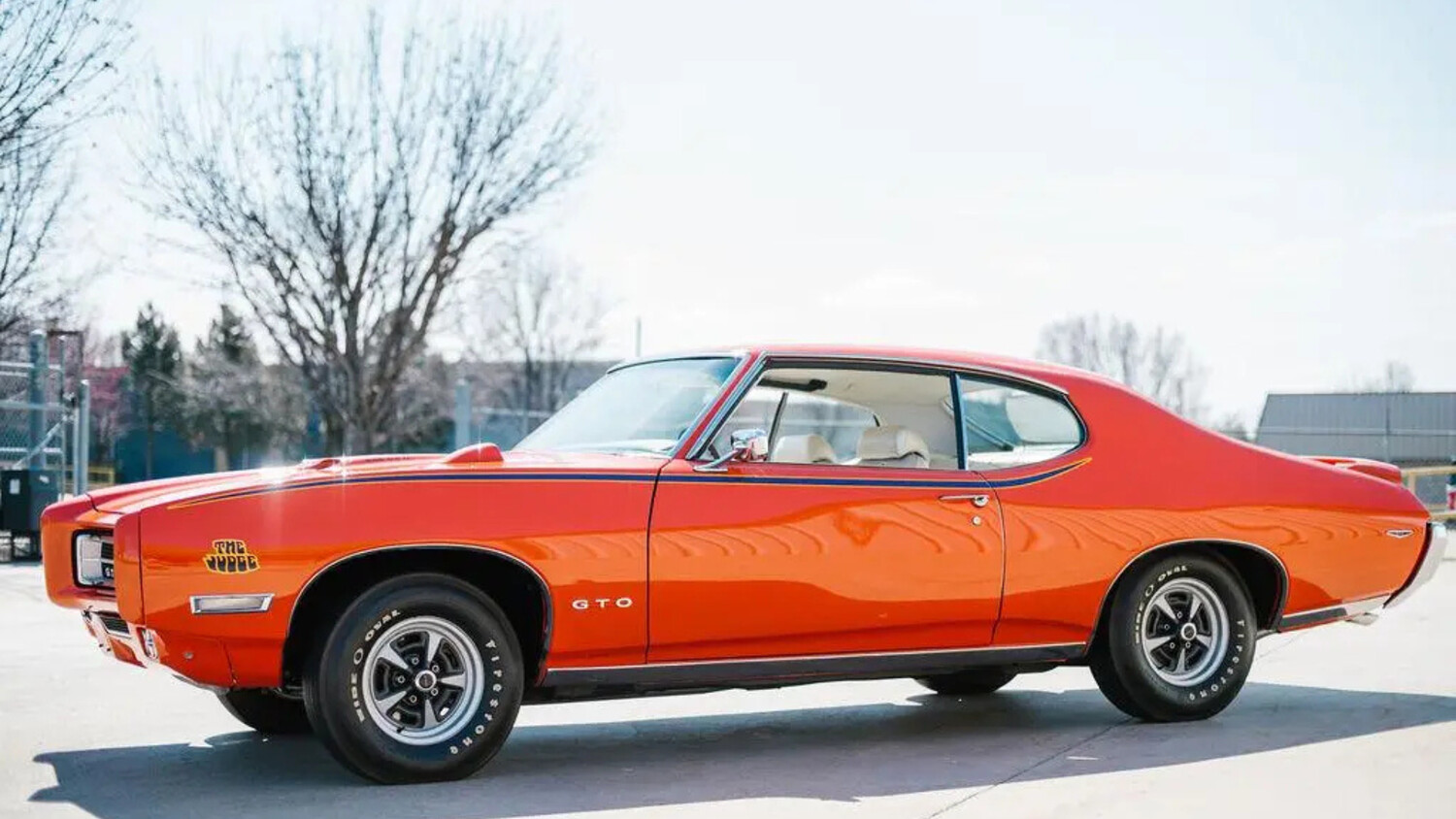
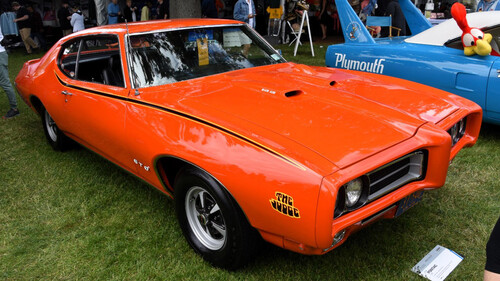
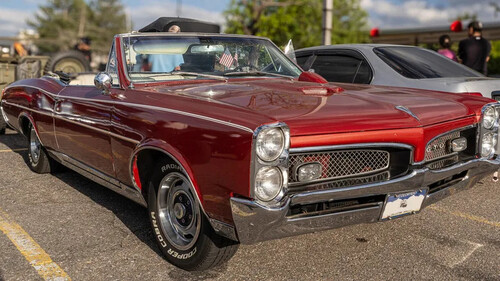
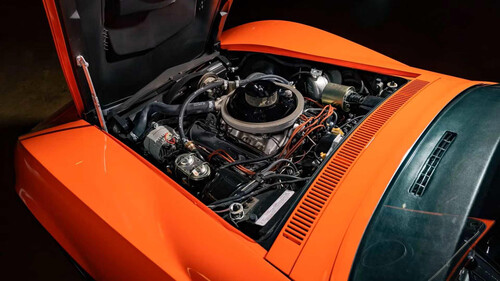
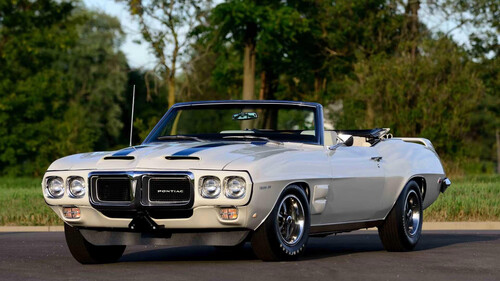
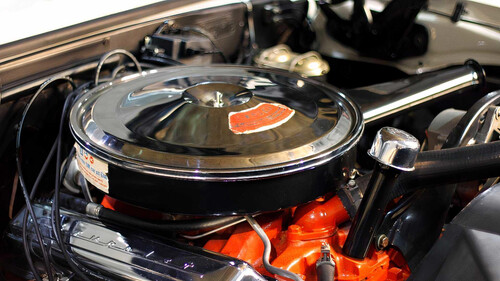
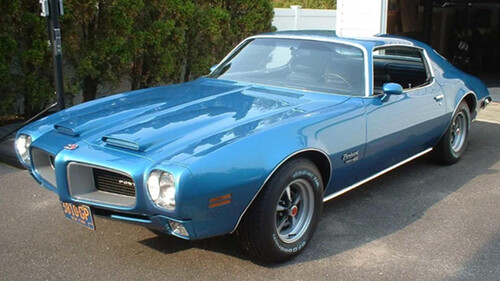
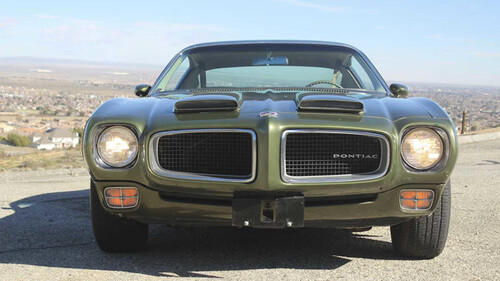
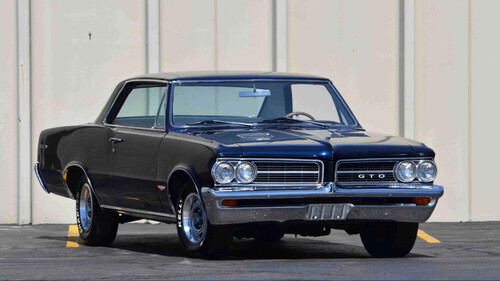
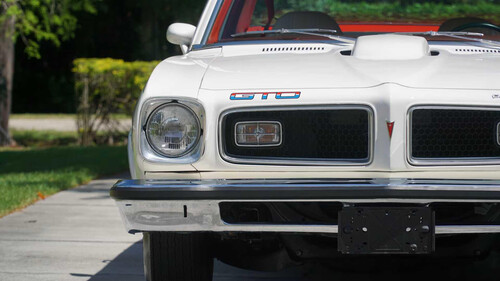
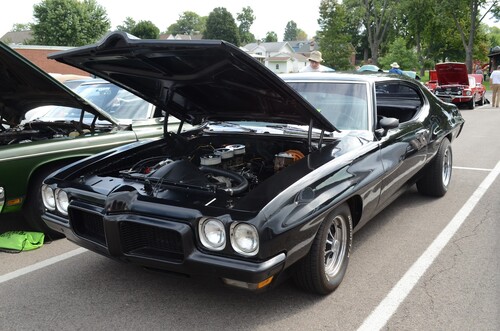
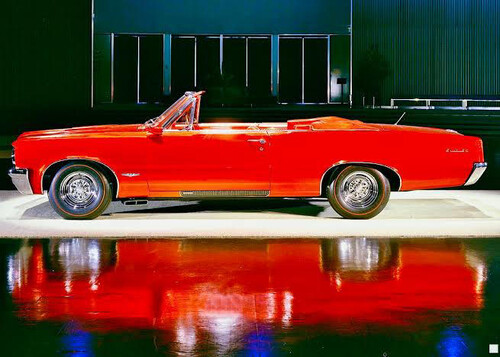
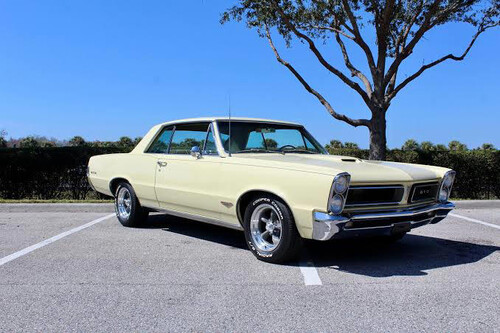
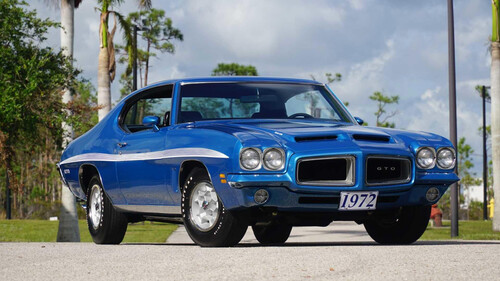
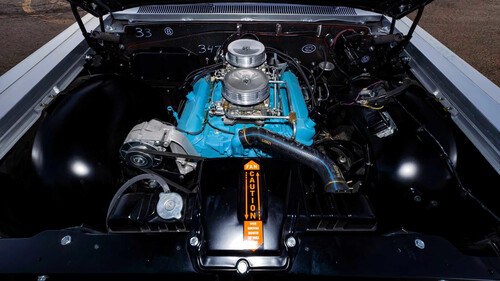
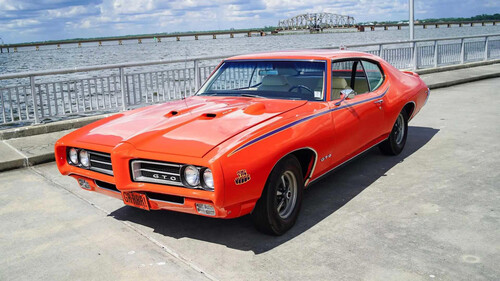
The Ram Air IV V8 marked the pinnacle of Pontiac's performance and engineering in the '60s. On paper, Pontiactried to downplay what they’d unleashed, which ended up being a factory race engine disguised for the street. But the ones who ordered it knew better. This wasn’t an engine for cruising to the grocery store. It was built for burying the loud pedal, lighting up the rear tires, and embarrassing anyone foolish enough to pull up next to you at the stoplight.Today, Ram Air IV-powered Pontiacs have become pure muscle car gold. And not just because they’re rare. It’s because they backed up the hype. This is the story of how an underrated factory monster became one of the most coveted engines of its era. Here's What Made the Ram Air IV V8 Different from the Rest via Bring A TrailerIn the golden age of muscle cars, just about every big American automaker had a hot new V8 in the showroom. But very few built one like Pontiac’s Ram Air IV. This wasn’t just another high-compression lump of Detroit iron. No. It was a legitimate street-legal race motor. But the real kicker was that its true racing pedigree was craftily disguised behind a warranty.Born in 1969, the Ram Air IV was Pontiac’s answer to a growing horsepower war and a rising demand from weekend racers. Per Hagerty, it took the foundation of the already potent Ram Air III and cranked everything to eleven. It had a bigger cam, forged internals, and better flowing round-port heads. An aluminum intake manifold also shaved weight and helped airflow. And to top it off, a special Rochester Quadrajet 4-barrel carb handled the fueling.via Bring A TrailerOn paper, Pontiac rated it at 370 hp and 445 lb-ft of torque, but anyone who spent time behind the wheel knew those numbers were sandbagged. This engine loved to rev, made real power well past 5,500 rpm, and breathed like no factory Pontiac V8 before it.However, it wasn’t just the hardware that really set the Ram Air IV V8 apart from the rest. No. It was the intent. You see, the Ram Air IV wasn’t aimed at grocery-getters. No. It was built for the street racer, the weekend warrior, the gearhead who wasn’t afraid to run through a set of slicks at the local strip. While this V8 did require premium fuel and needed a confident right foot to unleash its full potential, this engine made some living legends when everything gelled just right. The Cars That Carried It: From the GTO Judge To The Firebird Formula Given its somewhat undercover race car capabilities, Pontiac only offered the Ram Air IV in a handful of high-performance models. Of course, this made every model with a Ram Air IV V8 under the hood rare, highly desirable, and, frankly, a true legend on wheels. In total, there were only five models that were ever factory equipped with the Ram Air IV V8 engine under the hood. Those being the GTO, the GTO Judge, the Firebird 400, the Firebird Trans Am, and the Firebird Formula 400. Pontiac GTO (1969–1970) via Bring A Trailer Specs The original muscle icon got a serious performance upgrade when you ticked the Ram Air IV box. Under the hood, you’d find a 400-cubic-inch V8 rated at 370 hp and 445 lb-ft of torque, complete with round-port heads and an aluminum intake. No doubt, these are certainly rare traits for a factory engine of its day.According to Hemmings, a little over 1,500 GTO hardtops and convertibles were built with this option over the two years of production. Paired with a four-speed transmission and aggressive rear gearing, these street beasts were known to launch hard enough to earn a place in drag-strip legend. Pontiac GTO Judge (1969–1970) via Bring A Trailer Specs The Judge amped things up with added spoilers, graphics, and attitude. Then Pontiac let you take things to another level by letting you tack on the Ram Air IV upgrade, too.According to Hemmings, a little over 700 Ram Air IV Judges were produced. And the rareest of them all? A 1970 Ram Air IV Judge convertible with a four-speed. Only five of these rigs have been spotted. Pontiac Firebird 400 (1969) Specs Pontiac allowed the Ram Air IV V8 to trickle down into the non-Trans Am Firebird 400 coupe and convertible in 1969. However, only 55 cars were fitted with the Ram Air IV engines, making them amongst the rarest in the Ram Air line.There were no special decals and no spoilers with these rigs. Nope. It was just raw power under a classic Firebird hood. These were some true sleepers. Pontiac Firebird Trans Am (1969–1970) via Bring A Trailer Specs The Trans Am was Ram Air IV’s architectural home in the F-body world. In 1969, only about 55 Trans Am coupes and a handful of automatics were fitted with the Ram Air IV. According to Trans Am World, fewer than 150 were ever built throughout the two years of production.With a close-ratio four-speed, bold styling, and factory suspension upgrades, these were drag strip-legal weapons straight from the showroom. Ram Air IV Trans Ams today are among Pontiac's most coveted collector icons. Pontiac Firebird Formula 400 (1970) Specs In 1970, Pontiac added the Formula 400, a sleeker, spoiler-less alternative to the Trans Am with full Ram Air IV capability. Per Trans Am World, there were just 59 manual and 29 automatic Ram Air IV Formulas built throughout its production in 1970.These quiet-bodied rockets combined understated styling with all-out power, making them ultra-rare and highly desirable to collectors.At the end of the day, the cars with the Ram Air IV engine under the hood didn’t always wear the loudest stripes or claim the biggest headlines. But where they really excelled? That happened when the light turned green. And to boot, these beasts were a whole lot faster than Pontiac ever admitted. Why The Ram Air IV Was Faster Than Pontiac Claimed Pontiac’s official figure of 370 horsepower and 445 lb‑ft torque for the Ram Air IV didn’t quite tell the full story. In the late 1960s and early ’70s, manufacturers routinely underrated their engines to play nice with insurance companies and stay in favorable NHRA race classes. In addition, Pontiac wanted to try and comply with GM’s internal dramatic-arithmetic rules—like the "one‑horsepower‑per‑10‑lb curb‑weight" limit for non‑Corvettes, per Ate Up With Motor.However, once these engines hit a dynamometer, the truth came out. According to a Max Performance Inc. forum, the dyno proved that the stock Ram Air IV V8 actually hit 424 hp at the crank. Yep. That’s around 54 hp more than advertised. And torque? Likely closer to 480–500 lb‑ft, especially in hot cam, high‑octane tune settings. If Pontiac claimed 370 and 445, real-world numbers would’ve been closer to 420–430 hp and 480–500 lb‑ft, which is essentially 10–15 percent higher than what was printed on the sticker.And no, this discrepancy wasn’t shady. But it was a strategy. You see, Pontiac executives wanted to offer a snarling, undisguised street‑strip animal without tipping their hand or setting off race or insurance alarms. Thus, the Ram Air IV engine was an undeniable sleeper whose real roar whispered everywhere it left tire smoke. This Is Why Ram Air IV Cars Are Now Muscle Car Gold 1970 Pontiac GTO Judge Ram Air IV ConvertibleWhen the cars with the Ram Air IVs under the hood started rolling out of showrooms in 1969–70, sticker prices were modest by today's standards. According to Hagerty, when new, a 1969 Pontiac GTO had a base MSRP of $3,382, while the Ram Air IV option cost $558.20, which put the price of a factory-installed Ram Air IV GTO at just under $4,000 in total.Fast-forward to recent years, and the market has gone nuclear. At Mecum’s Kissimmee 2023, a 1970 GTO Judge Ram Air IV convertible, one of only seven with automatic transmission, sold for a jaw-dropping $1.1 million. This insane auction price was double its Hagerty-estimated value of around $560,000.So, why is there such a frenzy surrounding these Ram Air IV-powered classics? Well, it’s really a one-two punch with their ultra-low production numbers and legendary performance.At the end of the day, these cars check every collector box with high heritage, a factory-built race pedigree, and a whisper-quick 0–60 time that still turns heads today. They’re not just cars. No, they’re rolling legends whose value smashed through nostalgic ceilings to become bona fide muscle car gold.At the end of the day, the Ram Air IV engine wasn’t built for everyone. It wasn’t polite. It wasn’t subtle. And it wasn't for the rule followers. No. Because sitting behind the wheel of a hot rod equipped with the Ram Air IV engine under the hood was for the ones who knew what they were doing when they buried their right foot into the gas.Decades later, that spirit still lives on. Whether they’re parked behind velvet ropes or still ripping down back roads, Ram Air IV cars remain some of the most coveted machines ever built. While the numbers on the build sheets may have been conservative, the legends these cars created? Anything but.