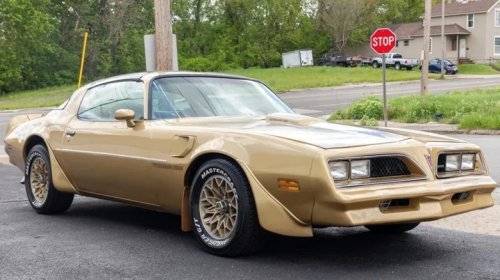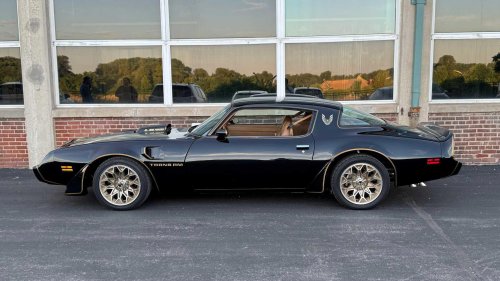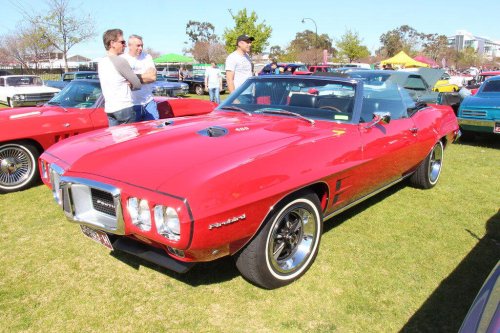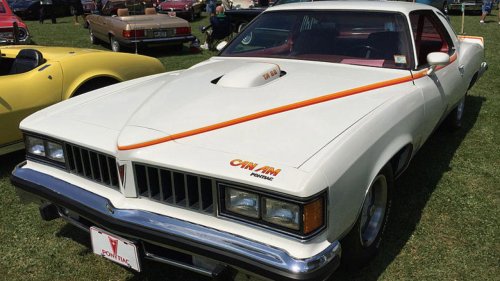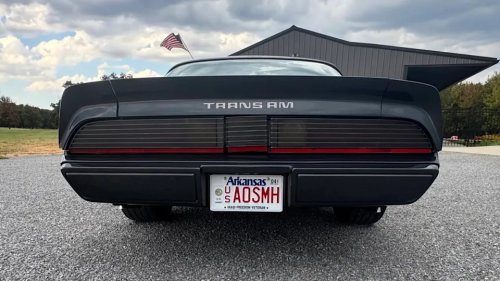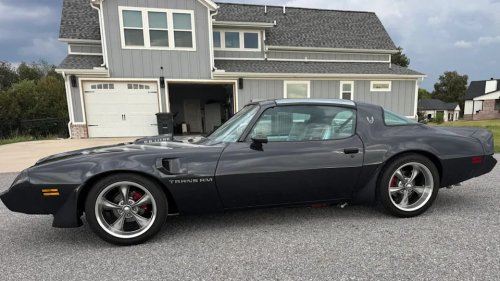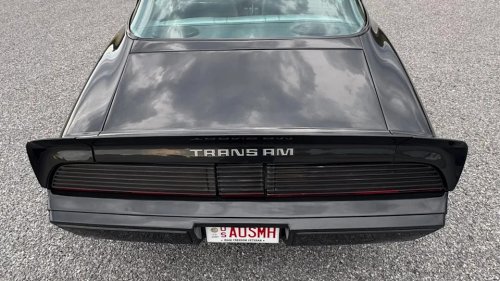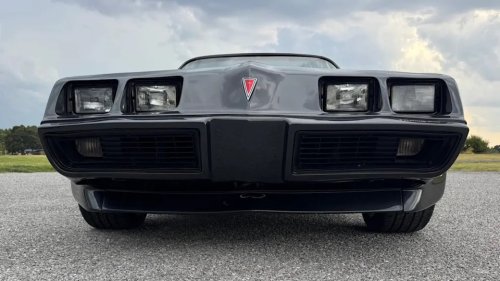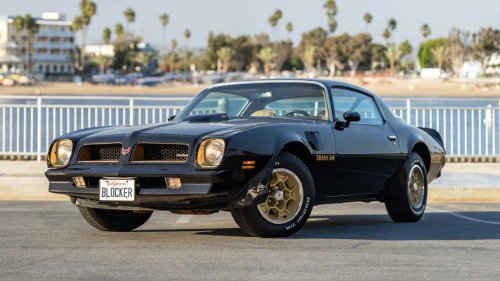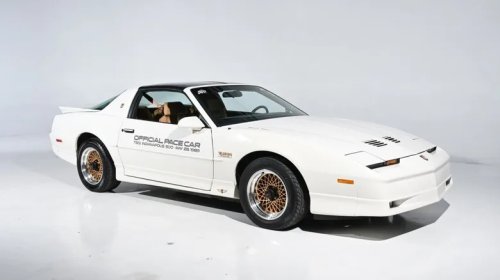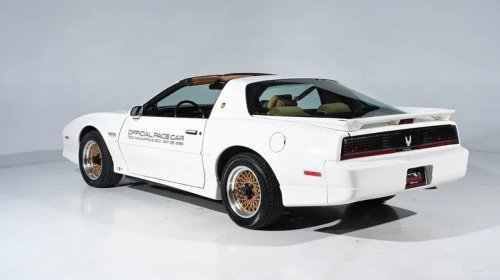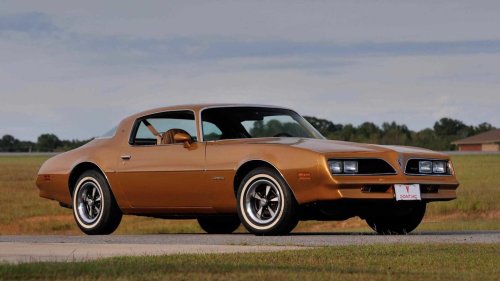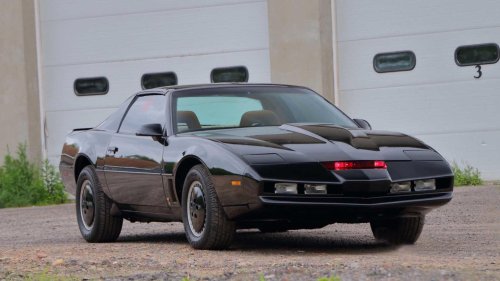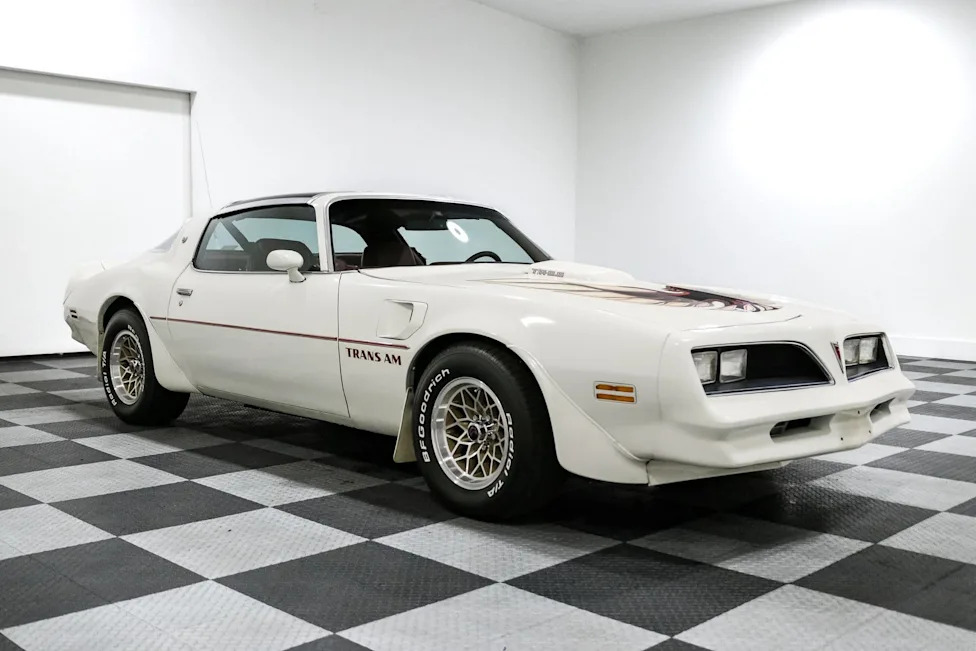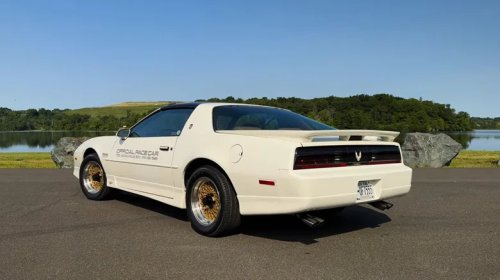





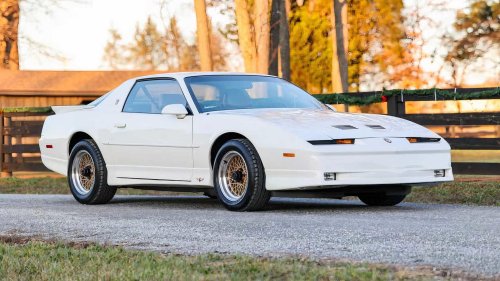






















In the Golden Age of American Muscle, Chevrolet designated its performance trims with "SS", while Dodge put "R/T" on their baddest variants, but the Chevelle or Charger was always the star of the show. With the Pontiac Firebird Trans Am, however, the performance trim became more famous than the host model. It is not even necessary to mention the make or model of this classic ride, when "Trans Am" identifies it precisely. If someone with a 1967 Mustang GT in the garage told people he or she drives a "GT", the response would be "a GT what?," but Trans Am says it all.Just as famous as the name is the Trans Am's Firebird logo, known lovingly as the "Screaming Chicken," which began modestly but eventually took over the entire hood. It might be tricky to identify a Firebird Esprit or Formula, but there's no mistaking a Trans Am. This legend wasn't just about looks either, as whatever the model year, the Trans Am was the fastest, most powerful in the Firebird family, making it one of the original name-brand performance cars. Pontiac may be gone, but the Trans Am is such an icon that it's just as relevant and vibrant today with fans as it was when it launched.To give you the most up-to-date and accurate information possible, the data used to compile this article was sourced from various manufacturers and other authoritative sources, including Pontiac, Classic.com, and Trans Am Depot. Pontiac Trans Am Origin Story 3/4 front view of 1969 Pontiac Firebird Trans AmThere would be no Trans Am without the Firebird, and that came about in a weird way that involved Chevrolet stealing the C3 Corvette design from Pontiac. The XP-833 concept car, retroactively named the Banshee, was a two-seat sports car that Pontiac developed in 1964. GM put the kibosh on the project, because the car would have threatened the Corvette, and adding insult to injury, corporate gave the design to Chevy, who used it for the third-generation Vette.As a consolation prize, Pontiac was allowed to produce their own version of the Camaro, which was introduced in 1967. Pontiac had to wait until mid-model year to give the Camaro a head start, but when they launched, it was a truly amazing pony car. 1969 Trans Am Power and Performance The Firebird has some slightly different sheet metal than the Camaro and a unique grill that included integrated front bumpers, giving it a much more aggressive look than its Chevy cousin. The Camaro's performance trim was the SS, but Pontiac didn't initially have a cool name for its top ass-kicker beyond the Firebird 400, named for its 400-cubic-inch V-8 engine option.Chevy also had the Z/28 package, which was designed for competition in the Sports Car Club of America (SCCA) Trans-Am Series racing circuit. Pontiac followed suit in 1969 with the Firebird Trans Am, packing an upgraded suspension and powerful version of the 400 engine. Of the 697 Trans Ams produced in '69, only eight were convertibles, but all were white with dual blue racing stripes, which would become its signature look. 13-Second Legend Bring a Trailer The 1969 Trans Am came available with the legendary Pontiac 400-cubic-inch Ram Air IV V-8, which was conservatively rated at 345 horsepower. It was likely much more powerful than that because the '69 Trans Am could rip a 13.7 quarter-mile and cars with ETs like that generally have power in the 400-horsepower range.Amazingly enough, this was GM's first 13-second muscle car of the Golden Age. GM had initiated a company-wide ban on engines over 400 cubic inches in intermediate cars back in 1963, which was the dawn of the classic era, and it really screwed its divisions trying to match Mopar perfromance. Pontiac played within the rules and managed to get a 13-second burner out of the 400, which began the Trans Am's legend. SCCA Trans-Am Series Mecum While the Pontiac Trans Am was developed to compete in the SCCA Trans-Am Series, there were a couple of things that prevented that from happening in 1969. The first was that there was a 5.0-liter (305-cubic-inches) upper limit on racers and the Trans Am's 400 was obviously way over the line.Luckily, SCCA changed the rules in 1970 that allowed competitors to de-stroke bigger engines to hit the displacement limit. The other sticking point was that Pontiac never licensed the Trans Am name from the SCCA, which held the rights to it. The SCCA actually threatened to sue over it, but in a rare case of GM having Pontiac's back, corporate stepped in and offered to give the racing governing body five bucks for every Trans Am sold. Secod-Gen Trans Am: The Last Muscle Car Standing Mecum In 1970, both the Camaro and Firebird got a radical style upgrade with miles of hood and hardly any decklid, beginning the epic second-generation of both cars that would last into the 1980s. This really was an enduring design that never seemed dated, and that was reflected in the sales, which were strong until the end.The other exciting thing that happened to the Firebird in the second-gen was that GM finally lifted its arbitrary big engine ban and suddenly the Pontiac pony car had access to thoroughbred horsepower with the 455-cubic-inch V-8. The Camaro, on the other hand, was the only GM muscle car that never got a super-big-block, so the Trans Am left the SS in the dust and never looked back. Second-Gen Trans Am Production 1970: 3,196 units 1971: 2,116 units 1972: 1,286 units 1973: 4,802 units 1974: 10,255 units 1975: 27,274 units 1976: 46,701 units 1977: 68,745 units 1978: 93,341 units 1979: 117,108 units 1980: 50,896 units 1981: 33,493 units Though the engine ban was gone in 1970, the Trans Am that year was still topped out with the 400 Ram Air IV, but in 1971 had the 455 option. In a weird quirk, the 455 was actually less powerful than the 400 Ram Air IV, making 10 fewer horsepower and adding two-tenths of a second to the Trans Am's quarter-mile time. It was, however, still a 13-second ride, and that was something it would hold on to longer than any other classic-era muscle car.By 1972, the Golden Age was effectively over, with emissions standards forcing automakers to detune their engines, resulting in absolutely garbage performance from once-mighty cars. The 1973 Trans Am Super Duty 455 was test-driven by Car and Driver with a 13.751-second quarter-mile, making it the "Last of the Fast Cars." The Screaming Chicken Becomes A Calling Card 1971 Pontiac Trans Am Screaming Chicken hood decalThe second-gen is also when the Trans Am got its most endearing feature with the massive Firebird Hood Decal, which is what it was officially called by Pontiac. Fans, however, know it as the Screaming Chicken, and the Trans Am never looked cooler. In 1970, there was a very small Firebird decal on the front that would stay that way until 1973, when it exploded to engulf the entire hood.According to Hagerty, the Screaming Chicken Hood Decal was a $55 option, which is $396 adjusted for inflation, and there were probably a lot of cheapskates who regretted not splurging on it. It's a guarantee that any Trans Am, whether it originally had the decal or not, got one during restoration because literally no one wants to buy a birdless classic Pontiac. Bandit's Black and Gold Trans Am Bring a Trailer There have been some pretty amazing movie star cars, but there is no bigger A-Lister than the 1977 Trans Am from Smokey and the Bandit. The four cars provided for the shoot by Pontiac were actually 1976 models with 1977 front ends including the updated rectangular headlights, because the new versions weren't ready for the production schedule. The cars were equipped with 455 V-8s that were discontinued in '77, but the hood scoops were marked with "6.6-Liter", which was the new way to measure displacement for the year and indicated a 402-cubic-inch engine. There was some magic in the Bandit's black Trans Am with a golden Screaming Chicken hood logo and sales almost doubled in the years following the film's release. A True Turbo-Powered Trans Am Bring A Trailer The third-generation Firebird debuted in 1982, but almost didn't include a Trans Am package. Pontiac didn't want to pay royalties to the SCCA anymore and so some of the first models were actually branded as "T/A" cars. It was, however, determined that the Trans Am moniker was too popular and valuable, so thankfully it carried on.Unfortunately, the Screaming Chicken Hood Decal was replaced by a very small "Phoenix" logo that had several locations in that generation. The early '80s were the tail-end of the Dead Horsepower Era, which began in 1972, so the early third-gen Trans Ams weren't quite the performance beasts they had once been. Equipped with Chevy 5.0-liter V-8s, Trans Ams were 165-horsepower cars until 1986 when the Corvette 5.7-liter V-8 became available, and they bumped it up to 210 horsepower. 1989 Tran Am 20th Anniversary Edition Power and Performance Pontiac sent the second-gen Trans Am out in style with a special turbocharged version, available in 1980 and 1981. The 301-cubic-inch turbo V-8 was expected to carry over to the third-gen, but that never happened. Despite that, there was a "turbo bulge" hood option available for those who wanted to cosplay as a TTA.In 1989, to celebrate 20 glorious years of the Trans Am, Pontiac gave fans a proper turbo car that was the pedal-to-the-floor fastest fide of the entire decade. The '89 20th Anniversary Edition Trans Am had a better version of the Buick 3.8-liter turbo V-6, that powered the legendary GNX. This engine was hilariously underrated at 250 horsepower, but it was definitely 300 horsepower or more. With this forced-air marvel under the hood, the Trans Am could blaze quarter-miles in the low 13s, making it the first 13-second muscle car since the '73 Super Duty. Trans Am GTA Ferrari Back Side view of 1988 Pontiac Trans Am GTA NotchbackOne of the coolest, and disastrous, third-gens was the 1988 Trans AM GTA Notchback option. Instead of the big glass hatch back on the normal Firebirds, the GTA had a flat fiberglass trunk and a vertical rear window. People had never seen anything like it, and many assumed it was an Italian sports car, which caused owners to dub it the "Ferrari Back" Trans Am.As rad as it looked, the fiberglass trunk tended to blister like it had bad acne, and thankfully nobody started calling it the "Zit-Face" Trans Am. Pontiac would fix this issue for free, but after repairs it would more than likely happen again. Only 718 Trans Am GTA Notchbacks were built, and the number without a pimply complexion is likely minimal, making them rare collectibles. Trans Am Swan Song Mecum The fourth and final Trans Am generation began in 1993 and featured some of the hottest rides the nameplate ever offered, including the SLP Firehawk. Available on the Trans Am trim from 1999-2002, this was a 350-cubic-inch/350-horsepower street assassin capable of a 13.2-second quarter-mile. Sadly, Pontiac discontinued the Firebird after 2002 and obviously the Trans Am went away as well.It handles very well and takes off how and when you want it to. It's got 186,000 miles on it, and you would never know it without looking at the numbers. I've won several competitions and am now a true Firebird fan.- Fourth-gen Firebird owner via EdmundsThe entire Pontiac company would fold in 2010, and it's likely a combination of the lack of a Trans Am model and the visually atrocious Aztek doomed the automaker. For the final year, Pontiac created the Trans Am Collector's Edition with a 325-horsepower 5.7-liter V-8 and all the WS6 upgrades. Made only in yellow, the last Trans Am came with hood and body stripes that, upon closer inspection, were Screaming Chicken feathers. The Pontiac Tran Am's Lasting Legacy Trans Am Depot It's been over a half-century since the Pontiac Trans Am was first introduced and nearly 25 years since it was discontinued, yet it remains one of the most popular classic muscle cars, with a rabid fan base. Since Pontiac is lost to time, hopes for a reboot were never high, but it actually kind of happened.Trans Am Depot signed a licensing deal with GM to use Pontiac and Trans Am logos that they applied to modern Camaros. They also customized them with awesome power and T-tops for a fitting tribute. If Chevrolet was in any way cool, they would have made these cars as a special edition Camaro, before they canceled their iconic pony car in 2024. Top Trans Am Auction Sales 1969 Trans Am Ram Air IV: $440,000 1977 Trans Am SE: $400,000 1969 Trans Am Ram Air IV: $325,000 1973 Trans Am Super Duty: $260,000 2002 Trans Am Collector's Edition: $112,000 On the collector's market, Trans Ams from all generations go in the six-figures for the choice rarities, with the notable exception of the third-gen. This is an actual outrage as this is the generation that gave us the 1982 Trans Am KITT car from the Knight Rider TV show, which you'd think would be a big-money collectible.Also, according Classic.com, 1989 20th Anniversary Edition Trans Ams top out at $90,000, which is a steal for such an awesome and important ride. More common Trans Ams are actually quite affordable, with the average retail price for a 1978 at just $26,300. That's chicken feed to put yourself behind the wheel of a Screaming Chicken and one of the best deals for classic muscle.