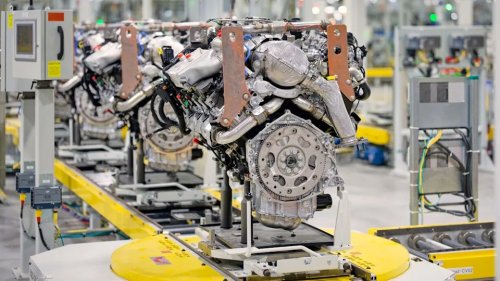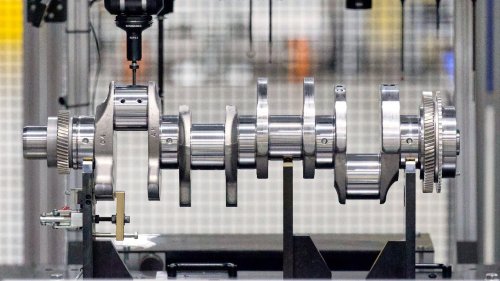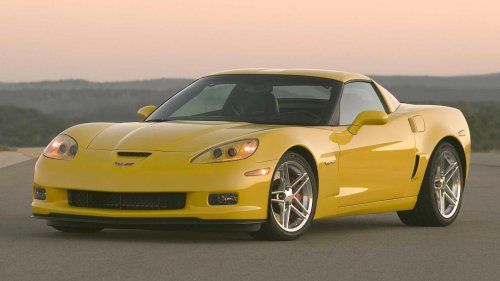
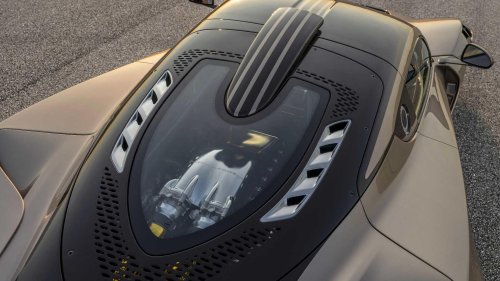
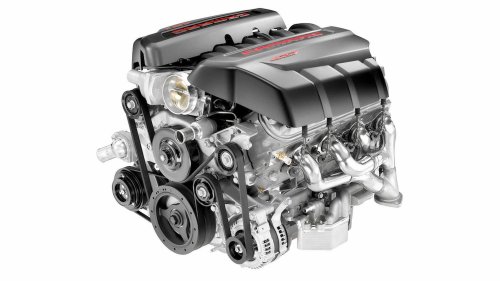
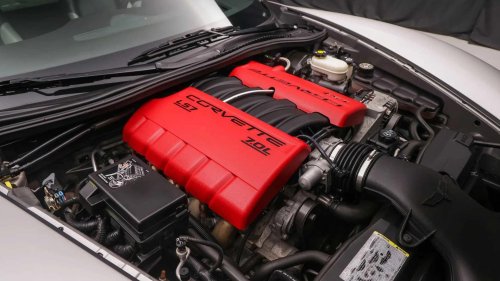
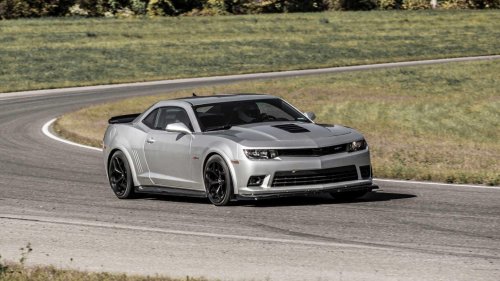
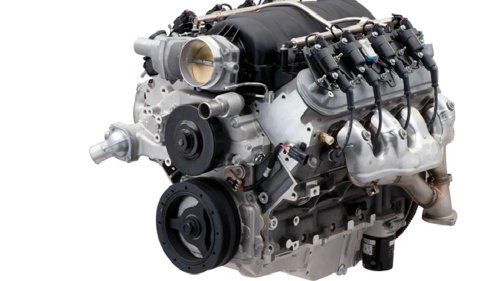



















Jump LinksA Favorite Of Smaller Car ManufacturersAirflow Was The Name Of The GameExamples Of Cars To Have Used The LS7When you think American muscle, many gearheads will likely picture some 1960s weapon that houses a huge V8 beneath the hood, usually producing about as much grunt as a hot hatch does these days. But it didn't matter, American muscle was all about size, and a wide variety of high-displacement eight-cylinder units graced US roads during the mid-20th century in particular. Following a barren spell in the 1970s and 1980s, big V8s came back into fashion throughout the 21st century, but have since gone back to being an endangered species.General Motors' LS7 V8 is a key example of this, being the final large capacity V8 built that didn't follow the modern rulebook of starting with a small V8 and finding ways to extract more grunt from it. Designed To Power A Legend Chevrolet The history of the LS7 V8 runs all the way back to 2006, when it made its debut under the hood of the Chevrolet Corvette Z06. The Z06 was a hardened version of the base C6 Corvette model, with the car designed to not only be faster down the straights, but also be more effective through the bends and under braking. As a result, its 6.0-liter LS2 V8 was deemed insufficient for use in the Z06, so General Motors elected to design a new engine specifically for it.The LS7 used the same Generation IV block as the LS2, with the powerplant bored and stroked to increase its total capacity to 7.0 liters. This allowed for a commanding 505 hp under the hood of the Z06, despite not using any form of forced induction. Every unit was handmade by GM's engineers too, giving each a personal touch. A Favorite Of Smaller Car Manufacturers Hennessey Special Vehicles While Chevrolet only used the LS7 sparingly in its own machinery, the unit was popular with smaller performance brands that wanted a plug-and-play solution to getting big power out of their latest creations. It featured in the likes of the Spada Codatronca, the Ultima GTR, and the Zenvo ST1 in its early years, and is still used today in modified form. Sin uses a tweaked version for its R1 550, while Henessey uses a heavily developed variant in its wild Venom F5 supercar.GM discontinued the LS7 in 2022 as it moved towards smaller-capacity V8s in its future models, leaving independent makers to produce tweaked versions of the engine themselves. As a result, it was the last of the breed of bigger-is-better V8 engines, meaning it will remain as somewhat of a yardstick of how things used to be. Developed To Be At Home On The Racetrack GM GM had to go to great lengths to increase the size of the LS7's displacement, with pressed-in steel cylinders needing to be developed to leave enough room to allow for the upsizing. Wanting the powerplant to deal with all the punishment thrown at it when used in anger on a track day, GM's engineers threw all kinds of racing-developed parts at it. High-flow cylinder heads that came with CNC-machined intake and exhaust ports, as well as a larger combustion chamber, allowed for more air to flow around the unit. This allowed for a more potent fuel/air mixture, as well as an increased compression ratio of 11.0:1.Titanium connecting rods were also employed to help reduce weight and inertia, while at the same time increasing the durability of the powerplant. To this end, the LS7 was also graced with a racing-inspired dry sump oiling system, which consists of a separate oil container located higher up the engine. This allows the oil to get around the engine much more efficiently, and crucially, eliminates the chances of oil starvation under heavy cornering, which can occur with a more traditional under-engine wet sump configuration. Airflow Was The Name Of The Game Chevrolet The key to creating more power and greater endurance in a performance engine is by ensuring it has plenty of airflow, and GM went further to make sure this element was optimized with the LS7. Hydroform stainless steel exhaust manifolds were brought to the party to help with this, and were a full 0.5 inches wider than those used on the LS2 engine. A new high-intake manifold was also produced for the LS7, which matched those used on the cylinder heads. Examples Of Cars That Have Used The LS7 2006-2013 Chevrolet Corvette C6 Z06 2014-2015 Chevrolet Camaro Z/28 2020-Present Hennessey Venom F5 2015-Present Sin R1 550 2015-Present Ultima Evolution 2009-2016 Zenvo ST1 All these ingredients meshed together beautifully to create a race-style engine, and helped to make the Corvette Z06 one of the most capable sports cars on the road. Tightening Emissions Regulations Made These Engines Unviable Chevrolet Sadly, the future for high-displacement naturally aspirated production V8s like the LS7 has been compromised largely by the push to meet ever stricter emissions rules. Manufacturers have been forced to move towards smaller engines that use forced induction techniques like turbocharging and supercharging, which make up for the loss of power given away by reducing ultimate displacement.Aside from being less demanding to run due to needing less fuel to function at capacity, components like turbochargers boost power considerably while running on normally wasted exhaust gases. This makes them particularly power efficient when compared to an NA powerplant.Many manufacturers have found superior results by using turbocharging to hunt for extra power in any case, independent of whether they're cleaner or not. Besides, being able to use a smaller engine means the vehicle can be more neatly packaged, which can help to improve weight distribution. Smaller engines are also lighter, which equals free performance. High-capacity V8s are undoubtedly awesome, but the ongoing push for engine development has meant that they're now largely obsolete across the modern automotive landscape. GM Also Produced A Crate Version General Motors Feeling the LS7 still had a bit more mileage left in it, GM made the decision to tweak the engine and offer a special crate version that independent builders could utilize in their road or race projects. Named the LS427, one of the key changes was to ditch the dry sump oiling system and replace it with a more conventional wet sump. This would make it easier to install the powerplant in a range of machinery due to the lack of extra plumbing for the external oil pump.Alongside this, a new hydraulic roller camshaft was introduced, as were revised exhaust manifolds that had been developed for the limited-edition Chevy Camaro Z/28. Peak power was increased to 570 hp, and the modifications made it easier to equip aftermarket performance mods that could further increase grunt. The LS427 ended up having a short production run, with GM electing to discontinue it alongside the LS7 in 2022.RIP LS7, hopefully the lay of the land will change in the coming years so that engines just like you can make a big comeback. The world needs a factory 8.0-liter 'Vette at some point, after all.Sources: Chevrolet.