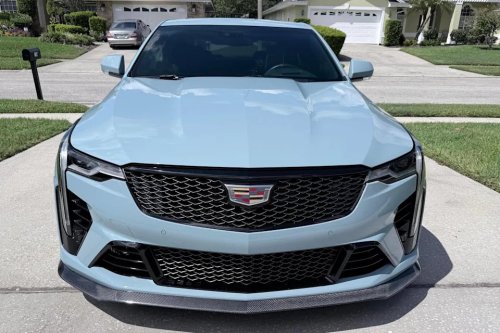
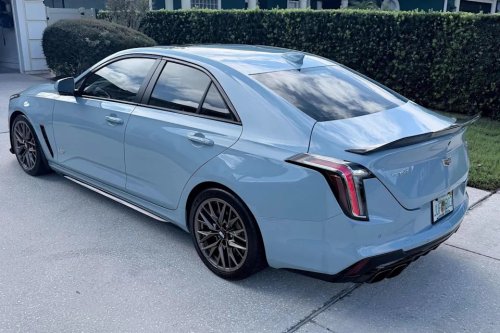
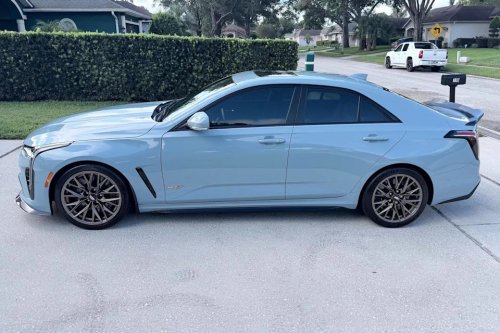
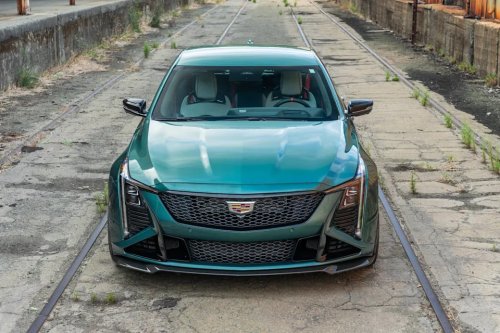
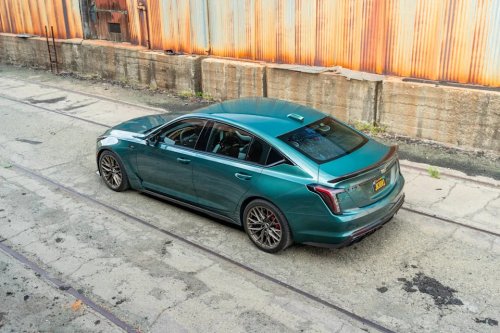
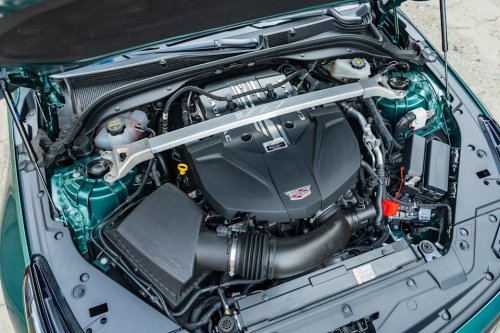
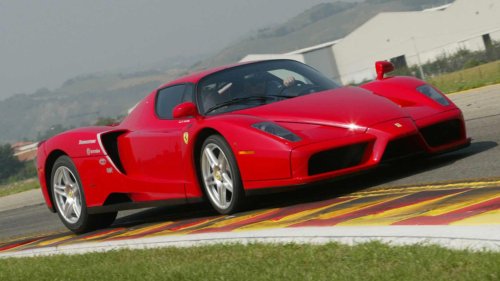
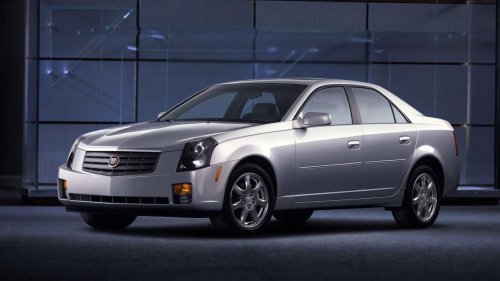
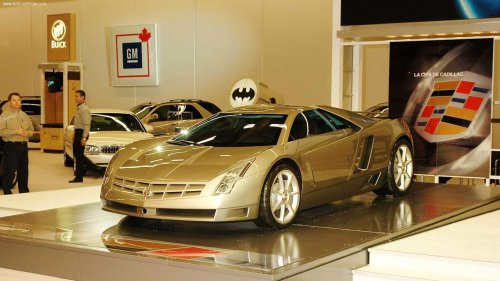
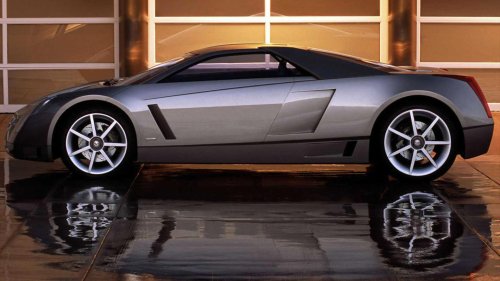
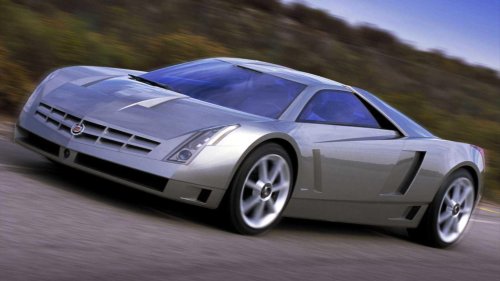
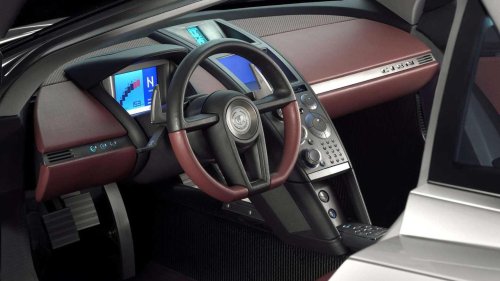
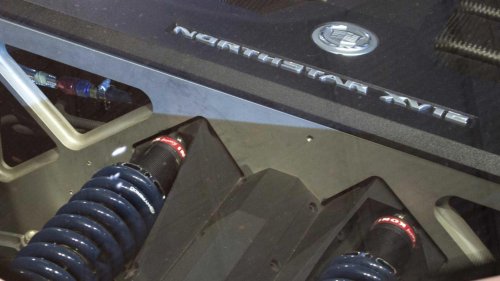
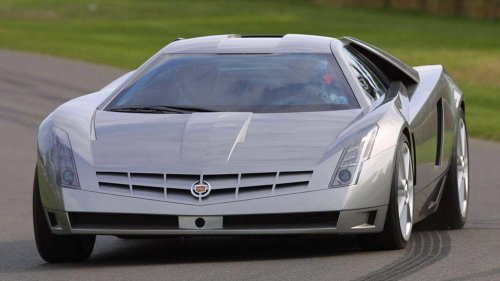
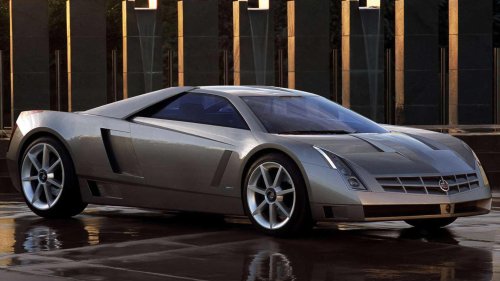
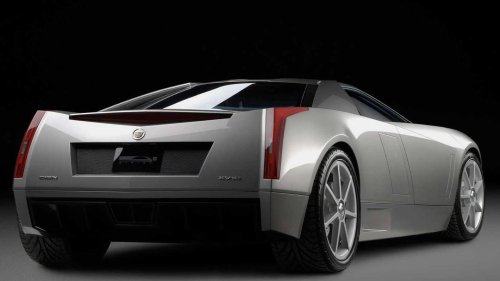
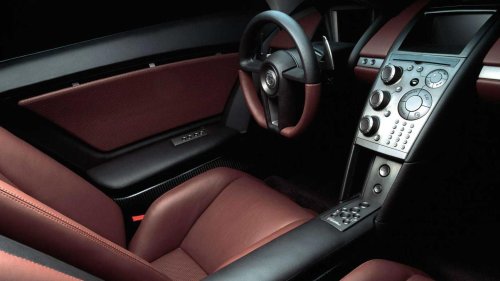
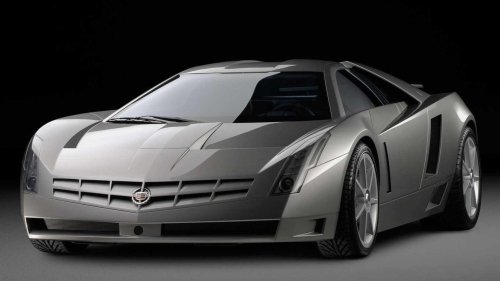
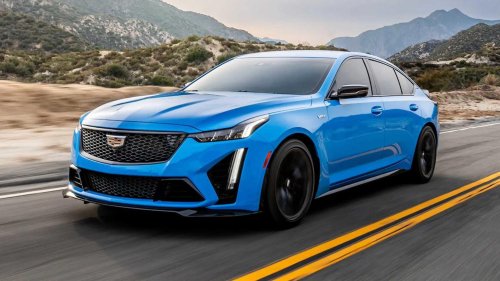
At the 2002 Detroit Auto Show, Cadillac unveiled a mid-engine supercar with 750 hp and a V12 engine built specifically for the car. It was nothing Cadillac had ever made before, or since as it never went into production. GM shelved it, and the engine was never used in any other car either.Cadillac decided to design it, and then cancel that plan entirely. There was a ray of hope momentarily, but that fizzled out soon after. Here's what really went down behind the curtains at General Motors. When Cadillac Stopped Playing It Safe Ferrari In 2002, the supercar world had clear borders. Ferrari owned the dream, Lamborghini set the spectacle, while a handful of Europeans split everything else. No American brand had seriously threatened that territory in years.Via: CadillacGM was best known at the time for the Escalade, the Seville, and a lineup of trucks that were selling well precisely because they weren't trying to be exotic. Cadillac's job was comfort, bling, and cruise control, while performance was Corvette's job.Via: Cadillac So when a low, wide shape emerged on the Detroit Auto Show floor — mid-engine layout, carbon fiber construction, scissor doors, and a V12 producing 750 hp — nobody had a reference point for it. This wasn't a Cadillac anyone had asked for, or atleast knew that was possible. Cadillac's 100th Birthday Present Via: Cadillac In 2002, Cadillac was in the middle of a full identity overhaul. The "Art and Science" design language had just reshaped the CTS into something angular, aggressive, and deliberately un-Cadillac by the old definition. The brand was done apologizing for being American, and showing desire and intent to compete globally.Cadillac wanted a celebratory concept to mark the brand's 100th anniversary. The concept was designed to be the ultimate proof of that ambition — a halo car that no one could ignore. It wasn't built in Detroit, but developed at GM's Advanced Design Studio in Birmingham, England, and assembled with the help of Prodrive, the British motorsport company responsible for some of the most competitive race machinery on the planet.It also had a racing pedigree baked in. Cadillac had been running at Le Mans, and the concept was meant to show that the technology from those race cars could translate directly to the road.In the same year, Ferrari unveiled the Enzo, Cadillac made a statement about where it intended to go next. The V12 Cien Concept Was Built To Run With The Best In The World Via: CadillacThe Cien (meaning 100 in Spanish) was designed by Simon Cox in collaboration with Prodrive. The result was a fully functional driveable prototype and not a prop for the auto show. Debuting at the Detroit Auto Show, the body and chassis were made from carbon fiber, inspired by the F-22 Raptor fighter jet. It sat low and wide — 175 inches long, 77 inches wide, and just 46 inches tall. It weighed around 3,307 lbs, reasonable for a car of its size and ambition.Via: CadillacThe layout was rear mid-engine, rear-wheel drive with power channeled through a 6-speed electronically controlled semi-automatic transmission. Suspension was double wishbones front and rear, with carbon-ceramic brakes planned for production. The body even used electronically controlled air vents that opened and closed based on cooling needs. An active spoiler adjusted automatically depending on speed and the removable targa roof panel let in open air when the mood called for it.Via: CadillacScissor doors opened upward, the taillights ran vertically in classic Cadillac fashion. The glass was tinted blue, inspired by sport performance eyewear — an odd detail that somehow worked.Via: CadillacInside, the Cien had Night Vision thermal imaging displayed on a head-up display, LCD screens for navigation and rearview cameras, and a digital instrument cluster. For a car from 2002, It was loaded with tech that is generally considered the bare minimum today.On paper, it would do 0-60 mph in 3.5 seconds and top out at 217 mph. Those numbers put it in the same conversation as the Ferrari Enzo and Lamborghini Murciélago — the dominant supercars of that era. The Northstar XV12 Was Made For One Car And Then It Disappeared Via: CadillacThe Cien's engine was called the Northstar XV12, built specifically for it but was never used it in anything else before or after. It displaced 7.5-liters and produced 750 hp and 650 lb-ft of torque. It was all-aluminum, with a dual overhead cam design and four valves per cylinder. For reference, that's over 100 hp per liter — a benchmark very few naturally aspirated engines hit at the time.GM packaged it to take up roughly the same space as a V8. That was the point — showing that a V12 didn't have to be a packaging nightmare.Via: Cadillac The engine sat longitudinally at a 60-degree angle just behind the cabin. It was visible through the rear window, which was a deliberate design choice. A carbon-fiber intake manifold with twin throttle bodies fed it air.It featured direct fuel injection, which was not common in 2002. It also had GM's Displacement on Demand system, allowing it to drop down to six cylinders under light loads. On a 7.5-liter V12, that was a serious fuel saving capability.The XV12 was a development of the Northstar V8 that powered mainstream Cadillac models at the time. But it was purpose-built for the Cien, and when the project was shelved, so was the engine. It was never developed further, never dropped into another car, and never saw a production line. Why A $200,000 Cadillac Was A Problem In 2002 Via: Cadillac The Cien was never officially canceled. An internal review determined the timing wasn't right, so the project was shelved. The costs were the main problem. A production Cien would have carried a price tag of around $200,000. In today's money that's closer to $340,000. That's a hard sell for a brand that, at the time, was still best known for large sedans and SUVs — with no established supercar customer base to sell into. GM's focus in the early 2000s was elsewhere. The priority was profitable small cars, better trucks, and performance models spread across its many divisions. A low-volume, $200,000 Cadillac supercar didn't fit that plan.Via: Cadillac The costs weren't concentrated in one place either. The specialized 7.5-liter V12, the semi-automatic transmission, and the carbon fiber chassis all needed significant further development before a production car was possible. "Shelved, Not Abandoned", Then Later It Was Abandoned Via: Cadillac Around 2012, GM's Performance Division chief Mark Reuss was asked about the Cien. He said the project had been shelved, not abandoned, and stopped short of ruling out production entirely. That was enough to keep the conversation alive for a while.But the engine told a different story. In July 2010, GM ended production of the entire Northstar V8 family after a 17-year run. The Northstar was replaced by GM's LS small-block — a pushrod V8, simpler and more reliable, but a very different engine philosophy.The XV12 was a development of that Northstar family. When the engine line died, the XV12 lost the only platform it could have grown from. The V12 engine could have changed Cadillac forever. The Cien Died, But Shaped Cadillac's High-Performance Ambitions Via: Cadillac Cadillac did eventually return to serious motorsport. The Project GTP Hypercar finished on the podium at Le Mans in 2023 — the brand's first appearance at the race in 21 years, and has now entered a new team in Formula 1 from the 2026 season.On the road however, Cadillac's performance lineup today runs through the V-Series — supercharged and twin-turbocharged V8 sedans and SUVs like the CT5-V Blackwing and Escalade-V. They're genuinely fast cars, but they're a long way from a mid-engine supercar with a purpose-built V12.Via: Bring a Trailer In 2025, Mark Reuss ruled out a mid-engine Cadillac supercar based on the Corvette platform. Two-seat performance cars, in his view, belong to Corvette. That was the clearest signal yet that nothing like the Cien is coming in the future from the brand.GM had the engineering, the design talent, and at least some internal support for building it. Whether the timing was genuinely wrong or the will simply wasn't there is a question the company never had to answer publicly.Sources: GM Heritage Collection, JD Power, GM Authority



















 +37 others