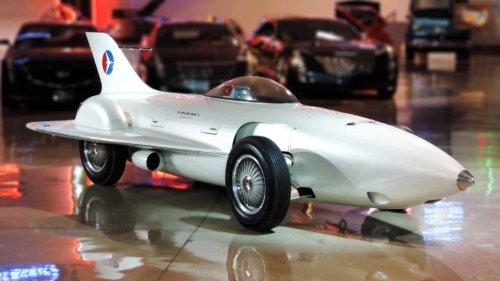
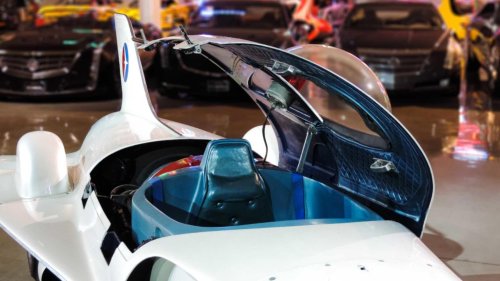
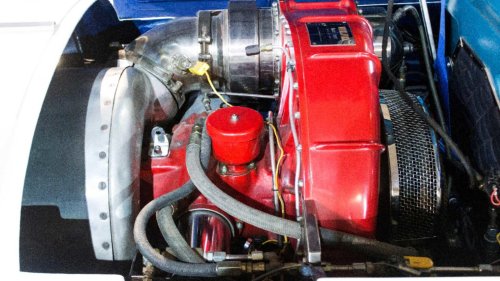
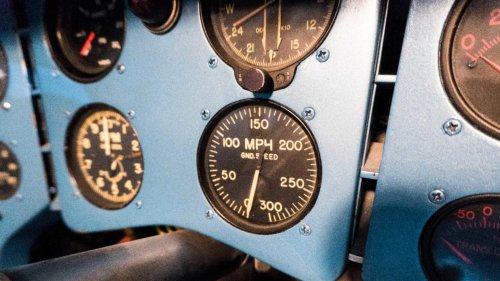
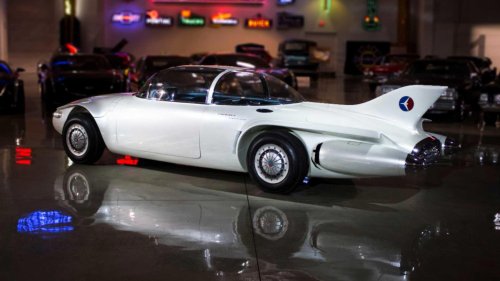
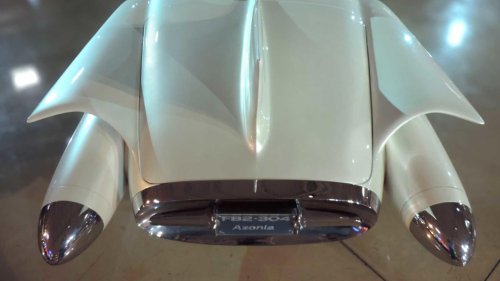
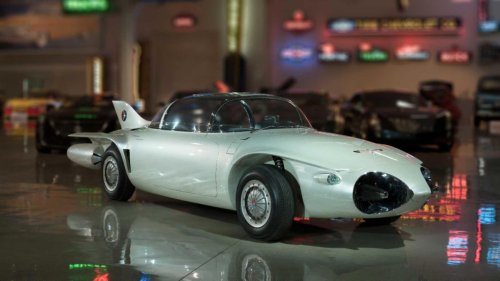
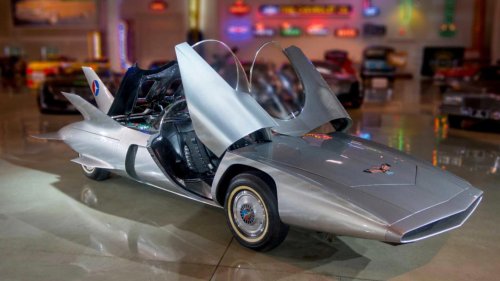
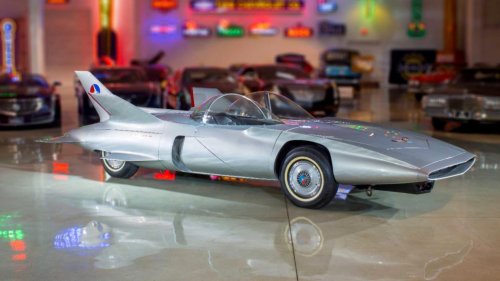
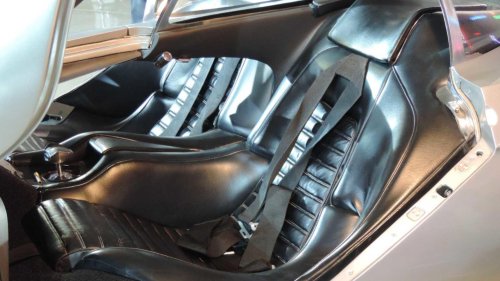
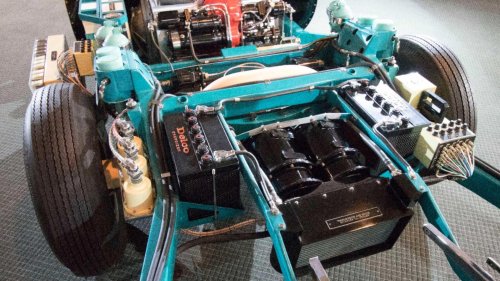
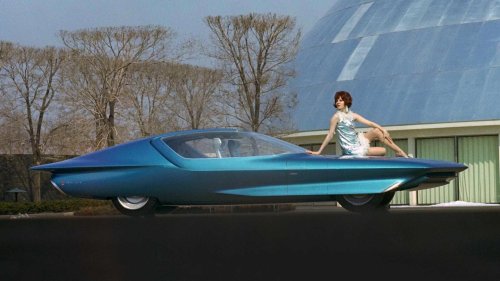
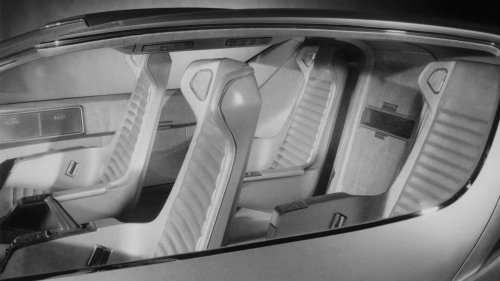
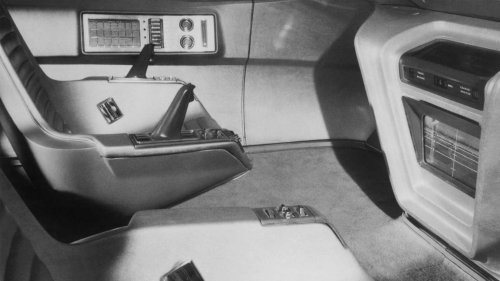
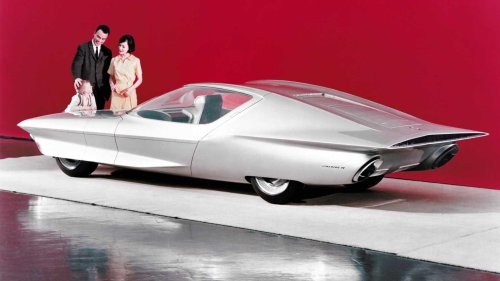
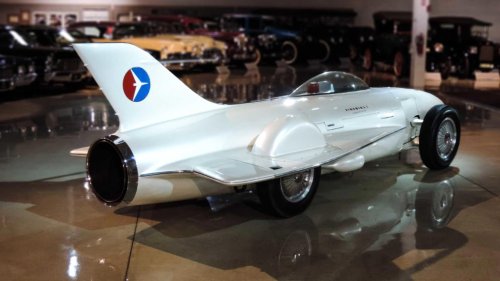
Looking back, the 1950s was a decade of limitless ideas and bold, confident designs. The jet age had arrived, and it was influencing everything from toaster shapes to couch designs. The automotive world was no different. Some iconic models were launched during this decade, including the Ford Thunderbird, Chevrolet Corvette, and the Cadillac Eldorado. These cars were the designs of car companies that were ready to take on a bright future where anything was possible.During this period, GM's range of road cars was expanding rapidly, and it was also developing experimental vehicles that pushed the boundaries of what was technologically possible. Its range of Firebird concept cars encapsulated the nation's obsession with space and the boundless possibilities that lay just out of our grasp. We look back on this quartet of fascinating vehicles that helped shape the future of GM's production models. Firebird IGeneral MotorsLooking like a prop out of a 1950s Sci-Fi movie, Firebird I was unlike any other conventional car the world had seen. It resembled a futuristic jet plane more than something designed for the road, and it even had wings and a single seater cockpit, too. Harley Earl was GM's styling VP at the time, and he came up with the concept and the aircraft-style design. The bodywork was made from fiberglass-reinforced plastic, which contributed to the low curb weight of 2,800 lbs. However, the most fascinating aspect was the engine used to power it.General Motors Instead of going the conventional route and fitting a gas-powered V8 to it, GM fitted a single-stage axial-flow turbine to the rear of Firebird I. This made it the first gas turbine vehicle ever to be built and tested in the US, as well as making it even more like a road-bound jet than a regular car.General Motors The aim of Firebird I was to test the viability of turbine power for future GM models. To ensure that it didn't head for the skies when the full 370-hp was unleashed, the bodywork was refined and honed in the California Institute of Technology's wind tunnel. It remained a one-off, but it laid the groundwork for a series of similar experimental vehicles.General Motors Firebird II General MotorsFirebird II was revealed two years later; it was just as space-age as its predecessor, but was a bit less svelte, as it could now seat four occupants, instead of just one. While it was still powered by a gas turbine, Firebird II featured several other innovations that had not been seen on GM products before.General Motors The bodywork was crafted from titanium; it had independent suspension and disc brakes on all four corners, a magnetic ignition key, an electric gear selector, and air conditioning with individual controls. The gas turbine had also been refined, now sending exhaust gases through a regenerative system that lowered overall operating temperatures.General Motors The cockpit was covered by a huge glass canopy, and the dashboard looked very much like the one you'd find in a contemporary airplane. One innovative, but completely theoretical feature, was a self-driving system that guided itself with wiring built into the road network system. Clearly impractical, but still a glimpse into the future of autonomous travel. Firebird III General MotorsFirebird III was a more stylish design than its immediate predecessor and looked once again like a jet plane, ready to take to the skies. It had a gas turbine engine powering the rear wheels, and a small two-stroke gas engine to keep the ancillary devices powered. Innovative (potential) features included cruise control, anti-lock brakes, and a joystick instead of a steering wheel.General Motors While many of the features were more fanciful than functional, they showed that GM was focusing on developing new and innovative solutions in its upcoming models. There was an ultrasonic key that would remotely open doors, and a hands-free steering system allied to an automatic guidance system. A feature straight out of aircraft design was the air brake system that would help Firebird III slow down from the hypothetically immense speeds it would be capable of. The system was essentially just sections of flat body work that popped up under braking, but it all added to the futuristic image of these concepts.General Motors That said, some of these ideas would go on to become a reality many decades later, and Firebird III was also highly influential on GM's existing product line. It had sharply curved rocker panels, a feature incorporated into the 1959 Cadillac, while those short rear winglets on either side became a feature of the 1961 model year Cadillac.General Motors While the gas turbine idea was a technological dead end, the styling and technological innovations featured in these three concepts certainly influenced GM's models well into the 1960s. The Firebird name also resurfaced in 1967, when it was given to Pontiac's newly released pony car. Firebird IV General MotorsThe Firebird concept car story doesn't quite end there, because in 1964, Firebird IV was revealed at the New York World Fair. It was arguably the most eye-catching of all the designs, but unlike its predecessors, it was merely a full-sized wooden frame, and GM used it more as a visual representation of its ideas for a road car of the future than as a technological testbed.GM The self-driving vehicle idea was mentioned once again, this time talking about a programmed guidance system that would offer completely safe travel at twice the existing highway speed limits at the time. Power was said to be from a gas turbine, but no actual running gear was fitted to Firebird IV.It did have an interesting interior, though, with four seats arranged in a conventional fashion, and a pair of joysticks for the driver. Going with the autonomous driving theme, it also had a fridge, a built-in TV, and a foldable table, presumably to have your snack on while being ferried to your destination.GM The Legacy of the Firebird Concept Cars General Motors It has taken over 60 years for autonomous driving features to appear in production vehicles, and we are still some way from being able to sit back in our lounge-like vehicles and binge-watch the latest series on Netflix. But technologies like adaptive cruise control, remote car entry, and built-in infotainment screens are available on all but the most basic cars today. GM may not have quite predicted the future of the automobile with its space-age designs and gas turbine power plants, but many of its more aspirational ideas are coming to pass.General Motors Considering that in the 1950s there were no mobile phones, no navigation systems, and certainly no storage devices capable of storing the intricate details of a road network, these ideas must have seemed like the stuff of science fiction. In many areas of automotive design, the rate of progress in recent years has been astounding, and perhaps our dreams of hovering cars, properly functioning autonomous driving systems, and exotic powerplants are not as far-fetched as they seem.



















 +6 others