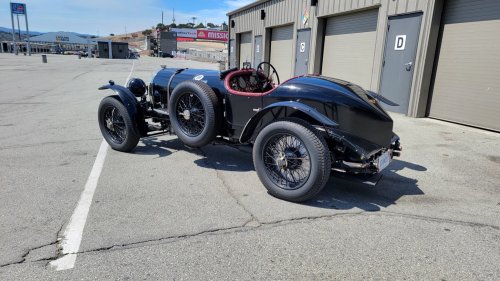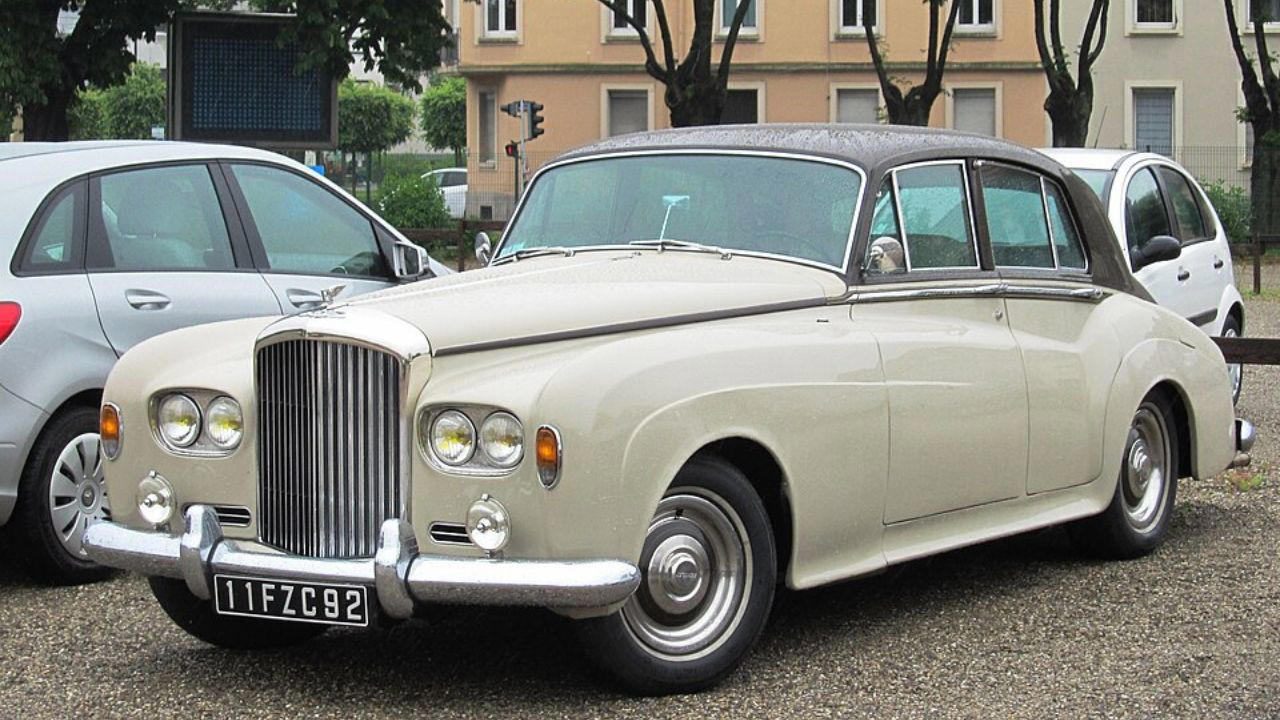



















Luxury met performance in the 1963 Bentley S3 without losing identityThe 1963 Bentley S3 arrived at a turning point for British luxury cars, when clients wanted more speed and comfort but were not ready to abandon old-world grandeur. It carried more power, sharper road manners and modern conveniences, yet preserved the upright elegance and quiet confidence that defined the marque. In an era of rapid change, the S3 showed that performance and progress could be absorbed without sacrificing identity. The last of the classic S Series By the early 1960s the S Series Bentley stood as the company’s flagship sedan, a direct descendant of the postwar R Type. The S3 replaced the S2 in 1962 and kept the separate chassis and traditional proportions that had become a signature of the brand. Period descriptions of the 1963 Bentley S3 describe it as the last production luxury sedan from Bentley with body-on-frame construction and the final model in the S Series that had run for a decade, a line that had itself followed the older R Type that dated back to just after the war. That heritage matters because it framed the S3 as the closing chapter of a long-running design language. Later in the decade the T-Series Bentley would arrive with a very different engineering philosophy, including a new platform that shared much with the Rolls-Royce Silver Shadow. Contemporary commentary on the S3 positions it as the last of the truly classic Bentleys, a car whose elegance and comfort were designed for long-distance cruising rather than outright performance figures. The official heritage listing for the company’s own 1963 S3, registered as 176 FGH, underlines how carefully Bentley curates this era. The entry records the car under the heading 1963 S3 – 176 FGH and preserves details such as the Date Produced and the combined Chassis and Engine No. The figure 176 is presented verbatim in the documentation, which treats 176 FGH as a reference point for the S3 in the modern heritage collection. That attention to archival detail shows how central the model remains in the brand’s narrative of itself. From Paris spotlight to showroom reality The S3 did not arrive quietly. Bentley first announced the model at the Paris Motor Show in October 1962, placing it in front of a European audience that already associated the marque with discreet wealth. According to the overview of the Bentley S3, the car was visually similar to the S2, which reassured traditional buyers, but carried a series of technical and cosmetic updates that marked it as a new generation. This balance of continuity and change was deliberate. The company needed to respond to growing expectations for power, refinement and safety without startling clients who valued understatement. The Paris Motor Show debut signaled that Bentley intended to stay in the top tier of luxury while quietly raising the performance bar. V8 power with a softer voice Under the bonnet the S3 continued with the all-aluminium 6.2 liter V8 that had arrived in the S2, but with internal improvements that gave the car stronger performance. Contemporary descriptions refer to the 1963 Bentley S3 6.23 liter V-8 and note that the upgraded engine appeared in the S3 and its Rolls-Royce counterpart at the start of the production run. The emphasis remained on smooth, near-silent power rather than dramatic acceleration. Commentary from enthusiasts highlights that in a car like this, outright performance figures were almost secondary. What mattered was the way the S3 could maintain high speeds in silence, with reserves of torque that made overtaking effortless. Observers described the ride comfort in glowing terms, stressing that occupants would struggle to feel a bump in the road. This approach to performance, where effortlessness and refinement are valued above numbers, became a defining part of Bentley’s character. The Continental variants sharpened that character. The 1963 Bentley S3 Continental Saloon used the same basic V8 but paired it with lighter coachbuilt bodies and higher gearing. A period summary of the 1963–65 Bentley S3 Continental Saloon notes that the upgraded engine made its debut in this model and its Rolls counterpart, reinforcing the idea that the S3 represented a mechanical step forward for both brands. In the Continental, that step translated into a genuine high-speed touring capability that matched the car’s glamorous image. Coachbuilt performance: Continental Coupe and Flying Spur If the standard S3 saloon was the gentleman’s express, the Continental versions were its sporting cousins. A widely shared description of the 1963 Bentley S3 Continental Coupe by Mulliner Park Ward calls it a rare, high-performance luxury car built on a lightweight aluminium-bodied chassis. The car combined the 6.2 liter V8 with advanced features for the period such as electric windows and optional air conditioning, equipment that signaled a more modern idea of luxury. That same description notes that the car was Built for long-distance touring, with a focus on both speed and comfort. The Continental Flying Spur variant added four doors to this formula without losing its athletic stance. A detailed listing of a 1963 Bentley S3 Continental Flying Spur specifies special features that underline how far the S3 had moved into contemporary territory. The car carried a Hirschmann electric aerial fitted by H. J. Mulliner, Firestone white-sided tubeless tyres and a radio marked with the legend Made in England. The seller’s notes even begin a sentence with the word Its to introduce this list, a small stylistic detail that reflects the period marketing language around bespoke equipment. These cars made a clear statement. They showed that Bentley could offer serious performance and cutting-edge convenience while still working with coachbuilders like Mulliner Park Ward and H. J. Mulliner. The Continental Coupes and Flying Spurs were not mass-produced sedans with a badge upgrade. They were hand-finished machines that blended traditional craftsmanship with features that would soon become standard expectations in luxury cars. The “Chinese Eye” and a new face of luxury Styling is where the S3 most obviously walked the line between heritage and innovation. The standard saloon remained conservative, but the Continental models received a distinctive front end that would divide opinion and eventually become iconic. Coachbuilder H. J. Mulliner had to adapt classic Bentley lines to accommodate quad headlamps, a modern feature that promised better illumination and a more assertive look. A detailed model guide to the Bentley S3 and S3 Continental credits designer Vilhelm Kor with the solution. The coachwork did not lend itself happily to horizontal headlights, so he positioned them on a slight slant instead. That angled arrangement created a subtle V shape when viewed from the front and gave the car a more dynamic expression without abandoning the upright grille and long bonnet that defined the marque. The unusual lamp treatment quickly attracted a nickname. A period description of the Bentley S3 Continental Drophead Coupe notes that the angled placement of the headlights gave rise to the term Chinese Eye. Another summary of the same model begins a sentence with the phrase Chinese Eye, Under the long hood, to describe the mechanical changes that accompanied the visual update. The nickname may have been informal, but it stuck, and today it serves as shorthand for this entire generation of Continentals. Some observers at the time considered the Chinese Eye treatment controversial, yet it helped the S3 stand apart in a market where American and European rivals were becoming more flamboyant. The design captured a shift in luxury aesthetics, from purely conservative to quietly expressive, without tipping into excess. Subtle but telling exterior changes Beyond the headlights, the S3 featured a series of small exterior revisions that signaled progress. A period overview of the 1963 Bentley S3 Saloon Exterior explains that the S Series Bentley had replaced the R Type in 1955 and by 1962 had reached its third major iteration. The S3 carried a slightly lower bonnet line, a revised grille and discreetly reshaped front wings, changes that modernized the look while preserving the car’s imposing presence. The Continental versions went further. An analysis of the 1963 Bentley S3 Continental records that the indicators on these new models were incorporated into redesigned sidelights positioned on the front of the wings. The same source notes that Asi, a detail included in the context of the model’s recognition by enthusiast groups, had documented these changes as part of the car’s evolution. Integrating the indicators into the sidelights cleaned up the front end and hinted at the more integrated lighting designs that would dominate later decades. These modifications show how Bentley approached modernization at the time. Rather than introducing radical styling shifts, the company refined existing lines and folded new technology into familiar shapes. The result was a car that looked current without abandoning the visual cues that long-time clients expected. Cabin comfort and the meaning of luxury Inside, the S3 expressed luxury through both materials and technology. The saloon continued the marque’s tradition of deep leather seats, polished wood veneers and thick carpeting, but it also made space for features that were becoming essential to high-end buyers. The Continental variants, in particular, showcased this shift. The description of the 1963 Bentley S3 Continental Coupe by Mulliner Park Ward highlights electric windows and optional air conditioning as key selling points. In the early 1960s those features were still rare in European cars, especially in hand-built grand tourers. Their presence signaled that Bentley was responding to a new kind of client, one who valued convenience and climate control as much as craftsmanship. Another contemporary portrayal of the 1963 Bentley S3 6.23 liter V-8 encourages readers to Indulge in British luxury with this car, stressing that it embodies elegance and refinement for open-road cruising in comfort and style. The text leans heavily on the words British and Bentley to evoke a particular image of national character: a blend of restraint, quality and quiet confidence. That framing suggests that for many owners, the S3 was as much a symbol of lifestyle as a means of transport. The Continental Drophead Coupé variant sharpened that message. A profile of the 1963 Bentley Continental Drophead Coup describes it as one of the technological and design marvels of its period, created by British engineers who combined advanced mechanics with open-top glamour. The car’s ability to deliver near-silent V8 power with the roof down, while surrounding occupants with traditional materials, encapsulated the idea of luxury meeting performance without compromise. Heritage, identity and the road to the T-Series Looking back, the S3 sits at the junction between two eras. On one side lies the world of separate chassis construction, coachbuilt bodies and a focus on ride comfort above all else. On the other stands the age of monocoque structures, higher-volume production and a more overt emphasis on performance and technology. A retrospective on the S3 notes that the model marked the end of an era and that it was only fitting that such a car should be among the most elegant ever to wear the Flying B. The same source lists famous owners of 1963 Bentley S3 cars, including Hollywood actress Gloria Swanson, Keith Richards and Sir Elton John, a roster that underlines the model’s appeal across entertainment and music circles. For these buyers, the S3 offered a way to project status without resorting to flashiness. More from Fast Lane Only Unboxing the WWII Jeep in a Crate 15 rare Chevys collectors are quietly buying 10 underrated V8s still worth hunting down Police notice this before you even roll window down