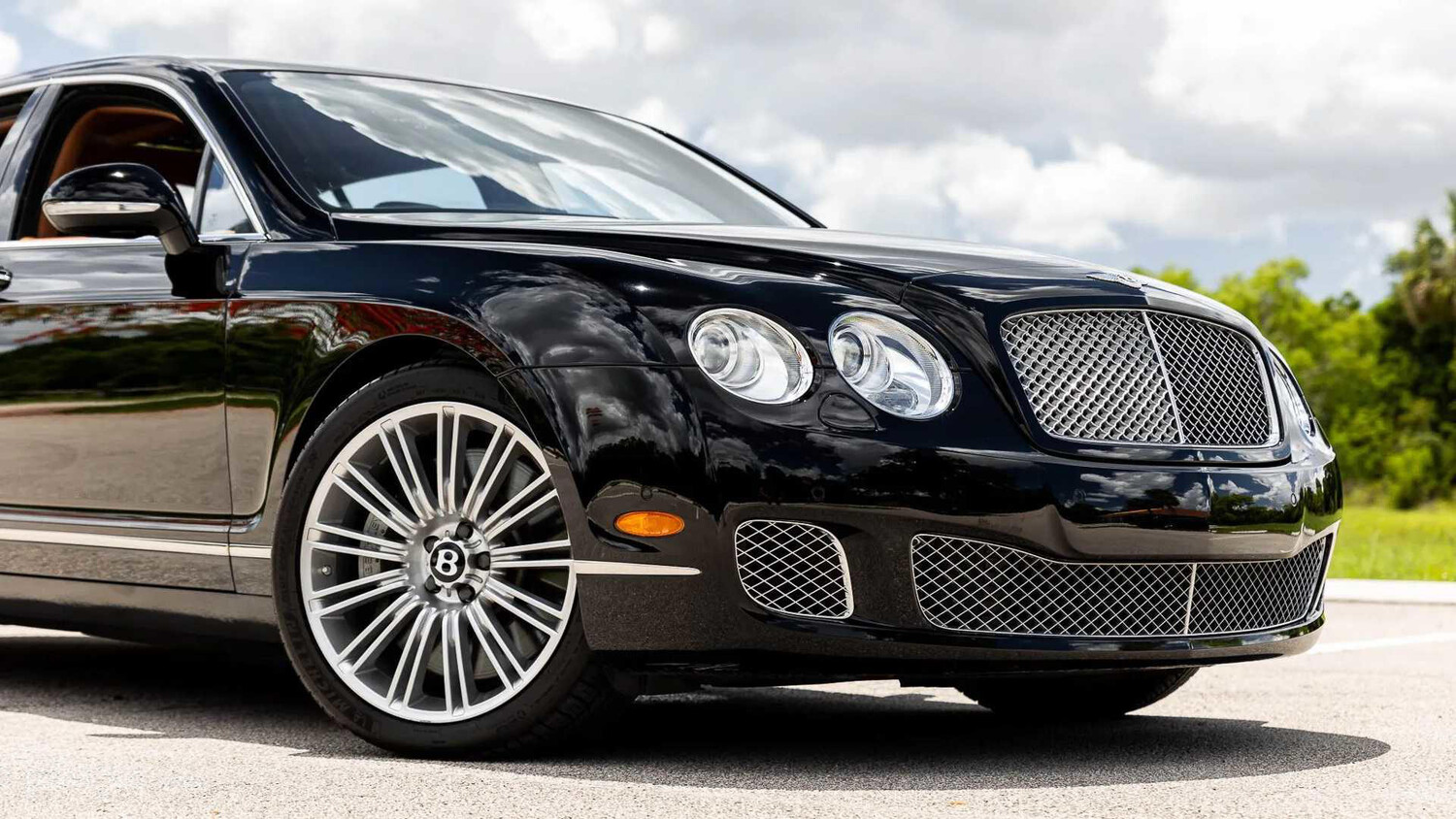
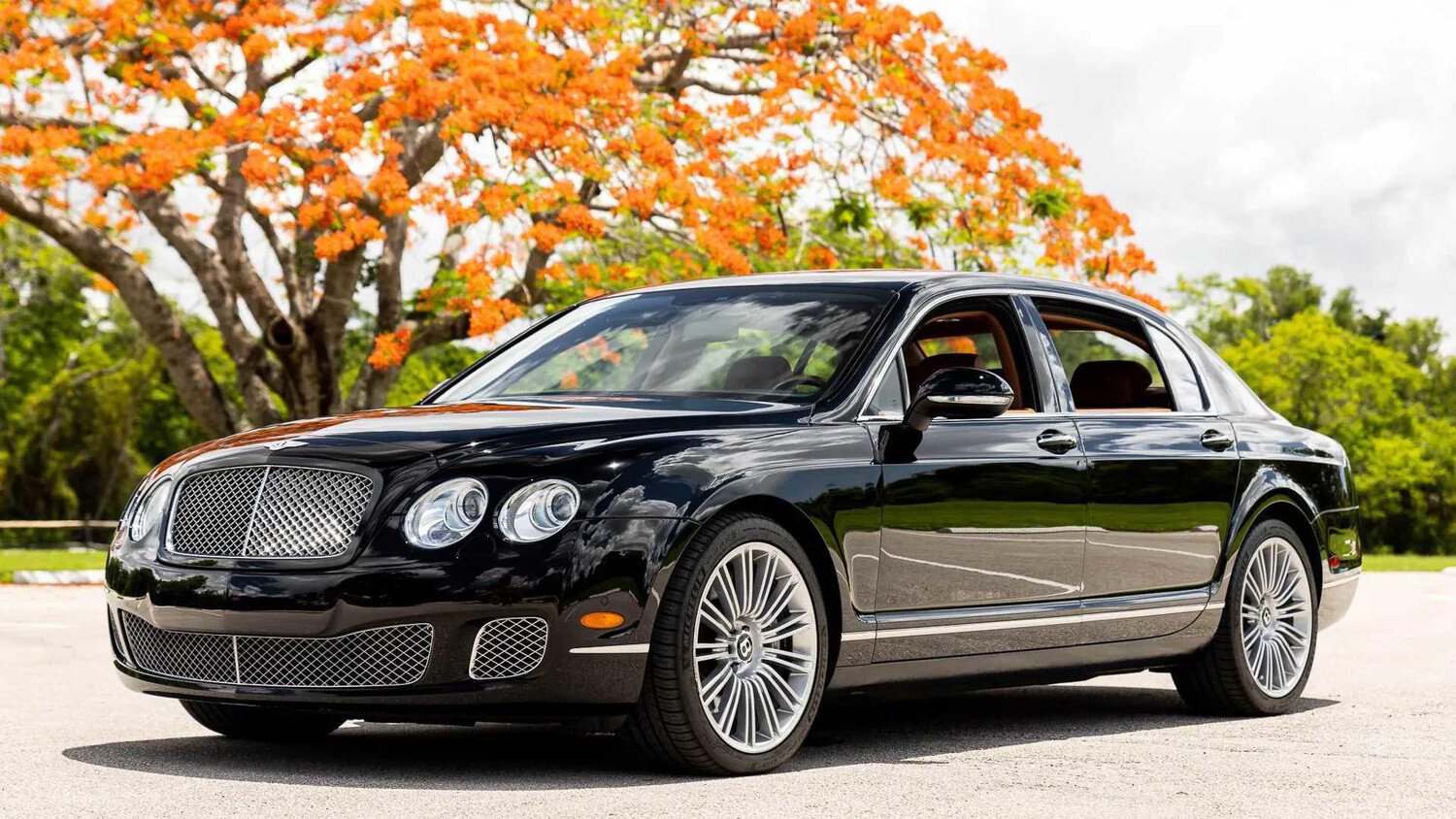
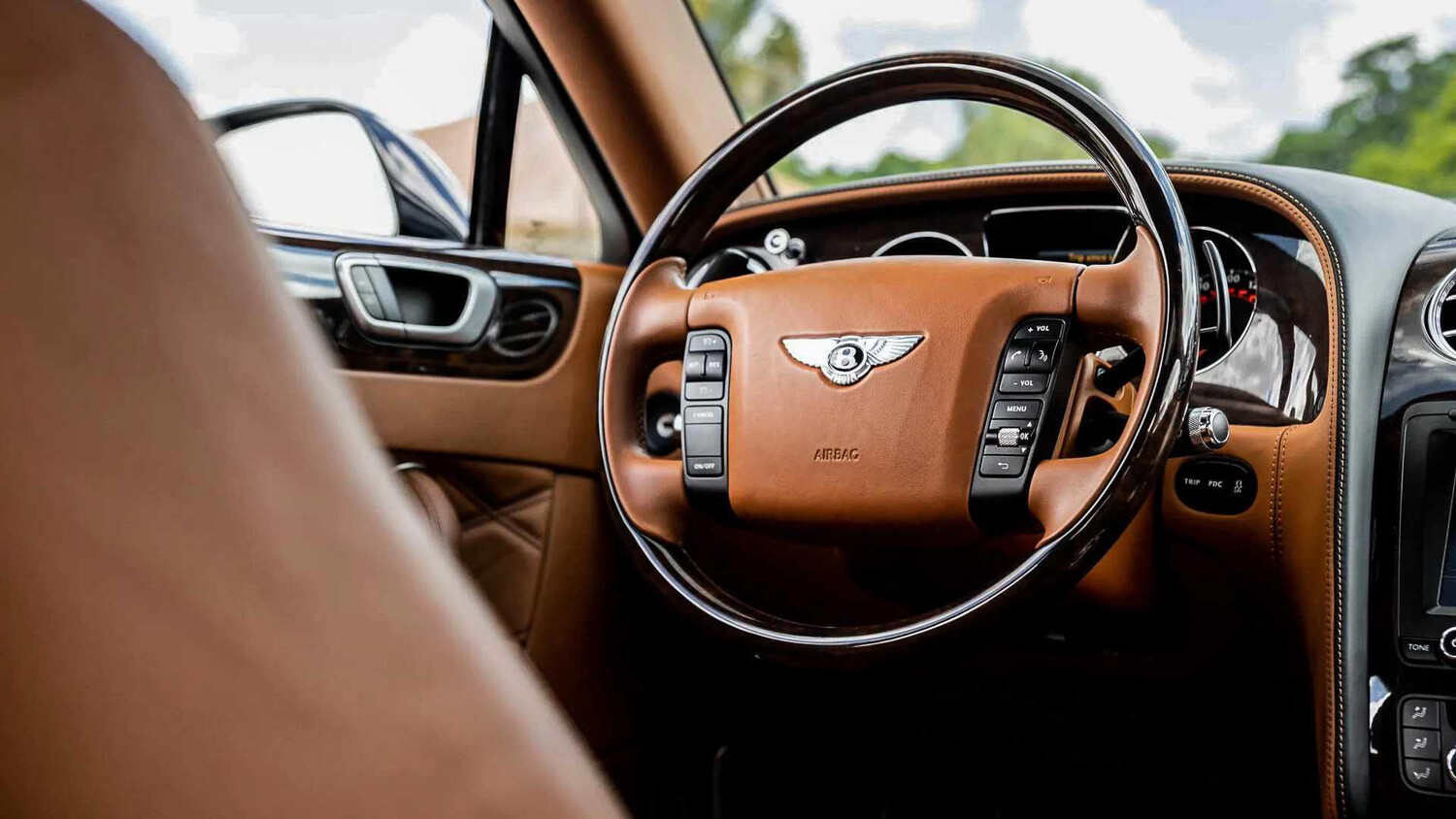
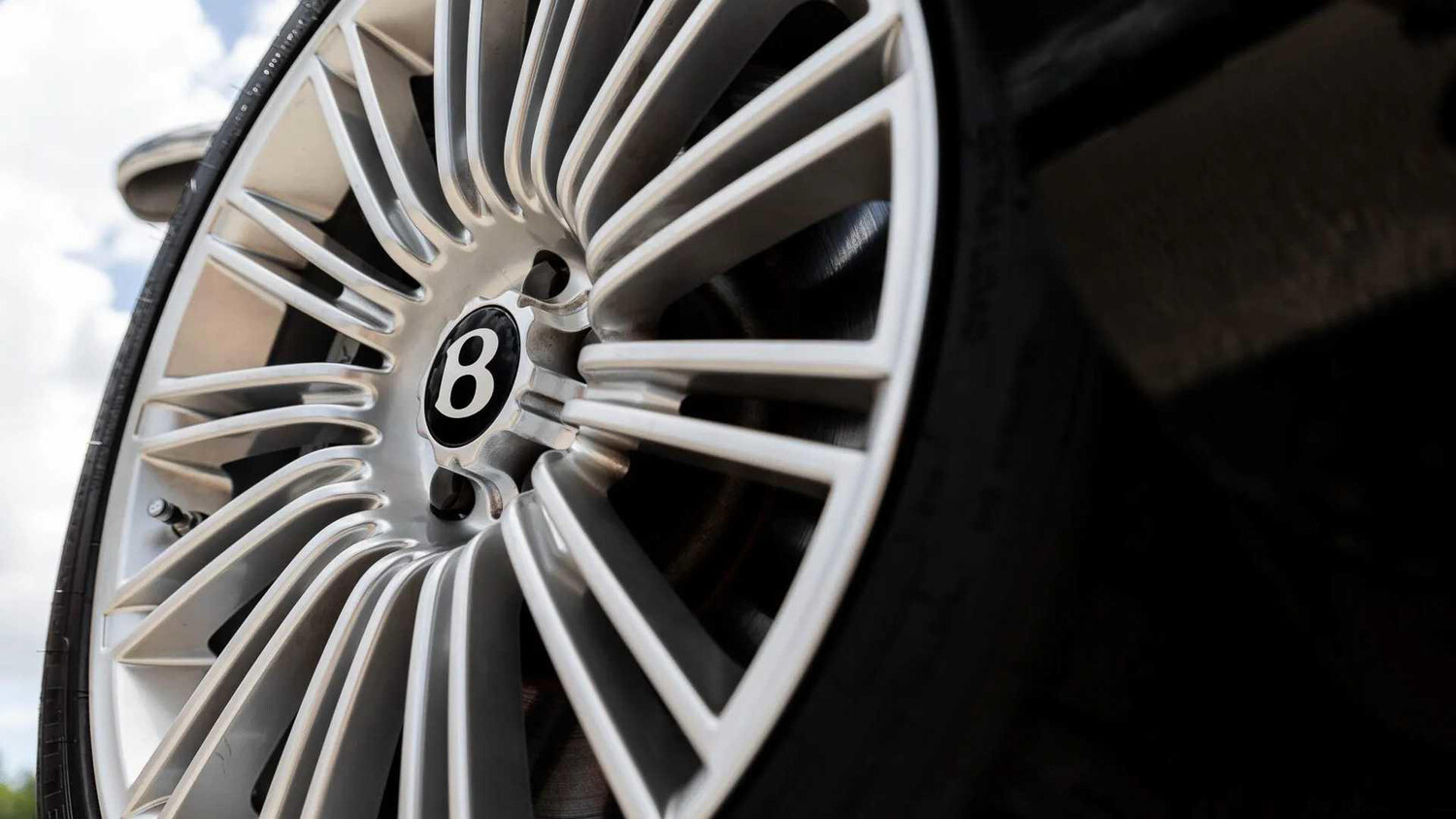
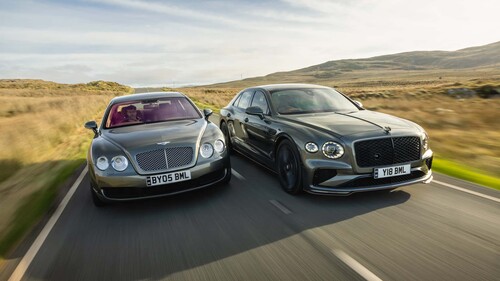
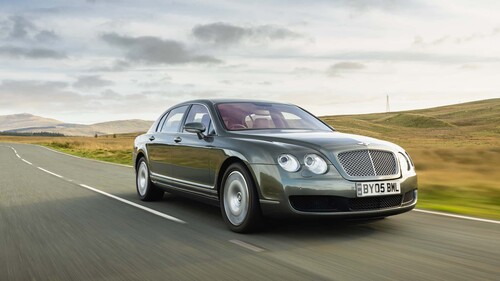
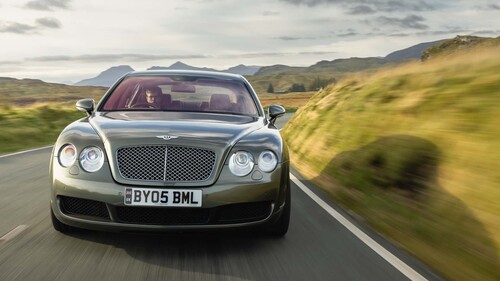
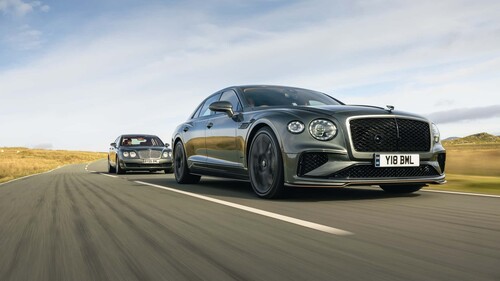
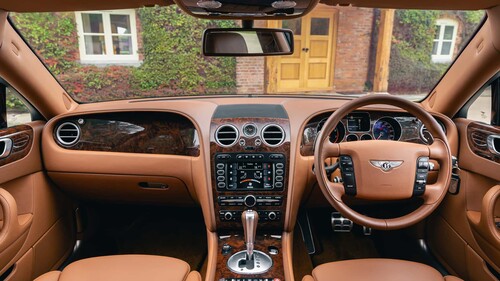
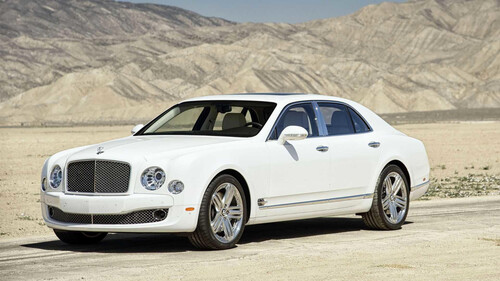
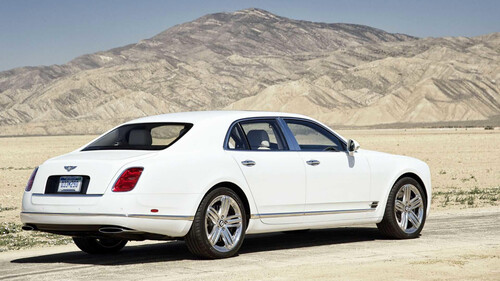
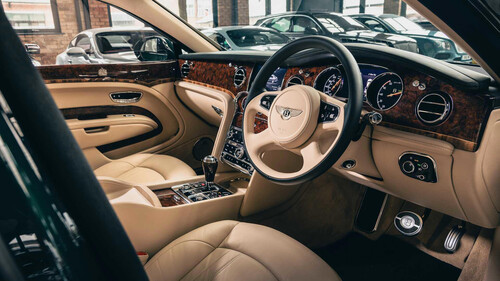
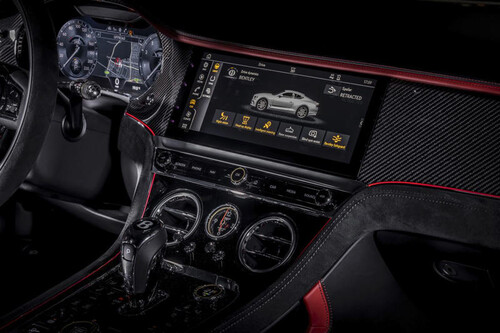
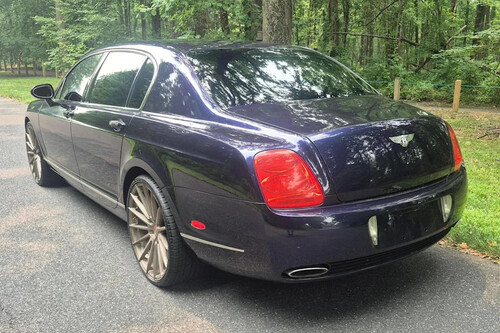
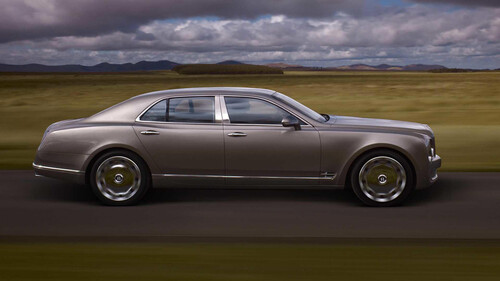
Bentley's flagship Flying Spur has, seemingly, never been a stranger to ‘Speed,’ as a recent velocity record across ice and the luxuriously lunatic, V8-powered Black Edition attest. Bizarrely though, when it was first launched in the mid-2000s, the Flying Spur, while a sales success, went through something of an identity crisis.In its formative years, it was marketed as the ‘Continental Flying Spur’ in deference to the Aston Martin-rivaling Continental coupe that had been introduced several years prior, and could only tread water as the range-topping Mulsanne limousine stole the spotlight. One package though, introduced for 2008, changed all of that, introducing as it did a bold new direction for Bentley’s luxury limousine it has followed ever since. The Price You Could Pay For A Second-Hand Flying Spur Speed Today Bring A Trailer (Premierautofl)Admittedly, second-hand examples of the Flying Spur Speed in the United States aren’t what you’d call ‘cheap.’ Third-generation models, for example, are likely to set those of you with incredibly deep pockets back upwards of $255,000. One particularly pristine 2012 model, meanwhile, with only 13,000 miles on the clock, was sold in 2021 for a still fairly stiff $106,000. Even 4,000-6,000-mile first-gen examples still nabbed an impressive $65,000 in 2025 and $86,000 in 2022.Dig deep though, and you will find some compelling – and, crucially, unmodified – first-generation Flying Spur Speeds with acceptable wear and tear, and less than five figures on the clock, for around the $30,000 mark. Indeed, an all-black, 2012 model sold just last year for $27,750, meaning one lucky owner walked away with a slightly dinged, 600 hp, 200+ mph Bentley for less than the price of a brand-new Toyota Camry (turns out there are quite a few high-rollers you could buy for that kind of money). Potentially Herculean service and maintenance costs aside, plus the sleepless nights that come from accidentally nicking that stunning quilted leather upholstery, it’s a tantalizing prospect. The Bentley Flying Spur Speed, And The Ballistic W12 That Powered It Bring A Trailer (Premierautofl)Introduced in June 2008, the first-generation Flying Spur Speed looked to put some distance between Bentley’s grand tourer and the likes of BMW’s 7 Series and the Mercedes-Benz S-Class. Furthermore, named as it was after the original high-performance 3 Liter ‘Speed Model’ from 1923, it would do so with… well, more speed.At the heart of that plan, unsurprisingly, was Bentley’s well-established, and suitably massive 6.0-liter twin-turbo W12, a technological powerhouse overseen by parent company Volkswagen. In the ‘standard’ (cough) $170,000 USD Flying Spur, said W12 kicked out an already impressive 552-horsepower and 479 pound feet of torque. For the fittingly named Speed, meanwhile, power was upped to a Dodge Viper SRT10 ACR-rivalling 600 hp, while torque similarly went up to 553 lb ft, on par with the similarly-powered, though more dynamically-focused, Continental GT.Bring A Trailer (Premierautofl)A small hike, but a significant one. While the 'standard' Flying Spur could already nail zero to 60 mph in just a shade under five seconds en-route to a 195 mph top speed, the new Flying Spur Speed could hit 60 mph from standstill in just 4.5 seconds, out-accelerating an entry-level Audi R8 in the process. Top speed, meanwhile, for this 2.7-ton GT swathed with the finest leathers sourced from across the globe, was a limited, and frankly staggering, 200 mph. Speeds of which even a Z06 Corvette was incapable at the time. For Bentley, still recovering from a barren period during the 1990s, and having just suffered a 20% drop in global sales a year prior, the new Speed was a statement of serious intent. Power Wasn’t The Only Selling Point Though Bring A Trailer (Premierautofl)Of course, while its on-the-nose name would suggest otherwise, the first Flying Spur Speed wasn’t just about raw, brute horsepower. To its already elegant exterior, new dark chrome air intakes, rifled exhaust tailpipes, bespoke 20-inch wheels, and a more upright grille were affixed. Inside, alongside a mind-boggling array of leather and wood upholstery, a three-spoke sports steering wheel and drilled aluminum pedals were added. Plus, since this was still a near-quarter-million dollar limousine, customers could savor new diamond-quilted seat facings and door trims. Yes, this affected the curb weight slightly, but with a newly tuned W12 ballistic missile under the hood, it made very little difference.Beneath that opulent skin, stiffer suspension bushings and thicker anti-roll bars were fitted, and the ride height was reduced by 10 millimeters to reduce the English stately home’s bodyroll. Wider tires were also fitted to aid overall grip and mid-corner traction, and Crewe’s band of tea-quaffing misfits even fitted sportily-tuned traction control, plus a new Dynamic Mode for increased wheel slip. Like the Turbo R before it, this was a Bentley you were encouraged to power slide. A ruinously expensive hobby, sure, but a customer-grabbing showpiece, nonetheless. Other Issues The Speed Package Improved Bring A Trailer (Premierautofl)The Flying Spur Speed was, however, still a Bentley at heart, albeit a rortier one. The chassis was thus left largely untouched to preserve the grand tourer’s pristine ride comfort (softer compound tires with less rigid sidewalls were even fitted). Indeed, introduced as part of a mid-life refresh for the Flying Spur, several much-needed updates were also introduced with the Continental Flying Spur Speed. The previously nervous Servotronic steering, for example, was re-tuned to give better feedback to the driver. Sound insulation in the wheel wells and cabin was further improved, and a faint judder over more abrasive tarmac was dialed out.Moreover, while the bushings themselves were stiffer, the suspension was extensively reworked, including revised springs, dampers and anti-roll bar settings, to further refine the ride quality without making the front end ‘float.' Rather charmingly, it was a balancing act Bentley’s engineers called “breathing." The Speed’s Legacy, 18 Years On Bring A Trailer (Premierautofl)Granted, a $246,000 (plus change) luxury limousine, unfortunately launched just as the worldwide financial crisis was starting to build steam, was never going to be a rambunctious seller for Bentley. That only 1,155 examples of the first-generation Speed were sold in the first two years might suggest the Flying Spur’s first identity transplant was a flop. At a time when Bentley was leaning more heavily into its illustrious sporting heritage, however – this was a brand, lest we forget, built off the back of The Bentley Boys’ motor racing successes and five consecutive wins at Le Mans during the 1920s – this new, more dynamic, and slightly, ever so slightly more abrasive Flying Spur Speed made a statement. And, as it turns out, was a sign of things to come.Within the year, Bentleys’ revered ‘Supersports’ name was revived atop a lightened, more performance-focused 621 hp Continental GT. By 2013, the newly-developed Continental GT3 had brought the Flying B back to motorsport with a full factory outfit that's still being run today. That same year, the considerably tighter and more confident, though still opulent, second-generation Flying Spur, now without its ‘Continental’ preface, was introduced. Now with both W12 and V8 powerplants, and, by 2016, an ‘S’ headliner producing nearly 630 hp. All to similar intrigue, and, this time, greater sales.Bring A Trailer (Premierautofl)Today, Bentley’s Flying Spur Speed – now the flagship, ironically, after the Mulsanne was shelved in 2020 – now packs up to 771 hp courtesy of its hybridized, 4.0-liter twin-turbo V8. Now more than ever, the Flying Spur is all about luxury and speed, both in name and practice. A tentative package released nearly 20 years ago can take much of the credit for that.