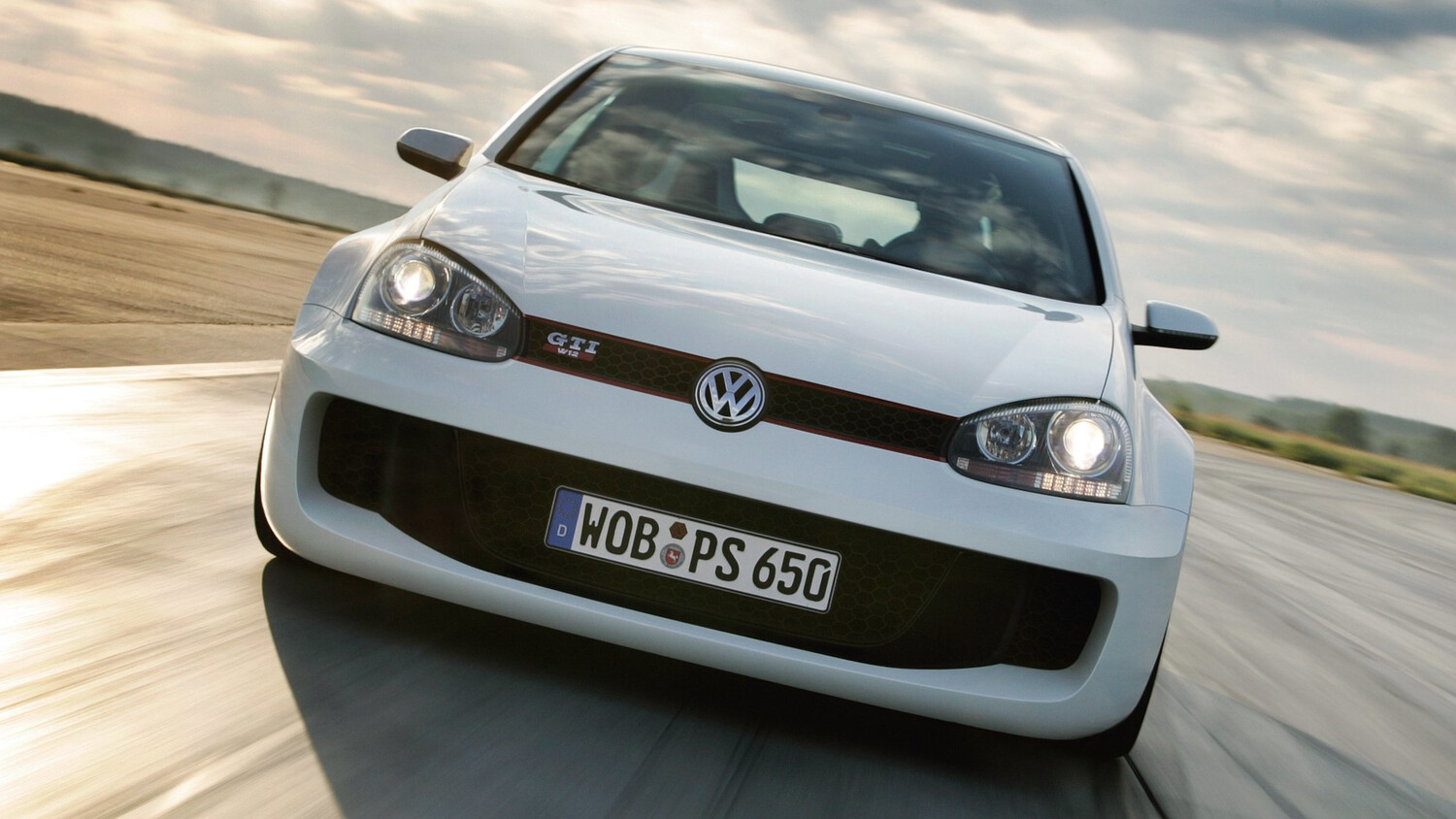
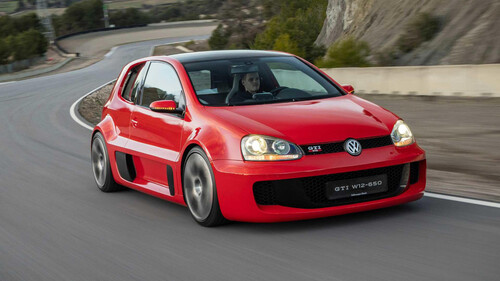
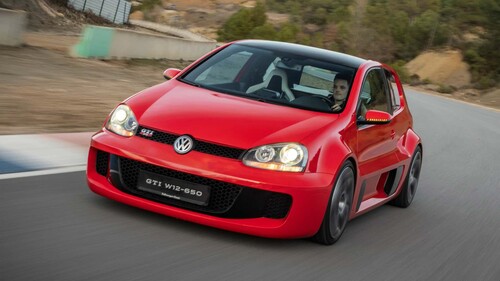
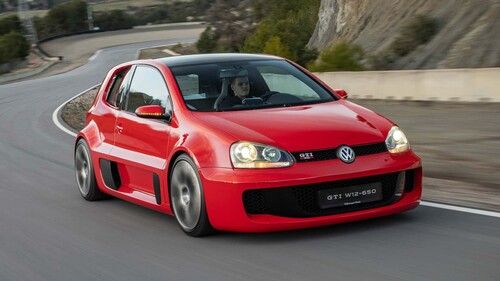
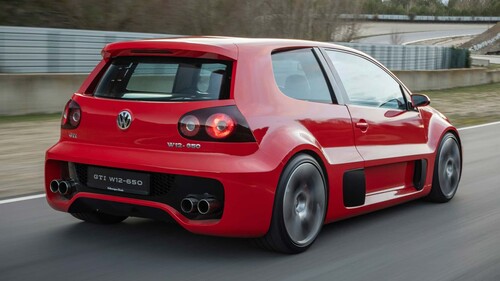
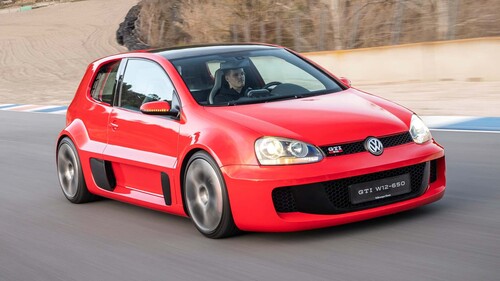
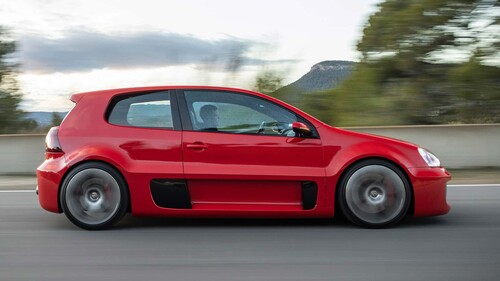
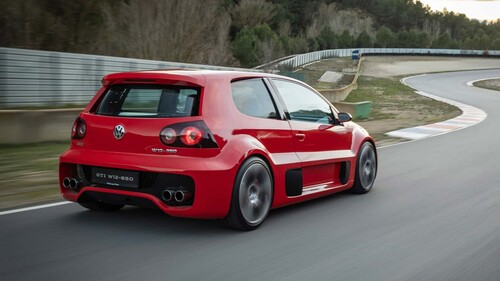
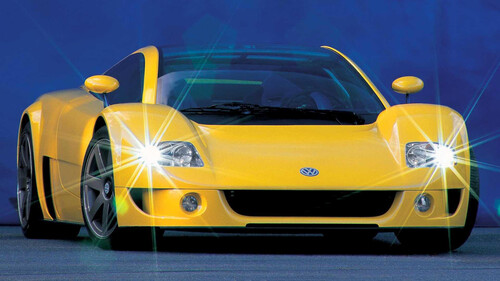
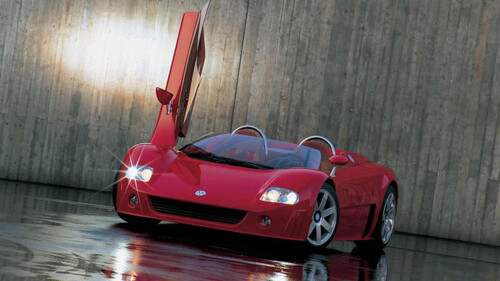
In its 50 years of existence, the Volkswagen Golf GTI has traded on its versatility. Every iteration of the hot hatch has offered accessible performance without compromising on daily usability, and at a reasonable price, too. Rarely has the badge strayed far from that formula, but there are a few occasions when Volkswagen engineers have been let loose to create some truly incredible creations wearing Gran Touring Injection branding.The best of all of them has to be the VW Golf GTI W12-650; a twelve-cylinder, mid-engine, rear-wheel drive GTI. Yeah, you read all that right. Why Was The W12-650 Built? VolkswagenTo understand why Volkswagen built the Golf GTI W12-650, we have to travel back to 1982 and to the sleepy town of Reifnitz in Austria. In that year, about 100 VW GTI enthusiasts met up on the shores of Lake Wörthersee. Doesn’t sound like a great deal, but that would become an annual tradition. Every year, that meet grew in scale, ultimately snowballing into the biggest VW meet on the planet, known as the GTI Treffen.Volkswagen caught wind of the event in its early years and realized its potential as a marketing goldmine. After all, you’ve got some of your most dedicated customers meeting in one spot, annually, why wouldn’t you take advantage? In 1987, then-CEO of Volkswagen Carl Hahn showed the first major gesture from the manufacturer, presenting Reifnitz with a granite carving of a Mk2 Volkswagen Golf GTI.Yet, the GTI Treffen wasn’t an officially-backed Volkswagen event at this stage, and it wouldn’t be so until 2006, when Volkswagen really stepped up its involvement and became an official sponsor. In 2007, it began what would become an annual tradition of presenting the Treffen with a GTI concept car to honor both the event and the community that journeyed to a lake in Austria annually.That first concept was arguably the best of them all, the Volkswagen Golf GTI W12-650. The ultimate parts-bin special, based on the Mk5 Golf GTI. The Heart Of A Bentley Volkswagen That parts bin was a treasure trove for Volkswagen engineers, dipping into its array of high-end subsidiaries to screw together the most bonkers Golf ever made. At the heart of the GTI W12-650 was a 6.0-liter twin-turbocharged W12 engine originally designed and taken from the Bentley Continental GT. Not content with its stock 552bhp output, VW engineers cranked up the power in the W12-650, producing an incredible 641hp and 553lb ft of torque. For context, more than three times that of the Mk5 GTI you could buy from a dealer.That unit would never fit under the hood of the regular Golf GTI, so it had to be relocated to the middle of the car. Yes, a mid-engine Golf GTI, as if things couldn’t get crazier.Rear seats had to be removed, naturally, to make way for a bespoke aluminum subframe that would contain the W12 engine. Power was then sent to the rear wheels, and through the six-speed torque converter gearbox found in the VW Phaeton sedan. Perhaps it’s a surprise that a DSG wasn’t used, considering Volkswagen was really pushing the technology at the time and had pushed the limits of the tech with the Bugatti Veyron just a couple of years earlier, but that’s because a dual-clutch gearbox that could both fit in the Golf and handle that level of torque wasn’t available at the time.According to Volkswagen, all of that would allow the Golf GTI W12-650 to do 0–60 mph in under 4 seconds, and head all the way to a 201mph top speed. The Bones Of A Lamborghini Volkswagen Naturally, engineers had to look for more parts from other departments to cope with that immense level of performance. Next on the list was Lamborghini, with the rear axle of a Gallardo deployed here, along with the supercar’s huge rear brakes. At the front of the car, Audi was leveraged, with RS4 calipers and rotors used.Pair that with a set of much wider tires (12 inches at the rear, and 9 at the front) to put the W12’s power down, and the W12-650 had a much, much wider track width than the regular Mk5. As a result, its bodywork had to be made 6.3 inches wider, leading to its comically huge front and rear fenders. Its suspension rode 3 inches lower than the regular car, too. Was There Anything From The Production GTI Here? Volkswagen Very little of the production Mk5 Volkswagen Golf GTI was present here. Although the W12 650 did use the hood, headlights, and taillights from that car, everything else was reworked. Even the glass windows and doors, which had to be reshaped to accommodate the car’s dramatic new bodywork. Meanwhile, a carbon fiber roof was brought in to lower the center of gravity.The interior used the same dashboard as the road car, albeit with extensive changes to its switchgear, including a row of new controls and dials placed in the center. A D-shaped steering wheel was brought in for the W12-650, as was a set of white-trimmed sports seats. The neatest touch of all is the GTI-branded fire extinguisher in place of the glove compartment, though. Production Was A Possibility VolkswagenAlthough built as a showcar for the GTI Treffen first and foremost, Volkswagen did let some auto journalists loose in the GTI W12-650 as it considered whether or not to build a limited-run production version. Most famously, it featured on Top Gear, with Jeremy Clarkson praising its linear power delivery, although critiquing its snappy handling characteristics. No surprise, given the short wheelbase. UK-based Evo magazine echoed similar statements in its written review, and quoted designer Marc Lichte’s desire to put the car into production, stating: “It’s up to you guys to spread the word, help drum up demand, help persuade our management to make the W12.”Sadly, that never happened. Although Volkswagen never publicly commented, it’s safe to assume the limited appeal and cost of a W12-powered GTI didn’t make business sense, leading to the W12-650 being relegated to history books. Why It’s Back Now Volkswagen Now, though, Volkswagen has once again brought the W12-650 to the spotlight, and this time with a fresh red wrap on. That’s to celebrate 2026 marking 50 years of the Golf GTI, and VW realizing just how cool the W12-650 concept is. Don't expect this to stimulate some interest in a new version of the concept, given the Bentley W12 engine died in 2024, as much as we'd love to see it.Truthfully, though, the GTI W12-650 never disappeared, at least if you knew where to look for it. Take a visit to Autostadt in Volkswagen’s hometown of Wolfsburg, Germany, a complex that serves as a theme park-like celebration of all things VW. The W12-650 lives here and is often on displayed at the on-site museum. Oh, and you can grab Volkswagen-branded currywurst from the cafeteria while you're at it.