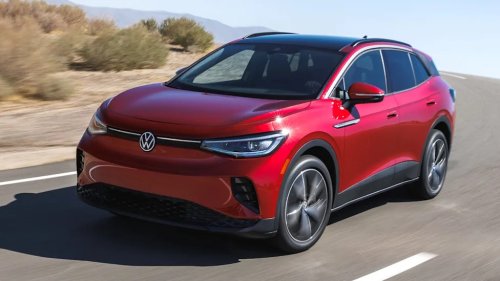
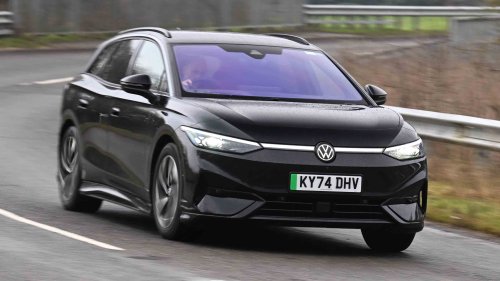
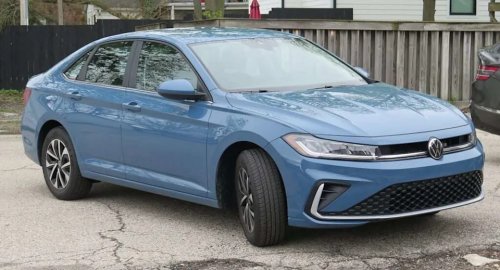
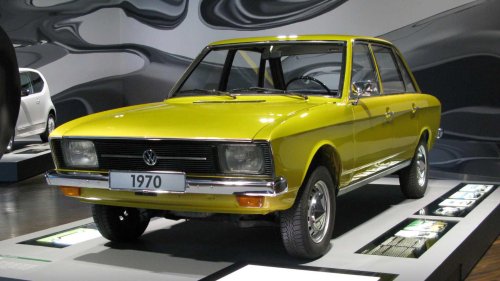
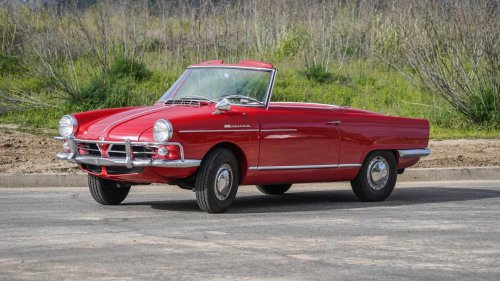
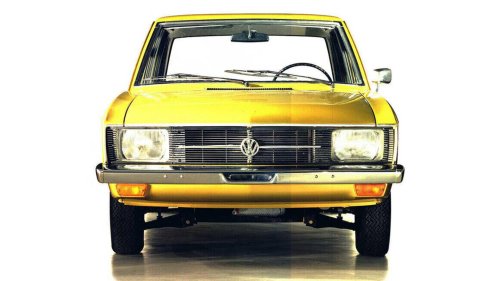
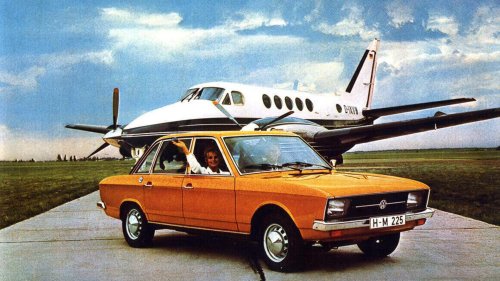
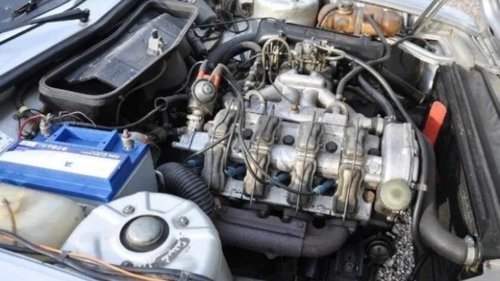
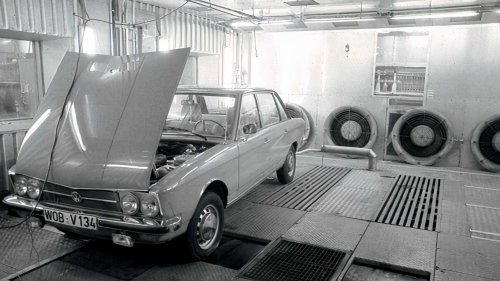
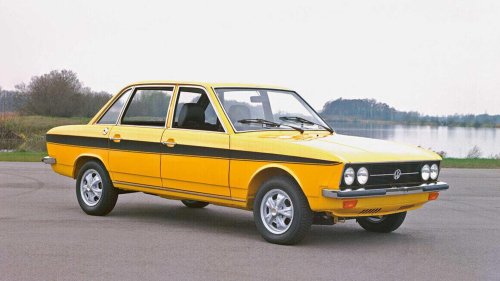
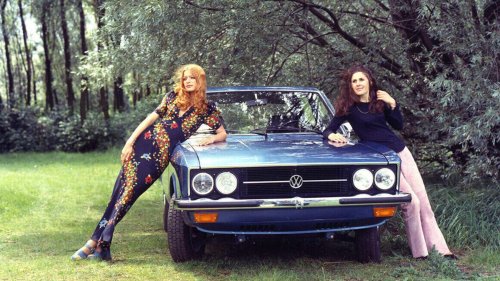
These days, Volkswagen is one of the brands that routinely sits at the cusp of modern automotive innovation. In our current age of technology, VW employs the use of things like artificial intelligence in its models, along with advanced driver assistance features and a slew of cutting-edge software. In addition, the German automaker also produces a small selection of electric vehicles which, like it or not, still seem to be the most popular way forward in the mainstream automotive market.The thing is, though, Volkswagen was not always the crisp, modern brand it is today. After its founding in 1937, the manufacturer focused on building small, cheap modes of transportation for the masses. Following some broken promises during World War II, the VW brand got a fresh start thanks to a British Army officer by the name of Ivan Hirst. The brand was responsible for building a small handful of models, such as the famous VW Karmann Ghia. However, in 1970, Volkswagen released its first "modern" car, the K70. The model boasted a few notable firsts for the brand, and helped catapult it into the modern age. The Days Of Old Are Over Wikimedia Commons: Herranderssvensson Quick Facts About The Volkswagen K70 Introduced in 1970 Originally meant to be an NSU model Constituted the first front-engined, front-wheel drive, water-cooled model by VW Acted as a direct replacement for the Volkswagen Type 4 Axed in 1975 In the late 1960s, West German automaker NSU was in deep financial trouble. The brand had been around for several decades, as its founding took place in 1873. Back then, NSU was involved in the production of knitting machines and bicycles. It then produced its first motorcycle in 1901, followed by its first car in 1905. The brand also built military vehicles for Germany during World War I. However, following the end of the conflict, NSU struggled to break into mass market automobiles, as sales were pitifully slow.NSU's automobile production was halted entirely in 1932, with the company instead focusing on its motorcycle production. It wouldn't be until 1957 that NSU would, again, begin building cars. The first model to hit the streets was called the Prinz, a two-cylinder, air-cooled car. In 1964, NSU released something called the Wankelspider which, if you can guess, employed the use of a Wankel rotary engine. However, by this point, financial issues were mounting, and something needed to be done.Bring A Trailer Sadly, things weren't going to straighten out. In 1967, NSU released the Ro 80, a small sedan that employed the same tiny, twin-rotor Wankel mill found in the Wankelspider. Despite most folks liking the Ro 80, sales were awful. Looking for a quick turnaround, the brand began designing the Ro 80's replacement, the K70, in 1968. It was a Hail Mary effort, but with trouble mounting, NSU's K70 aspirations wouldn't come to fruition.In 1969, Volkswagen absorbed the failing NSU brand, along with the plans for the K70 and a handful of pre-production examples. However, instead of scrapping the model, Volkswagen decided to keep most of the design and engineering work already completed by NSU intact. In essence, the only changes made were to the K70's badging. Seeing as minimal work needed to be done, the K70 was ready for mass production at the beginning of 1970. The First Modern VW VolkswagenUpon the K70's 1970 launch, it marked a slew of firsts for Volkswagen. Up until this point, the brand had solely focused on rear-engined, rear-drive cars that boasted air-cooled engines. Producing cars in this manner was great for cost-cutting, and it also allowed for easy maintenance and repair. However, the days of air-cooled engines and rear-mounted motors in utilitarian transportation were coming to an end, and German folks were beginning to want cars with a more refined feel.Volkswagen The K70 was the answer to these issues. It was the first mass-produced Volkswagen sporting water cooling, a front-mounted engine, and front-wheel drive. These days, a VW featuring those attributes is par for the course. But, back in 1970, this was a revolutionary development in Germany. Once it hit showroom floors over in England, it was priced right at about 1,584 pounds. In today's money, that equates to roughly $43,562. A steep price for sure, but Volkswagen's K70 flagship was, in VW's opinion, worth the price.However, trouble began to bubble as soon as the K70 officially went on sale. At the time, the German public – along with the Western European populace as a whole – were extremely used to VW's boasting rear-engined, rear-drive, air-cooled cars. This newfangled K70 and its backwards mechanicals put a lot of folks off. Not to mention, it was more expensive than some of its competitors, and even competed against other VWs, like the 411/412.The Audi 100 also cut into the K70's sales. To top it all off, West Germans in particular didn't like the fact that the K70 was originally an NSU design, prompting even more people to avoid the new VW. Under The (Front) Hood Bring A TrailerThe engine that upset a lot of folks due to its choice of living quarters was a pair of inline-four engines. At first, a 1.6-liter mill was on offer. It was a carbureted unit capable of producing just 74 hp. While adequate for the early 1970s in Europe, this power output and use of a carburetor caused some issues, chief among which was it forced the K70 into early inferiority.The VW 411 had, by this time, already switched over to fuel injection, and it also produced a few more ponies to boot. Responding to the criticism, Volkswagen added a 1.8-liter unit to the K70's options list in 1973 to garnish its mild facelift, in which the model gained a set of quad headlights and a revised grille.Wikimedia Commons: Lothar Schaak Backing up either the 1.6 or 1.8-liter mill was a four-speed, floor-mounted manual transmission, and no automatic option was offered. Its suspension was well-sorted for its time, with its front end sporting MacPherson struts, along with a sway bar.At the back, a pair of independent trialing arms and coil springs took up residence, complemented by separate shock absorbers. Reportedly, this suspension setup was praised for its feel, as well as its comfort. Stopping was taken care of by a pair of disc brakes up front, and a pair of drums around the back.Volkswagen A special-edition K70 joined the fold in 1973. It was coined the "LS", and sported upgrades like decals running along its flanks and a unique set of steel rims. Reportedly, only about 5,000 LS models were produced in 1973. The Right Place At The Wrong Time VolkswagenDespite its trailblazing nature, the VW K70 simply couldn't pull it together in terms of overall sales figures. Its fresh approach to engine and drivetrain orientation was largely rejected by the European public, and its inferior engines meant those who sought a bit of pep from their vehicles looked elsewhere.It also faced competition from all angles, including, as we learned, from its own company. Come 1973, VW released the Passat, which served to further kneecap the K70's market presence. That same year, the K70 was technically axed from VW's model lineup, although production continued on until the early months of 1975.In the end, Volkswagen managed to shift approximately 211,127 K70's across five years of production. While this may seem like a respectable number, it was allegedly under VW's projected totals. It seems that, while the K70 was a revolutionary model for Volkswagen, it simply came too early.



















 +43 others


![Volkswagen, Volkswagen ID.4, Volkswagen ID.5, Volkswagen's best-seller is going electric in 2027 to replace the ID.4 and ID.5 [Images]](https://cdn.topcarnews.net/thumb/id/aHR0cHM6Ly9pMC53cC5jb20vZWxlY3Ry-ZWsuY28vd3AtY29udGVudC91cGxvYWRz-L3NpdGVzLzMvMjAyNi8wOS9Wb2xrc3dh-Z2VuLUlELVRpZ3Vhbi1JRC00LmpwZWc_-dz0xNTAwJmFtcDtxdWFsaXR5PTgyJmFt-cDtzdHJpcD1hbGwmYW1wO3NzbD0x/aed2aa2870791850c8e69c5fc3a0ed85.jpeg?t=20261004&post_id=66267)
![Volkswagen, Volkswagen ID.4, Volkswagen ID.5, Volkswagen's best-seller is going electric in 2027 to replace the ID.4 and ID.5 [Images]](https://cdn.topcarnews.net/thumb/id/aHR0cHM6Ly9lbGVjdHJlay5jby93cC1j-b250ZW50L3VwbG9hZHMvc2l0ZXMvMy8y-MDI2LzA5L1ZvbGtzd2FnZW4tSUQtVGln-dWFuLUlELTQtZnJvbnQtcXVhcnRlci5q-cGc_c3RyaXA9aW5mbyZhbXA7dz0xMDI0/97fb00cd3919b8d0dc36440715039e6e.jpg?t=20261004&post_id=66267)
![Volkswagen, Volkswagen ID.4, Volkswagen ID.5, Volkswagen's best-seller is going electric in 2027 to replace the ID.4 and ID.5 [Images]](https://cdn.topcarnews.net/thumb/id/aHR0cHM6Ly9lbGVjdHJlay5jby93cC1j-b250ZW50L3VwbG9hZHMvc2l0ZXMvMy8y-MDI2LzA5L1ZvbGtzd2FnZW4tSUQtVGln-dWFuLUlELTQtc2lkZS5qcGc_c3RyaXA9-aW5mbyZhbXA7dz0xMDI0/ed240b20e8275f3af4b904f46ebb5fb3.jpg?t=20261004&post_id=66267)
![Volkswagen, Volkswagen ID.4, Volkswagen ID.5, Volkswagen's best-seller is going electric in 2027 to replace the ID.4 and ID.5 [Images]](https://cdn.topcarnews.net/thumb/id/aHR0cHM6Ly9lbGVjdHJlay5jby93cC1j-b250ZW50L3VwbG9hZHMvc2l0ZXMvMy8y-MDI2LzA5L1ZvbGtzd2FnZW4tSUQtVGln-dWFuLUlELTQtcmVhci1xdWFydGVyLmpw-Zz9zdHJpcD1pbmZvJmFtcDt3PTEwMjQ/436c7979cf5b947053f7f0bf39ff94bc.jpg?t=20261004&post_id=66267)
![Volkswagen, Volkswagen ID.4, Volkswagen ID.5, Volkswagen's best-seller is going electric in 2027 to replace the ID.4 and ID.5 [Images]](https://cdn.topcarnews.net/thumb/id/aHR0cHM6Ly9lbGVjdHJlay5jby93cC1j-b250ZW50L3VwbG9hZHMvc2l0ZXMvMy8y-MDI2LzA5L1ZvbGtzd2FnZW4tSUQtVGln-dWFuLUlELTQtZnJvbnQuanBnP3N0cmlw-PWluZm8mYW1wO3c9MTAyNA/ec2e4ca027ccbfb42942abe523f3acf7.jpg?t=20261004&post_id=66267)
![Volkswagen, Volkswagen ID.4, Volkswagen ID.5, Volkswagen's best-seller is going electric in 2027 to replace the ID.4 and ID.5 [Images]](https://cdn.topcarnews.net/thumb/id/aHR0cHM6Ly9lbGVjdHJlay5jby93cC1j-b250ZW50L3VwbG9hZHMvc2l0ZXMvMy8y-MDI2LzA5L1ZvbGtzd2FnZW4tSUQtVGln-dWFuLUlELTQtcmVhci5qcGc_c3RyaXA9-aW5mbyZhbXA7dz0xMDI0/668525889dc433b0fd0e166fd5bd8366.jpg?t=20261004&post_id=66267)