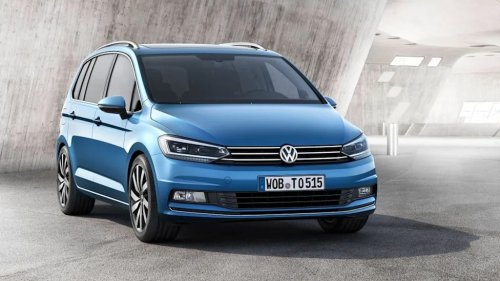
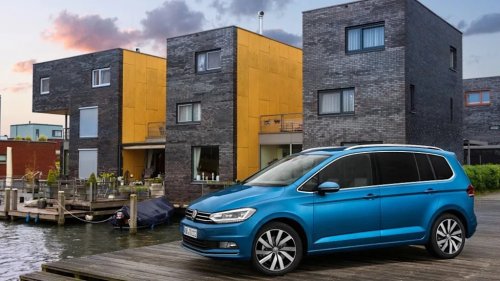
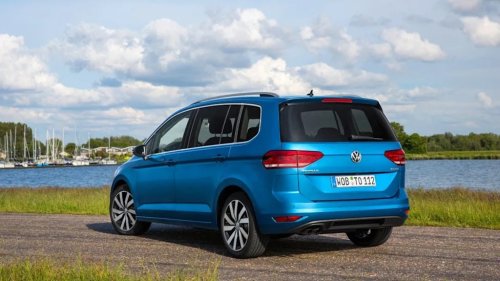
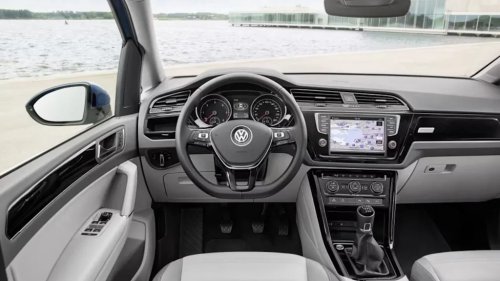
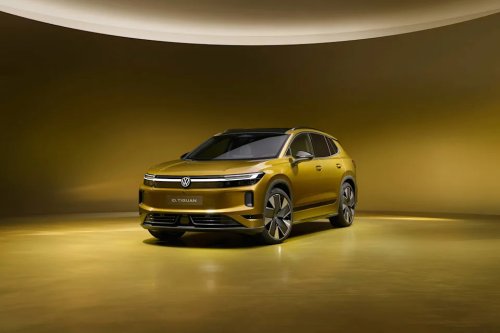
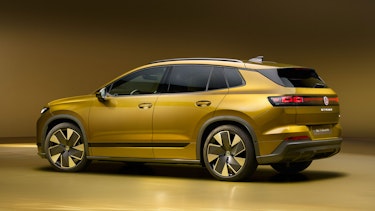
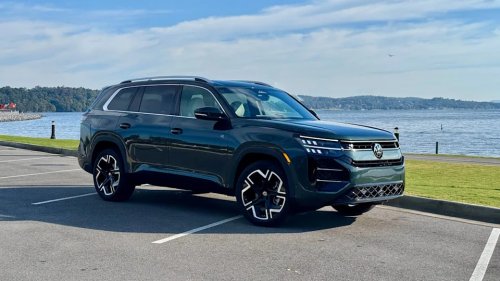
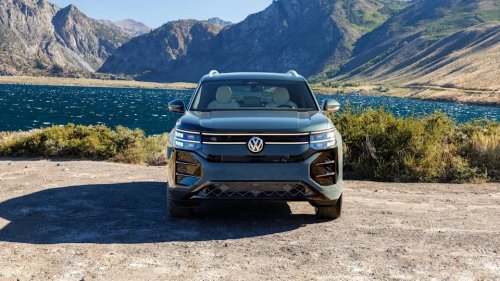
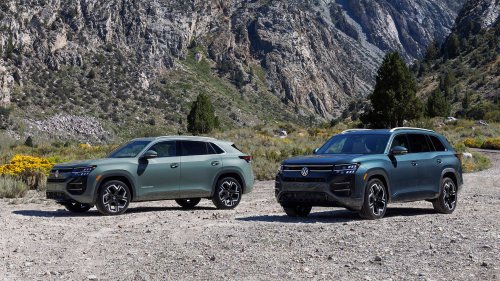
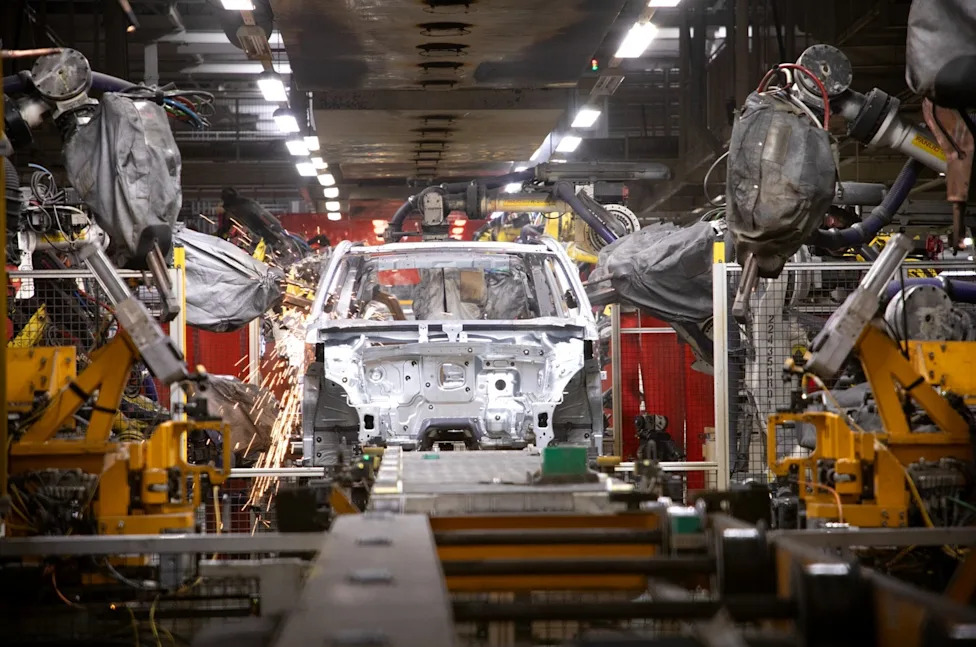
Photo Courtesy: Autorepublika.Almost quietly, without a major ceremony and without the kind of attention now given to battery-electric crossovers, one of Europe’s most important family cars has left production.On April 29, 2026, the final Volkswagen Touran rolled off the production line in Wolfsburg, closing a story that lasted for two decades and change.For many European drivers, the Touran was never a car that created instant emotion. It did not have a sporty image, aggressive styling, or spectacular performance.AdvertisementAdvertisementIts greatest strength was exactly the opposite. The Touran answered real family needs with space, practicality, rational engineering, and everyday usefulness.A Quiet Success In EuropePhoto Courtesy: Autorepublika.In Germany alone, over 1.07 million Tourans were registered between 2002 and the end of 2025. Total production reached about 2.3 million vehicles.Its strongest year came in 2004, when sales passed 95,000 units. In its best period, the Touran recorded over 52,000 annual registrations in Germany.Although the second generation remained on sale for 11 years and became the oldest model in Volkswagen’s current European lineup, its departure means far more than the end of one vehicle. With the Touran gone, Volkswagen no longer has a traditional minivan in its range.AdvertisementAdvertisementThe official reason for ending production is a new United Nations safety regulation that takes effect on July 6, 2026. The Touran could no longer meet the new standards without expensive technical changes, and Volkswagen clearly did not see a business case for developing a new generation.The Auto 5000 ExperimentThe Touran’s history is far richer than a normal MPV life cycle. Its creation was tied to one of the most unusual industrial experiments in modern German automotive history.At the start of the 21st century, Volkswagen was looking for a way to keep production in Germany instead of moving factory work to lower-cost countries. That led to the Auto 5000 GmbH project, built around the slogan “5,000 times 5,000.”The idea was to hire thousands of workers under a new production organization model. A key figure was Peter Hartz, then Volkswagen’s labor director, who later became known for the controversial Hartz IV reforms of the German welfare system.AdvertisementAdvertisementThe Touran became the central vehicle in that experiment. Workers, often recruited from the unemployed, received special training to build the model, while production was organized through more flexible teams and a flatter hierarchy.A Practical MPV With Golf RootsPhoto Courtesy: Autorepublika.The first-generation Touran quickly became a success and one of the leaders of Europe’s MPV segment. It used the platform of the Golf V, but its complicated interior layout and many seating configurations made it a serious test for modern production methods.The second generation arrived in 2015 and brought major improvements. The new Touran measured 178.2 inches long and was about 1.2 inches wider than its predecessor, which made the cabin noticeably roomier.The second row used three individual seats, while a third row was available as an option. Practicality remained the model’s signature quality.AdvertisementAdvertisementThe five-seat version offered 26.2 cubic feet of cargo space, or up to 69.9 cubic feet with the rear seats folded. The seven-seat version still had 4.8 cubic feet with the third row in use, while folding all rear seats opened up 65.6 cubic feet.The Market Moved Toward CrossoversPhoto Courtesy: Autorepublika.In its final years, the engine lineup was reduced to proven choices. Buyers could choose a 92 cubic inch TSI gasoline engine with 150 hp or a 122 cubic inch TDI diesel offered with 122 hp or 150 hp.Those engines remained efficient and strong enough for family use, but the market had moved in a completely different direction. Buyers who once chose practical minivans now often move directly into crossovers.That is why a direct Touran successor is not planned. In terms of size, the closest current Volkswagen is the Tiguan, while a seven-seat option is now offered only in the larger Tayron.AdvertisementAdvertisementThis marks the end of a category that once represented the ideal European family car. Minivans, once seen as symbols of practical and rational mobility, have almost completely given way to crossovers and SUVs with tougher styling and a higher seating position.A Rational Car From A Different EraThe Touran may never have been a dream car, but for millions of families, it was exactly what they needed. It was reliable, intelligently packaged, easy to live with, and designed to solve daily family challenges without unnecessary complication.In today’s market, where style often wins over function, its departure feels like the end of a much more rational automotive era.This article originally appeared on Autorepublika.com and has been republished with permission by Guessing Headlights. AI-assisted translation was used, followed by human editing and review.If you want more stories like this, follow Guessing Headlights on Yahoo so you don’t miss what’s coming next.























![Volkswagen's best-seller goes EV to replace the ID.4 [Images]](https://cdn.topcarnews.net/thumb/id/aHR0cHM6Ly9pMC53cC5jb20vZWxlY3Ry-ZWsuY28vd3AtY29udGVudC91cGxvYWRz-L3NpdGVzLzMvMjAyNi8xMC9Wb2xrc3dh-Z2VuLUlELVRpZ3Vhbi1JRC00LWltYWdl-cy5qcGVnP3c9MTUwMCZhbXA7cXVhbGl0-eT04MiZhbXA7c3RyaXA9YWxsJmFtcDtz-c2w9MQ/0ccd3b3b36acc251cd0f5ee652e9aa5a.jpeg?t=20261010&post_id=69282)