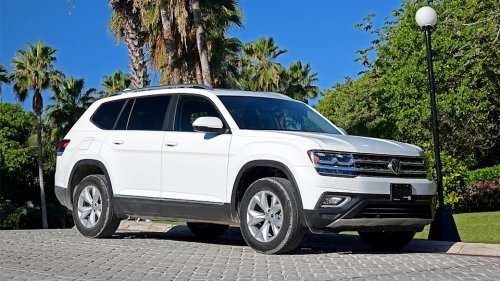
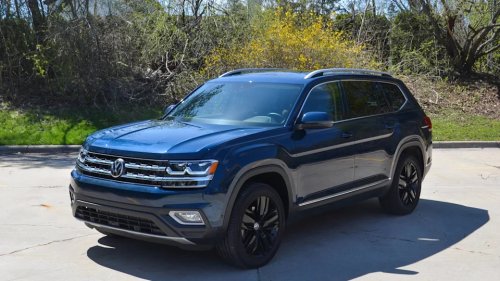
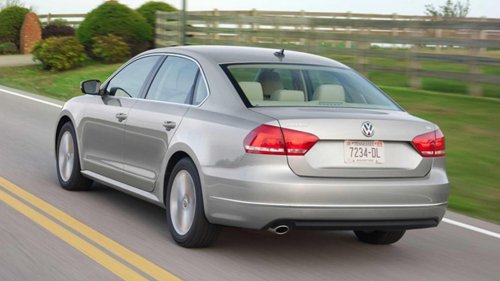
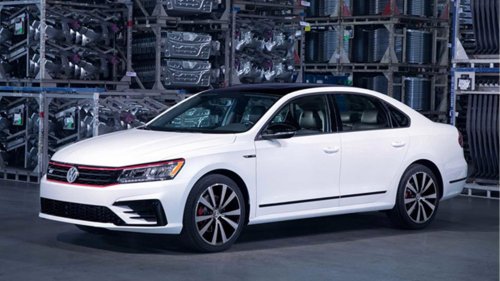
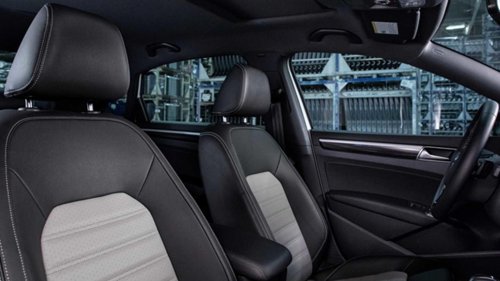
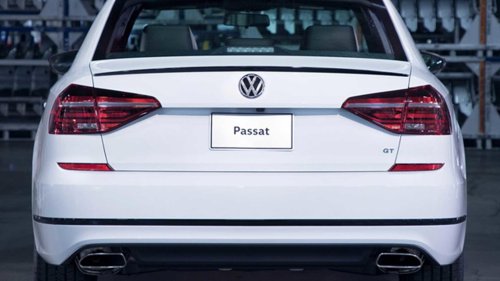
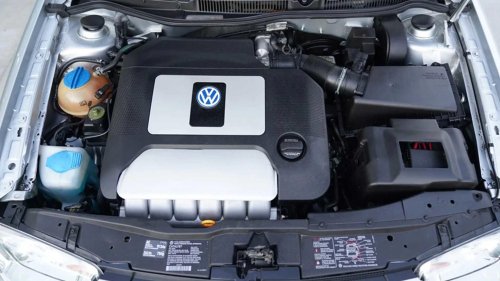
When trying to build a long-lasting legacy and a loyal fanbase that will continue to buy your latest and greatest models, manufacturers need an insignia of some kind. This could come in many forms, such as a particular feature that sets a vehicle apart from its rivals or a radical form of engine. The latter can be seen around the world, in examples such as Subaru's Boxer engines andAudi's throaty five-cylinder.Another instance is the Volkswagen Group's VR6, which enjoyed an extensive production run over a span of over two decades. It left VW's sedan line-up a while ago, though, but this only means models with the powerplant are now a bit of a bargain on the used market.This piece explores the history and the used values of the 2018 Volkswagen Passat V6 GT, the last VW sedan ever to feature the VR6 engine design. The story also investigates the reasons for the brand moving away from this powerplant. The Passat Took Care Of VW's Mid-Size Sedan Interests In The US Volkswagen Given the US's traditional love for four-door sedans, which has admittedly now wavered thanks to the explosion of the SUV market, it shouldn't come as a surprise that VW wanted to cash in on demand. Its trusty Golf hatchback model made waves across the Atlantic in Europe, though American drivers wanted a sedan that offered a little more cabin space. The Golf-based Jetta was developed as a result. However, VW had already entered the segment in 1974 with the Passat. Initially, VW sold it in the US as the Dasher and then as the Quantum before finally adopting the Passat moniker in 1990. A US-Specific Passat Volkswagen Wanting to lock in its gains, VW decided to develop a separate variation of the Passat for the Chinese and US markets. They differed from the version primarily sold in Europe. Launched for the 2012 model year, the new car was 3.9 inches longer and 0.9 inches wider, which enhanced interior space. Several engines were available, including a naturally aspirated 2.5-liter five-cylinder as the base powerplant. For drivers who wanted a little more grunt, VW also offered its beefy 3.6-liter VR6 unit. It was available in the Passat from the 2012 model year, when the US-focused models debuted, until the 2019 model year, when VW decided to offer a turbocharged 2.0-liter four-cylinder solely. The VR6-Powered Passat Had Legs Volkswagen The VR6 was an intelligently designed powerplant, as its cylinders were designed to have a narrow 15-degree angle, as opposed to the 60- or 90-degree angles seen on V6 engines. This meant that the engine could be made considerably smaller than a V6 or inline-six engine, which helped to increase the amount of usable cabin space. At the same time, the six-pot engine produced more power than a naturally aspirated four-cylinder. It was also smoother, which was key in a mid-size sedan like the Passat.In the 2018 Passat SEL Premium and GT trims, the engine offered was capable of producing 280 hp. The power is channeled through the front wheels via a quick-shifting, six-speed DSG automatic transmission. As a result of these components, the Passat VR6 could accelerate to 60 mph in around 6.5 seconds, making it as quick as some sports cars on the market. That said, it shouldn't be treated as one. The Passat GT Is More Of A Long-Distance Cruiser Volkswagen The model may have been graced with a mildly sporty suspension setup, but the main purpose was to be a smooth highway mile muncher. It even used the same braking system as the standard four-cylinder variant, which hinted that this version wasn't exactly designed to slay apexes on the weekend. The VR6 was there to provide enough power for the Passat to deal effectively with whatever roads and challenges were thrown at it, while remaining smooth and effortless. Decent Passat VR6s Won't Cost You A Fortune Volkswagen If you fancy having the upmarket but rapid Passat VR6 in your driveway, then you have two different versions to choose from. The SEL Premium came with more standard interior equipment than the GT, including heated rear seats, an upgraded touchscreen infotainment system, and additional advanced safety systems such as Park Distance Control and Lane Departure Warning. The GT looked more sporty thanks to carbon fiber interior trim, larger 19-inch rims, and blacked-out exterior trim, among other aggression-building changes. The GT was the more popular choice for most buyers, and thus, SEL Premiums are difficult to find on the used market.Make sure that the car has been frequently serviced throughout its life to ensure the VR6 is in tip-top condition. The right vehicle can provide you with a modern, affordable luxury sleeper. The VR6 Is No Longer With Us Bring a Trailer While the Passat was the last VW sedan to feature the VR6 engine, it lived on for half a decade or so more beneath the hood of the brand's SUV range, such as the Atlas. This was at least until 2024, when VW decided to retire the powerplant permanently. While the layout was unique, the powerplant wasn't the most fuel-efficient engine in the world. It struggled to compete in an evolving world full of turbocharged four-cylinder units that could provide a similar amount of power, while also being more fuel-efficient. Following VW's tumultuous last decade, which included the infamous Dieselgate scandal, the brand wanted to clean up its image as much as possible. Hence, the trusty VR6 had to go. Notable Vehicles That Featured The VR6 Engine 1991-1995 VW Corrado 1996-2003 VW Transporter 2002-2016 VW Phaeton2008-2015 Audi Q72002-2018 Porsche CayenneStill, it had a good run over its 30+ years in service. It powered future classics like the VW Corrado Coupe, Porsche's first-ever SUV, the Cayenne, as well as VW's trusty range of sedans, minivans, and SUVs. Combining the advantages of V6 and I6 engines was an excellent idea, and the beauty of it is that, thanks to the sands of time, you can now buy used vehicles featuring the powerplant for just a fraction of their initial MSRPs.



















 +14 others