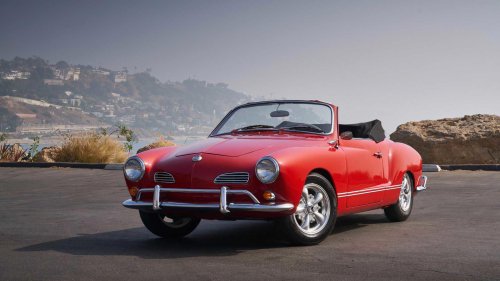
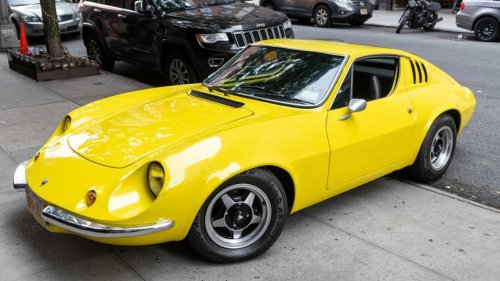
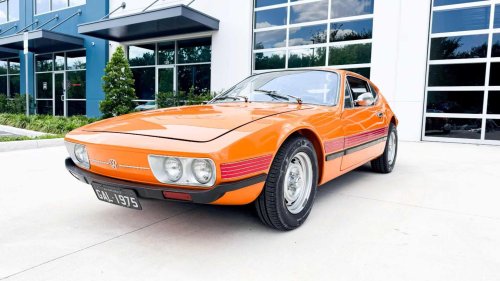
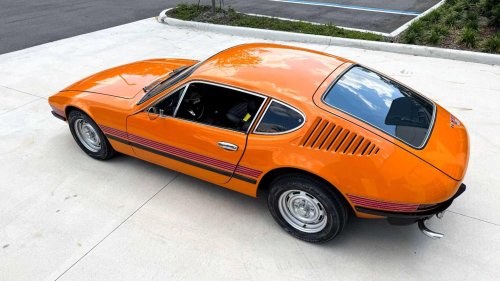
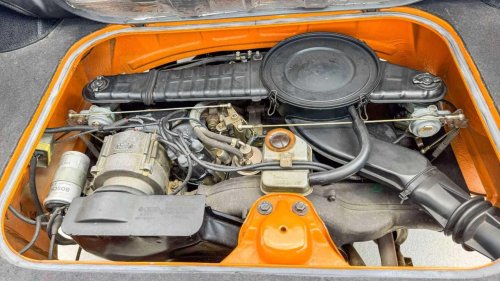
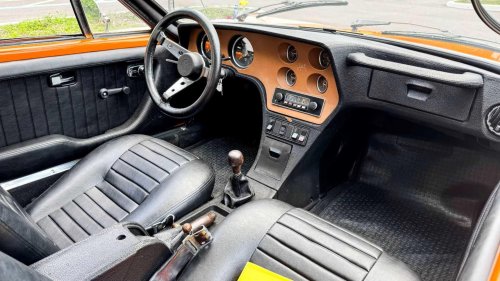
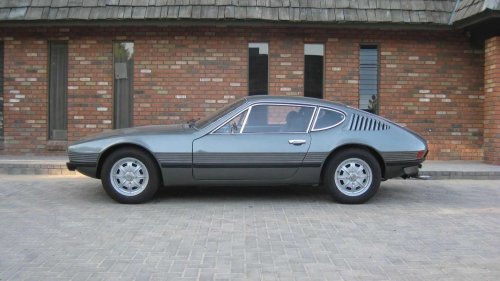
Walk down any street in the USA and you'll probably see a Volkswagen. Golfs, Tiguans, Jettas, and Buses, they are all there. But look closely, and you might see that one is missing. While VW offers plenty of sporting options, not least the evergreen Golf GTI, it doesn't really have a large back catalog of actual sleek sports cars. But that's not to say the German company didn't produce any beautiful low-slung models. In fact, arguably the best-looking sports VW ever made didn't make it to North America. And it is all but forgotten today. Volkswagen Was Evolving In America In The '70s Bring a Trailer In 1972, something momentous happened that rippled through both the German and American carmaker industry. On February 17, 1972, the 15,007,034th Volkswagen Beetle was produced in Wolfsburg, Germany. This may seem like a fairly random (yet astonishingly high) number, but it had great significance. This surpassed the production record that had previously been held only by the groundbreaking Ford Model T, VW said, making the Beetle the most popular car in history. Pretty impressive for a model that was born under the shadow of war, but went on to symbolize global peace. VW went on to sell 21.5 million first-generation "people's cars". Following up on the Beetle wasn't easy, but VW managed another smash hit with the Giugiaro-designed Mark 1 Golf, which went on to spearhead the new boxy hot hatchback class. Volkswagen Didn't Do Sleek Sports Cars — Or Did It? Volkswagen The German company did dabble in more sporting designs, but they weren't really its bread and butter. The sleek Karmann Ghia was based on a Beetle chassis but was wrapped in achingly beautiful skin. The 1974 Scirocco borrowed the underpinnings from a Golf but added a more low-slung look, as if the Golf had been squished by a giant boot. But a year after the Scirocco was launched, VW created a far more exotic-looking sports car. It's just that the USA never got to see it. Brazil Desperately Needed More Sports Cars Bring a Trailer If you go to Brazil, you'll see classic VWs everywhere. Volkswagen do Brasil is a subsidiary of VW and has made Type 1 ("Fuscas") since the late '50s. Today, Volkswagen is the largest automobile producer in Brazil, with more than 26.3 million vehicles manufactured. In the '60s, import restrictions in Brazil effectively stopped foreign cars arriving, with Brazilians relying on locally-built metal. This was all well and good if you wanted a Beetle, but for anyone wanting a sports car, there were slim pickings.Rudolf Leiding, who had a long and illustrious career at VW, saw that there was a gap in the market for a sports car from the company. Legend has it that he was spurred on by the offer of a Puma GT (a collab with Volkswagen) for the VW stand at the 1969 Brazilian motor show. A year later, Leiding launched Projeto X (Project X), with the sole mission to bring a VW sports car to Brazil. The SP2 Looks Like The Future — But Was Built On The Past Mecum 1975 Volkswagen SP2 SpecsA prototype SP1 was presented in 1971 at the German fair in São Paulo — the letters in the title a nod to the city itself. When the SP1 went on sale a year later, it came fitted with a 1.6-liter four-cylinder boxer engine, which pumped out a heady 65 horsepower. The public noticed that this so-called sports car wasn't much more sporty than a Beetle you would putter around town in, so VW also offered a SP2 (Type 149) with a slightly larger 1.7-liter flat-four.The SP2 was based on the Volkswagen Type 3, which had been around since 1961 but launched in Brazil in the late '60s. But the rear engine, flat-four layout could be traced back to the '40s. Hardly groundbreaking tech then. But one thing worked in the SP2's favor. The SP2 Is A Thing Of Beauty Mecum Even today, the SP2 looks out of this world. The predatory "shark face" nose style and the 911-style rear still turn heads today, with the overall look being that of a well-crafted concept car rather than a mass production model. The unfamiliarity of the model in North America just adds to the attention-grabbing looks. Perhaps unsurprisingly, German tech magazine Hobby called the SP the "most beautiful Volkswagen in the world" in its June 1973 issue. The SP2 Wouldn't Be Winning Too Many Races Mecum The SP2 looked like it could do 150 mph. Sadly, this wasn't the reality. The four-banger wheezed out 74 horsepower and will get to 60 mph eventually (or in about 16 seconds). Top speed was 100 mph with a tailwind. A four-speed manual gearbox saved the day a little, allowing the driver to wring out every last horsepower. Add to the fact that the car weighed less than 2,000 lbs, and you could have some fun without ever worrying about breaking too many speed limits.Reports of light steering, and the common rear pendulum swing on the engine, meant that it certainly demanded concentration too. With Porsche developing a six-cylinder boxer engine for the 911, it is a wonder that VW didn't do the same for the SP2 to make a proper sports car, but it remained with the lethargic four. The SP2 Disappeared Not Long After It Launched Mecum Poor sales probably contributed to the fact that the SP2 was canned in late 1975. The car was said to be twice the price of a Beetle, and the '70s weren't exactly known for an abundance of disposable income. But the car lived on in strange ways, apparently inspiring the rare Philippine DMG-VW Toro. Perhaps even more interesting, it is widely thought that the SP2 inspired the look of the innovative Porsche 924.The small Porsche was launched in 1975, using some shared VW parts, and there are certainly similarities, especially in the side profile. The fact that the 924 then spawned other transaxle models, right up to the 968 of the '90s, means that at least the ethos of the SP2 lived on for a couple of decades after it arrived in Brazil. You Can Actually Buy An SP2 Today In The USA Bring a Trailer VW managed to sell 10,205 SP2s in total, which is not bad for a niche car designed for one market in a time of challenging global economic conditions. A fair few have made it out of Brazil since production ended, and now they make for an attractive and unusual (if not particularly fast) classic buy.The only problem is, they aren't exactly cheap. In Brazil, SP2s are a cult classic, fetching up to around $40,000. In the USA, when they do appear, they have reached a little less in the past. That said, it's hard to get an accurate figure as sales are so sporadic. If you are really hankering for a four-pot VW from the mid '70s that has bags of style and not a lot of power, you might be better off seeking out a bargain Porsche 914 instead.Sources: Hagerty.com



















 +10 others


![Volkswagen, Volkswagen ID.4, Volkswagen ID.5, Volkswagen's best-seller is going electric in 2027 to replace the ID.4 and ID.5 [Images]](https://cdn.topcarnews.net/thumb/id/aHR0cHM6Ly9pMC53cC5jb20vZWxlY3Ry-ZWsuY28vd3AtY29udGVudC91cGxvYWRz-L3NpdGVzLzMvMjAyNi8wOS9Wb2xrc3dh-Z2VuLUlELVRpZ3Vhbi1JRC00LmpwZWc_-dz0xNTAwJmFtcDtxdWFsaXR5PTgyJmFt-cDtzdHJpcD1hbGwmYW1wO3NzbD0x/aed2aa2870791850c8e69c5fc3a0ed85.jpeg?t=20261008&post_id=66267)
![Volkswagen, Volkswagen ID.4, Volkswagen ID.5, Volkswagen's best-seller is going electric in 2027 to replace the ID.4 and ID.5 [Images]](https://cdn.topcarnews.net/thumb/id/aHR0cHM6Ly9lbGVjdHJlay5jby93cC1j-b250ZW50L3VwbG9hZHMvc2l0ZXMvMy8y-MDI2LzA5L1ZvbGtzd2FnZW4tSUQtVGln-dWFuLUlELTQtZnJvbnQtcXVhcnRlci5q-cGc_c3RyaXA9aW5mbyZhbXA7dz0xMDI0/97fb00cd3919b8d0dc36440715039e6e.jpg?t=20261008&post_id=66267)
![Volkswagen, Volkswagen ID.4, Volkswagen ID.5, Volkswagen's best-seller is going electric in 2027 to replace the ID.4 and ID.5 [Images]](https://cdn.topcarnews.net/thumb/id/aHR0cHM6Ly9lbGVjdHJlay5jby93cC1j-b250ZW50L3VwbG9hZHMvc2l0ZXMvMy8y-MDI2LzA5L1ZvbGtzd2FnZW4tSUQtVGln-dWFuLUlELTQtc2lkZS5qcGc_c3RyaXA9-aW5mbyZhbXA7dz0xMDI0/ed240b20e8275f3af4b904f46ebb5fb3.jpg?t=20261008&post_id=66267)
![Volkswagen, Volkswagen ID.4, Volkswagen ID.5, Volkswagen's best-seller is going electric in 2027 to replace the ID.4 and ID.5 [Images]](https://cdn.topcarnews.net/thumb/id/aHR0cHM6Ly9lbGVjdHJlay5jby93cC1j-b250ZW50L3VwbG9hZHMvc2l0ZXMvMy8y-MDI2LzA5L1ZvbGtzd2FnZW4tSUQtVGln-dWFuLUlELTQtcmVhci1xdWFydGVyLmpw-Zz9zdHJpcD1pbmZvJmFtcDt3PTEwMjQ/436c7979cf5b947053f7f0bf39ff94bc.jpg?t=20261008&post_id=66267)
![Volkswagen, Volkswagen ID.4, Volkswagen ID.5, Volkswagen's best-seller is going electric in 2027 to replace the ID.4 and ID.5 [Images]](https://cdn.topcarnews.net/thumb/id/aHR0cHM6Ly9lbGVjdHJlay5jby93cC1j-b250ZW50L3VwbG9hZHMvc2l0ZXMvMy8y-MDI2LzA5L1ZvbGtzd2FnZW4tSUQtVGln-dWFuLUlELTQtZnJvbnQuanBnP3N0cmlw-PWluZm8mYW1wO3c9MTAyNA/ec2e4ca027ccbfb42942abe523f3acf7.jpg?t=20261008&post_id=66267)
![Volkswagen, Volkswagen ID.4, Volkswagen ID.5, Volkswagen's best-seller is going electric in 2027 to replace the ID.4 and ID.5 [Images]](https://cdn.topcarnews.net/thumb/id/aHR0cHM6Ly9lbGVjdHJlay5jby93cC1j-b250ZW50L3VwbG9hZHMvc2l0ZXMvMy8y-MDI2LzA5L1ZvbGtzd2FnZW4tSUQtVGln-dWFuLUlELTQtcmVhci5qcGc_c3RyaXA9-aW5mbyZhbXA7dz0xMDI0/668525889dc433b0fd0e166fd5bd8366.jpg?t=20261008&post_id=66267)