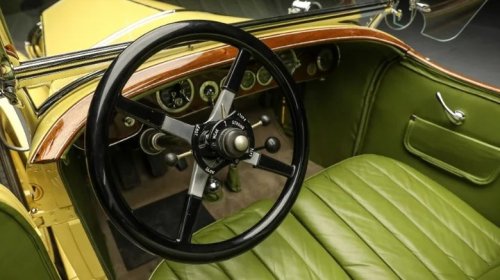
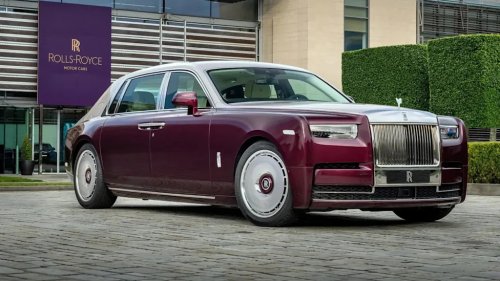
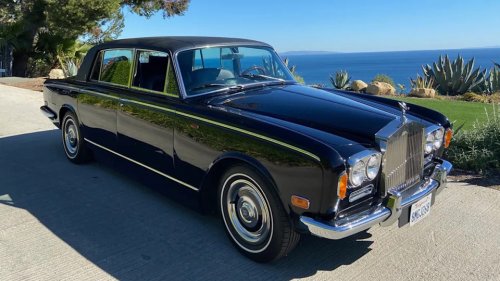
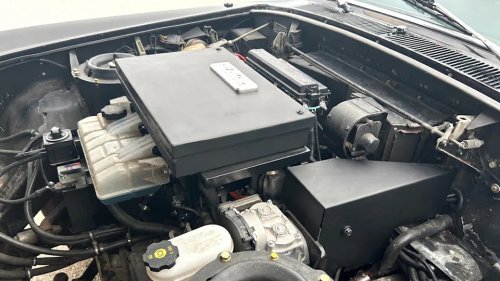
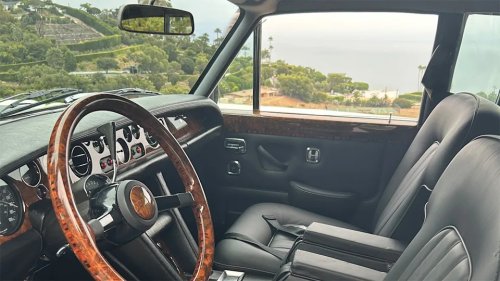
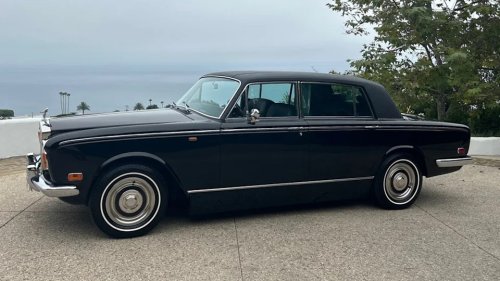
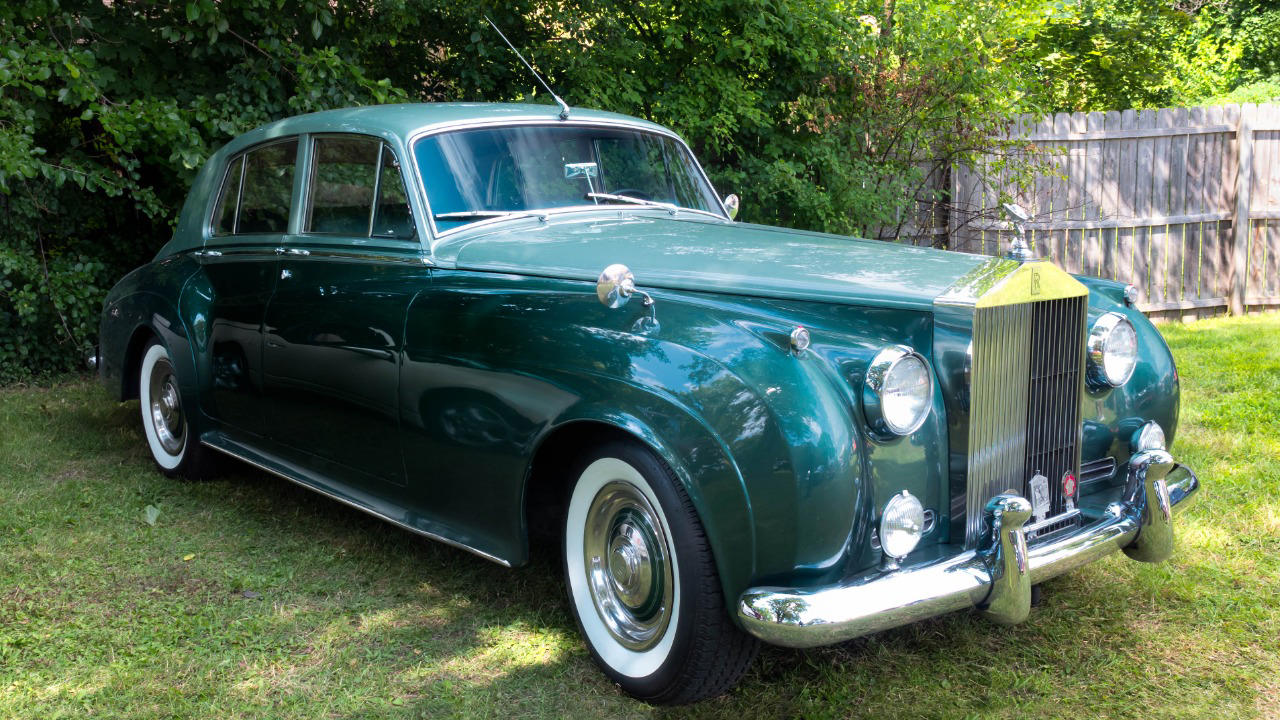
1959 Rolls-Royce Silver Cloud vs 1959 Bentley S2 one carries a stronger legacyThe 1959 Rolls-Royce Silver Cloud and the 1959 Bentley S2 share a chassis, a factory and even a new V8, yet they have grown into very different legends. One became the shorthand for ultimate luxury, the other the insider’s choice for drivers who prefer their comfort with a sharper edge. Placed side by side, these near-twin British limousines show how branding, design and later collector appetite can push two technically similar cars toward very different legacies. The question is not which is faster or quieter, but which story has carried further from 1959 to the present. The shared bones: one engineering leap, two badges The 1959 model year marked a turning point for both marques. September that year brought a major mechanical change to the Silver Cloud, when the long-serving straight-six in the Rolls Royce Silver was replaced with a 6.2-litre V8 motor. That engine, described in factory literature as a Rolls-Royce developed 6.2 L V8, powered the second generation of the model known as The Silver Cloud II, which arrived in 1959 with little visible change but a very different heart under the bonnet. On the Bentley side, the same basic transformation was underway. A detailed Model Guide By 1959 explains that it was time for a major change at Bentley with the release of the S2. Although from the outside the factory-built saloons looked very similar to their predecessors, there was one very significant change mechanically speaking: the adoption of that same new V8 in place of the older six-cylinder unit. Under the skin, the 1959 Bentley S2 and the 1959 Silver Cloud II moved in lockstep. Corporate history helps explain the overlap. A period description of the S1 notes that it comes from a time when Bentley was owned by Rolls-Royce, and that Bentleys were effectively the sporting versions of their Rolls-Royce counterparts, all produced by Rolls-Royce Limited in the same facilities. The Rolls Royce Silver Cloud was the core model for Rolls-Royce Limited from April 1955 to March 1966, so the S2 slotted in as the more driver-focused sibling built on the same core architecture. That shared platform did not prevent each marque from shaping its own image. The Silver Cloud II, as described on Rolls-Royce Silver Cloud, carried forward the stately three-box saloon body, with modest external tweaks disguising the leap to the 6.2 L V8. The Bentley S2, while mechanically near-identical, was marketed as a car for owners who preferred to sit behind the wheel rather than behind a division. Coachbuilt derivatives underline the common engineering. A specialist history of Bentley during The Rolls Royce Years notes that from 1959 to 1962 Bentley offered the S2 Continental Drophead Coupé on the upgraded chassis with the 6¾-liter V8, a high-performance evolution of the same family of engines, aimed squarely at enthusiastic drivers. The Bentley Rolls Royce account of this Continental Drophead Coup adds that the S2 Continental models sat at the top of the Bentley range, using the shared mechanical base to create more exclusive and sporting body styles. Styling and character: grille, posture and presence If the engineering converged, the visual language did not. A discussion among enthusiasts in Nov in an old British car club highlights the key distinction that most observers notice first: Bentley’s traditional mesh grille and sportier branding, versus Rolls-Royce’s iconic upright radiator and Spirit of Ecstasy. The post frames the comparison as a choice between the more athletic stance of the Bentley and the more formal, almost ceremonial posture of the Rolls. That grille difference is more than cosmetic. The Bentley mesh, lower and slightly more inclined, gives the S2 a sense of motion even at rest. The Rolls grille, taller and more architectural, signals hierarchy and formality. In the 1950s, that visual contrast mapped neatly onto the brands’ target customers. Bentley was sold to owners who might drive themselves briskly along a country road, while the Silver Cloud was expected to carry dignitaries to events where arrival mattered as much as the journey. Period marketing and later commentary both stress that distinction. The Rolls Royce Silver Cloud is frequently described as regal, with a long bonnet, high roofline and generous rear overhang that reinforce its limousine role. A later reflection from a Rolls-Royce retailer in India describes the 1959 Rolls Royce Silver Cloud as a highly coveted classic, known for its regal presence, exceptional build quality and enduring appeal in the world of luxury automobiles. The same statement places the Silver Cloud alongside the Silver Dawn as a defining model for the marque in the 1950s. The Bentley S2, by contrast, wears similar body panels but carries subtle cues that change its character. The mesh grille, rounder headlamp surrounds and less ornate badging make the car look more purposeful and less ceremonial. Coachbuilt S2 Continental versions, including fastback and drophead Coupé bodies, push that impression further, with lower rooflines and more tapered tails that move decisively away from the upright Silver Cloud silhouette. The 1959 S2 Continental listings show how these cars combined the S2 chassis with lightweight, often two-door coachwork aimed at high-speed touring. In period, those differences would have been obvious on the road. A long-wheelbase Silver Cloud with division, such as the 1959 Rolls Royce Silver Cloud I LWB shown in a modern test drive video, presents as a chauffeur car, complete with rear compartment privacy and a commanding rear seat. The S2 Continental Drophead Coupé, with its two-door open body and more aggressive stance, plays an entirely different role even though it draws from the same parts bin. Inside the cabin: how each car treats its occupants Open the doors and the shared DNA reappears. Both the Silver Cloud and the Bentley S2 offer thick carpets, polished wood veneers and deep leather seats. The craftsmanship reflects the standards of Rolls-Royce Limited in the late 1950s, with hand-finished trim and extensive sound deadening. Yet the way those materials are arranged again reveals each brand’s priorities. In the Silver Cloud, the cabin is laid out to flatter rear passengers. Long-wheelbase versions with division place a glass or wood partition between driver and rear compartment, with folding picnic tables, footrests and sometimes vanity fittings in the back. The driver’s area is functional but relatively plain, with large, clear instruments and a thin steering wheel that keeps the focus on smooth progress rather than dynamic feedback. The Bentley S2 uses similar materials but subtly rebalances the space toward the front seats. Many S2s were specified without division, with more supportive front chairs and slightly sportier steering wheels. On S2 Continental models, the dashboard and seating position are clearly aimed at the person behind the wheel, with better lateral support and a more intimate cockpit feel. The result is a car that still pampers passengers but invites the owner to drive briskly rather than recline. Noise, vibration and harshness are low in both cars, thanks to the 6.2 L V8’s smoothness and extensive insulation. However, the Silver Cloud’s softer suspension tuning and emphasis on isolation create a floatier ride, while the S2’s firmer setup and different weight distribution yield more controlled body movements through bends. Period testers and modern owners often describe the Bentley as the better driver’s car, even when acknowledging that the Rolls is the quieter and more relaxed cruiser. Market hierarchy and collector values Although the 1959 Silver Cloud and Bentley S2 started as close cousins, the market has long treated them as different propositions. A detailed buyers’ guide to the Rolls Royce Silver Cloud explains that there is a hierarchy in pricing of the Rolls Royce Silver Cloud and Bentley S-Series cars. A clear pecking order emerges: early Silver Cloud I cars, Silver Cloud II and III variants, and their Bentley equivalents occupy different rungs based on body style, originality and condition. Within that hierarchy, Bentley S-Series cars often command a premium among enthusiasts who value the driving experience, especially for rarer coachbuilt S2 Continentals. The Continental Drophead Coupé and fixed-head Continental bodies, as chronicled in the Bentley Rolls Royce Years overview, were produced in lower numbers and targeted at a wealthier, more performance-oriented clientele. Collectors today continue to prize those cars for their combination of V8 power, lighter coachwork and distinctive styling. At the same time, the Silver Cloud’s broader cultural recognition keeps demand strong for well-preserved saloons. The Rolls Royce Silver Cloud article on how much does notes that values vary significantly across the range, with condition and provenance playing a major role. There is also a clear gap between standard steel saloons and rare coachbuilt variants, which can reach far higher prices. For 1959 specifically, the market sees a split between late Silver Cloud I cars and early Silver Cloud II examples, the latter benefiting from the 6.2-litre V8 and the cachet of being the first V8 Rolls saloons. Bentley S2 cars from the same year share that mechanical advantage, and S2 Continental models from 1959 often sit near the top of S-Series pricing charts. Data on 1959 S2 Continental sales compiled by classic car marketplaces shows that these cars regularly attract strong bids, especially for well-documented examples. In practical terms, a buyer choosing between a 1959 Silver Cloud saloon and a 1959 Bentley S2 saloon will often find that the Bentley is slightly more expensive like-for-like, reflecting its relative rarity and driver appeal. However, the Rolls can outstrip the Bentley in value when it comes to certain coachbuilt versions or exceptionally original, low-mileage cars that appeal to collectors seeking the archetypal Rolls-Royce silhouette. Public perception: symbols, stories and social media Legacy is not only about prices. It also lives in how people talk about these cars. The Rolls Royce Silver Cloud has become a visual shorthand for old-world luxury. Multiple language editions of Wikipedia, including Czech, German, Spanish and Persian pages on Rolls Royce Silver Cloud, frame the model as a central part of the brand’s postwar story. That breadth of coverage reflects how widely the Silver Cloud image has spread beyond English-speaking markets. Modern brand storytelling reinforces that status. A social media post from Rolls-Royce Motor Cars in New Delhi places the Silver Cloud alongside the earlier Silver Dawn as one of the models that defined luxury for their eras, stressing how the understated sophistication of the Silver Dawn gave way to the effortless grandeur of the Silver Cloud. In that narrative, the 1959 Rolls Royce Silver Cloud remains a highly coveted classic whose appeal still shapes how people think about the marque. Enthusiast communities echo that view but often add nuance. A Facebook post from Jan about the S1 era describes how The Rolls Royce Silver Cloud was produced by Rolls-Royce Limited and notes that Bentleys of the time were essentially the same cars with different grilles and branding. That observation supports the idea that the Silver Cloud and S-Series Bentleys share a core identity, even as later storytelling separated their reputations. In the same enthusiast sphere, the old British car club comparison from Nov, which invites members to choose between Bentley and Rolls, highlights how styling cues still drive brand loyalty. The post points to Bentley’s traditional mesh grille and sportier branding, versus Rolls-Royce’s iconic upright grille, as the key distinction that sways preferences. The fact that such debates continue in enthusiast groups decades later speaks to the enduring pull of both badges. Video content also shapes perception. A modern test drive of a 1959 Rolls Royce Silver Cloud I long-wheelbase with division presents the car as an event in itself, focusing on the sense of occasion from the rear compartment and the effortlessness of the V8. Bentley S2 coverage, particularly of S2 Continental models, tends to emphasize performance, road manners and the pleasure of driving at speed. Over time, those narratives have hardened into stereotypes: the Silver Cloud as the ultimate wedding and state car, the S2 as the connoisseur’s express. Which legacy runs deeper? Judged purely on cultural visibility, the 1959 Rolls Royce Silver Cloud carries the stronger legacy. Its outline, with that tall grille and sweeping rear wings, has become one of the most recognizable shapes in automotive history. The model’s status as the core Rolls-Royce saloon from the mid 1950s into the 1960s, as recorded in the main Rolls Royce Silver histories, cemented it in films, official fleets and public imagination. When people picture an old Rolls, they usually picture a Silver Cloud. The Silver Cloud II’s introduction of the Rolls-Royce developed 6.2 L V8 in 1959 further enhances its significance. That engine architecture influenced Rolls-Royce and Bentley products for decades, making the 1959 cars a mechanical turning point as well as a stylistic icon. Later brand communications that single out the Silver Cloud as a defining model show how heavily Rolls-Royce leans on this era when presenting its heritage. The Bentley S2, however, has built a different kind of legacy. Among enthusiasts and collectors who care about driving, the S2 and particularly the S2 Continental Drophead Coupé occupy a special place. The images and descriptions show a car that blends Rolls-level craftsmanship with a more athletic stance and exclusive coachwork. For many Bentley loyalists, that combination represents the brand at its best. In terms of pricing, the hierarchy described in the Silver Cloud buyers’ guide indicates that certain Bentley S-Series variants can exceed comparable Rolls models, especially rare Continentals. That suggests that within the specialist market, the S2’s reputation as the driver’s choice has real financial weight. Yet outside those circles, the Silver Cloud name still carries more instant recognition and symbolic value. The question of which legacy is stronger therefore depends on the metric. By cultural imprint, global recognition and use in brand storytelling, the 1959 Rolls Royce Silver Cloud stands ahead. It is the car that appears in multiple language editions of reference works, the one used in official communications to illustrate the marque’s golden age, and the silhouette that non-enthusiasts identify as a Rolls. By enthusiast esteem and driving reputation, the 1959 Bentley S2, particularly in Continental form, holds its own and in some niches surpasses its sibling. Its mesh grille, sporting branding and coachbuilt variants have given it a lasting appeal among those who value performance and exclusivity alongside comfort. More from Fast Lane Only Unboxing the WWII Jeep in a Crate 15 rare Chevys collectors are quietly buying 10 underrated V8s still worth hunting down Police notice this before you even roll window down




















 +32 others