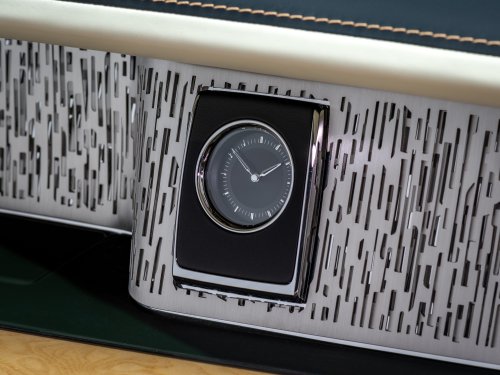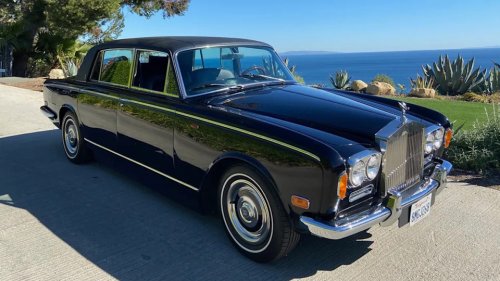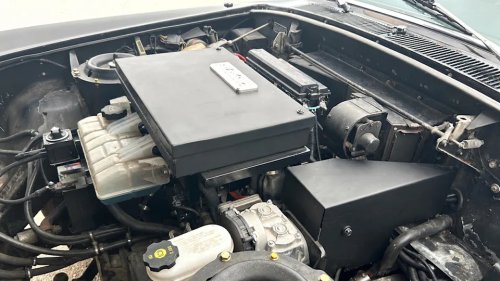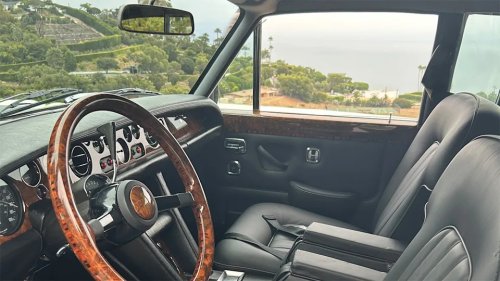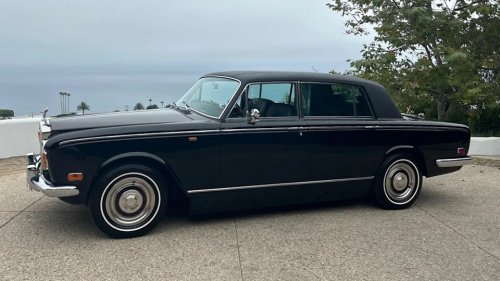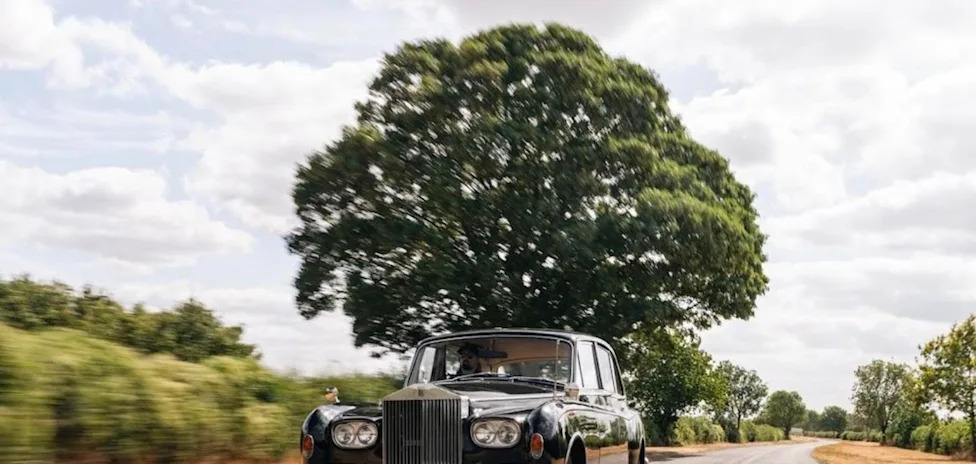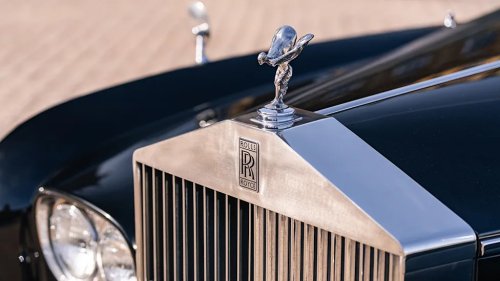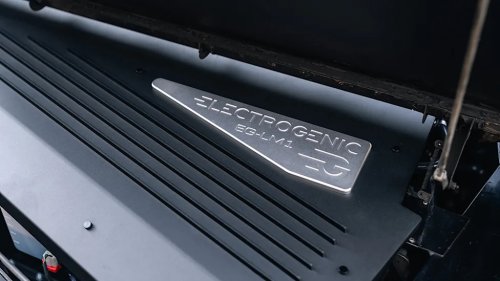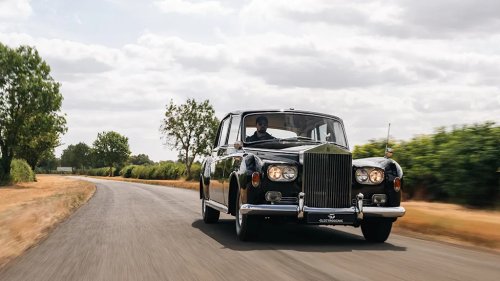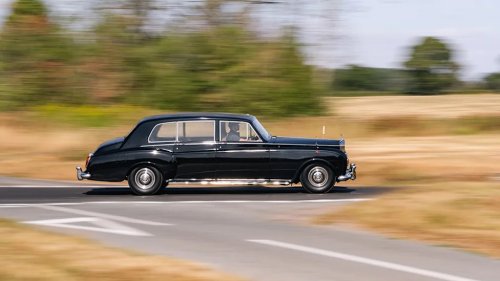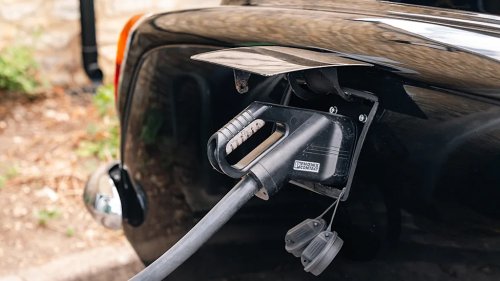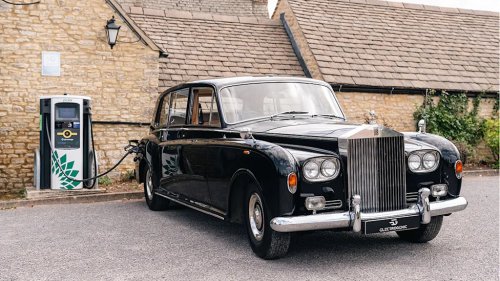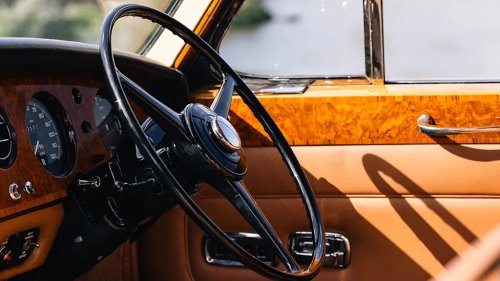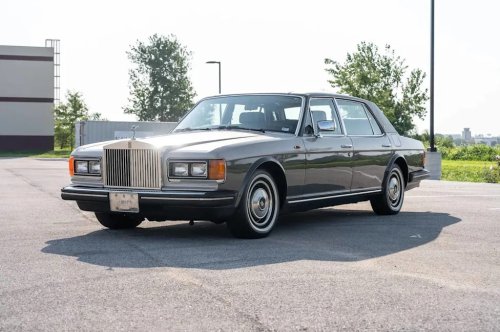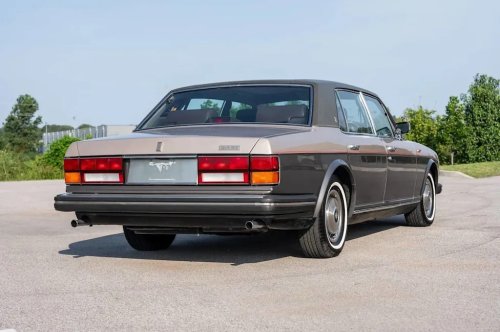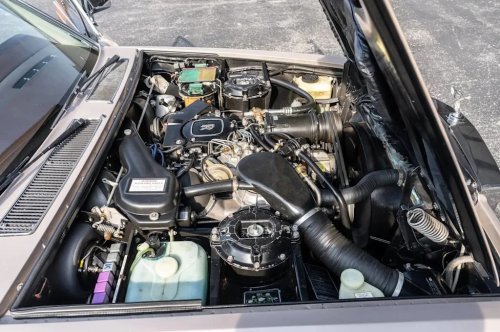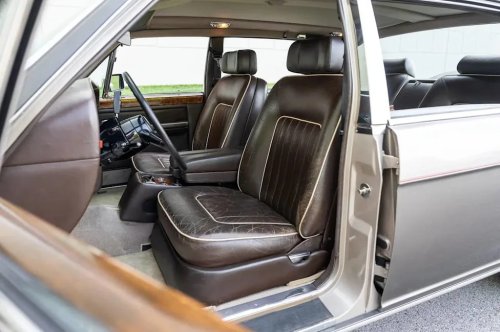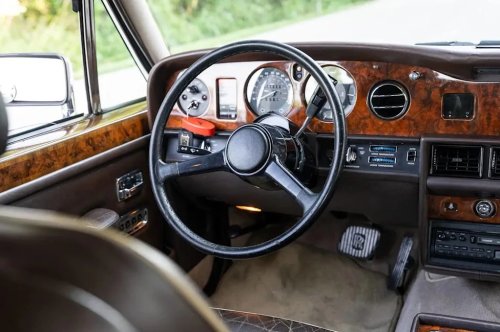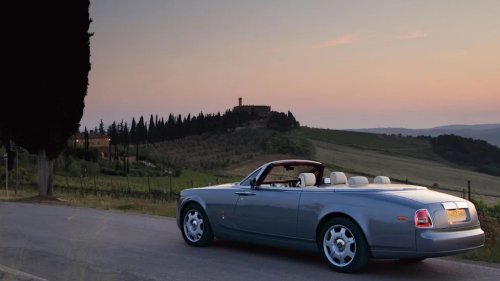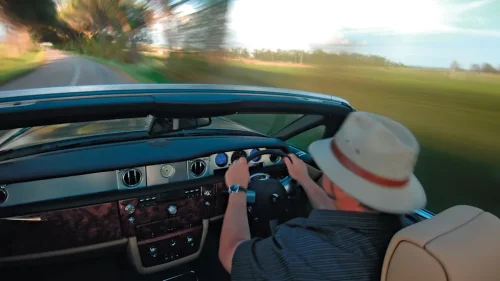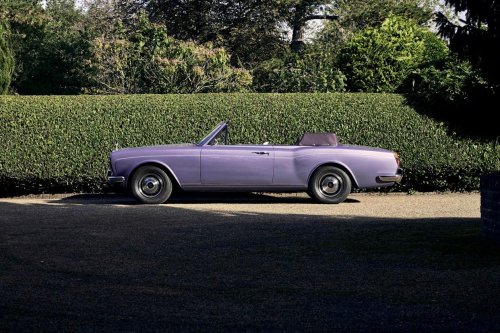
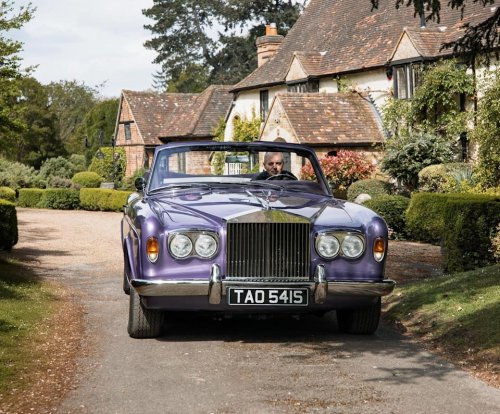
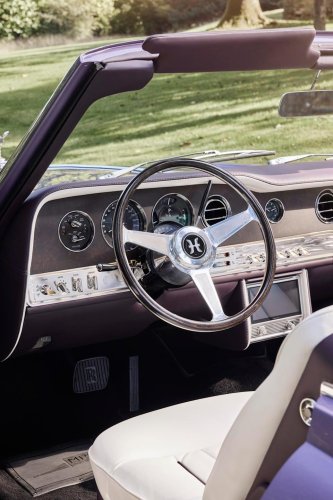
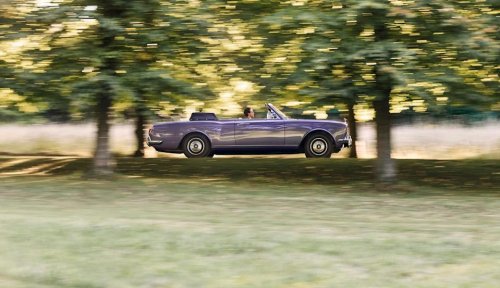
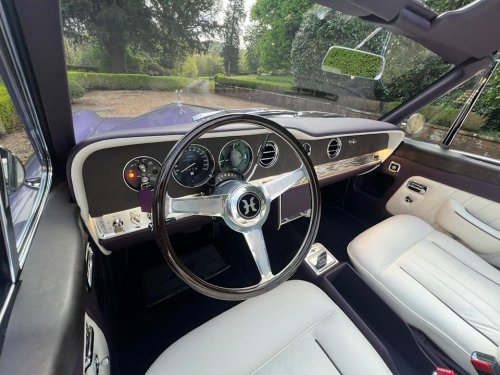
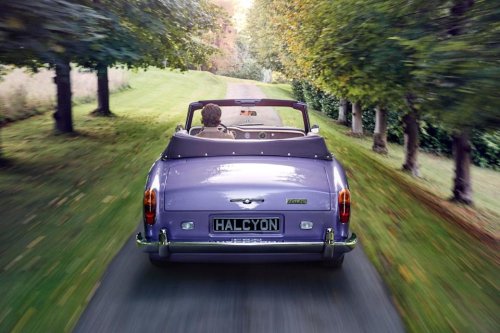
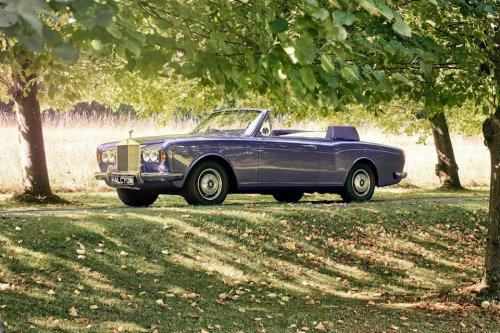


















This Seventies Rolls-Royce Is an EVHalcyonTry to imagine the most stereotypically English thing you possibly can. Maybe eating buttered crumpets at Scotland Yard, or watching a game of cricket on the village green at Midsomer Norton while a brass band plays “The Dam Busters March.” But for transparent tweed-wearing English eccentricity, the Halcyon Rolls-Royce Corniche has everything beaten.My experience of this freshly built, fully electric restomod version of the Seventies Rolls-Royce convertible included driving it on Box Hill in Surrey. This is a popular location for the sort of cyclists who like to seek out scenic challenges. On the narrow, steep lane that leads to the summit, a pair of these Lycra-clad adventurers were making slow progress up the slogging gradient, and there wasn’t enough room for the Halcyon to squeeze past. I soon realized that they hadn’t heard the approach of the nearly silent Corniche, and so, with no roof in the way, I issued a polite, throat-clearing cough. Realizing the presence of the aristocratic Roller, the cyclists moved over far enough over to create space for me to pass. “Thank you!” I called out as I went by. “You’re welcome,” came the slightly breathless reply.A car that allows you to have polite conversations with other road users without needing to raise your voice. It doesn’t get more English than that.HalcyonBut the wider concept of the EV classic remains a strange one. It’s entirely possible that, in the distant future, graybeard owners of historic Teslas and Taycans will park their well-polished cars in ranks and award prizes for originality. But for the moment, electrification is something more likely to have been done to an existing classic. Road & Track editors have experienced several of these, and it’s fair to say that very few have felt like better alternatives than the combustion models they’re based on. Remove the engine of an old car, and the soul disappears as well.AdvertisementAdvertisementBut the Halcyon Corniche could be a different proposition, given the effort Rolls-Royce has put into making its cars as smooth and quiet as possible over the years. Indeed, Rolls’s modern Spectre EV is a car that combines traditional design with an ion-fueled powertrain. Will buyers miss what’s not meant to be there in the first place?HalcyonHalcyon, a start-up based in Guildford in the U.K., is now offering electric conversions for cars built during Rolls-Royce’s “rubber bumper” era, specifically the Silver Shadow and Corniche from 1976 to 1979. The Silver Shadow was the brand’s sedan from this period, while the Corniche name was used for both a traditional coupe—“fixed head” in Rolls parlance—and a “drophead” convertible. Examples of all three are relatively plentiful and affordable on both sides of the Atlantic, important for Halcyon as the converted cars keep the legal identity of an original example. The company says it won’t produce more than 25 drophead coupe EVs, 20 fixed-head coupes, and 15 Silver Shadows.The EV powertrain transplant is the headline change, but it is far from the only one. Halcyon says each bare-metal restoration takes thousands of hours of labor, with cars painted and trimmed according to their new owners’ tastes, and involves numerous visible and invisible upgrades. For those who don’t want an EV, later there will be a separate combustion-powered model line using the original car’s 6.75-liter V-8.HalcyonThe EV version I drove was what Halcyon described as being a production prototype, representative of the build quality that buyers will ultimately receive but with a powertrain still some way short of final specification.AdvertisementAdvertisementLike some other electro-mod makers, Halcyon has opted for a multipart battery pack, this running at a spicy 800 volts. In the prototype, this had two sets of cells, the larger one under the hood in the place previously occupied by the V-8 and a smaller pack in the back in place of the original gas tank. Beyond the loss of the former spare wheel that was mounted under the rear of the car, this means the EV weighs almost exactly the same and has the same front-to-rear mass distribution as the original car.The battery uses commercially acquired cells but was built and designed by Halcyon’s partner company, Evice Technologies, which also created the software that runs it. In the prototype, the battery had a claimed 77 kWh of overall capacity, translating to around 72 kWh usable, according to Halcyon’s chief operating officer, Charlie Metcalfe. There will also be an optional 94-kWh “long range” version that will add a third, separately located set of cells between the rear suspension turrets. All versions support DC fast-charging at peak rates claimed to be as high as 230 kW. Drive is delivered through a single rear-mounted motor on a new custom-designed subframe. The prototype had an open differential, while the production versions will use a plate-type mechanical limited-slip differential.Mike DuffAdvertisementAdvertisementMy drive was not an arduous dynamic test, being on a short loop consisting almost entirely of English country lanes and scenic villages. The Halcyon prototype certainly delivered on the waftiness you would expect from a Seventies Rolls-Royce. But, despite the company’s claims of a 400-hp peak output, it also felt much more leisurely than I was expecting it to, with even full-throttle starts delivering no more than a smooth transition from rest to stately progress. According to Metcalfe, the prototype’s torque output is limited because of its open differential. It currently produces no more than 236 lb-ft, while the production car will have a punchier 435 lb-ft. All of which works against a weight of about 5200 pounds.Yet, on my subjective experience, the prototype still felt slower than that combination of numbers suggested it should, indeed no quicker off the line than my memory of having driven some V-8-powered Rollers from the same period, although acceleration did seem to gather steam from around 30 mph onward. Ultimately, the long-range version will apparently have a peak output of 500 hp, which, if achieved, should wake it up a bit.Of course, nobody is going to be considering a car like this in search of rocket-ship performance. And the Halcyon’s newly fitted adaptive dampers did help keep its mass under impressively tight control over what were often bumpy road surfaces. The high-profile sidewalls of the 235/70R-15 Avon tires helped smooth the primary ride too. I didn’t get the chance to assess cruising refinement with the roof up—my entire drive took place with it down—but the lack of noise from the Corniche’s suspension and body structure over rougher stuff gave proof of the care and attention that had gone into rebuilding it. One of my takeaways from other electrified classics has been that squeaks and creaks become obvious when the noise of an engine is removed. Traveling at an indicated 50 mph, the Halcyon prototype was quiet enough that I could hear birdsong over a very faint electric-motor whine.HalcyonAnother innovation is the introduction of switchable drive modes using the original Corniche’s wand-style column gear selector. This now moves through park, reverse, and neutral to the regular Drive and then two further positions. The first of these, Spirited, firms the suspension and sharpens throttle response. The other, Touring, softens everything off to maximize effortlessness. This was definitely the mode that suited the car best. Unusually for an EV, the prototype didn’t have regenerative braking, but it still slowed and stopped with the same smooth precision as the original combustion car.AdvertisementAdvertisementBeyond the EV transplant, other details impressed. The prototype’s interior was beautifully finished, keeping the character of the original car but with significant improvement in material quality and fit and finish. Okay, so I’m not a fan of anachronistic display screens in restomods—the Corniche boasts an Apple CarPlay–compatible unit hung beneath the dashboard in a binnacle that makes it look like a 1970s television, but this can be covered with a power-operated flap. The quad-part dial that reported on fuel level, battery amps, and oil temperature and pressure on the original car has also been repurposed for battery charge and temperature, power flow, and air temperature.HalcyonOverall, yes, a Seventies Rolls-Royce makes plenty of sense as the basis for an electric conversion—certainly way more than doing the same thing to a car with a louder and more charismatic combustion engine. Yet some of the original magic was definitely missing. The secret of a good conjurer’s trick is making something that you know to be there disappear. That was what the original Rolls engineers were striving for with their almost-silent V-8s. When that thing is missing in the first place, the magical transformation is absent too. Which is why my experience of Halcyon’s EV demonstrator made me more keen to find out what the future Great Eight version, with an update of the original pushrod 6.75-liter V-8, will sound and feel like. I’m pretty certain that’s the one I will like more.In this part of the market where want beats need, it makes sense for Halcyon to be offering a choice—and the EV version is definitely one of the better examples of an electric powertrain transplant. Regardless of version chosen, exclusivity is guaranteed. Prices for a fully finished EV will start at £450,000 for the Silver Shadow—about $610,000 at current exchange rates—with taxes and the cost of an original car to be added to that, rising to £520,000 ($705,000) for the Corniche fixed-head coupe and £550,000 ($745,000) for the drophead.You Might Also LikeIf You Can Only Own One Car, Make It One of TheseThese Are the Most Popular Cars by State