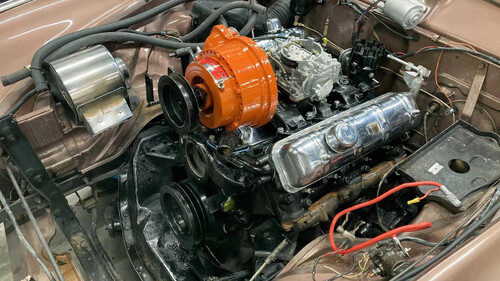
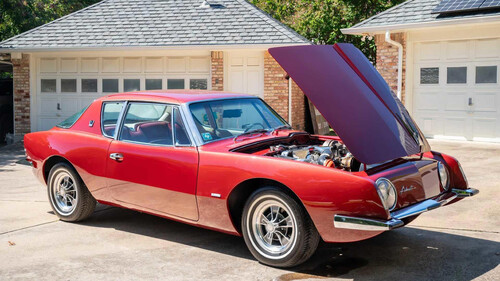
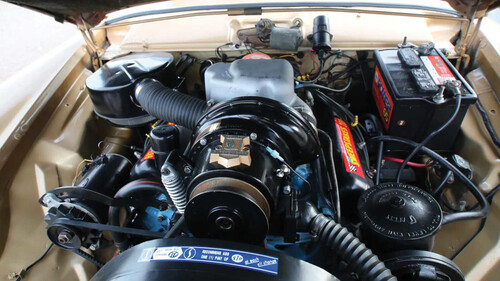
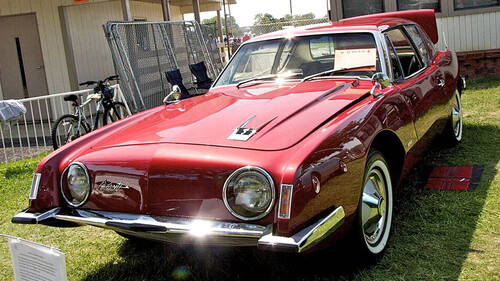
European style met American power in the 1963 Studebaker Avanti R2In 1963 the Studebaker Avanti R2 arrived as an unlikely fusion of European elegance and American horsepower, a fiberglass bullet aimed at saving one of the country’s oldest carmakers. Its clean Raymond Loewy styling wrapped around a supercharged V8, creating a coupe that looked ready for Milan yet pulled like a Detroit muscle car. More than six decades later it reads less like a footnote in Studebaker history and more like an early blueprint for the modern grand tourer. Viewed from today, the Avanti R2 captures a precise cultural moment when American drivers were discovering European taste but still demanded straight line speed and V8 thunder. Its story runs from a Palm Springs sketch session to drag strips, concours lawns and museum galleries, and it helps explain why this short lived model still commands serious attention among collectors. Loewy, Palm Springs and a European vision for South Bend The Studebaker board turned to industrial designer Raymond Loewy when the company needed a halo car that could reset its image. Years later, Loewy recalled arriving in Palm Springs with a clear idea of the direction he wanted to take, then working with a small team to shape the Avanti in a compressed schedule that would test any studio. He described how, by the time he reached Palm Springs, the basic form was already in his head, a low nose, smooth flanks and a fastback roof that owed more to Italian coachbuilders than to American tailfins. That European flavor is obvious in the Avanti’s surfacing. The front end dispenses with a conventional grille and instead uses a slim opening under a pointed nose, a solution that made the car look closer to contemporary GTs from Turin than to anything on American roads. A long hood, short deck profile emphasizes rear drive proportions, while the cabin sits far back on the chassis for a dramatic stance. The Los Angeles County Museum of Art has highlighted the way the Avanti translated Loewy’s broader industrial language into automotive form, treating the coupe as a key object in its exploration of mid century design and featuring it within a series on Raymond Loewy and his work. Inside, the Avanti continued that European leaning. The dashboard wrapped around the driver with a bank of round gauges and toggle switches that would not have looked out of place in a British sports car. Thin roof pillars and a large glass area gave an airy feel that contrasted with the heavy, chrome laden cabins of many domestic rivals. Contemporary observers noted that the car seemed aimed at buyers who might otherwise have looked at imported GTs, but who still wanted American service and a familiar badge. Fiberglass skin, American bones Underneath the sleek body, the Avanti remained a Studebaker at heart. The chassis used a modified version of the company’s existing frame, but the body itself was molded in fiberglass, a material that allowed Loewy’s team to realize complex curves without the tooling costs of steel. This approach placed the Avanti in the same experimental space as other fiberglass American cars, but the execution was more refined, with tight shut lines and a focus on aerodynamics that enthusiasts still discuss on dedicated Avanti groups. The car’s silhouette, with its smooth nose and minimal ornamentation, contrasted sharply with the chrome heavy sedans that shared Studebaker showrooms. Writers have compared the Avanti’s profile to European fastbacks of the period, noting how the C pillar treatment and rear glass echoed design trends seen on limited production coupes from Italy and France. At the same time, the Avanti’s stance, especially on period correct whitewall tires and turbine style wheels, still projected the visual mass and presence American buyers expected. Practical engineering choices underpinned the glamour. The fiberglass body reduced weight and resisted rust, while the chassis used conventional suspension that made servicing straightforward. This combination of exotic skin and familiar hardware has helped the model remain usable decades later, a fact reinforced each time a survivor appears in unrestored form yet still runs and drives, as seen in a recent profile of an unrestored Avanti that had sat for years but returned to the road with relatively modest mechanical work. The R2: supercharged American power While the styling spoke with a European accent, the powertrain shouted pure American. Studebaker offered the Avanti with several engine options, but the R2 specification turned the car into a genuine muscle machine. A belt driven supercharger sat atop the company’s V8, force feeding the cylinders and dramatically increasing output. One period review of the related R1 engine noted that the naturally aspirated version produced 240 horsepower, with enthusiasts pointing to 240 horsepower as the baseline before boost. The R2 package added the blower, revised internals and supporting upgrades. A later video review of a 1963 Avanti described an engine that made 290 horsepower and 303 lb feet of torque, with power sent to a rear axle described as a Dana 44 with 373 g gears, figures that underline how hard the car could pull when tuned correctly. The presenter emphasized that, in 1962, this output placed the Avanti among the quickest American production cars, a point reinforced by the quoted 290 horsepower 303 numbers. Modern commentators have not hesitated to apply supercar language to the R2. One detailed feature referred to the model as The Sleek But Ill Fated Studebaker Avanti R2 Supercar and described it as one of the most overlooked performance cars of its era, highlighting how the combination of relatively light fiberglass body and blown V8 delivered acceleration that could match or beat contemporary Corvettes and imported exotics. The same piece framed The Studebaker Avanti as a car that deserved more recognition in discussions of early American Supercar history, a sentiment echoed by collectors who see the R2 as the purest expression of Studebaker’s performance ambitions. From launch sensation to commercial struggle When the Avanti debuted in April of 1962, reaction from the automotive press was immediate. One influential magazine noted that The Avanti had caused raised eyebrows among diehards, and described how the car’s styling and specification challenged expectations of what a conservative Midwestern manufacturer could build. Testers praised the ride and high speed stability, and some early owners used the car in competition, where the supercharged engine and relatively slippery body delivered strong results. A later profile of a heavily modified example, titled in part This Studebaker Avanti eats Hellcats, underlined how far the platform could be pushed when enthusiasts turned up the boost and modernized the suspension. Yet the excitement did not translate into financial salvation. Production challenges with the fiberglass body slowed deliveries, and Studebaker’s broader financial problems limited marketing and dealer support. A retrospective feature on the Avanti’s development noted that the coupe had been conceived as Studebaker’s last harrah, with one presenter in a video about the Avante describing it as the car that would not die, a reference to how the design outlived the company itself. Another enthusiast video, filmed on Old Woodward in Birmingham, introduced viewers to four examples of the model and began with the original 63 Avanti, using that car to explain how the coupe became a symbol of both ambition and missed opportunity for Studebaker. By the mid 1960s Studebaker had exited automobile production, leaving the Avanti without a factory parent. Even so, the design’s appeal ensured that it did not vanish. Successor companies acquired the tooling and continued to build updated versions, often referred to collectively as Avanti II and later variants, which kept the basic Loewy shape but used engines and components from other manufacturers. This extended life has led some historians to argue that the Avanti succeeded in one sense, since the shape it introduced continued to find buyers long after the original corporation disappeared. Driving character: a mid century GT with muscle reflexes Modern road tests of well preserved R2 cars help clarify how the Avanti fits between European GT and American muscle. A video walkaround by Tony Fleming of Fleming’s Ultimate Garage, titled Drive back to the future in this 1963 Studebaker Avanti R2, shows the car starting readily and idling with the familiar burble of a large displacement V8. On the road, the presenter notes that the supercharger delivers strong mid range torque, allowing the car to surge forward in higher gears without drama, a trait that suits relaxed touring as much as quarter mile runs. The same clip emphasizes how the steering and brakes feel more precise than those of many period American coupes, supporting the idea that the Avanti aimed at a more sophisticated driver. Another enthusiast review, framed around the phrase Mid century Modern Muscle Car, underscores this dual personality. The host points to the 290 horsepower and 303 lb feet of torque figures as evidence that the Avanti could stand with muscle era icons, yet also highlights the car’s stability at highway speeds and the relative quiet of the cabin. That balance of long legged comfort and explosive acceleration aligns the Avanti more closely with European grand tourers than with stripped out drag specials. Owners who have restored R2 cars to factory specification often stress how usable they remain. A feature on a 1963 Studebaker Avanti R2 4 Speed described a coupe that had been brought back to original condition and retained its supercharged engine, manual gearbox and period correct interior. The write up noted that the car combined sleek styling with impressive performance, and that the restoration aimed to preserve the character that made the model revolutionary for American buyers who wanted both style and Speed in one package. From showroom gamble to collectible icon In the collector market, the Avanti R2 occupies a distinctive niche. It appeals to enthusiasts who appreciate design history as much as quarter mile times, and to those who enjoy driving something that even seasoned car people may not immediately recognize. A detailed market profile of a 1963 Studebaker Avanti R2 outlined how limited production, the association with Raymond Loewy and the car’s performance credentials have combined to support strong values relative to more common American coupes of the era. That analysis also noted that buyers look for correct supercharger hardware, original interiors and documented history when assessing an Avanti R2. Another feature on an individual R2 car, published on a site that focuses on unusual and historically interesting vehicles, described one example as a high performance, limited production coupe and emphasized how its sleek styling and supercharged engine made it a standout on both road and show field. The same piece highlighted the appeal of factory correct restorations, where period details such as the unique seats, steering wheel and exterior badging help tell the story of Studebaker’s attempt to reinvent itself. More from Fast Lane Only Unboxing the WWII Jeep in a Crate 15 rare Chevys collectors are quietly buying 10 underrated V8s still worth hunting down Police notice this before you even roll window down