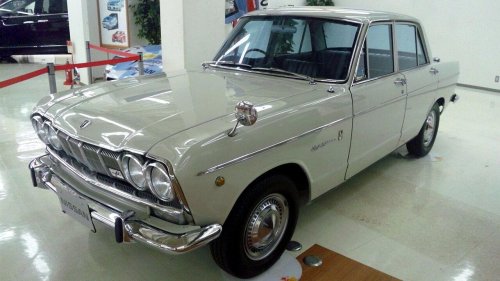
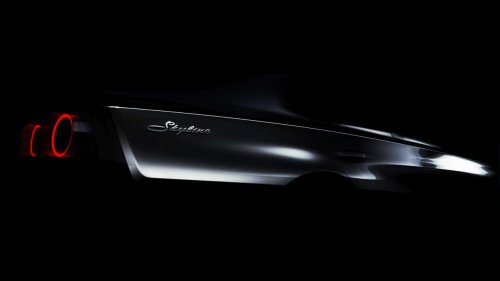
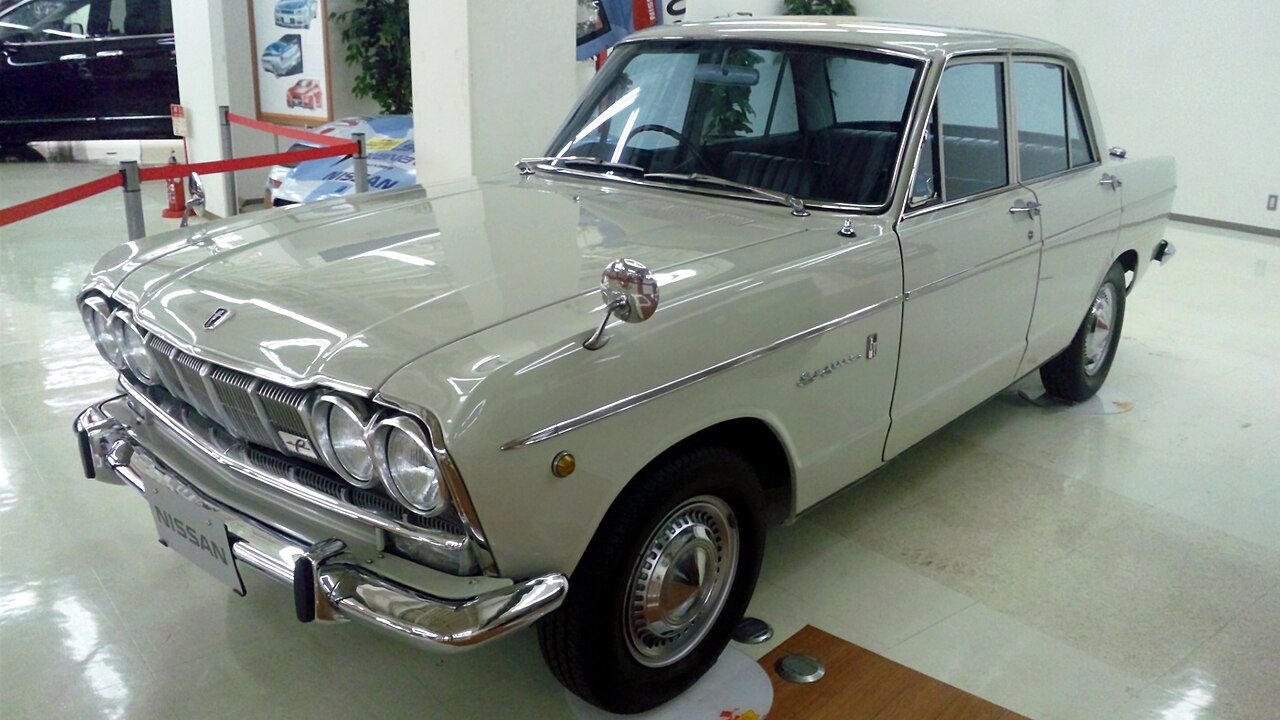
Few expected the 1963 Prince Skyline GT to hint at what was comingThe 1963 Prince Skyline GT arrived as a curious hybrid of family sedan and racing experiment, a boxy four-door that few outside Japan expected to matter much beyond local circuits. Yet within a few short years, the formula it introduced would shape one of the most storied performance bloodlines in the world and set the stage for the modern GT-R legend. What looked like a stopgap response to a disappointing race season instead previewed how Japanese engineers would fuse motorsport, mass production, and everyday usability. From aircraft roots to Skyline ambition To understand why the 1963 Prince Skyline GT was so unlikely, it helps to start with the company itself. Prince, originally an aircraft manufacturer, had moved into vehicle production in the postwar years and treated engineering as a matter of national pride. The second car to carry the Prince badge was the 1957 Skyline, which represented a huge leap forward for Japanese family cars. While its predecessor had been basic transport, the Skyline pointed toward a more sophisticated, aspirational product aimed at a growing middle class. By the early 1960s, Japan was rebuilding at speed, and domestic manufacturers were looking for ways to prove that their sedans could compete with European machinery. The Skyline name already had recognition inside Japan, but it was still associated with practicality rather than performance. That tension between everyday duty and racing ambition would define what came next. The second generation and a new canvas The second-generation Skyline, internally coded S50, arrived as the Prince Skyline 1500. It formed the backbone of the brand in the mid-1960s, and contemporary accounts describe it as one of the best cars in Japan that originated from Prince Motors and was later taken over by Nissan. The basic sedan was honest and unpretentious, with clean lines and a roomy cabin, and it served as a logical evolution of the earlier model rather than a radical statement. Inside Prince Motors and, later, Nissan, engineers saw the S50 platform as more than a commuter car. The chassis was robust, the wheelbase long enough to offer stability at speed, and the engine bay had room for something bigger. The company needed a halo project that could lift its image and show that Japanese sedans were not limited to slow, utilitarian roles. Racing disappointment as a catalyst According to period recollections, the year 1963 was a disappointing race season for Prince. After a year of defeat, Prince decided to build an all-out track weapon based on its existing sedan. The plan was audacious: take the humble Skyline, stretch its nose, and drop in a larger six-cylinder engine that had been developed for a higher-class model. This decision was less about selling a new trim level and more about restoring pride. Within the company, the project was framed as a direct answer to European dominance. Japan was preparing for its first major national circuit events, including the early editions of the Japan Grand Prix, and domestic manufacturers wanted to prove they could run with imported sports cars. Prince engineers were given a clear mandate: build something that could challenge the best, even if it meant bending the definition of a family sedan. The birth of the Skyline GT formula The result of that internal push was the Skyline GT, often referred to by its S54 designation. In engineering terms, it was a clever piece of parts-bin innovation. The team took the Skyline shell and extended the front to accommodate a larger inline-six that had been developed for a more upscale model. This transformed the car from a modest 1.5-liter sedan into a muscular touring machine with genuine performance intent. Prince Motors, Ltd did not treat this as a marketing exercise. Official heritage material describes the Skyline GT as a special machine that Prince Motors, Ltd produced to win the 2nd Japan Grand Prix GT-II Race on May 3. The goal was explicit: victory in a specific race category, achieved with a car that still wore the Skyline name and retained its four doors. That combination of everyday body style and serious mechanical upgrades created a template that would echo through later generations. The GT badge did not replace the Skyline identity; it amplified it. The message was that a family car could be a threat on the circuit without losing its practical shape. Showdown at the Japan Grand Prix The real test came at the Japan Grand Prix, where Prince entered its muscled-up Skyline against international competition. Contemporary reports describe how Skyline fans remember that 1963 to 1968 generation primarily for racing. In 1963, at the 1st Japan Grand Prix, Japan fielded domestic sedans against European sports cars, and the Skyline GT quickly became the crowd favorite. The most famous duel arrived at the 1964 Japan Grand Prix, when Prince lined up its GT against a Porsche 904. On paper, the German machine was the thoroughbred and the Skyline the underdog. Yet accounts from the event describe how Prince’s muscled-up Skyline fought with the Porsche 904 for supremacy in the 1964 Japan Grand Prix but came slightly short of victory. The image of a four-door sedan harrying a purpose-built sports racer around the circuit did more for the Skyline legend than a simple class win could have. For Japanese fans, that race proved that domestic engineering could stand shoulder to shoulder with European specialists. For Prince, it validated the decision to turn a family car into a race car without disguising its roots. Lap times, pride, and the Suzuka benchmark Performance figures from the era underline how serious the Skyline GT project had become. One driver recalled that they finished a lap in 2 minutes 47 seconds, and at that point he was proud to say this was the fastest car at Suzuka. That anecdote, tied directly to the Skyline’s development, shows how a sedan that began life as practical transport could be honed into a benchmark on Japan’s most demanding circuit. The pride expressed in that 2 minutes 47 seconds lap time speaks to more than raw speed. It reflects an emerging confidence inside Japanese engineering circles that domestic cars could set records on home soil. The Skyline GT became a symbol of that shift, a car that combined national ambition with tangible results. Road car spin offs and the GT-A / GT-B split Racing success, or even near success, quickly filtered into the showroom. The Skyline GT spawned road-going variants such as the GT-A and GT-B, which carried over much of the competition hardware in slightly tamer form. While the GT-A had blue GT fender badges, the GT-B had red ones, a tradition that continued onto the Hakosuka GT-R and beyond. Those small visual cues signaled to enthusiasts that the car in front of them carried genuine racing DNA. Customers who bought these early GT models were not just purchasing extra horsepower. They were buying into a narrative that connected their daily commute to the drama of the Japan Grand Prix. The fact that the Skyline GT retained its four-door configuration reinforced that link, since the same basic silhouette could be seen in traffic and on the grid. From Prince to Nissan and the GT-R future The corporate story behind the Skyline is as significant as the racing record. Skyline is one of the best cars in Japan that originated from Prince Motors and was taken over by Nissan. When Nissan absorbed Prince, it also inherited the Skyline program and the GT concept that had been forged on the track. Rather than dilute that identity, Nissan chose to build on it. Later generations, including the famous Hakosuka GT-R, would refine the formula that the 1963 Skyline GT had sketched out. A practical bodyshell, a high-output engine, and a direct link to motorsport became the core ingredients. Over time, the Skyline GT-R name would evolve into the standalone GT-R badge, but the roots remained visible in the way Nissan marketed performance as something that could live alongside everyday usability. The Skyline Sport and the image game Prince did not rely solely on racing to shape its image. The company also produced more stylish derivatives such as the Skyline Sport Coupe, which has been highlighted in modern displays of Japanese automotive history. Company management decided that a racing pedigree would help further establish its performance image, and their engineers were tasked with turning that vision into reality. The Skyline Sport sat alongside the GT in this strategy, presenting a more glamorous face while the GT carried the burden of competition. Together, these efforts showed that Prince understood the value of a layered brand. The Skyline name could cover everything from a refined coupe to a stripped-back racer, with the GT sitting at the intersection of both worlds. How historians frame the second generation Enthusiast historians often describe the second-generation Skyline as a turning point. One analysis of the 1963 to 1968 cars notes that what Skyline fans really remember the 1963 to 68 g generation for is racing, particularly the early Japan Grand Prix efforts. That perspective is telling. The basic S50 sedan sold in respectable numbers, yet the stories that endure focus on the GT conversions and their battles with European rivals. Another retrospective on the model family, introduced under the banner of The Next Generation, recalls how Prince announced the Prince Skyline 1500 as the second generation of the Skyline and then quickly steered it toward motorsport. In that view, the S50 was less a standalone product and more a platform for experimentation, a canvas that allowed engineers to test how far a mass-market sedan could be pushed. Why the 1963 GT still matters Looking back from the vantage point of modern GT-Rs with advanced electronics and enormous power outputs, the original Skyline GT can seem modest. Its performance figures are easily surpassed by contemporary hot hatchbacks. Yet its significance lies not in outright speed but in the way it redefined what a Japanese sedan could represent. By stretching the Skyline’s nose to fit a larger engine and sending it into battle against a Porsche 904, Prince challenged the assumption that family cars belonged only in the slow lane. The GT badge signaled that practicality and performance did not have to be mutually exclusive. That idea would later inform everything from turbocharged Skylines to the all-wheel-drive GT-Rs that dominated international racing. The 1963 project also showed how motorsport could be woven into a brand’s identity without resorting to limited-run exotica. The Skyline GT was aspirational yet recognizably connected to the cars parked on Japanese streets. That accessibility helped build a loyal fan base, which in turn justified further investment in performance variants. A legacy written in four doors Few observers at the time would have predicted that a sedan born from a disappointing race season would become the ancestor of a global performance icon. Yet the threads are clear. The Skyline GT introduced the idea that a mass-market four-door could be reengineered into a serious circuit weapon. It proved that Japanese manufacturers could challenge European specialists on home soil. It created visual and mechanical cues, from GT badges to engine swaps, that still resonate with enthusiasts. More from Fast Lane Only Unboxing the WWII Jeep in a Crate 15 rare Chevys collectors are quietly buying 10 underrated V8s still worth hunting down Police notice this before you even roll window down



















 +76 others