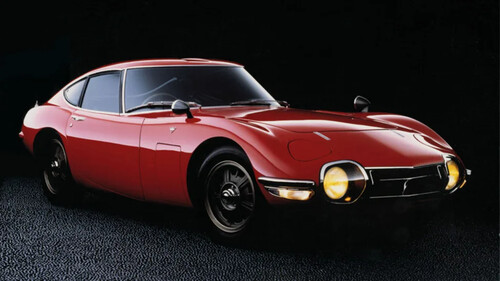
Few expected the 1967 Toyota 2000GT to rival European sports cars so quicklyThe Toyota 2000GT arrived in 1967 as a shock to the sports car establishment. In just a few years, a company better known for practical sedans produced a low-slung grand tourer that could stand beside contemporary Ferraris and Porsches on design, performance, and price. The car’s rarity and enduring influence now make it one of the most coveted Japanese classics, but its real legacy lies in how quickly it forced Europe to take Japan seriously. What happened When Toyota unveiled the 2000GT in the late 1960s, the company set out to build a limited-production flagship that would change global perceptions of Japanese cars. The coupe featured a front-engine, rear-wheel-drive layout with a 2.0‑liter straight-six, a five-speed manual transmission, and disc brakes on all four wheels. Its proportions, with a long hood and tightly drawn cabin, echoed the best European grand tourers of the era rather than the conservative sedans that defined Toyota’s showroom at the time. The project was a collaboration between Toyota and Yamaha, which brought deep experience in high-revving engines and precision manufacturing. Yamaha reworked Toyota’s inline-six with a twin-cam cylinder head, transforming a relatively ordinary powerplant into a free-spinning unit that could compete with established sports cars. The chassis used a backbone-style structure and independent suspension, engineering choices that aligned more with European performance benchmarks than with the economy-focused cars that had previously come out of Japan. Production numbers were intentionally small. Toyota built roughly a few hundred examples over a short run, making the 2000GT far rarer than mass-market models that followed. Each car required significant hand assembly, which kept volumes low but allowed a level of finish that surprised buyers who expected Japanese cars to prioritize cost over craftsmanship. The cabin featured wood trim, detailed instrumentation, and tailored bucket seats that looked at home beside contemporary European luxury coupes. Performance figures placed the 2000GT firmly in the sports car conversation. Period tests recorded top speeds in the neighborhood of 135 miles per hour, with acceleration that matched or bettered many six-cylinder European rivals of similar displacement. The car’s balance and steering feel earned praise from drivers who had previously associated Japanese manufacturers with basic transportation rather than high-speed touring. Motorsport and media exposure further raised the 2000GT’s profile. Toyota entered the car in endurance racing, where it demonstrated reliability and speed over long distances. The coupe’s sleek profile then reached a global audience when it appeared in a major spy film, cementing its image as Japan’s first true exotic. That screen presence carried symbolic weight, signaling that a Toyota could be aspirational rather than purely utilitarian. Today, the limited production run and historical significance have turned surviving examples into highly valued collectibles. Enthusiast coverage frequently cites the 2000GT as one of the most desirable classic Japanese cars, with some analysts calling it an ideal choice for dedicated gearheads who want a car that combines rarity, design pedigree, and motorsport heritage. Auction results reflect that reputation, with well-preserved cars reaching prices that align with European exotics of the same era. Those values have climbed sharply in recent years. Reports on the collector market describe 2000GT sales that stretch into seven figures, with at least one car changing hands for a price that would have been difficult to imagine when the model was new. A documented example of a 2000GT selling for a multi-million-dollar figure reinforced the perception that the car now occupies the same rarefied space as blue-chip European classics, a shift illustrated by coverage of a record-setting 2000GT sale at auction. Why it matters The 2000GT’s rapid rise to parity with European sports cars mattered far beyond its small production run. At the time, Japanese automakers were primarily associated with affordable, durable transportation. The idea that a Toyota could credibly challenge a Porsche 911 or a Jaguar E‑Type in performance and price seemed unlikely. By executing a car that matched European benchmarks in design, engineering, and exclusivity, Toyota rewrote expectations for what a Japanese brand could achieve. One key shift was in perceived craftsmanship. European sports cars had long traded on hand-built mystique and interior detail. The 2000GT showed that Japanese factories, especially with Yamaha’s involvement, could deliver similarly meticulous workmanship. The wood-rimmed steering wheel, hand-finished dashboard, and tight panel gaps contrasted sharply with the utilitarian cabins of mass-market Toyotas, signaling that Japanese companies could operate at both ends of the market. The car also helped reposition Japan in the global performance conversation. Before the 2000GT, enthusiasts often treated Japanese models as budget alternatives rather than primary choices. The Toyota coupe did not try to undercut rivals on price. Instead, it aimed directly at the premium segment, with a sticker that rivaled European sports cars. That strategy communicated confidence and ambition, suggesting that Toyota saw itself as a peer to established performance brands rather than a follower. Technically, the 2000GT pushed Toyota toward more advanced engineering. The twin-cam inline-six, four-wheel independent suspension, and disc brakes all signaled a shift away from purely cost-driven design. Many of those lessons filtered into later performance models. While later icons such as the Celica and Supra were built in larger numbers and at lower prices, they carried forward the idea that Toyota could build cars that were both reliable and engaging to drive. The 2000GT served as a proof of concept that encouraged that evolution. Racing success also played a role. Endurance events are unforgiving, and the 2000GT’s ability to survive and compete at speed helped counter stereotypes that Japanese cars were fragile or only suited to city commuting. When a car performs well over long distances under race conditions, it sends a strong message about engineering depth and build quality. That message resonated with buyers who might never see a 2000GT in person but would later consider more attainable Toyota models. From a cultural perspective, the 2000GT helped establish Japan’s design language in the sports car world. Its proportions were influenced by European grand tourers, yet details such as the headlight treatment and side profile gave it a distinct identity. That blend of familiarity and originality helped open Western markets to the idea that a Japanese car could be as beautiful as anything from Italy or Britain, not just practical and efficient. The model’s scarcity has amplified its impact over time. Because so few were built, each surviving car has become a reference point for collectors assessing the broader history of Japanese performance. When a 2000GT crosses the auction block for a multi-million-dollar figure, it sends a signal that Japanese classics deserve the same respect and valuation as their European counterparts. That shift has lifted interest in other historic Japanese models, from early Skyline GT‑Rs to Mazda’s rotary sports cars. The 2000GT’s place in pop culture also matters. Its film appearance gave Toyota a glamorous halo at a time when brand recognition outside Japan was still developing. Viewers who saw the car on screen encountered a very different image of Japanese industry: cutting-edge, stylish, and confident. That kind of soft power helped pave the way for later exports across segments, from compact hatchbacks to luxury sedans. For Toyota internally, the 2000GT set a benchmark that influenced corporate thinking about flagship models. Even though the company did not immediately follow it with another low-volume exotic, the memory of a car that could compete at the highest level lingered. When Toyota later developed performance-focused models and eventually high-end offerings under the Lexus brand, the experience gained from the 2000GT era provided a historical foundation for aiming at premium competitors. The car also shaped how enthusiasts and historians talk about Japanese automotive history. Without the 2000GT, the story might begin in earnest with the turbocharged era of the 1980s and 1990s. Instead, the narrative now includes a 1960s coupe that anticipated many of the qualities that would later define Japanese sports cars: precision engineering, reliability, and a willingness to challenge established players on their own terms. What to watch next The 2000GT’s legacy continues to influence both the collector market and modern product planning. On the market side, values for top-tier Japanese classics have been climbing, and the Toyota coupe sits at the apex of that trend. Collectors who once focused exclusively on European and American cars now track Japanese models with equal interest, often using 2000GT auction results as a barometer for broader demand. As more high-profile sales reach seven figures, other historically significant Japanese cars are likely to see parallel appreciation. That shift has practical consequences for restoration and preservation. Owners who previously treated older Japanese sports cars as inexpensive drivers are increasingly investing in factory-correct restorations, knowing that the market now rewards authenticity. The 2000GT, with its limited parts supply and complex construction, has become a focal point for specialist shops that can handle intricate bodywork and period-correct engine rebuilding. Their expertise often spills over into work on other vintage Toyotas and Yamahas, raising the overall standard of Japanese classic car restoration. Manufacturers are watching this enthusiasm closely. Modern Toyota sports cars, including recent Supra and GR-branded models, draw on the company’s performance heritage in their marketing. References to the 2000GT’s design and engineering appear in concept cars and promotional materials, suggesting that Toyota sees value in connecting current products to its first true halo car. As electrification accelerates, future performance projects may lean even more heavily on historical cues from the 2000GT to reassure enthusiasts that character and driving engagement will survive the transition. There is also growing interest in factory-supported continuation or tribute projects. While Toyota has not announced any official continuation 2000GTs, the broader industry trend of reviving classic shapes with modern underpinnings raises the question of whether a future limited-run homage might appear. If that happens, it would reflect both the car’s enduring appeal and the commercial potential of nostalgia in a market that increasingly values heritage alongside technology. On the cultural side, the 2000GT’s story is becoming more visible in museums, documentaries, and enthusiast media. As younger collectors enter the market, many are discovering Japanese classics through online content and social platforms, where the Toyota coupe’s distinctive silhouette and racing history make it highly shareable. That visibility helps cement its status as a foundational car for anyone interested in the history of performance engineering outside Europe and North America. Future scholarship on automotive history is likely to give the 2000GT a central role in explaining how Japan moved from a follower to a leader in vehicle design and manufacturing. Researchers and curators increasingly frame the car as a turning point that anticipated the quality and innovation that would later define Japanese industry across sectors. As archives open and more primary documents about the Toyota-Yamaha collaboration become available, the technical and corporate decision-making behind the project may receive deeper analysis. More from Fast Lane Only Unboxing the WWII Jeep in a Crate 15 rare Chevys collectors are quietly buying 10 underrated V8s still worth hunting down Police notice this before you even roll window down