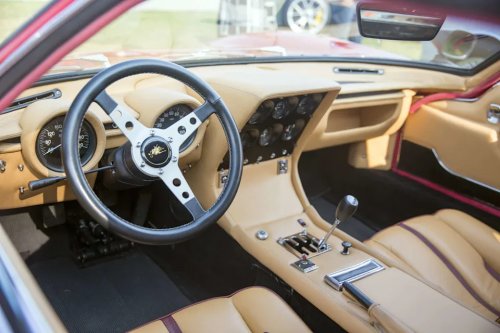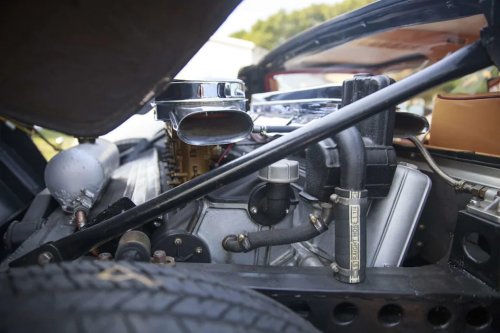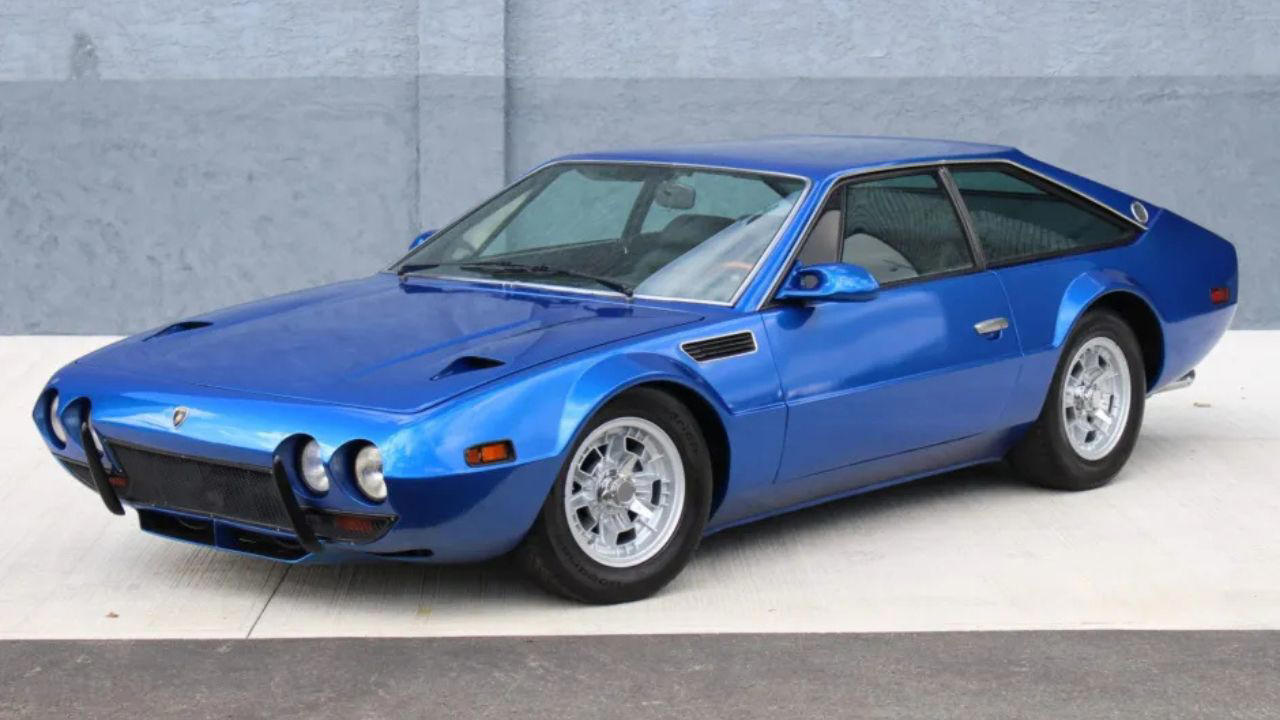



















The 1972 Lamborghini Jarama delivers more than expectedThe Lamborghini Jarama has long lived in the shadow of the Miura and Countach, a forgotten front‑engined GT from a brand better known for poster cars. Yet a well‑sorted 1972 Jarama can feel surprisingly modern, unexpectedly usable, and far more engaging than its reputation suggests. Recent drives and market activity indicate that this low‑volume V12 coupe is finally starting to deliver more than many enthusiasts ever expected. What happened When Ferruccio Lamborghini launched the Jarama at the start of the 1970s, he wanted a compact grand tourer that would satisfy strict American regulations without abandoning the company’s signature V12. The car used a shortened version of the Espada’s platform and the same 3.9‑liter quad‑cam twelve, but wrapped it in a tighter, more muscular body shaped by Marcello Gandini at Bertone. Period figures quoted 257 kW, or roughly 350 horsepower, from the 60‑degree alloy engine, routed through a five‑speed manual gearbox to the rear wheels. The 1972 Jarama sat in the middle of the model’s evolution. Early cars were simply called Jarama 400 GT, while later examples gained the “S” suffix along with power steering, revised brakes, and a light interior update. Contemporary testing often criticized the car’s heavy controls and slightly nose‑heavy balance, yet praised its stability at speed and the turbine‑smooth character of the V12. Production remained very low, with only a few hundred units built across the entire run, which helps explain why even many Lamborghini fans have never seen one in person. Modern road testing of a carefully maintained Jarama S has revealed a very different character from the old stereotypes. Reviewers who expected a clumsy, dated GT found instead a car that feels compact on the road, with quick steering once moving and a chassis that encourages confident, flowing driving. One detailed drive report of a 1972 Jarama S highlighted how the car tracks cleanly through high‑speed corners, with the V12 pulling hard from low revs and spinning freely toward redline. Inside, the cabin trimmed in thick leather with large glass areas delivers better visibility than the wedge‑era Lamborghinis that followed. Switchgear and ergonomics still reflect early‑1970s thinking, yet testers have been surprised by the relative comfort of the seats and the long‑legged gearing that keeps the engine relaxed at motorway speeds. Where many expected a temperamental antique, the Jarama instead behaves like a purposeful touring car that happens to wear a raging bull badge. On the market side, the Jarama has begun to attract more attention at specialist auctions. One well‑documented Jarama 400 GT, finished in a period‑correct metallic shade and retaining its original matching‑numbers drivetrain, was highlighted in a feature on Jarama 400 GT activity. The car’s condition, history, and relative rarity helped push bidding beyond what many observers expected for a model that used to sit near the bottom of the Lamborghini hierarchy. Interest in the Jarama has also grown alongside celebrations of Lamborghini’s broader heritage. As the company marked its 60th anniversary, retrospectives on the brand’s history have started to give more space to the front‑engined V12 GTs that shaped its early years. Coverage of Lamborghini turning 60 has reminded enthusiasts that the Jarama arrived at a time when the firm was experimenting with how a twelve‑cylinder grand tourer should feel, not just how it should look. Taken together, these threads, modern driving impressions, renewed historical context, and higher‑profile auction results, have converged to change how the 1972 Jarama is perceived. What was once a footnote in Lamborghini history is starting to be treated as a distinctive, usable classic with its own clear identity. Why it matters The Jarama’s quiet reappraisal matters because it challenges a long‑standing hierarchy inside the Lamborghini story. For decades, the brand’s narrative revolved around the Miura as the original supercar and the Countach as its wild successor. Front‑engined GTs such as the 350 GT, 400 GT, Islero, Espada, and Jarama were often described as side projects. Yet the Jarama shows that Lamborghini’s DNA has always included comfortable, fast touring cars alongside the extroverted mid‑engined flagships. From a driving perspective, the 1972 Jarama offers something that modern supercars often struggle to match. The naturally aspirated V12 responds instantly to throttle inputs, without turbo lag or hybrid complexity. The five‑speed manual demands effort but rewards precision, and the relatively narrow tires communicate grip levels more clearly than the huge rubber on current high‑performance models. For enthusiasts who want to feel mechanical connection rather than chase lap times, the Jarama delivers a kind of engagement that aligns with how many collectors now define enjoyment. Usability also carries weight. Owners and testers have reported that a sorted Jarama will start reliably, idle without drama once warmed, and cruise at contemporary highway speeds without feeling strained. The large glasshouse and relatively compact footprint make it less intimidating in traffic than a Countach or Diablo. That practicality, combined with the sense of occasion that comes from a hand‑built V12, helps explain why interest has grown among drivers who want to use a classic Lamborghini regularly rather than keep it as a static investment. Historically, the Jarama captures a moment when Lamborghini was wrestling with regulations and market demands. The car had to satisfy tightening emissions and safety rules, especially in the United States, while still delivering the performance expected from a V12 Italian coupe. The decision to base it on a shortened Espada platform and to keep the V12 up front reflects a pragmatic approach that contrasts with the more radical mid‑engined projects. That compromise created a car that is neither pure GT nor pure supercar, which may have confused buyers in period but makes it intriguing today. From a design standpoint, the Jarama illustrates Gandini’s ability to work outside the wedge language that later defined so many of his cars. The body mixes sharp creases with subtle curves, with a long bonnet, cropped tail, and wide rear haunches. Some angles can look slightly awkward compared with the timeless purity of the Miura, yet the shape has aged better than many expected. The car now reads as a confident, slightly brutalist GT, closer in spirit to contemporary muscle coupes than to delicate Italian exotics. The way the market has begun to treat the Jarama also says something about how collectors are reassessing value. As blue‑chip Lamborghinis have moved out of reach for many buyers, attention has turned to models that still offer a twelve‑cylinder experience without seven‑figure price tags. The Jarama’s low production numbers, shared mechanicals with more famous models, and improving reputation on the road make it a logical candidate for that second wave of appreciation. However, the car’s relative affordability compared with other Lamborghinis does not mean it is cheap to own. The quad‑cam V12 requires regular, expert servicing, and the complex carburetor setup must be tuned correctly for the engine to run as intended. Parts availability can be challenging for trim pieces and specific Jarama‑only components. Prospective owners who are drawn in by rising auction prices need to factor in the cost of maintaining a 1970s Italian V12, which can quickly erase the perceived savings over more mainstream classics. The Jarama also matters for what it signals about Lamborghini’s future relationship with its heritage. As the company moves deeper into hybrid and potentially fully electric powertrains, the emotional pull of its early V12 cars will only grow stronger. The fact that a once‑overlooked model is now gaining recognition suggests that the brand’s back catalog still has layers that enthusiasts and the company itself can explore. Special events, heritage drives, and factory‑supported restoration programs could bring more Jaramas back into the spotlight, broadening the story beyond the usual poster heroes. For younger enthusiasts, the Jarama provides a gateway into a different side of Lamborghini culture. Social media has already amplified interest in unusual, less obvious classics, and the Jarama fits that pattern perfectly. It offers the cachet of the raging bull badge and the sound of a period V12, yet it appears at cars and coffee events far less often than a Countach replica or a modern Huracán. That rarity gives it a kind of underground appeal, a car that signals deep knowledge rather than surface‑level fandom. The model’s rising profile also encourages a more balanced conversation about what makes a Lamborghini authentic. Is it the mid‑engine layout, the scissor doors, the extreme styling, or is it the combination of bold engineering, distinctive design, and a willingness to challenge convention? The Jarama argues for the latter. It shows that a front‑engined, relatively practical coupe can still feel every bit a Lamborghini if the fundamentals are right. What to watch next The next few years will reveal whether the Jarama’s current momentum turns into lasting recognition or remains a niche enthusiasm. Auction results will provide one clear signal. If more high‑quality, well‑documented cars appear at major sales and consistently achieve stronger prices, that will confirm that the market now sees the Jarama as a legitimate collectible rather than a curiosity. Observers will be watching not only headline figures but also the spread between average and exceptional examples, which often shows how discerning buyers have become. Another factor to watch is how many Jaramas return to the road after long periods off it. Many cars from this era spent years stored in private collections or fell into disrepair when values were low. Rising interest can justify expensive restorations, which in turn increase the number of usable cars. If more Jaramas start appearing at classic rallies, touring events, and marque gatherings, that will reinforce the idea that the car works as a driver’s GT, not just a static showpiece. Support from Lamborghini itself will also shape the Jarama’s future status. The company has shown growing interest in its heritage, with official celebrations of its 60th anniversary and a broader push to frame its history as a continuous story from the early GTs to current models. If factory communications, museum displays, or heritage driving programs begin to feature the Jarama more prominently, that will validate what enthusiasts have been discovering on their own. Specialist knowledge and parts supply are another area to monitor. As more owners commit to full restorations, demand for accurate trim pieces, body panels, and mechanical components will rise. Independent experts who understand the Jarama’s particular quirks, from chassis reinforcement points to correct carburetor jetting, will become increasingly important. A stronger ecosystem around the model will make ownership more appealing, which can then support further value growth. There is also the question of how the Jarama fits into broader conversations about sustainability and usage patterns for classic cars. As cities tighten regulations on older vehicles and fuel costs rise, owners may drive their V12 GTs less frequently or choose events and routes more carefully. The Jarama’s relative comfort and touring focus could work in its favor here. A car that can cover long distances smoothly on occasional trips may find a more secure place in a world where every outing has to feel special. More From Fast Lane Only: Unboxing the WWII Jeep in a Crate 15 rare Chevys collectors are quietly buying 10 underrated V8s still worth hunting down Police notice this before you even roll window down