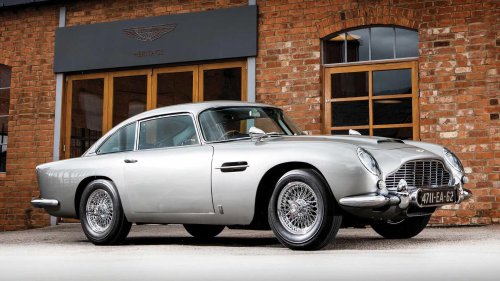
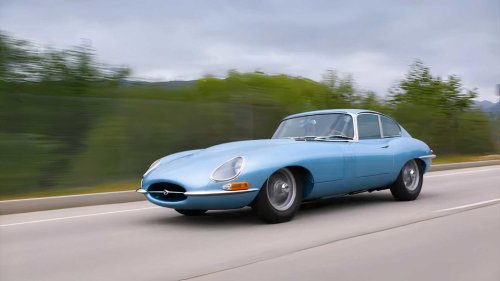
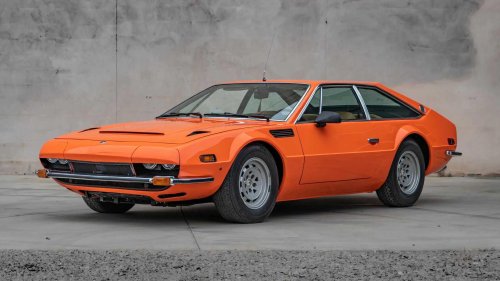
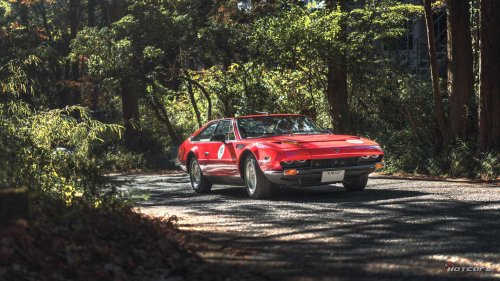
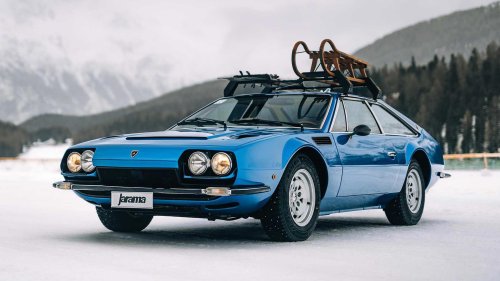
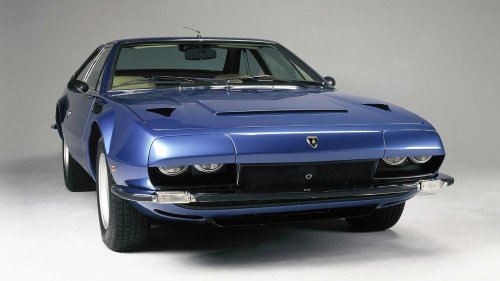
For decades, Grand Tourers were the pinnacle of European motoring sophistication. There were sports cars for the daring, trucks for the working, cheap cars for the masses, but GTs were how the truly wealthy did their driving. They were built to devour miles at speed, all while their occupants enjoyed luxury and comfort not afforded to mere mortals. But as the oil crisis loomed, one company's offering saw them shift tack entirely. Europe’s Grand Tourers Used To Rule The Autobahn RM Sotheby'sWhile their relevance today has arguably faded in favor of sports cars, Grand Tourers used to be the vehicle of choice for gentleman drivers. People who would load their luggage into the trunk, their partner into the passenger side, then set off on some comfortable, high-speed excursion along the Mediterranean Sea or the autobahn. They had speed, elegance, and an air of superiority that didn’t come with other cars.James Bond’s Aston Martin DB5 is perhaps the most iconic Grand Tourer of the 1960s golden age, along with the Jaguar E-Type, though modern cars like the Bentley Continental GT and Aston Martin DB9 are present-day stalwarts. Ferrari was also central to the GT formula, with cars like the 365 GTB/4 in the late 1960s and the 12Cilindri more recently, though Grand Tourers have largely given way to sports cars due to their massive price tags and comparatively small potential market. They do still remain a popular choice, though the segment went through a considerable shift in the 1970s.But what happened when the very thing that made Grand Tourers desirable—massive V12 engines and luxury—suddenly became their greatest weakness? The Oil Crisis Nearly Killed GTs Overnight Jay Leno's Garage / YouTubeAs that golden age of the Grand Tourer was coming towards its close, it would be the very thing that defined Grand Tourers that nearly killed them — that was big engines, heavy bodies, and masses of power.Grand Tourers typically had big V8 or V12 engines, long gearing for top speed, and the lack of fuel efficiency associated with powerful engines. As fuel became increasingly scarce, buyers moved away from these cars and towards ones with better fuel efficiency or lower running costs. Governments tightened regulations around emissions at the same time, squeezing the class more, while air travel becoming easier meant there wasn’t the same need to blast across a country at 150 mph.By the mid-1970s, it was a hard time to be a GT car, and an even harder time to produce one. It was so hard, in fact, that it forced one manufacturer not just to stop production of theirs, but to step away from Grand Tourers forever. The Lamborghini Jarama 400 GT Was Quintessential Grand Touring Bring A TrailerThough known as a sports car company today, Lamborghini actually started as a Grand Tourer manufacturer. Their first production model was the 350 GT, which was a two-door, 3.5-liter V12, with the 400 GT, Islero, and Espada all released in a four-year window. 1970 would see the Sant’Agata company continue their two-year release cycle with the Jarama 400 GT.The Jarama was different from other Lamborghinis. It was still designed by legendary Italian design house Bertone, who had already penned the stunning Miura, but the Jarama was angular and muscular. The hood stretched far out in front of the driver and half-hid the headlights, giving the car a look of either aggression or derision depending on the angle. The sloping rear created a trapezoid silhouette, and the 2+2 design put the backseat passengers over the rear axle. That hood also hid a 3.9-liter V12 engine good for 350 hp.The Jarama came just two years after the Espada, and was smaller and slightly quicker. The Jarama was significantly lighter, coming in at 3,197 lbs dry to the Espada’s 3,582 lbs dry, due in part to the Jarama using a shortened version of the Espada’s chassis. This did mean that the car went from a fully-fledged four-seater to that 2+2 layout in the Jarama, but the smaller size did lead to improvements in handling as they both used the same 3.9-liter V12 engine.Claire-Kaoru Sakai, Ayesh Seneviratne / HotCarsDespite the Jarama being a more nimble and responsive version of the already-successful Espada, it received mixed reviews in the motoring press. That smaller frame impacted the cabin, which led to some controversial cabin choices, like driving position and oddly-placed switches, while the car’s bold design was polarizing.Despite these pain points, though, Thoroughbred & Classic Car magazine reported that founder Ferruccio Lamborghini called it his favorite car, saying he “preferred the Jarama to all the others, because it is the perfect compromise between the Miura and the Espada… The Jarama is perfect if you just want to have one car.” But while the boss would sing the Jarama’s praises, it would last just six years and 327 examples before fading into obscurity.The Jarama would be the last new Grand Tourer that Lamborghini released, and it would be outlasted by the Espada, which continued two years after the Jarama was discontinued. The Jarama Quietly Disappeared Via: LamborghiniThe car’s 1970 launch came at a precarious time. Having seen the reaction to the original Jarama 400 GT, Lamborghini made an updated GTS version in 1972 to try and remedy the issues. The GTS would have slightly more power (365 hp vs 350 hp), a revised interior, and some slight aesthetic improvements to hopefully improve the car’s sales (which had been 177 to this point).Unfortunately, the ceasing of the GT and release of the GTS coincided with the 1973 oil crisis. This saw gas prices skyrocket, and consumers quickly turned away from big, thirsty, imported V12 engines and towards more fuel-efficient cars. This impacted Lamborghini heavily, as the company pivoted away from Grand Tourers and quietly stopped production of the Jarama in 1976 after just 150 cars were made. The Jarama Remains A Glimpse At A Different Future via LamborghiniThe Jarama remains an obscure part of Lamborghini’s history. Its almost brutalist design makes it unique among their typically expressive cars, especially considering the Miura came out just four years earlier and was designed by the same people. The dash was almost bench-like, while the radio was moved around from the roof to the center console (but facing the same direction as the driver, not facing towards the driver) or on the passenger side. But what would a Lamborghini be without some quirk?Though the Jarama is relatively unknown today, its rarity (328 cars) does help it to achieve higher prices than the Espada (of which 1,227 were made). Per Hagerty, good-quality Espadas sell for around $50,000 - $80,000, while the same quality Jarama will be around $100,000.But the Jarama gives us a view of an alternative future. Had the Jarama taken off as well as hoped, would Lamborghini have remained in the Grand Touring space? Had the oil crisis not hit, would we be missing out on cars like the Murcielago and the Gallardo that came far after their switch to sports cars? We’ll never know. What we do know is that, for the founder of the company, the Jarama was the perfect car. And maybe that’s enough.