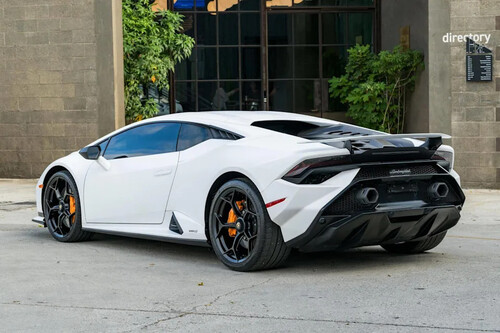
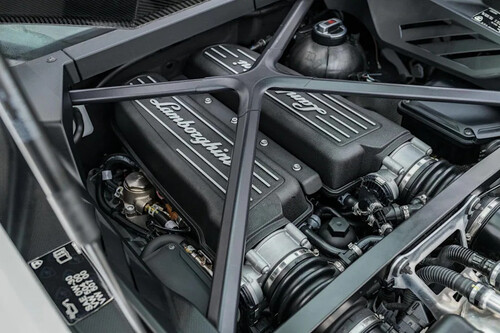
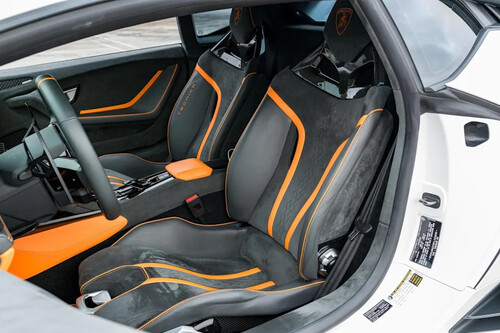
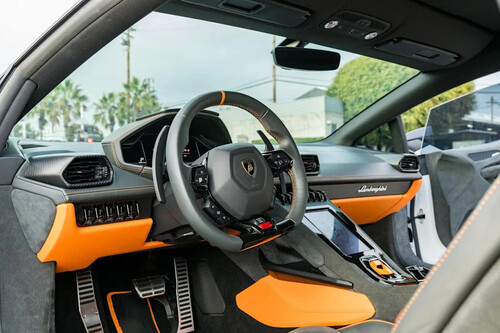
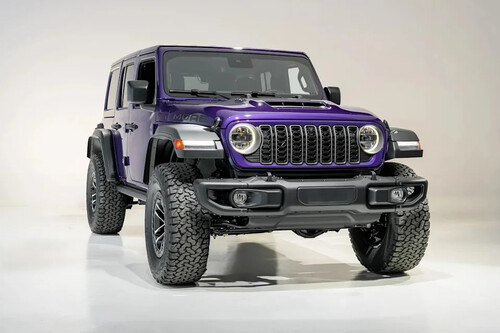
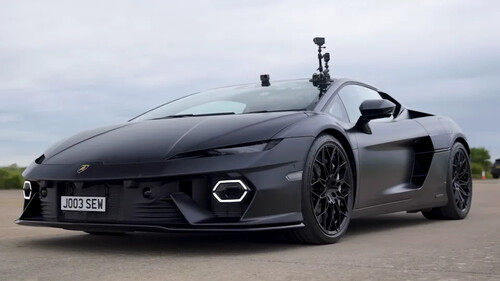
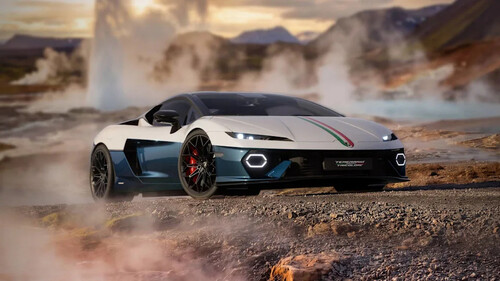
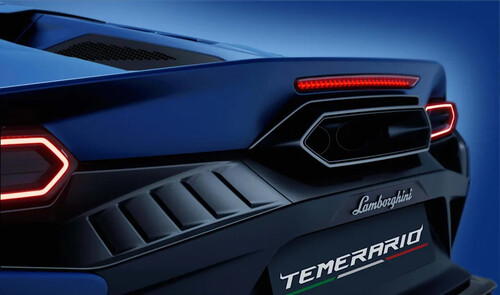
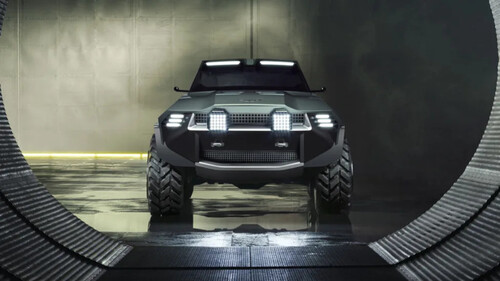
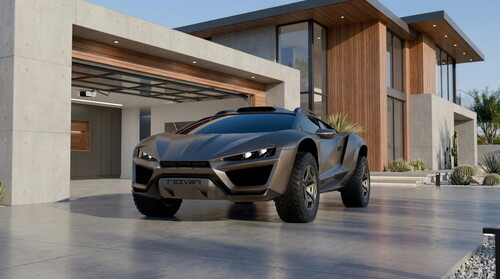
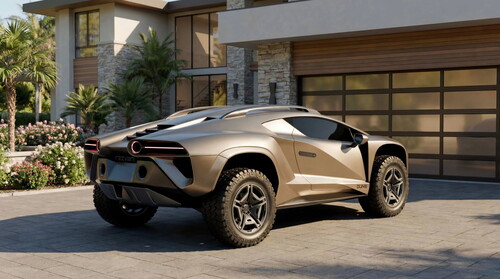
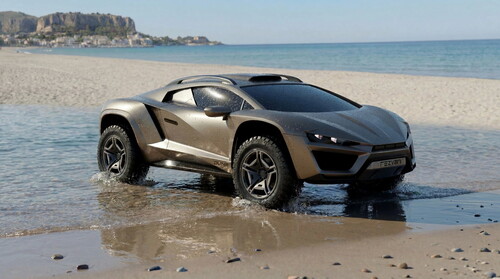
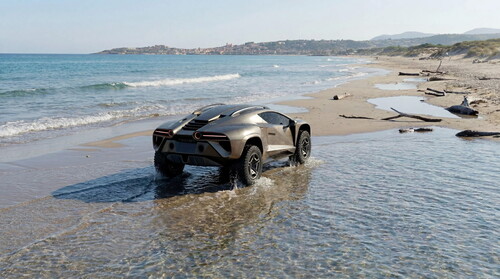
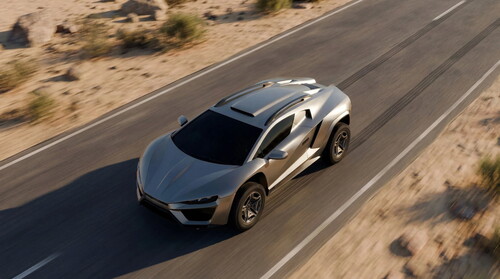
Rezvani's Dune Isn't an Off-Road Lamborghini — It's a Test of Whether a Modifier Can Become a MarqueRezvani Motors will build exactly seven examples of the Dune, and that number matters more than the 800 horsepower attached to it. Each one begins life as a Lamborghini Huracán before Rezvani's Southern California shop tears into the chassis: a 4.5-inch suspension lift co-engineered with VF Engineering, 31-inch mud-terrain tires on 20-inch wheels, a roof-mounted air snorkel, functional hood heat extractors, and a supercharger bolted to the Huracán's naturally aspirated 5.2-liter V10. The obvious headline writes itself: off-road Lamborghini. The more useful question is whether seven cars, built by a tuning house on someone else's chassis, can ever be collected the way a true factory special is collected, or whether they simply become very fast, very expensive curiosities with no second act in the market.The numbers alone explain why the Dune reads as serious engineering rather than a lift kit and some knobby tires. Rezvani quotes 800 horsepower and 785 lb-ft of torque from the supercharged V10, routed through the Huracán's seven-speed dual-clutch transmission and full-time all-wheel-drive system. Ground clearance climbs to 11 inches, a six-inch gain over the stock car, with a 25-degree approach angle and 35-degree departure angle — genuine off-road geometry, not marketing language. Front recovery hooks, a rear tow package, underbody skid plates, and a terrain-management system with dedicated sand, mud, rock-crawling, Baja, and snow modes round out a car that is 88 inches wide before anyone opens a door. Rezvani has not published a price. For a car built in single-digit numbers on a donor supercar, that omission is itself a signal: this is a commission, not a configurator purchase.To understand why the Dune exists at all, it helps to understand what Rezvani actually is. Founded by Ferris Rezvani around an aviation-inspired brand identity, the company has spent more than a decade building its lineup by taking an established donor platform and re-engineering it into something with its own name and its own identity: the Jeep Wrangler underneath the militarized Tank, a Corvette-based platform beneath the mid-engine Beast, and a growing Rezvani Retro line built around vintage-inspired coachwork. The recently introduced Fortress pickup follows the same formula on a truck platform. The Dune simply applies that playbook to a Lamborghini for the first time.AdvertisementAdvertisementThat playbook has a real precedent in the collector world, and it is worth taking seriously rather than dismissing as an aftermarket curiosity. RUF Automobile spent decades modifying Porsches before Germany's motor authority recognized RUF as an independent manufacturer with its own VIN sequence, meaning a RUF built on a 911 shell is not, legally or in the eyes of serious collectors, a modified Porsche. It is a RUF, appraised, authenticated, and collected on its own terms. Whether Rezvani ever reaches that same status is genuinely unresolved. But it is the right question to ask about the Dune, rather than simply whether it is fast or expensive.Lamborghini has already done some of the persuading for Rezvani. The factory's own Huracán Sterrato proved there is real collector appetite for an off-road-capable Huracán. One high-profile example was added to a prominent restaurant-tech executive's supercar collection, another turned up in a fraud suspect's collection headed to auction in the U.K., and a third spent a memorable weekend stuck in a Tahoe snowstorm rather than tucked away in a climate-controlled garage. The Sterrato established that raising a Huracán's ride height and adding all-terrain tires isn't a gimmick collectors ignore. The Dune simply takes that idea much further, with more lift, more power, and a production run of seven instead of a proper factory series, while riding on Lamborghini's own validation of the concept.Timing adds another layer. The Huracán generation is closing out, with Lamborghini already teasing its Temerario successor and closing the model's run with cars like the final Huracán STO Unica. That means every Dune is built from what will soon be a discontinued naturally aspirated V10 platform, converted before Lamborghini's own transition to twin-turbo hybrid V8 power in the next generation. Donor-based specials built from a platform's final chapter have historically aged better with collectors than those built mid-cycle, precisely because the underlying car's own story is now closed and fixed.The market evidence that exists points in a genuinely useful direction, even if it isn't about the Dune specifically. Rezvani's tactical Tank models have real secondary-market liquidity: public results on Bring a Trailer show Tank examples selling for anywhere from roughly $85,000 to $190,000 across completed and bid-to auctions over the past several years, a track record that shows real demand for Rezvani's own branding, independent of the Jeep hardware underneath. The Beast supercar has no comparable auction history to point to yet. That split matters: so far, it is Rezvani's tactical trucks, not its supercars, that have proven they can hold value in public sale. The Dune straddles both categories, with no auction history of its own to lean on.AdvertisementAdvertisementSerious buyers should also reckon with what a Dune conversion costs the donor car, not just what it adds. A numbers-matching, unmodified Huracán is collected on originality: factory specification, matching components, an unbroken paper trail. Once that chassis becomes a Dune, it exits that collecting category entirely and enters a different one, judged by different standards, closer to how a Zagato-bodied Aston Martin or a Singer-reimagined 911 is judged: not as a modified example of the donor car, but as its own object, successful or not on its own execution and documentation. Buyers expecting Huracán-style originality premiums from a Dune are collecting the wrong car for the wrong reasons.The most important number attached to the Rezvani Dune isn't 800 horsepower. It's seven. Collectors rarely pay a lasting premium for horsepower alone; they pay for scarcity attached to a documented, legitimate story, and the Dune has real ingredients working in its favor: genuine engineering investment, a factory precedent in the Sterrato that already answered the is-this-a-gimmick question, a donor platform closing out its production era, and a parent brand that has already shown it can hold value at auction in at least one of its model lines. Whether the Dune itself becomes collectible isn't yet answerable; no car with a production run this new has an auction history. But the harder, more honest question for serious buyers isn't whether Rezvani built something quick. It's whether Rezvani has spent the last decade quietly becoming a marque rather than a modifier, and the Dune is the clearest test of that yet.Join our Newsletter, follow our Instagram page, and follow us on Facebook.