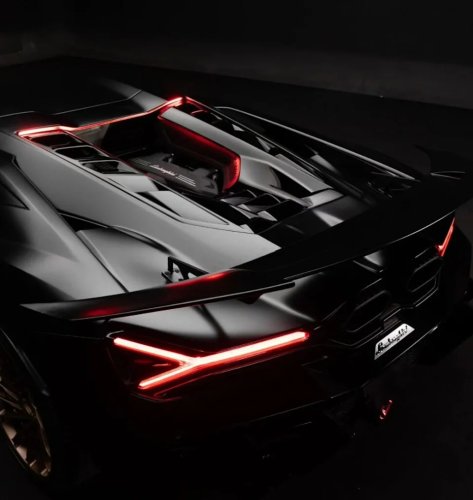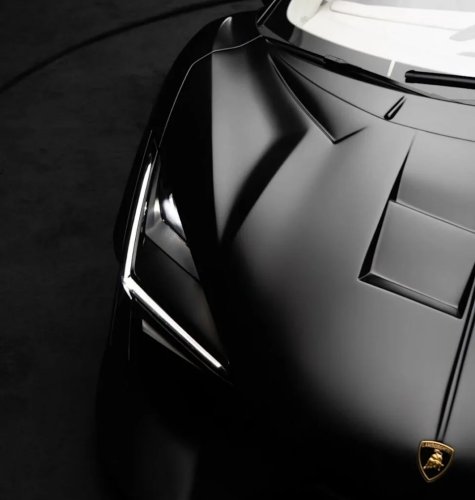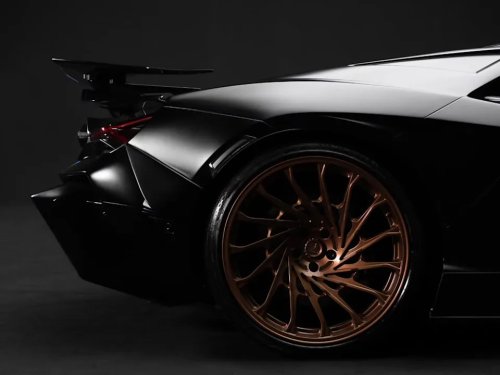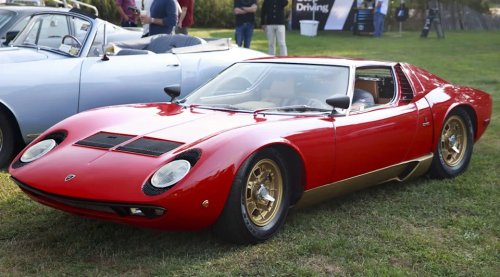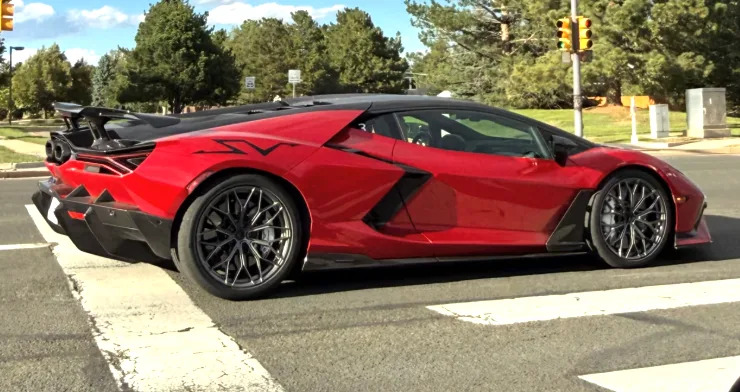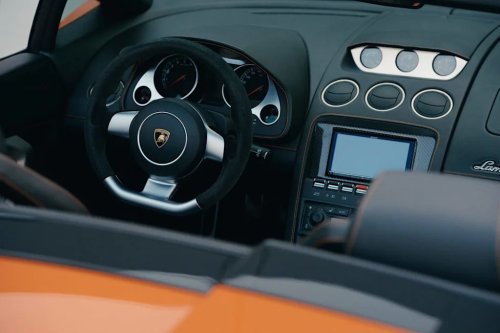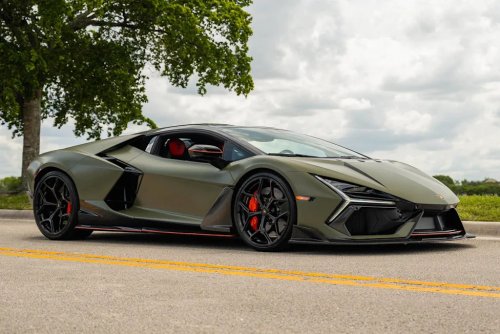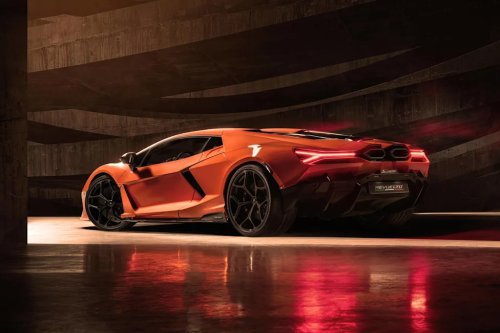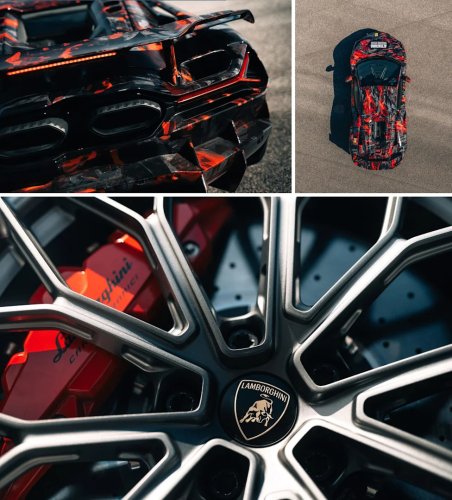

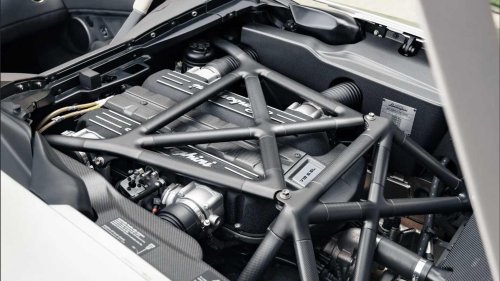

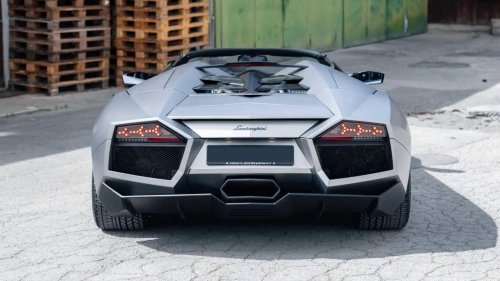
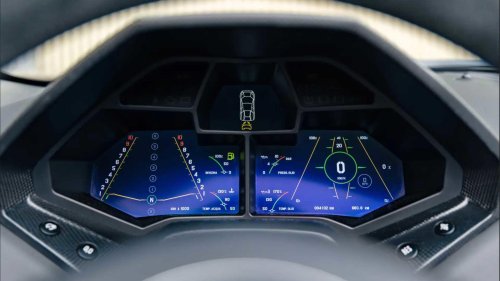
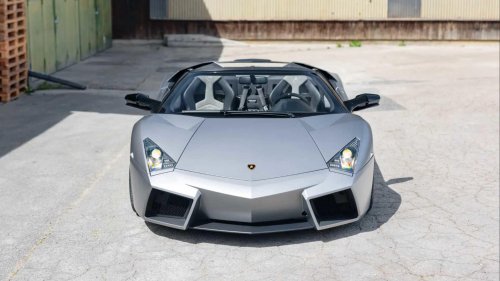


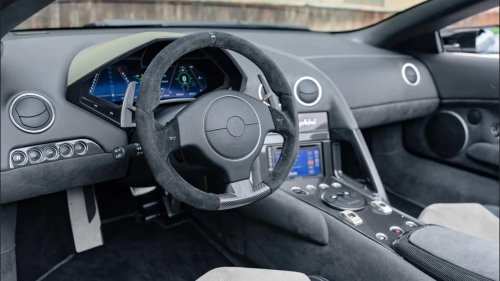
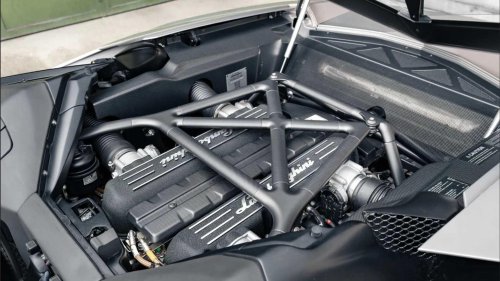



















Most car sightings don't stop anyone in their tracks. A Porsche 911 turns heads. A Ferrari gets a second glance. But every so often, a unicorn supercar appears on a public road and stops everyone dead. Phones come out to capture the moment, strangers gather, and the moment ends up on the internet before the car has even disappeared around the corner.That is the result of a very deliberate strategy, one that a handful of manufacturers have quietly perfected over the past two decades. The question worth asking is what it actually takes to build something so scarce, so charged, that ordinary people stop dead on a Tuesday afternoon just to watch it pass. The Day The Internet Lost Its Mind Over A Passing Car RM Sotheby's Someone posted a photo on Reddit's r/spotted recently with a caption that asked a simple question: "does this count as a spot?" It got 1,648 upvotes and 35 comments. For context, most posts on that forum generate a fraction of that engagement, because most posts are about cars people have actually heard of.This wasn't one of those posts. The car in the photo isn't a Ferrari 488 or a McLaren 720S, machines that are rare enough to be exciting but common enough that a determined enthusiast could realistically see one on any given weekend. What appeared in that photo is something most people have only encountered in a video game or a documentary they watched at 2 a.m. down a YouTube rabbit hole.Yet there it was, this rare unicorn with a Lamborghini raging bull at the front, driving on a real road, under real sunlight. Verified sightings in Hamburg in May 2026 and London in April 2026 confirm that these cars do still surface in the wild, driven by owners who actually use them, rather than leaving them as garage queens. But encounters like this remain genuinely rare events. The kind that feel less like a car sighting and more like a glitch in the fabric of everyday life.The car itself is only part of the story. The more interesting question is why a machine built nearly two decades ago still triggers this kind of reaction, and what that says about Lamborghini, and the path it paved for it. The Fighter Jet That Lamborghini Built For The Road RM Sotheby's The Lamborghini Reventón made its public debut at the 2007 Frankfurt Motor Show, and it arrived as something the automotive world had no real framework for. It was the first vehicle to come out of the then-new Lamborghini Centro Stile design studio, which had only been established three years earlier, announcing their intentions in the loudest possible way. Lamborghini Reventón Specs The fighter-jet-inspired body of the Reventón shared platform with the Murciélago LP640. A 6.5-liter naturally aspirated V12, 641 horsepower, 487 lb-ft of torque, 0–62 mph in 3.4 seconds, and a top speed of 211 mph. Those numbers were extraordinary, but they weren't the entire point. The Murciélago LP640 cost roughly half as much and delivered the same mechanical experience.RM Sotheby's What the Reventón offered instead was something closer to sculpture. Its body was drawn from the lines of the Lockheed Martin F-22 Raptor fighter jet. Sharp edges, blade-like surfaces, and a matte grey-green finish that used no pigment at all, only aluminum flakes suspended in the lacquer to produce its distinctive low-sheen appearance. No other Lamborghini before or since has worn the same color.RM Sotheby's Inside, the Reventón introduced three LCD screens to a Lamborghini cockpit for the first time, including an instrument cluster styled after an aircraft's heads-up display. That same approach later appeared in the Aventador. The carbon fiber body panels that gave the Reventón its visual sharpness also found their way into Lamborghini's next flagship.Just 20 customer cars were built, each priced at€1 million ($1,287,000), with one additional example, numbered 00/20, kept by Lamborghini for its own museum. Two years later, 15 Roadsters followed at the 2009 Frankfurt Motor Show, fitted with the uprated LP670-SV engine producing 661 hp. The roadster was listed at $1.2 million, but demand pushed actual transaction prices to around $2,100,000. Lamborghini had discovered something important, and it was only getting started. The Car That Proved Desire Is Worth More Than Performance RM Sotheby'sCritics at the time raised an important question. The Reventón used the same engine, the same chassis, and the same drivetrain as the Murciélago LP640, a car that cost roughly half as much. If you were paying for performance, there were better ways to spend $1.2 million.The cars were never publicly listed or offered to anyone who simply had the money. They were reserved for the brand's closest friends and collectors, by invitation only (perhaps a page out of Ferrari's book). That distinction mattered enormously, because it meant no amount of wealth guaranteed you could acquire one.The things that made the Reventón genuinely different were about experience, exclusivity and rarity rather than speed. The matte grey-green finish was developed specifically for this car and used no pigment whatsoever, just aluminum flakes suspended in the lacquer a color that existed nowhere else in the world. The cockpit introduced a G-force meter and an aircraft-style instrument display that had no precedent in a road car at the time.RM Sotheby's Lamborghini Design Director Mitja Borkert has since called it his favorite car from the early 2000s, and the vehicle that made Lamborghini the first luxury automotive brand to produce a limited-edition super sports car of this kind. The $1.2 million price wasn't irrational. But it was a test of whether the market would pay for desire itself, entirely separate from what the car could do. With the roadsters selling for twice its asking price, the market showed precisely that it agreed with Lamborghini's philosophy. The Reventón Paved The Future Of Lamborghini Few-Off Models RM Sotheby's What Lamborghini realized after the Reventón was that extreme scarcity, applied to a car with a genuine design concept behind it, created a different category of desirability, particularly among the affluent collector market.Since 2007, Lamborghini has launched six few-off series models, each one building on the formula the Reventón established. The Sesto Elemento arrived in 2010, the Veneno in 2013, the Centenario in 2016, the Sián in 2019, the Countach LPI 800-4 in 2021, and each one carried a piece of technology or design language that eventually found its way into the brand's series production lineup.The 2010 Sesto Elemento was a supercar built entirely of carbon, the "6th element" on the periodic table. The Veneno, unveiled at the 2013 Geneva Motor Show, took the scarcity principle to a new extreme. Priced at $4,000,000, it was built in just three customer coupes and nine roadsters. Numbers so small that the cars functionally disappeared into private collections the moment they were delivered.Lamborghini The Centenario followed in 2016 as a tribute to Ferruccio Lamborghini's 100th birthday, spread across 40 total units, 20 coupes and 20 roadsters, priced from €1.75 million ($2,047,500). Every single one sold before the public had seen the car. The Sián arrived in 2019 as Lamborghini's first hybrid production vehicle, pairing the V12 with a supercapacitor-based electric system for a combined 819 hp, across 63 coupes and 19 roadsters. Values on those cars are already approaching $2,500,000 or more on the secondary market.The tradition continues with the 2026 Fenomeno Roadster, capped at just 15 units, carrying the few-off lineage directly into Lamborghini's electrified era. The pattern has never really changed: extreme design, ultra-limited production, a technology preview, appreciating values, and then repeat. The Reventón took the gamble, succeeded in writing that playbook in 2007, and Lamborghini has followed it ever since. The Rarest Lamborghinis Don't Depreciate RM Sotheby's The Reventón was never going to be cheap to own, but the direction values have moved tells its own story. In January 2026, a 2010 Reventón Roadster crossed the block at RM Sotheby's Milan for €1,580,000, roughly $1,789,030, sold alongside its original Lamborghini flight case and a military-style shoulder bag that came with the car from new.RM Sotheby's Public auction data for the coupe puts the range somewhere between $1,187,000 on the low end and $2,162,000 at the top, with the average hovering around $1,931,000. Given that the original purchase price was $1.2 million, many owners are sitting on meaningful appreciation, and that's only accounting for the sales that become public record.Private transactions are believed to go considerably higher, but they rarely surface with verified figures. The cars change hands quietly, between collectors who have no interest in advertising what they paid. The scarcity that made the Reventón extraordinary in 2007 is the same scarcity that makes it valuable today. The Real Reason A Reventón Street Sighting Still Hits Different RM Sotheby'sGoing back to that Reddit post for a moment. Someone pointed a camera at a car on a public road and asked, somewhat sheepishly, whether it counted as a spot. Nearly 1,700 people said yes, emphatically, through the only language the internet has for that kind of shared feeling, an upvote.The Reventón was never meant to be a common sight. It was built in numbers small enough that most people will go their entire lives without seeing one outside a museum or a screen. When one appears on the street, under ordinary daylight, it becomes a moment worth remembering for the ages.RM Sotheby's With the Reventón, Lamborghini launched a product strategy that has since generated billions in brand value and collector demand. It proved that desire, followed by deliberately withholding accessibility, can create forever kind of icons. Thirty-five strangers arguing on Reddit about whether a passing car qualifies as a spot is exactly the legacy Lamborghini set out to build. Nearly two decades later, it's still working.Sources: Reddit, Lamborghini, RM Sotheby's