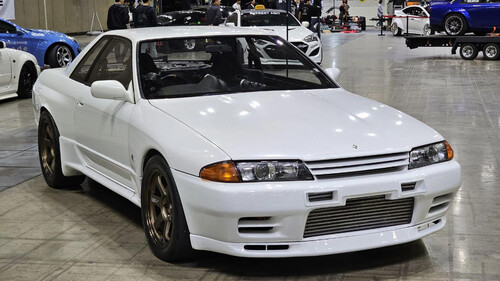
You’ve never heard of the 1963 Prince Skyline GT but it hints at something much biggerThe 1963 Prince Skyline GT is a ghost in most performance car histories, yet it sits at the hinge point between a modest family sedan and one of Japan’s most storied performance badges. Long before the Skyline GT-R became a global icon, this obscure coupe and its close relatives were already sketching out the formula of power, style, and racing obsession that would define generations of cars to come. Understanding that little known Skyline means seeing how a cautious domestic manufacturer learned to chase Porsche on track and how a quiet styling exercise helped launch an entire performance culture. From aircraft roots to family sedan The story starts with a company that did not begin in the showroom. When Prince Motor Company introduced its Skyline in 1957, the firm had come out of an aircraft background and was still feeling its way into postwar consumer carmaking in Japan. Early versions such as the Prince Skyline Deluxe were positioned as one of the first mid-size cars in a market that was only just beginning to motorize, particularly in the 1000 to 2000 cc class that was emerging in Japan as a practical sweet spot for family transport. Corporate identity was still in flux. Fuji Precision Industries changed its name to Prince Motor Company for the second time as the Skyline line matured, signaling that the Skyline was becoming central to the brand’s image rather than a side project. The sedan was conservative in layout, with a focus on reliability and space, but the badge was already starting to carry more emotional weight than its simple mechanicals suggested. Official retrospectives describe a brief history the of the skylinE that begins as a pragmatic answer to Japan’s need for everyday cars. Even in those early years, however, the company’s aircraft heritage and engineering ambition were quietly pushing it beyond basic transportation. The Skyline was one of the best cars in Japan that originated from Prince Motors and was later taken over by Nissan, and the values baked into those first sedans would be passed down in Skyline form for decades. The 1963 Prince Skyline Sport, style as a statement The 1963 Prince Skyline Sport is often treated as a footnote, a stylish curiosity built in tiny numbers. In reality it is the first clear hint that Prince wanted the Skyline name to stand for something more than practicality. The car’s hood was long and elegant, with a tall windsplit down the middle, and its sides were highly sculpted, flowing into vestigial tailfins that gave it a distinctly European flavor. The coupe and convertible bodies were penned with a sense of drama rare in Japanese production cars of the period and the model even appeared in Italian films in the early 1960s, which pushed it into the public eye. Later coverage of the 1963 Prince Skyline stresses that this car was not just a design exercise. It was a deliberate attempt to position Prince as an all new premium automotive company, one that could stand alongside European makers in sophistication. Including the hardtop and convertible, every color and every trim level was built in very small quantities, which made the model commercially insignificant but culturally loud. It suggested that the Skyline name could carry glamour and exclusivity as well as family duty. Viewed through a Japanese lens, that combination of sculpted bodywork, long hood proportions and a more luxurious interior was groundbreaking. It prefigured the idea that a Japanese manufacturer could sell a car on desire and image rather than solely on durability and price. The Prince Skyline Sport sat at the intersection of design and aspiration, and it prepared the public to accept a performance oriented Skyline that would soon arrive from a very different direction. Management discovers racing If the Skyline Sport showed that Prince could do style, the next step was to prove that the company could do speed. In 1964 the company’s management decided that a racing pedigree would help further establish its performance image. Engineers were given the task of turning a sensible sedan into a track weapon, not as a vanity project but as a strategic move to shift the brand upmarket. That decision would transform both the Skyline badge and Japan’s motorsport culture. To understand how radical this was, it helps to recall that Japan had only begun to become motorized at breakneck speed in the early 1960s. Interest in motorsport had been growing quickly, but domestic manufacturers were still learning how to compete with imported machinery. The Skyline, originally a 1500 cc family car, was about to be asked to challenge dedicated sports racers from Europe on one of Japan’s biggest stages. Inside Prince, figures such as Shinichiro Sakurai, often described as the father of the Skyline, saw racing not just as marketing but as a development laboratory. This move, envisioned by Shinichiro Sakurai, led directly to the creation of the Skyline GT. The idea was simple and audacious: stretch the existing sedan’s wheelbase, drop in a more powerful six cylinder engine, and use the resulting hybrid to chase victory in a new Grand Touring class. The company was about to discover how far it could push a car that had been designed to carry families, not trophies. Skyline GT: the sedan that chased a Porsche 904 The result of that internal gamble was the Skyline GT (S54), a car that looked like a slightly muscled up version of the everyday sedan but hid a serious mechanical upgrade. Official heritage material describes the Skyline GT as a special machine that Prince Motors, Ltd built to win the 2nd Japan Grand Prix GT II Race on May 3. Under the hood sat a tuned six cylinder engine that turned the once humble Skyline into a genuine performance car, and the chassis was reworked to cope with higher speeds and greater cornering loads. In period, Prince’s muscled up Skyline fought with the Porsche 904 for supremacy in the 1964 Japan Grand Prix but came slightly short of victory. Yet the significance of that duel far outweighed the final result. For several laps, a sedan based on a Japanese family car hounded a purebred European sports racer, and the crowd understood that something fundamental had changed. The Skyline GT did not need to win outright to prove that Japan’s engineers could close the gap to established performance benchmarks. Factory accounts of The Suzuka result in 1964 emphasize that the race did not produce a win, but it did inspire the development of the R380 Series cars that would later claim major victories and cement Japan’s place in international motorsport. Such is the significance of Skyline GT number 39 that a team of volunteers has since put hundreds of hours into restoring it, working in Nissa facilities to bring the car back to its original specification. The SKYLINE GT boasts a proud history of over 60 years, and that single chassis has become a rolling monument to the moment the Skyline name turned into a legend. Later retellings of the event point out that the title ultimately went to the German car, but the Skylines had a clean sweep from second place to sixth. Sunako was in the No. 39 car, and his drive became one of the defining stories in Japan’s car culture. From that day forward, the Skyline badge meant underdog grit as much as it meant engineering sophistication. How an obscure GT shaped the GT-R myth The 1963 Prince Skyline GT and its immediate successors are often overshadowed by the later Nissan Skyline GT-R, yet they supplied the DNA that the GT-R would refine. The History of Japan’s First Supercar traces a direct line from the 1964 Prince Skyline 2000GT S54 to the first Nissan Skyline GT, and then to the GT-R that arrived with the internal designation PGC10 in 1969. The early GT showed that a sedan based platform could compete in Grand Touring racing if given the right engine and suspension, and that insight shaped every GT-R that followed. Official heritage timelines describe how the Skyline is one of the best cars in Japan that originated from Prince Motors and was taken over by Nissan, and that the second generation Skyline 1500 Deluxe carried forward many of the traits established by the S54. The idea that a practical body could hide serious performance became a core part of the brand’s identity. When the first Skyline GT-R appeared, it simply turned up the volume on a formula that the 1963 Prince Skyline GT had already outlined. Even the way enthusiasts talk about the GT-R’s racing record echoes the earlier story. Accounts of the legendary 1971 Skyline GT-R often begin by noting that the story of the GT-R starts back in 1964, when Japan had begun to become motorized at breakneck speed and interest in motorsport had surged. That framing implicitly credits the S54 and its predecessors as the cars that taught Nissan how to build a winner, even if their names do not appear on modern badges. The Prince And Skyline Museum, dedicated to the Prince Motor Company and its most famous Skyline models, treats the early GT and the Skyline Sport as essential exhibits rather than curiosities. Together they show two sides of the same ambition: one focused on design and exclusivity, the other on racing and engineering. The GT-R story only makes full sense when those earlier experiments are seen as part of a continuous push to make the Skyline name synonymous with high performance. Why the 1963 Prince Skyline GT still matters For enthusiasts who only know the turbocharged, all wheel drive monsters of the 1990s, the 1963 Prince Skyline GT can seem quaint. It was based on a sedan, its output figures look modest beside modern numbers, and its production run was small. Yet it hinted at something much bigger that is still visible in today’s performance culture. First, it showed that Japanese manufacturers could use motorsport as a development tool and a branding platform in the same way European makers had done for decades. By building a car specifically to chase victory in the 2nd Japan Grand Prix GT II Race, Prince Motors, Ltd signaled that it was willing to take the risks and absorb the costs that come with serious racing programs. That mindset would later help Nissan justify the investment required to keep the GT-R competitive on track and in showrooms. Second, it proved that a family car could be transformed into a credible performance machine without losing its everyday usability. The Skyline GT was still recognizably a Skyline, with four doors and practical packaging, yet it could fight a Porsche 904 on track. That blend of normalcy and ferocity became a template not only for later Skylines but for an entire generation of Japanese performance sedans and coupes. More from Fast Lane Only Unboxing the WWII Jeep in a Crate 15 rare Chevys collectors are quietly buying 10 underrated V8s still worth hunting down Police notice this before you even roll window down The post You’ve never heard of the 1963 Prince Skyline GT but it hints at something much bigger appeared first on FAST LANE ONLY.