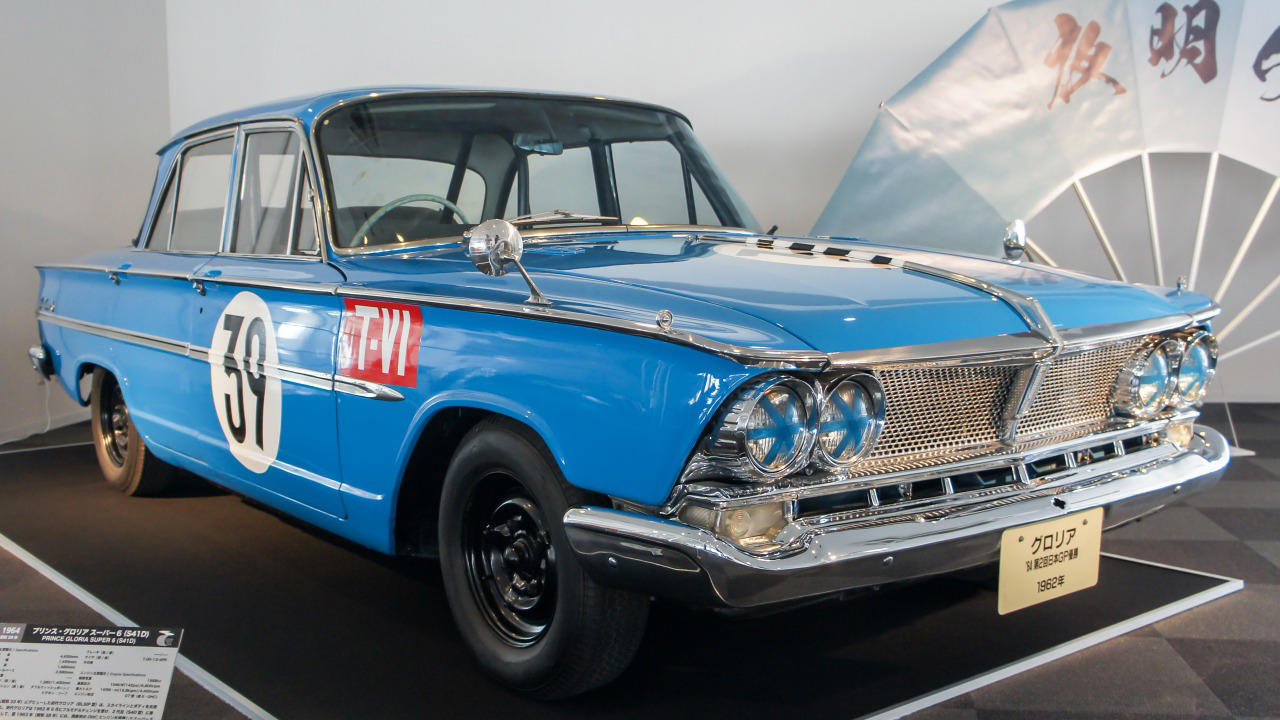



















You’ve probably never heard of the 1964 Prince Gloria but it hinted at future luxuryThe 1964 Prince Gloria rarely comes up in casual car conversations, yet it quietly previewed the comfort, refinement and engineering that would later define Japanese luxury sedans. Long before badges like Lexus or Infiniti existed, this discreet four-door from a small company called Prince Motor Company was already experimenting with six-cylinder smoothness, independent suspension and upscale styling aimed at drivers who wanted more than basic transport. Viewed from today, the car looks like a missing link. It bridged the gap between modest postwar family saloons and the polished executive machines that would follow, doing so with a mix of American-inspired design and European-influenced engineering that still surprises anyone who encounters one on the road. From Skyline sibling to quiet luxury statement To understand why the 1964 Prince Gloria mattered, it helps to start with its origins. Prince Motor Company, later absorbed into Nissan Motor Co, Ltd, positioned the Gloria above its better-known Skyline, sharing some underpinnings but aiming at a more affluent buyer. The first generation Prince Gloria BLSI arrived in 1959 as a luxury passenger car that even shared its body with the Skyline ALSI, yet it already carried a more formal, prestigious image. By the time the second Generation Gloria appeared, Prince Motor Company wanted to move beyond simple badge engineering. The firm treated the Gloria as a showcase for technology and comfort, something it hoped would appeal to business owners and professionals who were starting to demand more refinement from their cars. According to the official Vehicle Description for the Prince Gloria Super 6 Model 41, Prince Motor Company (now Nissan Motor Co, Ltd) added this Super 6 version to the second-generation Gloria specifically to highlight a new six-cylinder engine and upgraded running gear. That 1964 Super 6, coded Model 41, is the car that best captures the Gloria’s quiet ambition. It arrived as Japan was moving from basic mobility to aspirational motoring, and it tried to meet that moment with a combination of straight-six power, sophisticated suspension and a cabin trimmed to feel a step above the norm. Styling with a hint of Detroit and a lot of confidence Visually, the Gloria was never shy about its influences. Enthusiasts who study period photos often point out that the car borrowed cues from late 1950s American metal. Owners and historians have described the 1963 Prince Gloria Deluxe as having styling influences from 59 Buicks, and that same language carries naturally into the 1964 Super 6. The Gloria was one of the first Japanese ordinary family cars that tried to look glamorous, with a broad grille, pronounced rear fenders and brightwork that felt more boulevard than back street. Accounts of a 1965 Prince Gloria Super 6 repeat the same point. Those descriptions explain how the Prince Gloria Super adopted cues from 59 Buicks and became one of the first Japanese family sedans with some flair, a telling choice of words that underlines how unusual this approach was at the time. Japan’s domestic market was still dominated by boxy, utilitarian shapes, so a sedan that looked like a scaled-down American cruiser stood out immediately. The Gloria’s proportions also hinted at its luxury aspirations. Compared with smaller domestic sedans, it carried a longer hood to house its straight six, and its roofline and glasshouse gave rear passengers more space and light. Even the name Gloria suggested a certain formality that matched its upright stance. This was a car meant to be seen in, not just driven. Super 6 and the rise of the Japanese SOHC straight six Under the skin, the 1964 Prince Gloria Super 6 delivered more than just styling theater. The second Generation Gloria gained a new six-cylinder engine that set a precedent for Japanese manufacturers. On June of that era, the company introduced what one reference describes as the first mass-produced Japanese SOHC six-cylinder engine, known as the G-7, for its Gloria line. That move signaled a shift away from the small four-cylinder units that had dominated domestic cars. Specialist commentary on the Gloria notes that the G7 used a cast-iron block with wet-sleeve cylinder liners and a cast-iron head, and that it was equipped with an alternator rather than a dynamo. The design was explicitly described as Inspired by Mercedes and Benz practice, which shows how Prince Motor Company benchmarked European luxury engineering rather than simply scaling up its existing hardware. Performance figures from period descriptions of the 1965 Prince Gloria Super 6 give a clear picture of what the 1964 car was aiming for. They state that the Super 6 used a 105 hp 2.0 L straight six mated to a 4-speed manual gearbox, a combination that would have felt smooth and reasonably brisk in mid 1960s Japan. That output did not turn the Gloria into a sports car, but it put the sedan on a different level from the basic four-cylinder saloons that shared its roads. The G engine family also had a more aggressive side. Accounts from enthusiasts who track Prince’s racing history explain that the G engine was adapted for competition to produce close to 220 hp, with high compression and three Weber carburetors. That transformation showed how much latent potential Prince had built into its straight six. The same basic architecture that powered a family sedan could be tuned into a serious racing unit, and that dual character would later become a hallmark of Japanese performance luxury cars. Suspension, racing pedigree and the Super 6 legend Luxury is not just about power, it is also about how a car rides and handles. Here again, the Gloria pointed forward. Descriptions of the 1965 Prince Gloria Super 6 emphasize that the car used independent front suspension and a De-dion rear axle. That combination was more advanced than the simple live rear axles used on many contemporaries, and it aimed to combine comfort with better control at speed. For a mid 1960s Japanese sedan, this placed the Gloria in rare company. The Gloria’s chassis sophistication was not just theory. Period accounts recall that Gloria (Prince Gloria) became even more popular when two Super 6 race cars finished 1st and 2nd in their class during the 2nd Japane Grand Prix. That result gave the sedan a performance halo and proved that its straight-six engine and suspension could cope with serious track use. The fact that a car aimed at family buyers could double as a class-winning racer foreshadowed the dual-purpose character that would later define Japanese sports sedans. The Model 41 Super 6, as preserved in museum collections, represents this blend of comfort and competition. The official museum listing for the Prince Gloria Super 6 Model 41 notes that Japan Prince Motor Company, later Nissan Motor Co, Ltd, added this Super 6 model to the second-generation Gloria to showcase its new six-cylinder powertrain. That decision effectively turned the Gloria into a rolling technology demonstrator, one that connected showroom buyers to the company’s racing ambitions. Inside the cabin: early lessons in Japanese luxury Step into a surviving 1964 Prince Gloria Super 6 and the interior immediately reveals what the company was trying to achieve. While detailed factory trim specifications are less widely documented than the engine, contemporary photos and owner descriptions show a cabin that aimed higher than the average domestic sedan of its day. The Gloria’s dashboard featured a wide, horizontally oriented design that echoed American practice, with round instruments grouped ahead of the driver and bright trim pieces that framed the controls. The steering wheel often carried a thin rim and a large horn ring, again reminiscent of late 1950s and early 1960s American cars. Yet the overall execution felt more restrained and tidy, in keeping with Japanese tastes. Seat upholstery and door panels in the Super 6 models typically used patterned fabrics or vinyl with contrasting piping, and the cars often featured armrests, rear ashtrays and other small comforts that signaled a step up from economy transport. The impression was not of opulence, but of thoughtful upgrades that made long journeys more pleasant. In that sense, the Gloria pointed toward the sort of quiet, detail-oriented luxury that Japanese manufacturers would refine in later decades. Noise, vibration and harshness control also mattered. The straight-six layout of the G7 engine naturally produced smoother running than a comparable four-cylinder, and Prince engineers added sound insulation to keep mechanical noise out of the cabin. Period owners and later reviewers have commented on the car’s refined character at cruising speeds, a trait that would become central to the identity of later Japanese executive sedans. Prince, Nissan and the path to modern Japanese luxury sedans The story of the 1964 Gloria cannot be separated from the corporate changes that followed. By 1966, Prince Motors merged with Nissan and the Gloria line up continued as one of Nissan’s strongest product lines in their history. That merger meant that the engineering expertise behind the G7 engine and the Super 6 chassis flowed directly into Nissan’s broader portfolio. Later overviews of the model family explain that The Gloria was sold as Prince Gloria from 1960 to 1971. But in its third generation, from 1967 to 1971, it was sold in Japan under the Nissan banner. That transition marked the moment when the Gloria name became part of a larger corporate strategy to compete in the growing market for upscale sedans. As Nissan integrated Prince’s technology, it also inherited the Gloria’s customer base. Buyers who had come to appreciate the car’s blend of comfort and performance now encountered it in Nissan showrooms, where it sat alongside more mainstream models. The Gloria’s role as a flagship within this environment helped shape Nissan’s understanding of what a luxury sedan should offer, from engine smoothness to cabin refinement. Over time, the lessons from the Prince Gloria Super 6 fed into other Nissan projects. The company’s later six-cylinder sedans and coupes carried forward the idea that a straight six, tuned for both power and smoothness, could serve as the heart of a premium car. The focus on independent suspension and precise handling also reappeared in later performance sedans, reinforcing the Gloria’s status as an early template. From obscurity to cult classic among enthusiasts Despite its historical importance, the 1964 Prince Gloria remains a rare sight outside Japan. When one appears on a Western road, it tends to cause a stir among enthusiasts who recognize its significance. One social media post celebrating a Nissan Gloria as a super rare import highlights how unusual it is to see such a car in regular traffic and notes that the process of registering and insuring these vehicles is VERY straightforward for those willing to navigate the paperwork. That kind of grassroots enthusiasm has helped keep the Gloria’s legacy alive among a small but passionate group of collectors. Enthusiast groups dedicated to odd or unusual vehicles often spotlight cars like the 1963 Prince Gloria Deluxe, emphasizing again how its styling drew from 59 Buicks and how the Gloria stood out as one of the first Japanese family cars with a sense of flair. These communities treat the Gloria not just as a curiosity, but as a key piece of automotive history that deserves recognition alongside better known classics. Museum collections also play a role. Institutions that preserve the Prince Gloria Super 6 Model 41 give visitors a chance to see the car up close, often alongside other significant Japanese models from the same era. The presence of the Gloria in such collections signals that curators view it as more than a niche oddity. It represents a turning point in how Japanese manufacturers thought about comfort, performance and style in a family sedan. Online resources that compile information about the Nissan Gloria line help tie these threads together. They trace the evolution from the early Prince Gloria models through later generations, documenting how the car’s role shifted over time. Those timelines show the 1964 Super 6 sitting at a crossroads, with one foot in the world of early postwar motoring and the other in the emerging segment of refined, aspirational sedans. Why the 1964 Prince Gloria still matters Looking back, the 1964 Prince Gloria Super 6 did not revolutionize the global car market, and it never achieved the name recognition of later Japanese luxury models. Yet its influence runs deeper than its limited production numbers might suggest. First, it proved that a Japanese manufacturer could build a straight-six sedan with European-inspired engineering and American-inflected styling, then sell it successfully to domestic buyers who wanted more than basic transport. The G7 engine, with its cast-iron block, wet-sleeve cylinder liners and alternator, showed that Prince Motor Company was willing to invest in advanced technology for a relatively small market segment. Second, the car’s suspension layout and racing success demonstrated that comfort and performance did not have to be mutually exclusive. The independent front suspension and De-dion rear axle, combined with the Super 6’s success in the 2nd Japane Grand Prix, hinted at the sports sedan formula that would later define many Japanese performance cars. Third, the Gloria’s interior and overall presentation taught Japanese manufacturers how to package luxury in a way that felt both aspirational and attainable. The car did not rely on excessive ornamentation. Instead, it offered thoughtful upgrades in space, trim and refinement that made everyday driving feel special. That approach would later become a hallmark of Japanese premium brands, which often emphasized quality and comfort over ostentatious displays. Finally, the merger of Prince Motors into Nissan ensured that the Gloria’s DNA did not disappear. The straight-six expertise, the focus on ride quality and the understanding of what affluent buyers wanted all fed into Nissan’s later products. Even if many modern drivers have never heard of the 1964 Prince Gloria, they have experienced the ideas it helped pioneer in the form of smoother engines, quieter cabins and more capable suspensions in Japanese sedans that followed. For enthusiasts who seek out rare imports or study the history of Japanese cars, the Gloria has become a kind of secret handshake. Spotting a well preserved Prince Gloria Super 6 Model 41, whether in a museum or on a quiet street, is a reminder that the story of luxury motoring in Japan did not start with the big brands of the 1980s. It began earlier, with a company willing to build a straight-six family sedan that looked to 59 Buicks for style, to Mercedes and Benz for engineering inspiration and to its own racing program for credibility. That blend of influences, filtered through the constraints and ambitions of 1960s Japan, gave the 1964 Prince Gloria a character all its own. It may never be a household name, but for those who care about how luxury evolved, it remains a small, elegant signpost pointing toward the future. More from Fast Lane Only Unboxing the WWII Jeep in a Crate 15 rare Chevys collectors are quietly buying 10 underrated V8s still worth hunting down Police notice this before you even roll window down The post You’ve probably never heard of the 1964 Prince Gloria but it hinted at future luxury appeared first on FAST LANE ONLY.