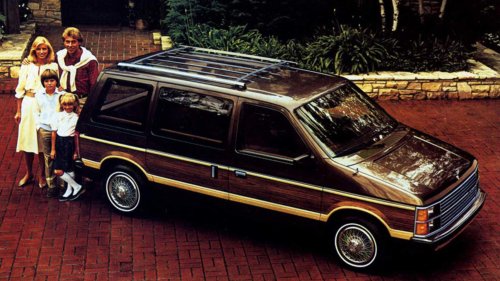
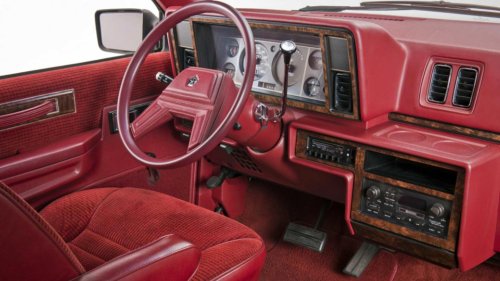
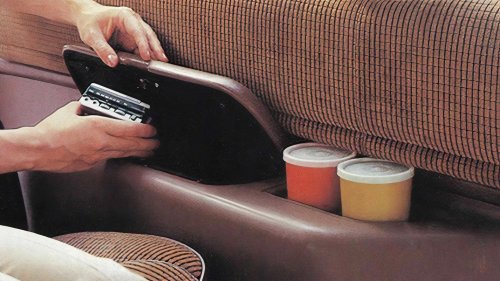
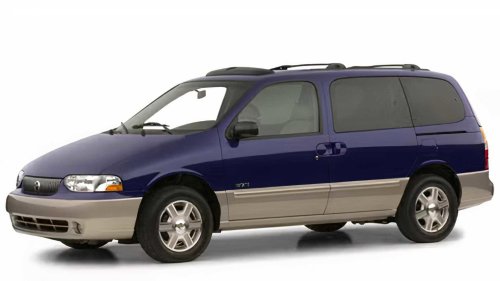
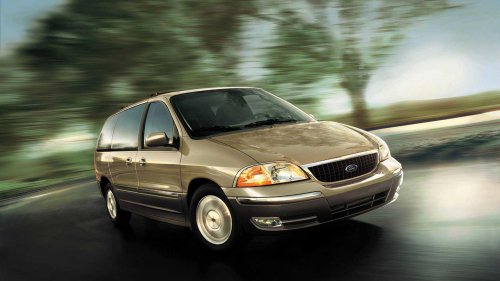
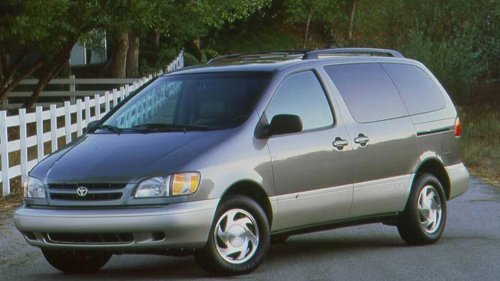
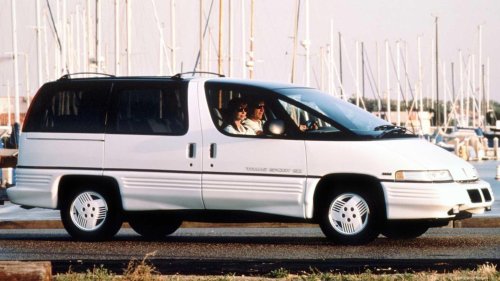
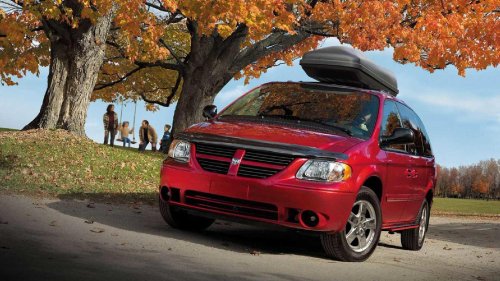
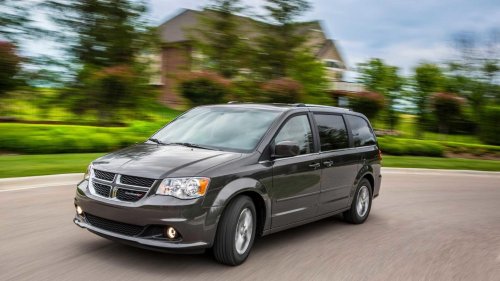
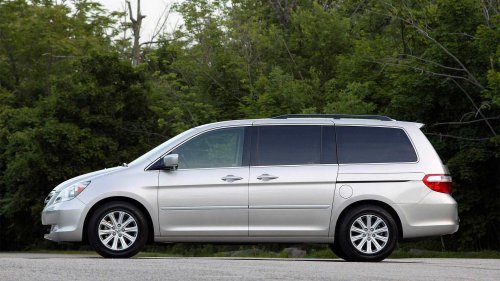
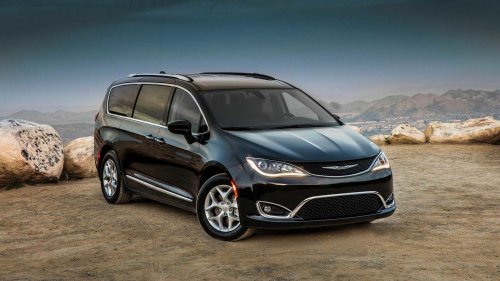


















A V8-powered Dodge Grand Caravan would have been cool. Sure, Dodge teased us with one in the form of a Caravan R/T concept at the 1999 Detroit Auto Show, complete with a 5.9-liter Magnum V8. It never got built. In fact, outside of the realm of a few whacky custom builds and some concepts that never reached production, there's never been a V8-powered minivan. The GMC Savana was always a little too spartan to be considered a true minivan, and the eight-pot Mercedes-Benz R-Class models technically were not proper members of the segment. So, if you've ever wondered why we've never been offered a genuine, V8 minivan, then you're a completely normal gearhead.Turns out, the minivan was pretty much destined to always be a four or six-cylinder-powered ordeal, even from its very early days. The heyday of the market's once most popular family hauler has come and gone, but a look back at the minivan's history and the evolving competitive landscape around its rise and fall reveals various factors that all kept big power out of the engine bay. Below, we'll look at the key reasons why the market's never seen a V8-powered minivan, and what people were buying instead. Minivans Needed To Be Cheap, Not Powerful ChryslerA V8-powered minivan would have been pretty cool, but 'pretty cool' doesn't sell minivans. There's a list of reasons a V8-powered minivan never made it to production, and one of the big ones relates to costs. Affordability was one of the main reasons the minivan was created in the first place, which meant a V8 engine wasn't the way to go. When Chrysler first created the segment in 1984 with the Dodge Caravan and Plymouth Voyager, both were based on the economy 'K-Car' platform, itself designed to keep costs down for a shopper keen to squeeze maximum value from every dollar. These minivans changed the world, initially striving to give shoppers maximum space for minimized outlay. They also represented a modern alternative to dated, V8-powered, rear-drive station wagons and larger, taller, thirstier V8-powered vans with pickup truck underpinnings.Chrysler The market was full of V8 engines when the minivan first arrived in the mid-eighties. These were mainly dated, heavy on fuel, and not very powerful. Mainstream shoppers were basically fed up with their heavy fuel consumption in light of rising fuel costs. Automakers were under tightening fuel economy restrictions, too.Dodge The V8 would still have a place in pickup and SUV applications, but the mass-market motorist wasn't looking for V8 power when the minivan first hit the scene. Instead, they prioritized a machine that was smaller, easier to park, more flexible, and easier on gas. In this way, the original minivans amounted to a new way to move your family around with space to spare, in a machine that drove and drank like a car, not a truck. So, the decided lack of a V8 engine was a key reason for the minivan's initial success. By the way, if you're curious about the most powerful series production minivan ever made, give this a read. The Market Was Splitting In Half MercuryIn the early days of the minivan, the family hauler market was setting up to split in half in the coming decades. As minivans rose to popularity in the '80s and '90s, shoppers had a simple question to answer: car, or truck? A minivan was designed, powered, and constructed just like a car, used car-based parts and powertrains, and offered a bigger and more flexible body. Conversely, an SUV was designed, powered, and constructed just like a pickup truck, often with the same engines, suspensions, platforms, and parts.FordIt'd be another decade or so before advances in engineering and design would blend the lines between car, truck, minivan and SUV, with successful new types of family-haulers arriving along the way. Shoppers started increasingly moving to vehicles that better fit their identity and lifestyle, with the SUV popular amongst image-driven shoppers and adventure seekers, and minivans reaching bestseller status with practical, family-first shoppers who needed more space than capability. This Shopper Didn't Want Rear-Wheel Drive, Which Affected Engine Choices ToyotaAs minivans grew in popularity for their compact, affordable, fuel-efficient operation, shoppers were getting familiar with front-wheel drive. Others missed the all-wheel traction of a 4x4 truck or SUV. Toyota had AWD-equipped minivans dating back to the '80s, but these were far from common in the US. In 1991, Chrysler made AWD available for their second-generation minivans, a year after Ford became the first mainstream family van in the US with AWD in the truck-based 1990 Aerostar. The truck-based Astro and Safari vans from GM also introduced four-wheel drive on their rear-drive vans in 1991 as well. Popular '90s Minivans and Their Engines Dodge Caravan: 1990–1995 (3.3-liter V6, up to 162 horsepower) Oldsmobile Silhouette: 1990–1995 (3.8-liter V6, up to 170 horsepower) Mazda MPV: 1990–1998 (3.0-liter V6, up to 155 horsepower) Toyota Previa: 1991–1997 (2.4-liter Supercharged I4, up to 161 horsepower) Nissan Quest / Mercury Villager: 1993–1998 (3.0-liter V6, up to 151 horsepower) Chevrolet Astro / GMC Safari: 1995–2005 (4.3-liter V6, up to 200 horsepower) Honda Odyssey: 1995–1998 (2.2-liter I4, up to 140 horsepower) Ford Windstar: 1995–1998 (3.8-liter V6, up to 200 horsepower) Chrysler Town & Country: 1996–2000 (3.8-liter V6, up to 180 horsepower) Pontiac Trans Sport / Montana: 1996–1998 (3.4-liter V6, up to 180 horsepower) Nissan Quest: 1999–2002 (3.3-liter V6, up to 170 horsepower) Honda Odyssey: 1999–2001 (3.5-liter V6, up to 210 horsepower) GMThough AWD minivans would be relatively rare for years to come, these early innovators gave shoppers the AWD traction of now-popular SUVs like the Explorer and Grand Cherokee, but in a minivan form factor. Here's the thing: in this era, adding AWD to a vehicle sucked up a lot of power and used a lot of extra gas. The four-cylinder engines used in early minivans weren't powerful enough, which pushed early V6 engines into the spotlight as the default engine for more and more vans as AWD gained traction. Since minivan platforms were never designed to accommodate a V8 engine, the push was on to deliver better and stronger V6 engines as the years went on. The Minivan Dug In With V6 Power DodgeAs the minivan digs in as a family favorite in the early nineties, the modern crossover SUV era looms. Toyota launched the RAV4 in 1996. Honda and Subaru followed with the CR-V and Forester in 1997. By 2000, the market would also meet the Lexus RX, BMW X5, Ford Escape, Hyundai Santa Fe, and Toyota Highlander for the first time. The SUV floodgates were now open, giving shoppers plenty of exciting new choices to consider.By this point in history, roughly the early 2000s, a few things start to happen that more or less seal the minivan's fate as a machine that would never have a V8 engine.Dodge First, V6 engines got a lot more powerful. By the mid-2000s, many a modern V6 engine running the latest technologies could outrun a dated old V8, using less fuel to boot. Shoppers loved this. These modern V6 engines were increasingly designed around flexible, multi-application drivelines that were easily adapted to both front and all-wheel drive setups. This helped lower costs, which the accountants loved too. Now, minivan sales had dipped, and the SUV was overtaking it popularity. Numerous minivan models struggled to sell and eventually bowed out of the market. The latest engineering advances in modern powertrains were allowing automakers to sell shoppers a more powerful, more rugged, AWD-equipped family hauler with a gas bill similar to a powerful minivan.HondaFor reference, in 1995, there were about 15 minivans on sale in the USA. By 2011, that figure had dropped to just six. That same year, Chrysler streamlined their minivan engine range to a single option: the talented new Pentastar V6. Around that point, turbocharged four-cylinder engines began to replace the V6 widely within the market, though the naturally-aspirated V6 would remain the minivan's engine of choice until the present day.Chrysler From a technological standpoint, it was never impossible to put a V8 engine into a minivan. Automakers were engineering and building front-drive, V8-powered cars along this timeline, including the Cadillac Deville and Oldsmobile Tornado. So, one reason the market never got a V8-powered minivan was less because it couldn't be done, and more because it's not what shoppers wanted to buy.Sources: Stellantis, GM.