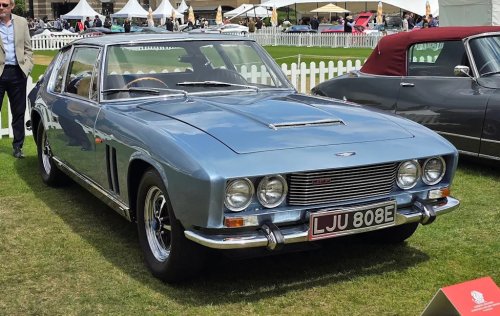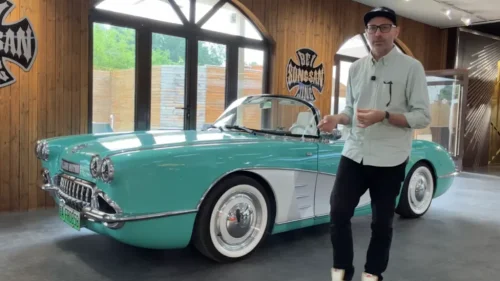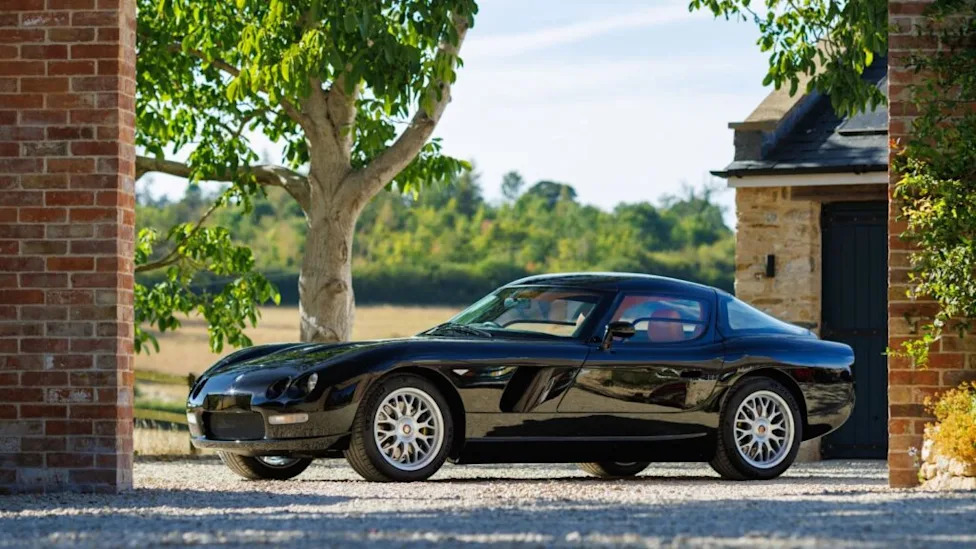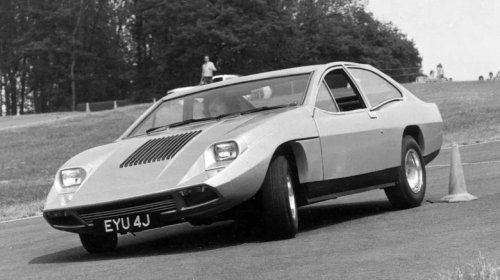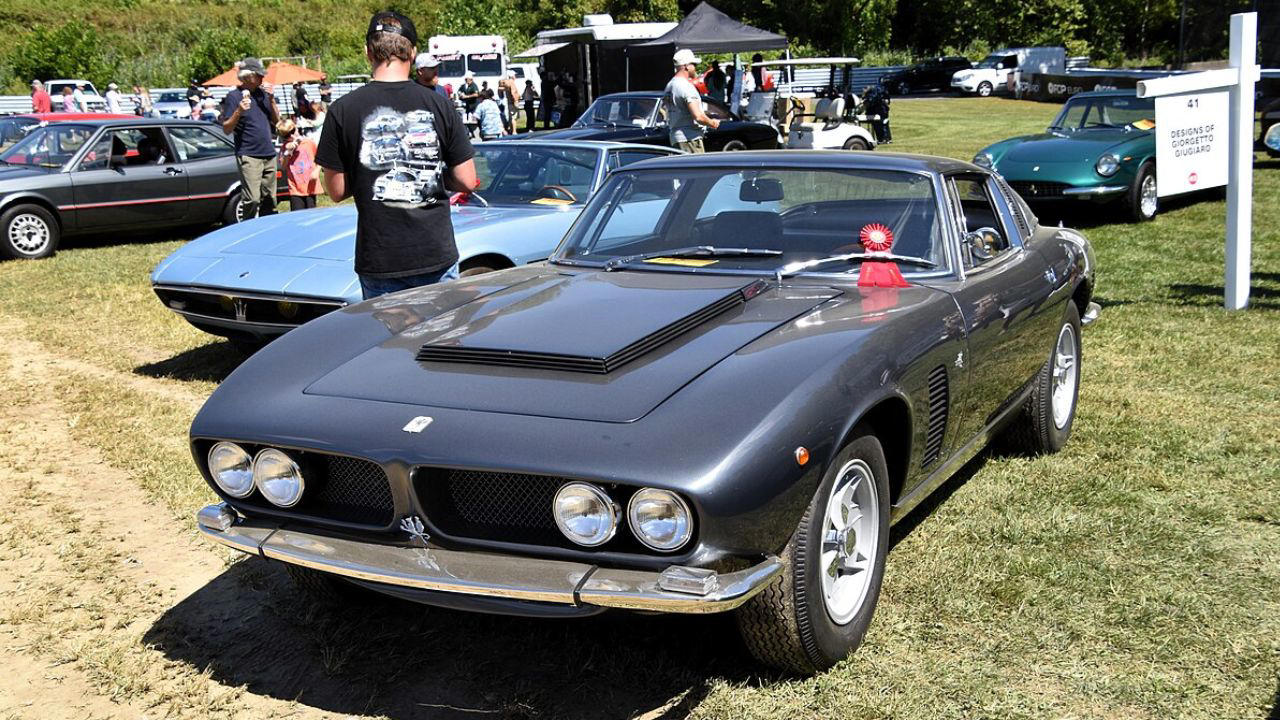


















You’ve never heard of the 1966 Jensen Interceptor but it carried American power in British styleThe 1966 Jensen Interceptor rarely appears in the same breath as Ferrari or Aston Martin, yet it married Detroit muscle to West Midlands craftsmanship in a way few cars have matched. Beneath its Italian-styled fastback body sat unapologetically American power, turning a low-volume British grand tourer into one of the most charismatic hybrids of style and strength ever built. Born in an era obsessed with speed, glamour and transatlantic influence, the Interceptor offered British drivers a Chrysler V8 soundtrack, hand-built luxury and a silhouette that could hold its own outside any London nightclub. It remains a cult favorite today, an unlikely bridge between two car cultures that usually stayed on opposite sides of the Atlantic. The birth of a British-American hybrid By the mid 1960s, Jensen Motors wanted something far more dramatic than its earlier, boxier models. The company turned to Italian coachbuilder Carrozzeria Touring for a new body, and the result was the Interceptor, a low, wide grand tourer with a distinctive wraparound rear window that instantly set it apart. Enthusiasts later summed it up as a uniquely British take on the glamorous GT formula, a point reinforced by analysis that describes The Jensen Interceptor as both British and super cool in the context of late 1960s coupes. The Interceptor did not arrive quietly. It was first shown to the public at the London Motor Show in Oct, where period observers asked whether anything could match the Jensen Interceptor for style and power. Contemporary commentary still describes Jensen Interceptor for style and power as a true British grand tourer, which captures the car’s mission in a single phrase. Under the skin, this was not a finicky Italian exotic. Jensen Motors had already experimented with importing American engines, and by the time the Interceptor arrived the company leaned fully into that strategy. Reports on the later SP variant explain that Jensen Motors had long used American engines and that it would exclusively use Chrysler V8s in the Interceptor, starting with the 383 V8 that defined the early cars. The same analysis notes that Jensen Motors chose Chrysler power because the American units were strong, relatively simple and easy to service. The Interceptor therefore embodied a deliberate fusion. British craftsmen in West Bromwich shaped and trimmed the body, while the heart of the car came from Detroit. Later commentary on the model’s history explicitly frames The Jensen Interceptor as a Timeless British Classic that stood out because of this formula, with sources describing how The Jensen Interceptor made its debut in 1966 and quickly replaced earlier Jensen models as the company’s flagship. One overview of History of the Jensen Interceptor highlights it as a Timeless British Classic and stresses how The Jensen Interceptor differentiated itself from contemporaries through both styling and its American engine choice. Hand-built glamour at Kelvin Way Factory The Interceptor was never a mass-market car. It was hand-built at the Kelvin Way Factory in West Bromwich, near Birmingham, Eng, which meant each example carried the quirks and charm of low-volume craftsmanship. A detailed overview of The Jensen Interceptor describes how the Kelvin Way Factory in West Bromwich, close to Birmingham, Eng, produced the cars largely by hand, with small teams of workers assembling and finishing each shell rather than relying on the kind of automated lines found in Detroit or Coventry. That heritage still appeals to collectors who value the sense of a car created rather than simply manufactured. Styling remains a major part of the Interceptor’s appeal. A buyer’s guide titled Jensen Interceptor Overview asks, Has there ever been a more evocative name for a car than the Interceptor, and notes that it was Launched in the mid 1960s as a bold new direction for Jensen. The same guide explains that Jensen Interceptor Overview treats the Interceptor as a grand touring car that evolved through incremental styling and equipment changes rather than radical redesigns, which helped preserve its core identity. On video, enthusiasts continue to revisit the car’s design and reputation. In one widely shared clip titled Britain’s Most Unjust Failure, presenter Jack walks around a preserved example and describes the Jensen Interceptor as a fascinating mix of Italian style and British engineering. The video, which opens with Jack’s greeting of “hello everybody welcome to number 27 I’m Jack and today I’m here to talk to you about the Jensen Interceptor,” has helped bring Jack and his subject to a new audience that may never have seen one on the road. That sense of underappreciation runs through much modern coverage. Some commentators go further and call The Jensen Interceptor the best and worst British car ever built, a nod to its blend of beauty and fragility. In one such video, the host jokes that “this review is not going so well” while wrestling with the car’s quirks, then signs off with a wry “cheers guys thank you all. right. so you le,” a reminder that living with a hand-built GT from the 1960s can be as challenging as it is rewarding. The clip at Jun captures that duality. American power under a British bonnet Underneath the Interceptor’s long hood, Jensen installed big-block Chrysler V8 engines that would have been more at home in a Dodge or Plymouth muscle car. Technical summaries for the early cars list a displacement of 6.3 L, a top speed of 139 m, a 0 to 60 mph time of 6.7 seconds, power output of 325 hp and fuel consumption of 10.8 m per gallon. These figures appear in a Tech Specs Summary that describes the 1966 to 1969 Interceptor as a two-door, four-seat GT, with the specification table explicitly listing 6.3, 139 m, 6.7, 325 and 10.8 m alongside details such as front and rear disc brakes and 2 Doors. The same reference, labeled Tech Specs Summary, confirms that the early Interceptor Mk I fastback combined serious performance with the thirst of a true American V8. Another detailed guide breaks down the mechanical package further. In a table titled Jensen Interceptor performance and specs, the Engine is listed as a 6276cc 16 valve Chrysler V8, with the row labeled Engin confirming the connection to Chrysler. This buyer-focused analysis of the Jensen Interceptor uses the term Engine repeatedly and emphasizes that the Chrysler unit delivered both effortless torque and a distinctive soundtrack that set the car apart from European rivals that relied on higher revving, smaller displacement engines. American influence did not stop at the block. A broader look at transatlantic collaboration notes that the Interceptor emerged from a period when the USA helped Britain build what some now call its first proper muscle car. One feature on this theme opens with the phrase Meet The Jensen Interceptor and explains that The Jensen Interceptor was introduced in 1966 and remained in production for a full decade, with its creators drawing on American know-how and supply chains for both engines and some drivetrain components. The same piece points out that Jensen had earlier ties to American manufacturers through its work with Ford, and that this experience eased the path to sourcing Chrysler power for Meet The Jensen. The same analysis revisits the point later and stresses that The Jensen Interceptor was introduced to the world in 1966 and remained in production for a full ten years, with the author returning to the theme that American parts and expertise helped Britain create a car that could legitimately be described as muscular. This second reference to The Jensen Interceptor underlines the model’s role as a bridge between British coachbuilding and American muscle car culture. Later versions pushed the formula even further. A technical overview of the Interceptor and its derivatives lists Specifications for models including the Interceptor I and Interceptor III 7.2 SP, as well as the four-wheel-drive FF. In a table labeled Specifications, the header row includes Model, Interceptor, Interceptor III 7.2 SP and FF, with a separate column titled Year of production. The figure 7.2 appears explicitly in the description of the Interceptor III 7.2 SP, confirming that Jensen eventually installed a 7.2 liter V8 in its most powerful road cars. The same source explains that the Interceptor was renowned for effortless performance, which is hardly surprising given the size of the engines listed in the Specifications table. Specialists have since highlighted the SP variant as a high point. One analysis calls the Jensen Interceptor SP the fastest road-legal car the company ever built, and emphasizes that all Interceptors of this generation relied on Chrysler engines. It reiterates that the 383 V8 formed the backbone of the range before the 7.2 liter units arrived, and that this American hardware made the cars easier to maintain than comparable Italian exotics. The same report on Interceptor performance underscores that the combination of a 383 and later 7.2 liter engines delivered serious speed in a straight line, even if fuel consumption remained firmly in the single digits. Technology, ambition and the FF connection Although the FF sat slightly apart from the core Interceptor lineup, the two shared styling and much of their chassis architecture, which means any discussion of the Interceptor also touches on Jensen’s broader ambitions. A Facebook group devoted to 1966 to 1969 cars notes that the Interceptor was a grand touring car designed by Carrozzeria Touring and built by Jensen Motors, while the FF adapted this same basic package for its more complex drivetrain. The group’s summary of Launched Interceptor models reinforces the idea that the company saw the car as a foundation for multiple variants, from straightforward GTs to advanced four-wheel-drive machines. Jensen’s willingness to experiment with American power also produced some of the most extreme British road cars of the period. A recent video feature calls the Jensen Interceptor SP the most powerful British car of its era and describes its six-pack V8 as a genuine monster. The host introduces the story with the line “this is the story of the Jensen Interceptor SP. the most powerful British car of its era. and the six-pack V8 beast that genuinely…” before diving into the details of its performance and the regulatory issues that eventually curtailed production. That narrative, preserved at Jensen Interceptor SP, frames the SP as a kind of outlaw, a British GT that borrowed heavily from American drag-strip culture. Another video from the same creator leans into the transatlantic drama even more, describing the SP as The BANNED American Beast That Britain Stole and again stressing that it was the most powerful British car of its era. The host repeats that this was a British machine in terms of badge and body but an American animal at heart, a point that aligns neatly with written accounts that describe the Interceptor as a British grand tourer powered by American engines. The clip, which refers repeatedly to the SP as a British beast, has helped cement the car’s reputation among younger enthusiasts who discovered it online rather than in period magazines. Why the Interceptor stayed a cult classic For all its glamour and power, the Interceptor never became a mainstream success. Production remained relatively low, and later owners had to contend with corrosion, complex electrics and the running costs that come with a big-block V8. A detailed buying guide warns that prospective owners should budget for significant maintenance and restoration, and that originality is often less important than evidence of careful upkeep. The same guide, which focuses on the Jensen Interceptor from 1966 to 1976, advises readers to treat the car as a hand-built classic rather than a modern daily driver, and notes that many examples have passed through specialist dealers or restoration shops before appearing in the classifieds. Links from this coverage lead to a marketplace where Discovered stock cars are listed, with filters that allow users to search for Jensen Interceptor models and related Buying options at pages such as Discovered. Despite these challenges, affection for the car runs deep. Modern enthusiasts praise its combination of comfort and pace, and some argue that the Interceptor offers better value than more famous contemporaries from Italy or Germany. One buyer guide writer goes as far as to ask if any other classic GT delivers such a mix of presence, performance and rarity for similar money, especially when the market still tends to focus on badges like Ferrari and Porsche. The same guide on the Jensen Interceptor highlights that well maintained cars can be genuinely usable on long trips, provided owners accept fuel bills that reflect the 10.8 m per gallon figure recorded in period tests. Enthusiast communities also play a role in keeping the story alive. Facebook groups dedicated to Jensen models share period photos, restoration tips and registry information, while specialist forums swap advice on sourcing Chrysler parts and upgrading cooling systems. Some owners embrace subtle modifications that improve reliability without sacrificing the car’s character, such as modern ignition systems or uprated brakes that still sit behind original-style wheels. Others aim for concours-level authenticity, tracking down original trim pieces and paint codes to recreate the car as it left the Kelvin Way Factory in West Bromwich, near Birmingham, Eng. Media coverage has followed this grassroots revival. Video essays, long-form written features and buyer guides have all contributed to a sense that the Interceptor is finally earning the recognition it missed during its production years. One such video, framed as a story of Britain’s Most Unjust Failure, makes a case that the car deserved far more success, with host Jack arguing that the combination of Italian styling, American power and British craftsmanship should have made it a global hit. That argument, presented in Oct, echoes through many modern discussions of the car. More from Fast Lane Only Unboxing the WWII Jeep in a Crate 15 rare Chevys collectors are quietly buying 10 underrated V8s still worth hunting down Police notice this before you even roll window down The post You’ve never heard of the 1966 Jensen Interceptor but it carried American power in British style appeared first on FAST LANE ONLY.