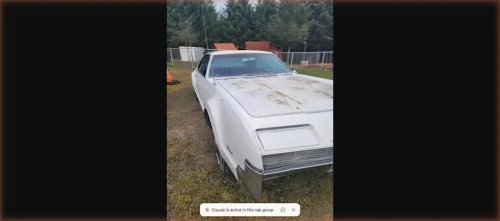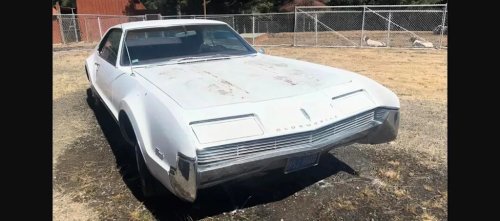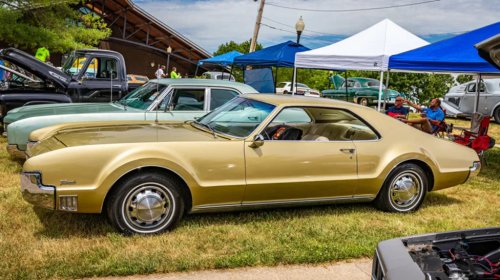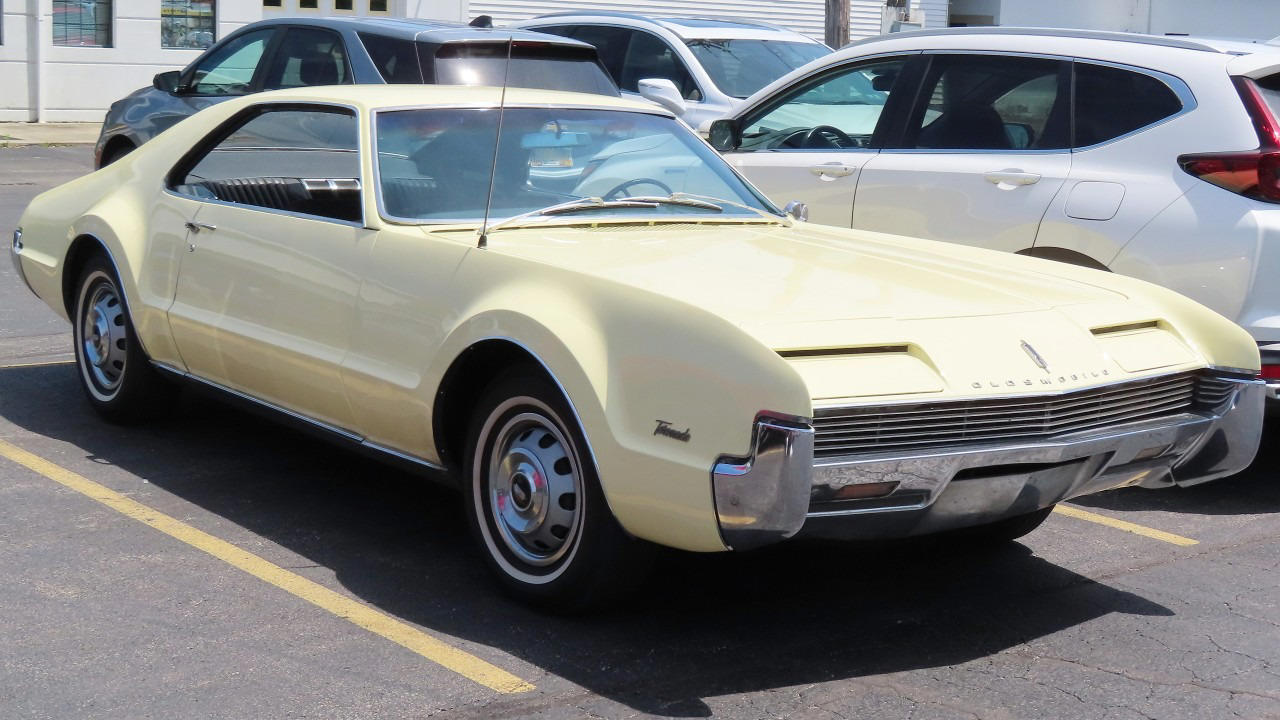



















The 1966 Oldsmobile Toronado did not just add front-wheel drive to a big American coupe. It used that layout to rethink how a powerful V8 car could look, feel, and even package its cabin space, which made it seem like a visitor from the future in the middle of the muscle car era. From its clean floor and radical driveline to its hidden headlights and rotating speedometer, the Toronado turned a risky engineering experiment into a statement about where performance and luxury might go next. A front-drive revolution in an American shell The Toronado arrived as the first American front-wheel-drive production car since the 1930s, reviving an idea most domestic manufacturers had abandoned after the Cord 812. It did so with scale and confidence, not as a quirky compact but as a full-size luxury coupe that put its driven wheels at the front while keeping classic long-hood, short-deck proportions. The project showed how front drive could coexist with American expectations for size and power rather than replacing them. That ambition started under the hood. The Toronado used a 425 cubic inch Rocket V8 that produced 385 horsepower, a combination that would have seemed more natural in a rear-drive muscle car. Instead, it sent that output to the front axle. The layout made the Toronado a kind of bridge between eras, pairing the straight-line thrust buyers wanted with a drivetrain concept that hinted at a more space-efficient and stable future. The Toronado’s power numbers rewrote front-drive expectations In period, front-wheel drive was usually associated with small European cars or modest American compacts. The Toronado shattered that stereotype. Contemporary reporting notes that the Toronado’s 385 horsepower was completely off the scale for a front-drive production car and that for decades afterward none would exceed it, making the car a benchmark for power sent through the front wheels. That figure came from the same 425 cubic inch Rocket V8 that defined its character, and it pushed the boundaries of what engineers believed a front-drive layout could manage. Some later coverage also references Oldsmobile introducing a car in 1966 with a 455 cubic inch V8 that powered the front wheels, described as the most powerful front-drive configuration of its kind. That claim sits alongside the 425 cubic inch specification, so enthusiasts often treat the 455 figure as part of the broader Toronado story while recognizing that the early production specification centered on the 425 engine with its 385 horsepower output. Taken together, those numbers show how aggressively Oldsmobile chased performance within a front-drive template. Unitized Power Package and the Hy-Vo chain Delivering that kind of power to the front wheels required an entirely new driveline concept. With GM’s new Unitized Power Package, the Toronado placed the engine longitudinally and used a compact transmission and final drive assembly beside it, all packaged as a single unit. This arrangement allowed the V8 to sit low and close to the firewall while still driving the front axle, which freed up interior space and kept the hood line suitably imposing. The key to making the Unitized Power Package work was a chain drive that could survive big-block torque. Called the Hy Vo, it contained an astounding 2,294 individual pieces to make up its links. The Hy Vo chain replaced the heavy and complex gearsets that would have been required to route power forward, and engineers credited it with delivering smoother operation and reduced noise compared with a traditional gear-driven system. Without that chain, the Toronado’s mix of power and packaging would have been nearly impossible. Period accounts explain that no gearset of the era could reliably handle nearly 500 pound feet of torque in a compact front-drive unit, so Oldsmobile turned to the Hy Vo solution instead. The result was heavy and unconventional, yet it worked and proved durable enough for real-world use. That success helped validate front-drive layouts for larger, more powerful cars rather than limiting them to low-output applications. Flat floor, Strato seats and the packaging payoff The Toronado’s front-wheel-drive architecture did more than move the driven wheels. It also transformed the cabin. By removing the traditional transmission tunnel, the design team created a flat floor that allowed seating for six and made the interior feel wider and more open than comparable rear-drive coupes. Contemporary descriptions emphasize how the front-wheel-drive setup allowed for a flat cabin floor, improving interior space and giving designers new freedom in how they arranged seats and controls. That freedom showed up in details such as the Strato bucket seats, which combined individual seat shapes with a broad, almost lounge-like cabin. The flat floor made it easier to slide across the front bench or to package optional center consoles without the hump that usually divided driver and passenger. For buyers used to stepping over a driveshaft tunnel in every large American car, the Toronado’s interior felt like a glimpse of a more efficient future. Reports on the car’s development also note that the Toronado would benefit from a flat floor that allowed seating for six, which became a key selling point in brochures and showroom pitches. The car promised big-engine performance without sacrificing the comfort and practicality that luxury coupe buyers expected, and the front-drive layout was the enabler rather than a gimmick. Styling that matched the engineering gamble Oldsmobile did not hide the Toronado’s ambition. The exterior combined a sleek fastback profile with details that looked almost concept-car-like on public roads. With hidden headlights, a sleek fastback profile, and that ground-breaking front-wheel-drive 425 Rocket V8, enthusiasts later argued that it rewrote what American performance could be. The car’s long, unbroken body sides and dramatic rear quarters made it stand out even in an era crowded with bold sheetmetal. Design analysts often point to the 1966 model year as a showcase of unique styling with no bone line along the side, pronounced wheel arches that still influence modern car designs, and a cohesive fastback roof. A period video review of the car highlights how that combination gave the Toronado a muscular yet clean stance, with the wheel openings framing the tires in a way that anticipated later performance coupes. Inside, the dashboard continued the futuristic theme. Accounts of surviving cars describe an aviation-inspired layout with a rotating drum-style speedometer that emphasized the car’s modern approach to driver information. Other descriptions call it a vertically revolving slot-machine-like speedometer, a feature that reinforced the sense that the driver was sitting in a piece of advanced machinery rather than a conventional luxury coupe. The visual drama matched the engineering underneath. Chassis, suspension and the way it drove Power and packaging would have meant little if the Toronado had been unruly on the road. Instead, reports from the period and later retrospectives describe a car that handled better than its size suggested. Its innovative torsion bar front suspension, heavy-duty frame, and precise steering gave it a surprisingly composed ride for such a large car, especially when compared with other full-size coupes of the time that prioritized softness over control. With GM’s new Unitized Power Package, the Toronado delivered impressive handling, a flat floor interior, and excellent road stability for its size. Engineers worked to control torque steer and front-end lift, and while contemporary testers still noticed some tug at the wheel under hard acceleration, the overall balance was considered a success for such a powerful front-drive layout. The combination of a low-mounted engine, wide track, and carefully tuned suspension allowed the car to make good use of its 385 horsepower. Reports mention that despite its nearly 4,500 pound curb weight, the Toronado could reach 60 mph in roughly the mid seven second range, a figure that put it squarely in performance territory for the mid 1960s. That acceleration, delivered through the front wheels, made the driving experience unlike anything else on American roads at the time. How front drive shaped the Toronado’s identity Oldsmobile positioned the Toronado as both a luxury cruiser and a performance statement, and front-wheel drive sat at the center of that identity. Marketing materials highlighted the improved traction in poor weather, the extra interior room from the flat floor, and the novelty of a big V8 driving the front axle. Enthusiasts later described the 1966 Oldsmobile Toronado as a revolution on wheels, part luxury cruiser, part muscle machine, and all innovation, a summary that captures how the drivetrain decision touched every aspect of the car. At the same time, the Toronado became associated with Oldsmobile’s reputation as the cutting-edge division within GM. Owners and fans recall that Oldsmobile Toronado back in the day represented the experimental side of the brand, where new ideas like front drive, unusual instrumentation, and advanced engineering packages were more likely to reach production. The Toronado’s layout fit that image perfectly and helped cement it in the public mind. The car’s recognition extended beyond enthusiast circles. Contemporary coverage notes that the Oldsmobile Toronado was praised for its engineering and design and that it received awards such as Motor Trend Car of the Year, reflecting how the industry saw front-wheel drive in a big American coupe as more than a curiosity. It was treated as a serious advancement with the potential to influence future models. Legacy and influence on later front-drive cars The Toronado’s specific layout, with a longitudinal big-block V8 and a Hy Vo chain driving the front wheels, did not become the standard template for later front-drive cars. Most subsequent designs adopted transverse engines and more compact drivetrains. Yet the Toronado proved that front drive could handle serious power and weight, which helped open the door for larger front-drive sedans and coupes in the decades that followed. Enthusiast histories point out that the Toronado, which was launched as the 1966 model, was the first front-driver to come out of America since the Cord 812. That historical link gave the car a kind of bookend role, connecting prewar experimentation with postwar mass production. Later front-drive American cars, from full-size sedans to personal luxury coupes, arrived in a market where the idea of a powerful front-drive car no longer seemed impossible. The Toronado’s styling influence also lingered. Commentators still reference its pronounced wheel arches and smooth flanks when discussing modern coupes and crossovers that aim for a clean, muscular look. A video feature on best looking cars highlights how the 1966 Oldsmobile Toronado pulled off a distinctive profile with no bone line and wheel openings that continue to inspire designers who want to combine elegance with aggression. Why the Toronado still feels modern Looking back from a world full of front-drive crossovers and sedans, the Toronado’s layout seems almost prophetic. Its flat floor and efficient packaging anticipated the priorities of later family cars, while its focus on stability and traction foreshadowed the safety arguments that would later be used to promote front drive. The difference is that Oldsmobile wrapped those ideas in a body and drivetrain aimed at enthusiasts who cared about power and style. More from Fast Lane Only Unboxing the WWII Jeep in a Crate 15 rare Chevys collectors are quietly buying 10 underrated V8s still worth hunting down Police notice this before you even roll window down