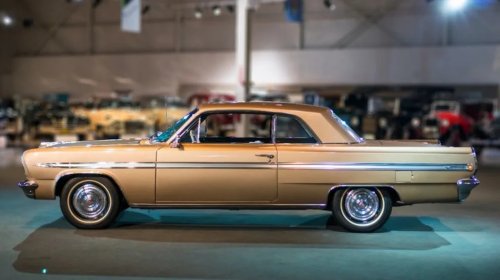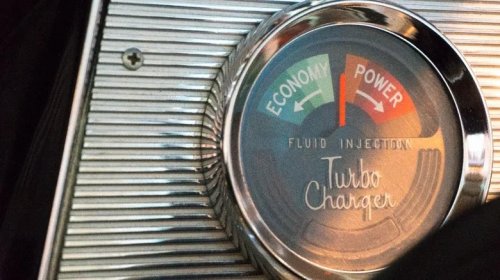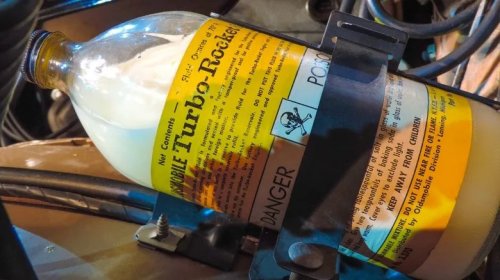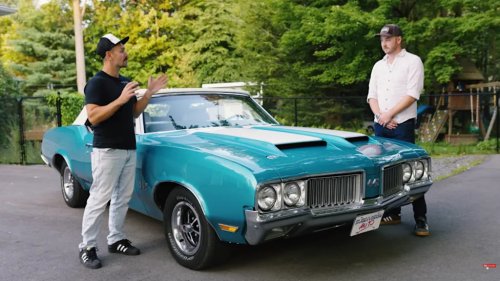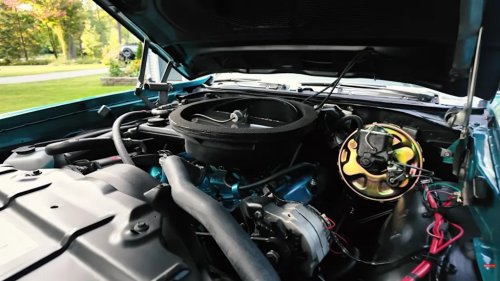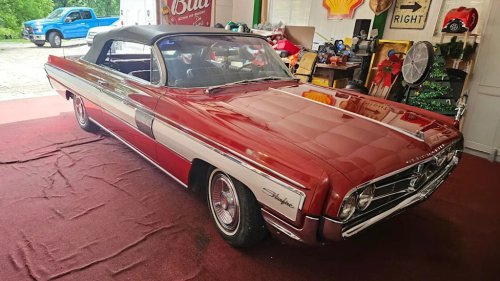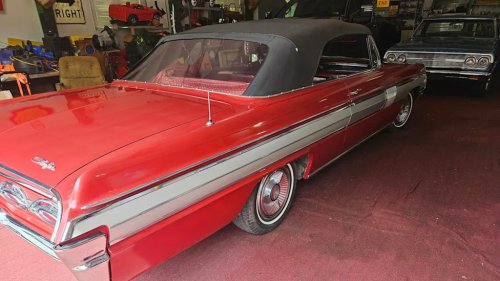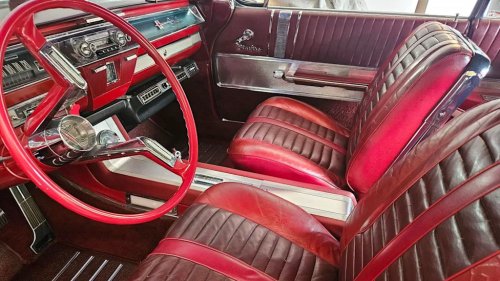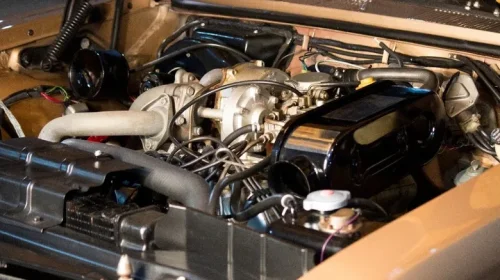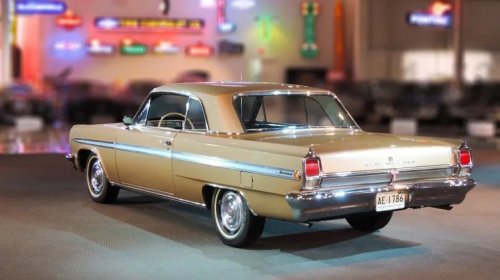
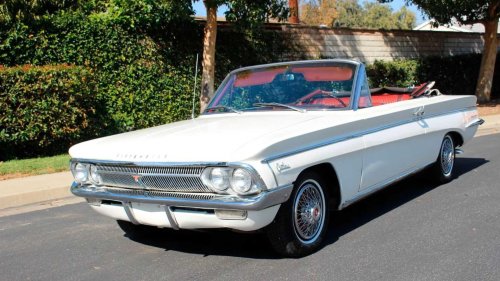
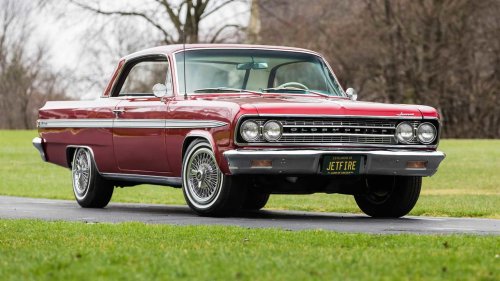
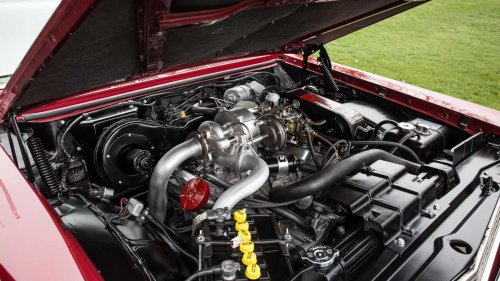
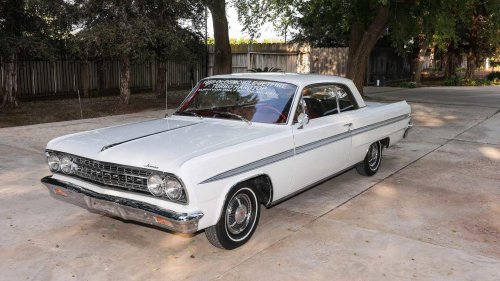
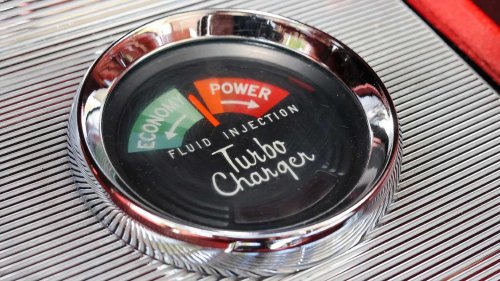


















Imagine a world where low-displacement, turbocharged sports cars became popular in the United States first, not Japan or Europe. A world where elephantine big block V8s shared drag strip space with forced induction machines that ran just as fast, if not faster, down the strip at a fraction of the weight? It’s the world that would’ve come to pass had General Motors decided not to pull the plug on one of their most ambitious engine projects of the early 1960s. Oldsmobile at the Turn of the ‘60s: An OEM About to Make an Impact Bring a TrailerOldsmobile was something of a go-between brand for General Motors at the turn of the ’60s. Sandwiched between Chevy and Buick beneath it and Cadillac on top, ‘Olds balanced mild sporting credentials with comfort and style like trapeze artists for decades.Before the ‘60s, ‘Olds leaned far more into the luxury and comfort side of things while maintaining the performance edge offered by one of the first V8s of the pre-muscle car era. It featured offerings like the Series 70, the 88, and 98, appealing to an audience young enough for the GI bill but not yet wealthy or established enough to bump up to Cadillac. These were perfectly serviceable as luxury cars, but did ‘Olds no favors in distinguishing itself from the rest of GM.But the perfect way to flip the script was rolling out an all-new high-volume hero, something Oldsmobile could market against equivalent brands like Mercury and DeSoto while bringing a look all its own to the tableSuch was the impetus of the original Oldsmobile's new permanent flagship vehicle, the Cutlass. Named after a US Navy fighter and a roughly 18th-century short sword, the Cutlass was designed from the ground up to be the affordable but desirable small car of the future. The Cutlass: The Perfect Foundation for an Experimental Sensation OldsmobileThe first generation Cutlass, or the F-85 as it was also known, was as brilliant as it was simple in its execution. Sharing its GM Y platform chassis with the Pontiac Tempest and the Buick Skylark, the Cutlass was not established as a muscle car. At least, not at first, it wasn't. Instead, it was a stylish, relatively refined little runabout with bold styling and generally acceptable handling characteristics.The car featured double wishbone front suspension and a quad-link rear end with coil springs at all four corners. Riding a unibody chassis, with the choice of a sedan, coupe, or a convertible, OEMs stretched singular models as far as they could go across a range of form factors, rather than separate everything as is the standard today. Its 112-inch wheelbase was nimble and agile for the time, nothing like the landships on wheels later generations became.Given its reasonable proportions, the gen-I Cutlass wasn’t bequeathed one of the mainstay “Rocket” series of V8s made famous by larger flagship cars in the range. Instead, the Cutlass/F-85 received an options package altogether different, but equally interesting. It still had a V8, mind you. But fundamentally, it was so far from the average Cutlass that it was almost comical. Oldsmobile F85 Jetfire: No Other Car It in the Early 1960sOMecumTurbocharging was still something like witchcraft in the automotive space in 1962. The technology cut its teeth over the skies of World War 2 in fighter planes on both sides of the conflict. Over the next decade and a half, turbocharging matured into something civilians could operate. More often than not, turbos were applied to heavy-duty marine and industrial applications that needed more horsepower, but not necessarily more space to take up.Advances in metallurgy and waste gate controls by firms like California’s Garrett AiResearch meant that by the early 1960s, turbos were small and energy-efficient enough to fit under the hood of a passenger car. Only by the early ‘60s, two-plus decades after the war, did turbo tech advance enough to reach this milestone.Starting in 1962, ‘Olds contracted Garrett AiResearch to custom-tool their T0-3 turbocharger for use on their Y-Body platform. Running in the neighborhood of 5 psi of boost pressure, it might not sound like much compared to the 30 psi turbos many modern cars make use of. But in the earliest days of turbocharging, any positive boost pressure at all was something of a miracle. Besides, it’s not like what ‘Olds decided to turbocharge was something mundane for the time. The “Rockette” V8: A Quantum Leap Forward MecumThe engine this turbocharger was attached to was, to put it lightly, unorthodox. Early 1960’s mainstream American engine tech wasn’t fundamentally all that different from the flatheads of decades prior. Save for token items like overhead valves and a few spirited attempts at early fuel injection, the basic cast iron block, cast iron heads, and cast iron, well, everything, hadn’t deviated much, from a much higher preference for V8s as the years progressed.But the Rockette V8 in the Oldsmobile F-85 bucked that trend, borrowing an all-aluminum engine block from the 215-cubic-inch V8 devised by Olds’ sister company, Buick.After a decade of research by way of two high-marquee concept cars in the ‘50s, the production aluminum Buick 215 made 150 horsepower at the crank in 1961.The engine was first sold in the 1961 Buick Special, the first time a truly mass-produced automobile, not a race car or short-lived curiosity, sported an aluminum block. Weighing a fraction of an iron block of its size, the Buick 215 even used aluminum cylinder heads as well, saving even more precious weight. Later, GM sold the rights to the 215 to Rover, where it stuck around into the 2000s. But not before ‘Olds got to have their fun with it. Clever Engine Plus Turbo Equals An Underrated American Icon Bring A TrailerWith its turbocharged grunt and peak power low down in the rev range, the Oldsmobile Jetfire made 215 horsepower at the crankshaft. That gave it the distinguished title of being among the first passenger cars to generate one gross horsepower for every cubic inch of displacement. At a time when most engines undercut that figure substantially, that 1-to-1 power ratio was as impressive as 1,500 horsepower is today. Oldsmobile Jetfire Specs Special pressure and vacuum gauges displayed real-time turbocharger feedback inside the car, and the whole machine was decked out in Jetfire-specific interior and exterior trim pieces, with chrome and plus vinyl just about everywhere. Zero to 60 was handled in around nine seconds from a dig.It doesn’t sound impressive today, but in the early ‘60s, what was exceptionally quick.For an early ‘60s machine from the time just before muscle cars, one can only imagine what would’ve happened had these turbo engines been allowed to mature fully. Instead, the engine faded into obscurity. Not the least bit because of some fairly troubling reliability issues. The Right Engine at the Wrong Time Bring a TrailerReliability was always something of an issue with these early turbos. Its clever water/methanol injection system, meant to decrease the engine knock brought on by forced induction, had to be topped off periodically. Lest the tank run empty, and lead to some of the most severe engine knock that you were liable to come across.In such a situation, a dual-float assembly built into the fluid tank, rigged to a bypass valve on the throttle body, activated. It led to performance that would’ve made the non-boosted 215 engine feel better about itself, or really anything more powerful than a golf cart motor, really. Oiling was another common problem, no surprise when a novel spinning doohickey’s twirling at 90,000 rpm under the hood of a ‘60s car. Even then, a lack of suspension upgrades over the standard F-85 made all that extra power not very usable outside of straight-line speed.Ultimately, a touch over 3,500 Jetfire turbos were sold between 1962 and 1963. Today, pristine examples can sell for well north of $50,000. They don’t often come up for sale, there simply aren’t that many left. But when they do, it’s always noteworthy.Sources: Hagerty