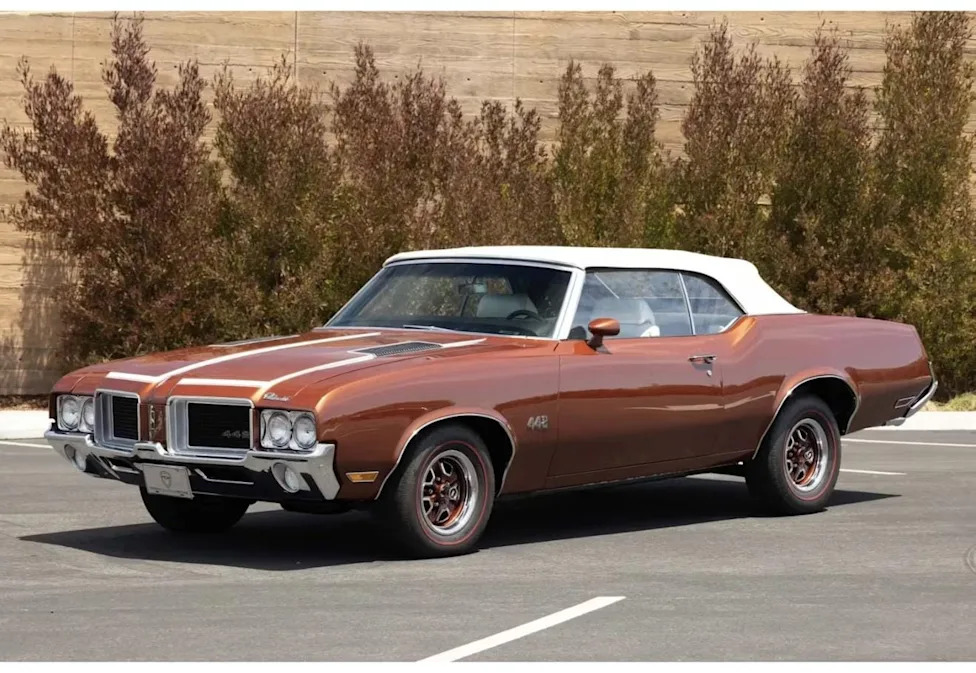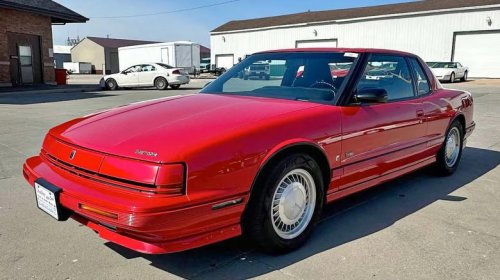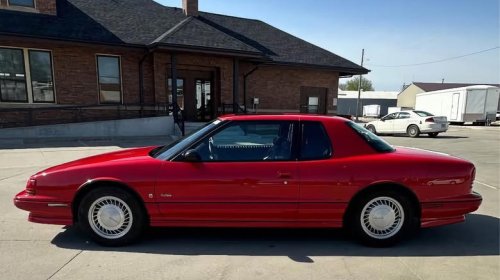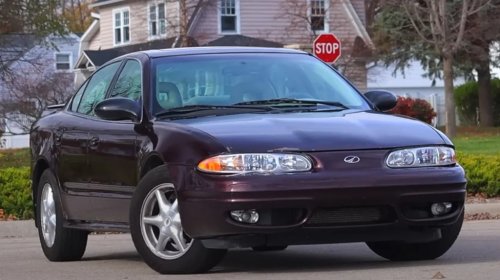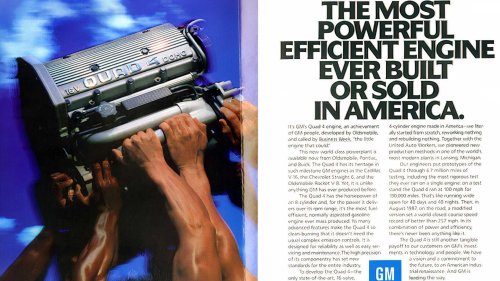
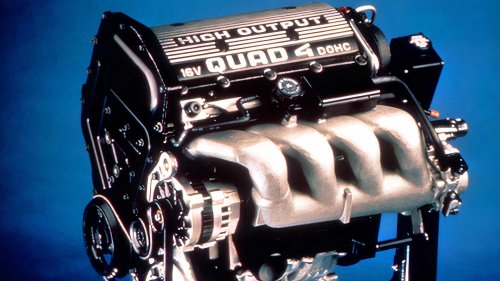
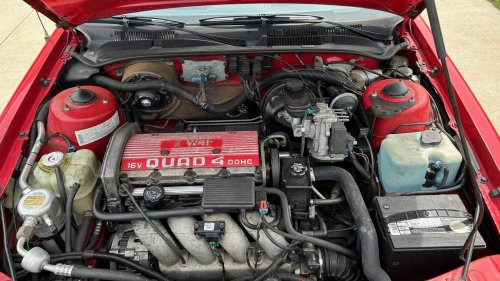
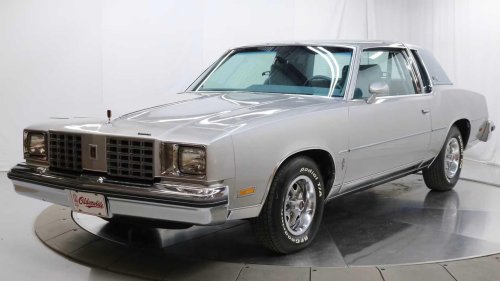
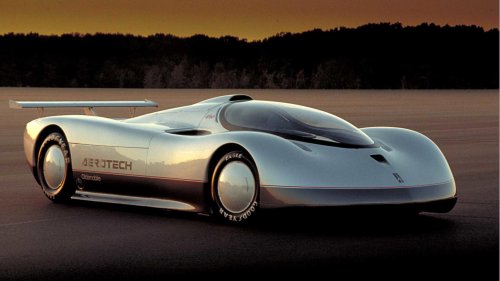
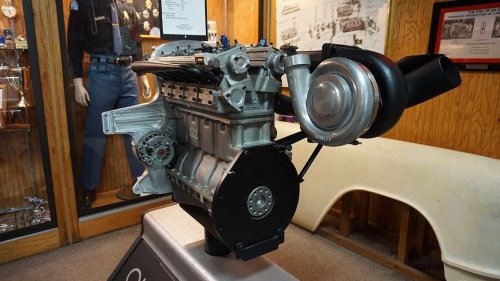
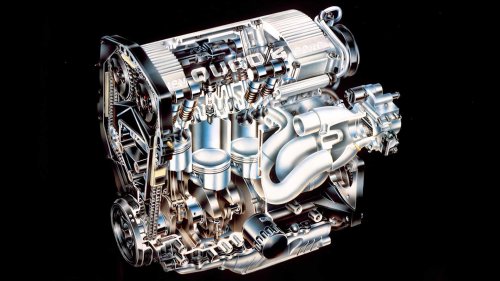
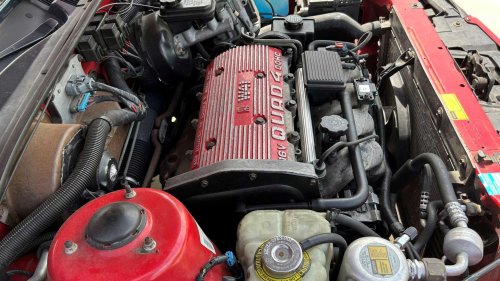
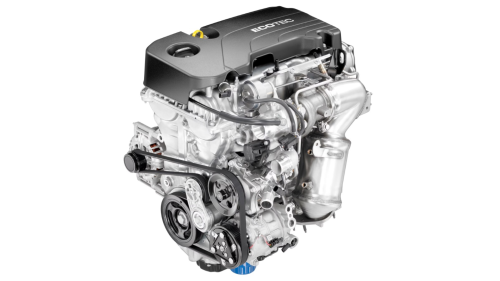





















Although V8-powered muscle cars have been the staple of America's automotive industry and culture, we've seen numerous sports cars born in the states powered by four-cylinders and, in some cases, capable of outperforming their V8-powered contemporaries. Think of the Chevy Cobalt SS, Dodge Neon SRT-4, Ford Focus RS, Pontiac Solstice GXP, and the supercharged Saturn Ion Red Line, to name a few.While those were icons of the 2000s and early 2010s, American automakers had dabbled in four-cylinder performance engines long before those four-cylinder-powered American icons. In the mid-1980s, General Motors was inundated by competition from Europe and Asia. In an attempt to fight back, it developed the Quad 4 engine, which was the automotive giant's earnest attempt at a performance-focused four-cylinder. Built To Level The Playing Field General Motors By the 1980s, General Motors' grip and dominance over the automotive market began to wane. While GM dealt with the effects of a waning brand image, the global recession, and the oil crisis, manufacturers like Honda continued to establish a foothold in the US with models like the Honda Civic.At the time, General Motors had several four-cylinder engines in its catalog, including the Family II, Vortec 2200, Iron Duke, and Chevrolet 153, among others. However, those engines were not exclusively built by General Motors; for example, the Family II engine was built by Opel, and in general, these engines weren't on par with offerings from Europe or Asia. That's where the Quad 4 engine comes in.GM had many iconic engines to its name, but even some of its craziest engines weren't built by GM. However, the Quad 4 engine was the first engine built exclusively by General Motors, and not only that, but it was also the first engine from the American automotive conglomerate to use dual-overhead camshafts, rather than the SOHC designs of GM's existing engines, and four valves per cylinder. The Quad 4 engine was born of the need to level the playing field and create an engine on par with offerings from Honda and Audi, among others.General MotorsThe Quad 4 engine, debuting in the 1988 Oldsmobile Cutlass Calais, was more performance-oriented than those that had come before, offering greater specific power output and greater efficiency, and earmarked as the replacement for GM's existing, but comparatively lacking, V6 and V8 engines.It was lauded as a revolutionary new engine, and by the standards of the mid-1980s, it was indeed a revolutionary engine, employing technology such as high-flow intake and exhaust ports, a multiport fuel injection system, and a distributor-less ignition system. It was the most fuel-efficient naturally aspirated engine GM had ever mass-produced at the time, and soon found its way into nearly every brand under the GM umbrella and across an array of vehicles, too. From Muscle Cars To Experimental Supercars Hemmings There were several renditions of this four-cylinder power plant throughout its nearly two-decade production run. Aside from the Quad 4, which debuted in the 1988 Oldsmobile Cutlass Calais, the other notable iterations of this engine included the high-output version that produced 190 hp in older versions of the Oldsmobile Cutlass Calais, the SOHC variants dubbed the L40 and the LD9. When it debuted, the Quad 4 was also distinguished by its 2.3-liter displacement, larger than many mainstream four-cylinder engines, and would grow to 2.4 liters in later iterations.Mecum In the 1980s, only a handful of models employed the Quad 4 engine, including the Oldsmobile Cutlass Calais, the Buick Skylark (previously powered by a naturally aspirated V6), the Pontiac Grand Am, and the more powerful Pontiac Grand Am SE, which commanded 180 hp. Not long after the Pontiac Grand Am SE debuted with the high-output version of the Quad 4 engine, Chevrolet incorporated the 180-hp mill into the Chevrolet Beretta GTZ, while more potent examples of the Oldsmobile Cutlass gained the HO Quad 4 engine, like the Oldsmobile Cutlass Supreme International Series.GM Media Archive The 1990s saw the most widespread use of the Quad 4 engine, with it being used primarily by Pontiac, Oldsmobile, and Chevrolet. While the Quad 4 engine became a mainstay for some of GM's biggest brands, it was also briefly used in a handful of comparatively obscure vehicles. Although the Quad 4 debuted in 1987, its development began in the early 1980s, and during that period, a unique rendition of the Quad 4 engine was built.Wikimedia Commons: Michael Barera While it was not based on the production version of the Quad 4, it retained some of its core characteristics, such as the dual overhead cams, cylinder head, and bore spacing. Developed by Batten Heads of Detroit, this engine was capable of producing anywhere from 750 to 900 hp, and in a single-turbocharged configuration, managed to propel the short-tail version of the Oldsmobile Aerotech to 250.9 mph, whereas the twin-turbocharged variant that produced roughly 1,000 hp managed to see the long-tail version to 275 mph. Plagued By Gremlins General MotorsThe Quad 4 engine was a significant step forward for General Motors and delivered on GM's desire to produce an engine with the fuel economy of a four-cylinder and more power than V8 engines at the time. However, it wasn't all smooth sailing for GM, as the Quad 4 engine was plagued by reliability issues, among other things.When it debuted, the biggest nitpick it faced was its noise, vibrations, and harshness, which we typically refer to as the engine's NVH. Its harshness, especially when pushed hard, was mainly the result of its balance shafts, or better yet, the lack thereof, which was reportedly the result of cost-cutting efforts. As we said, the Quad 4 engine remained in production for nearly two decades, and in that time several versions debuted, each addressing the troubles that plagued earlier ones.HemmingsAs for the NVH levels of the engine, they were finally addressed in 1992 with the introduction of a single-overhead-cam version of the Quad 4, which also introduced new damping mounts and reduced its power output to 115 hp. The much-needed balance shafts would be introduced only in 1995, in the LD9 Twin Cam variant of the Quad 4, which also featured a revised cylinder head design.While the Quad 4 engine was lauded and celebrated when it debuted, the engine was also plagued by poor reliability, with issues including overheating, head gasket failures, timing chain malfunctions, and water pump failures. However, like its NVH, the Quad 4's reliability was slightly improved in later volumes, particularly the LD9 variant, which was produced until 2002. What Happened To The Quad 4 Engine? General Motors When it debuted, the automotive press praised the Quad 4 engine as a milestone for General Motors, and while it later drew criticism for its harshness and reliability, its performance for the time was impressive. However impressive the performance of the Quad 4 engine was when it debuted – especially compared to its V8 contemporaries – its reliability and harshness could not be overlooked.By the turn of the millennium, the Quad 4 engine was too rough around the edges and lagged behind GM's competitors, and as such, it was laid to rest in 2002. The Quad 4 engine, along with a handful of other engines in GM's catalog, was eventually replaced in 2003 by the Ecotec engine, which shared some similarities with the Quad 4, namely its dual overhead camshaft configuration and aluminum cylinder head. Although its appeal was hindered by the poor reliability and harshness in initial versions of the Quad 4 engine, it remains one of the most interesting and important engines that General Motors ever built.Sources: General Motors