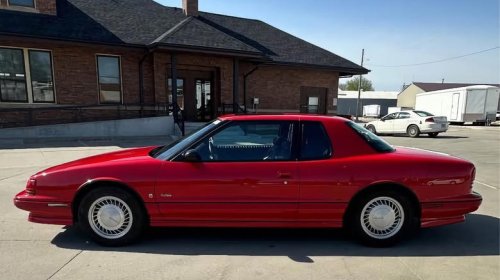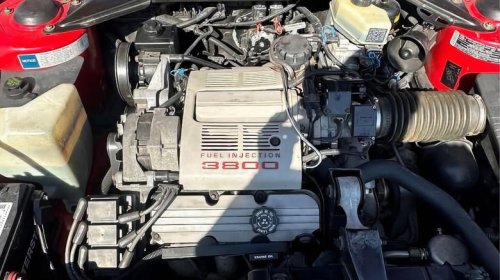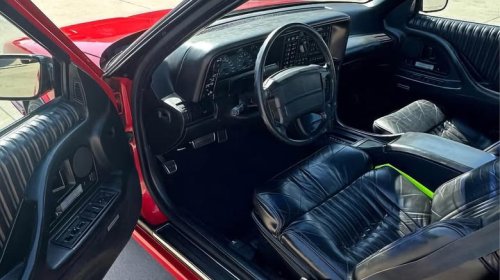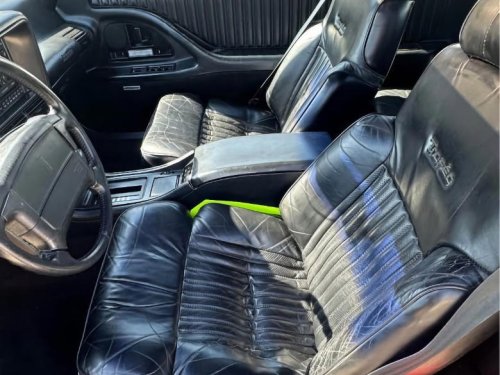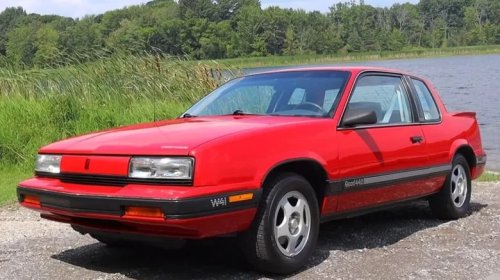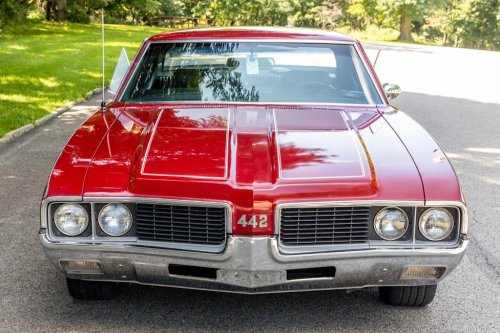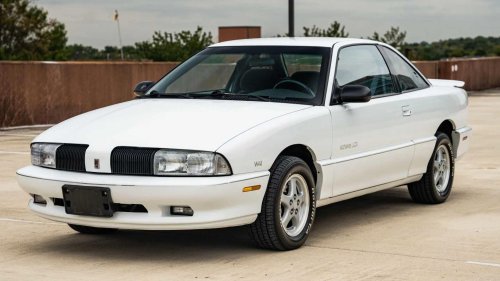
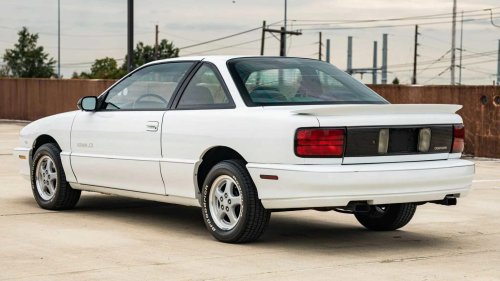
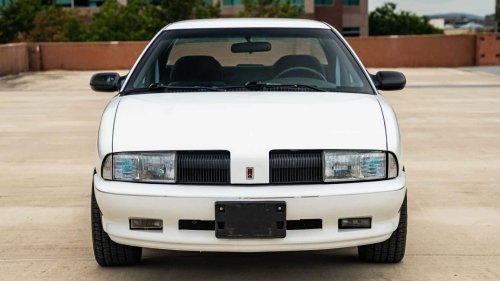
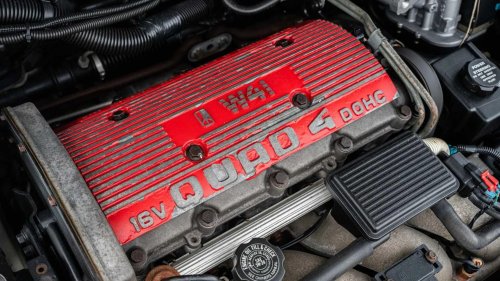
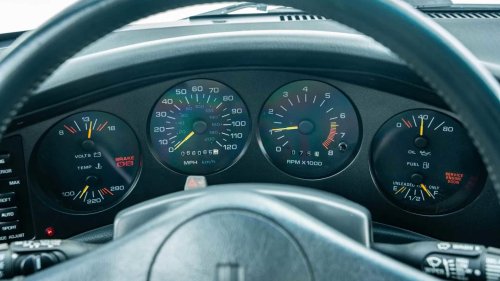
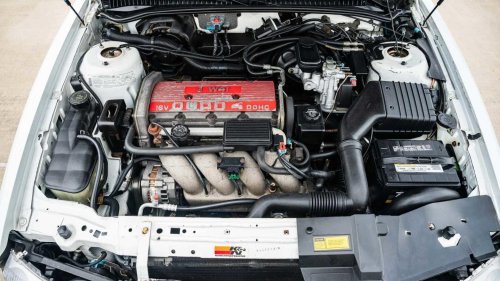
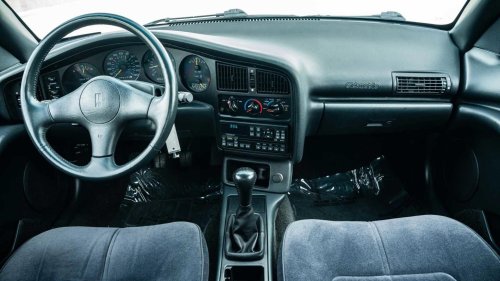
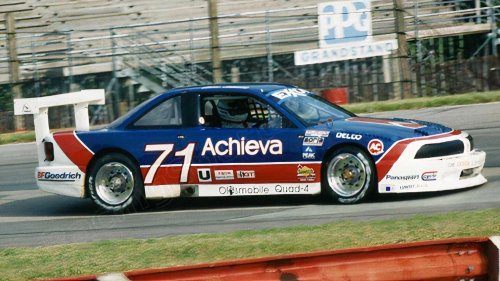
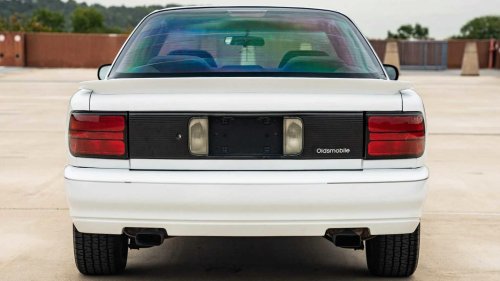
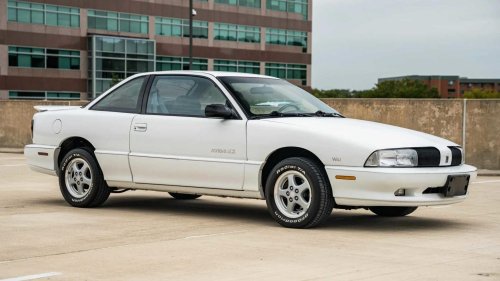















When we think back on Oldsmobile's final years in existence, the first word that comes to mind isn't necessarily performance. In its final decade of life, the brand was in dire straits, both financially and in self-image. Olds was struggling to compete with other brands it was aligned against, and it was also struggling to carve a niche for itself within GM's brand hierarchy. Just before the final downfall began around 1993 or so, Oldsmobile decided to give a true performance car for the road one last shot.The model that would serve as a vessel for the brand's last athletic hurrah was the Oldsmobile Achieva. The Achieva isn't particularly good-looking, and it even seems to have a mustache. Definitely not the sort of physical attributes you'd associate with a car that's built for the track. However, Olds decided to chuck a bunch of go-faster parts at it, along with a specially tuned engine, to give it a competitive edge in Showroom Stock Car Racing. Once equipped with its goodies, this special, homologation model was known as the Achieva SCX W41. Time Was of The Essence Bring A TrailerOldsmobile's fatal downward spiral didn't begin in earnest in 1993, it actually began much earlier. Most folks cite the mid 1980s as the turning point in the brand's fortunes, just after it managed to sell over 1,000,000 units in a single year for the final time in 1986.From there, success quickly unraveled, as severe brand confusion set in following GM's decision to make virtually every car it made look identical in the pursuit of penny-pinching. After all, if you can build the same car for five different brands, that's a hell of a lot cheaper than building five separate cars.By the time 1992 rolled around, the effects of Oldsmobile's floundering were being felt all over the place, at least in the automotive world. This prompted GM to do something about the brand's confused state of affairs, and bringing back its old-school penchant for performance seemed like a good start.Following the cancelation of the Oldsmobile Cutlass Calais Quad 442 W41, another SCCA racer for the road, the brand figured it was best to keep pressing on with a small, performance-oriented coupe to try and keep resurrecting its past performance-based image.Bring A Trailer Enter the 1992–1993 Achieva SCX W41, released as Oldsmobile's final, true track car for the road. It used the same engine found within the Cutlass Calais Quad 442 W41 – the brand's previous SCCA track-dominator that went out of production in 1991 – and acted as the model's direct successor.However, unlike the Calais, the Achieva didn't carry the fabled "442" namesake, making the hot '91 Calais the final model to use the nomenclature. While mechanically similar, the Achieva is larger, heavier, and sported a slightly different transmission and suspension setup than the Calais.Bring A Trailer Essentially, the Achieva SCX W41 was meant to be everything the Cutlass Calais Quad 442 W41 was, but just a little bit better. And, at this point in Oldsmobile's timeline, the brand was keen to try anything to keep things afloat, even if it meant throwing a bunch of performance parts at a mustachioed coupe. Over the course of its two-year tenure, Olds only produced about 1,650 Achieva SCX W41s, making it one of the brand's more rare sport models. The Achieva SCX W41's SCCA-Bred Guts Bring A TrailerThe most important aspect of the Achieva SCX W41's track-munching ability is its engine, Oldsmobile's Quad-4 inline-four, specifically the high-output "LG0" iteration. It's a 2.3-liter mill, and managed to churn out a gigantic lump of horsepower for its time without any forced induction.Olds engineers equipped it with things like forged pistons. However, its crankshaft and connecting rods were cast. It also utilized a high-flow aluminum cylinder head and a compression ratio measuring in at 11.0:1. A cast-iron block kept the mill sturdy.Bring A Trailer On top of all that, the hot Quad-4 engine also received a pair of aggressive, high-lift camshafts mounted over-top of its 16-valve valvetrain. A unique, tuned engine control unit (ECU) raises its rev limit from the standard 6,800 rpm to 7,200 rpm.A free-flowing exhaust system was installed to help the hotted-up Quad-4 breathe better. A specially designed Getrag five-speed manual transmission was mated to the mill, which boasted a 3.94:1 final drive ratio. It also sported special second and fifth gear ratios, which helped with acceleration in the former's case, and top speed in the latter's.Bring A Trailer On top of the engine upgrades, the Achieva SCX W41 sported other performance upgrades. A computer-controlled suspension system was installed, which consisted of adjustable spring rates and dampers. A larger front sway bar was installed, too, along with a pair of thick rear sway bars and wider rear track for better cornering stability. All the aforementioned suspension upgrades came with the FX3 suspension package.A rarely selected option carrying the RPO code "C41", allowed buyers to delete things like air conditioning, electric windows, and a radio. C41 models also gained a Torsen limited-slip differential (LSD). It's said that only about 20 C41-equipped Achieva SCX W41's were produced over its two-year lifespan. Other Features Bring A TrailerIn keeping with its sporty countenance, the Achieva SCX W41's interior was outfitted to match, at least a little bit. It doesn't sport things like bolstered seats, which you'd expect in a car that's meant to perform around a track. However, it did come with a special set of gauges, including a unique 140-mph speedometer. The tachometer was also altered to reflect the Quad-4's 7,200-rpm redline. However, apart from those minor changes, its interior was largely unchanged compared to the standard Achieva. How It Got On In Racing Mark Windecker @ classicsportscars.comYou wouldn't know by looking at it, but the Achieva SCX W41 actually dominated a couple of racing classes. Its most prominent display of its affinity for racing occurred in the SCCA. It managed to win the SCCA World Challenge Touring Car Championship for three consecutive wins in 1992, 1993, and 1994 with Chuck Hemmingson, Buddy Norton, brothers Paul and Karl Hacker, and Sam Moore at the wheel.The Achieva SCX also managed to gain a strong foothold in the International Motor Sports Association (IMSA) Firehawk class. Within the segment, it competed against other models in its class, like the Honda Prelude, Nissan 240SX, and Dodge Stealth. It was so successful, it actually managed to secure a victory at the 1992 IMSA Firehawk Endurance Series, and it also took home both the Drivers and Manufacturers Championships that same year. Here's How You Can Own One Bring A TrailerSeeing as there were only about 1,650 made in total, finding an Achieva SCX W41 for sale isn't an everyday occurrence. However, they do pop up from time to time, most recently on Bring A Trailer. Despite their huge racing pedigree, litany of racing-derived upgrades, and overall rarity, Olds Achieva SCX W41s are actually quite cheap. The example linked above sold for $6,941 with just 66,000 miles on the clock. Another example, listed on Facebook Marketplace last fall, presumably sold for just $3k with 114,000 miles. The Underdog-ged Hail Mary Bring A TrailerNobody remembers it, and few cared when it was released. Yet, the Achieva SCX W41 was a huge success when it came to its true purpose, that being racing. The road-going version was simply a homologation unit, and as we've hammered on about, it's not particularly good looking. But what it lacks in looks, it makes up for with sheer power.With that being said, the SCX W41 is definitely worthy of being Oldsmobile's final W-Machine, and despite its failure to right the proverbial Oldsmobile ship, it still shined bright where it needed to.