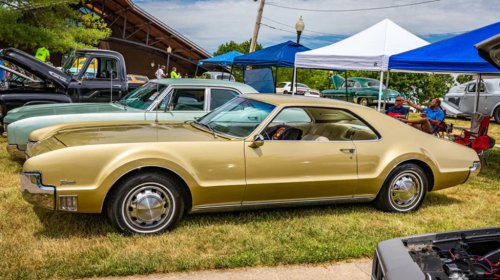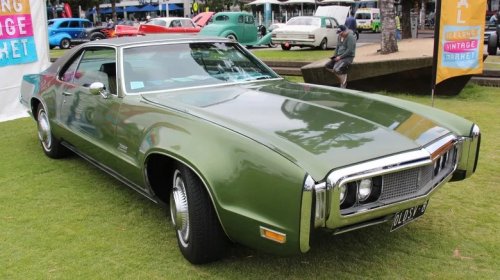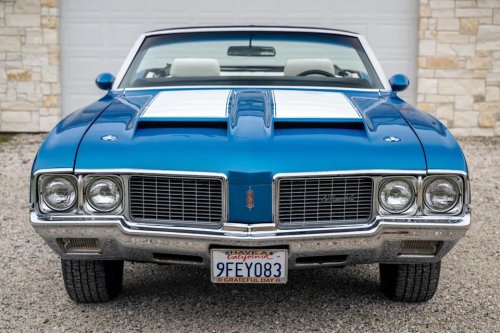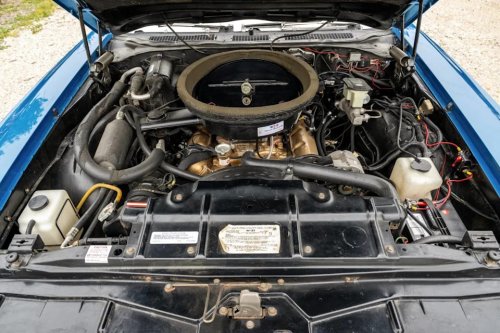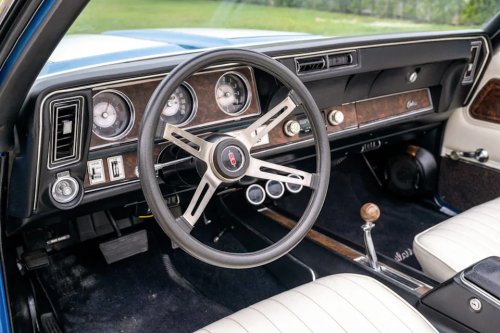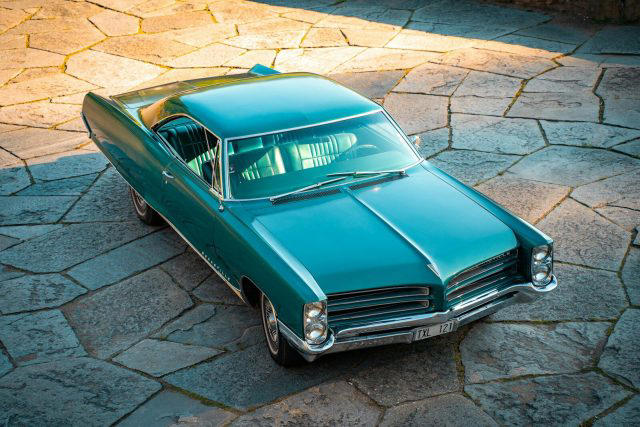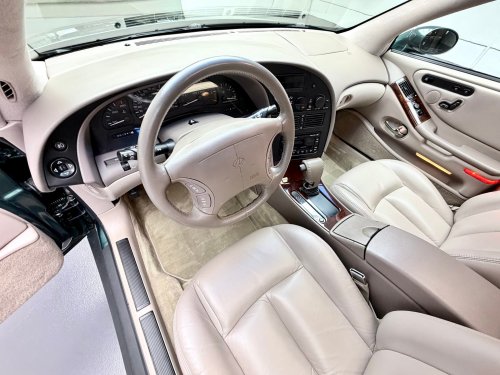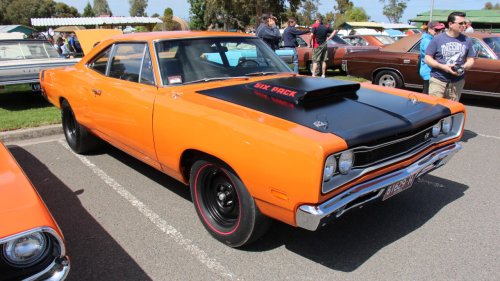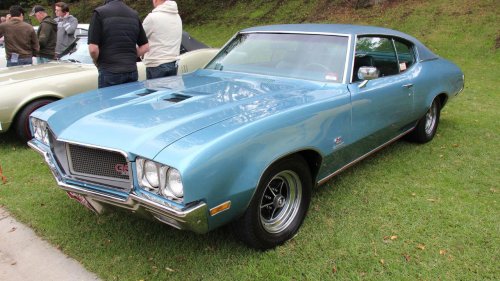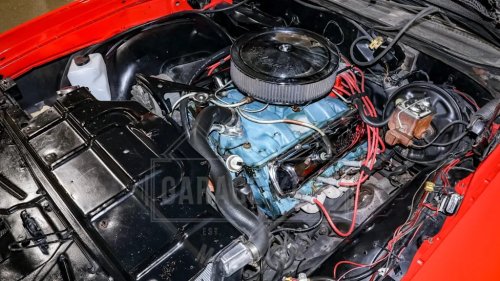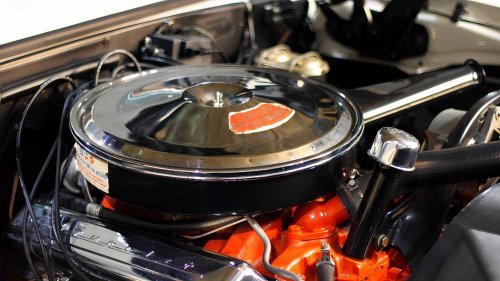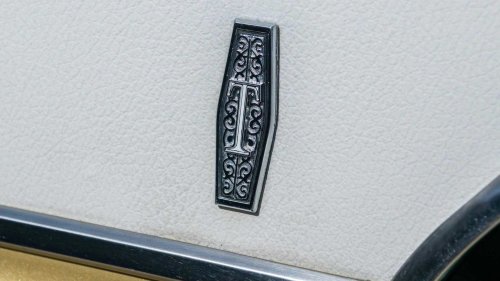
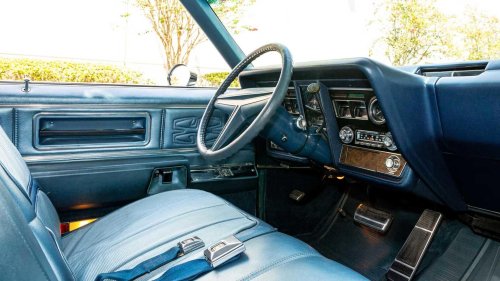
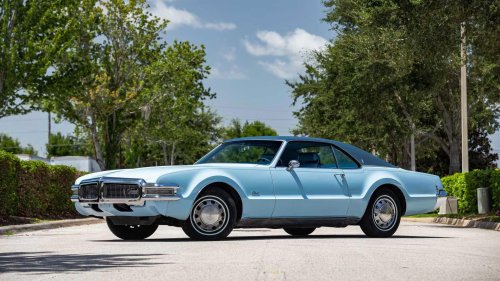
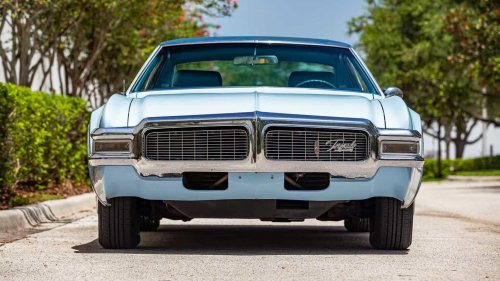
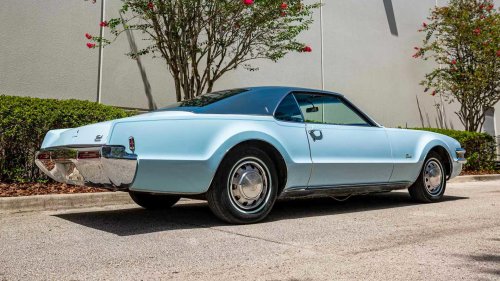
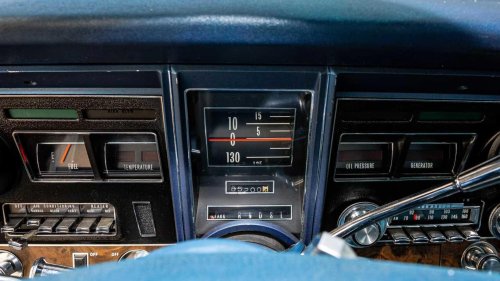
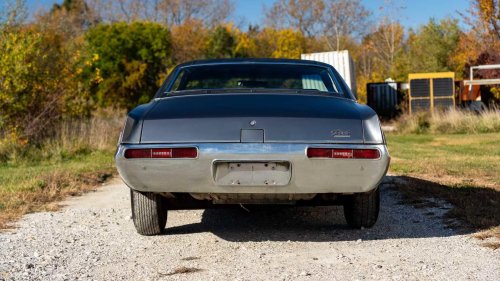



















By 1968, the muscle car formula was well established and nobody was questioning it. Big engine, rear-wheel drive, four-speed, burnout. The template had been proven, the sales numbers were in, and the magazines had written the script. Oldsmobile, however, had a division of engineers who had spent seven years and over 1.5 million test miles developing something the rulebook did not account for.The platform was front-wheel drive. The engine was one of the most powerful units General Motors had ever put into a production car. The combination was audacious enough that the muscle car faithful wrote it off immediately, which is precisely why serious collectors are paying attention to it now. When Detroit Decided Muscle Cars Didn't Need to Follow the Rules Mecum The muscle car era of the late 1960s was built on a single premise: put the biggest available engine into the lightest available body and let rear-wheel drive do the rest. The formula rewarded power and punished anything that deviated from it. Front-wheel drive, in the eyes of most enthusiasts and publications, was for economy cars and practical transportation. It was the drivetrain layout of the sensible family sedan, not the hard-charging coupe. Any manufacturer that combined a serious performance engine with front-wheel drive was asking to be dismissed.General Motors, however, was doing something the Big Three's other divisions were not. Its engineering programs in the 1960s covered jet-powered show cars, rear-engine compacts, and radical suspension experiments that would have seemed far-fetched anywhere else. The Oldsmobile division had quietly developed the most advanced front-wheel-drive system in American production history, and by 1968 it had been refined to the point where the engineering team believed it could carry genuine performance hardware. The only question was whether the market would follow. Oldsmobile's Most Unconventional Performance Bet Mecum Oldsmobile occupied an unusual position within General Motors in the late 1960s. It was the division that sat between Buick's luxury pretensions and Pontiac's youth-oriented performance positioning, and it had been responsible for some of the era's more technically adventurous production cars. The Toronado, introduced in 1966, was the first American front-wheel-drive production car since the Cord 812 of 1937. It was conceived as a personal luxury coupe, competed directly with the Ford Thunderbird, and won Motor Trend's Car of the Year in its debut season. Performance had not been the primary brief.By 1967, Cadillac had introduced its own front-wheel-drive Eldorado on a platform that shared engineering with the Toronado. That year, Toronado sales fell by nearly half, from 40,963 in 1966 to 22,062, as the initial novelty of the front-wheel-drive concept faded and buyers found the Cadillac's additional prestige compelling at a higher price point. The division needed a reason for enthusiasts to choose the Toronado on its own merits, and in the late 1960s, performance was the most persuasive argument available. The engineering team had the platform, the engine family, and the transmission know-how. What it built next was something nobody in the muscle car world had seen before. The Oldsmobile Toronado W-34: The Big Block Nobody Expected MecumThe W-34 option code appeared on the 1968 Toronado order sheet with almost no fanfare. It lifted the standard Rocket V8 from 375 horsepower to 400, making it the most powerful engine Oldsmobile had ever put into a production car. GM's displacement cap restricted intermediate muscle cars to 400 cubic inches at the time, meaning a full-size personal luxury coupe was the only vehicle in the lineup where the 455 could run at full output. It was a technical achievement dressed in a luxury wrapper, and the muscle car audience largely ignored it.Against its two closest front-wheel-drive contemporaries, it led in outright power and delivered substantially better acceleration than either. The Buick Riviera GS, despite carrying the Gran Sport badge, trailed the W-34 by 40 horsepower and a significant 1.7 seconds to 60 mph. The Cadillac Eldorado offered a larger displacement V8 but 25 fewer horsepower and a heavier body that blunted the advantage. The W-34 was not just the most powerful front-wheel-drive car in America. At a test weight approaching 4,600 pounds, its 0-60 time of 7.5 seconds and quarter-mile time of 15.7 seconds at 89.8 mph put it ahead of cars that weighed considerably less. The Rocket 455 Package That Changed the Equation Mecum The W-34 package built on the standard 455 Rocket V8 with three specific upgrades. Larger intake valves, a performance camshaft, and a recalibrated Turbo-Hydramatic 425 with a higher stall-speed torque converter sharpened off-the-line response. For 1968 only, the package also included Oldsmobile's Outside Air Induction system, which drew cooler outside air into the engine from a duct routed through the inner fender, the same cold-air philosophy Oldsmobile applied to its W-30 442 performance package. Dual exhaust outlets cut through the rear bumper completed the specification. The combination lifted output from 375 horsepower at 4,600 rpm to 400 horsepower at 4,800 rpm, with torque rated at 500 lb-ft. The 400-horsepower figure was the highest factory rating Oldsmobile ever published for any production engine across its entire history.For 1969 and 1970, the cold-air induction system was discontinued, but the larger intake valves and performance camshaft remained, maintaining the 400-horsepower output. The 1970 model gained exterior GT badging, making it the easiest of the three years to identify on sight. The compression ratio across all three years was 10.25:1 and the final drive ratio 3.07:1, with the Toronado's low-profile intake manifold retained to provide clearance beneath the hood. Every W-34 car was assembled at Oldsmobile's Lansing, Michigan plant, and the engine carried a specific block casting that distinguishes genuine W-34 cars from later-swapped examples. Why Front-Wheel Drive Made Muscle Car Purists Nervous Mecum The conventional critique of front-wheel drive in a performance context centers on torque steer: the tendency of a powerful front-drive car to pull toward one side under hard acceleration. The W-34 Toronado, despite its 400 horsepower figure, produced no detectable torque steer in period testing. Oldsmobile's engineers had developed a constant-velocity joint and chain-driven transmission arrangement that distributed power evenly to both front wheels, and the car's 4,600-pound mass worked in its favor at low speeds by loading the front tires sufficiently to maintain traction. Contemporary road testers noted that no matter how aggressively the W-34 was accelerated from a standing start, the front end remained planted and directionally stable.The handling trade-off was understeer. The Toronado's front weight bias produced a car that pushed wide in corners rather than rotating on its axis the way a rear-drive muscle car would. For drivers conditioned to the tail-out behavior of a 442 or a GTO, this felt wrong. For drivers who valued high-speed stability and predictable handling limits, it felt reassuring. Period testers consistently praised the car's composure at sustained high speed, noting that its front-drive layout made it more planted and directionally stable at triple-digit velocities than comparable rear-drive machines. The W-34 was a different kind of performance car, and the muscle car audience of 1968 had no category for it. What an Oldsmobile Toronado W-34 Costs Today MecumThe W-34's valuation picture requires transparency. No collector valuation tool currently publishes a W-34-specific condition breakdown, and the base Toronado figures in the table do not reflect what a documented W-34 commands in practice. First-generation Toronados have sold for as little as $850 for project-grade cars and as much as $49,000 for clean, well-documented examples, with a current market benchmark of $18,836 for the generation as a whole. W-34 cars sit at the top of that range where provenance can be established, and the 1968 model, with only 111 to 124 built, is the rarest of the three years and trades accordingly when it surfaces.The valuation challenge for the W-34 is documentation. Unlike a Marti Report-verified Ford or a Protect-O-Plate Chevrolet, establishing W-34 authenticity requires physically verifying the transmission bell-housing code, confirming the engine block casting, and cross-referencing the vehicle identification number against the original window sticker or build sheet where one survives. Cars that can demonstrate their specification convincingly through original paperwork attract serious collector attention. The 1969 model presents the most compelling case: the Toronado Chapter of the Oldsmobile Club of America has club-documented approximately 12 surviving 1969 W-34 examples, of which only around five have been formally verified. That is a survivor population smaller than most barn-find exotics, and it commands prices that reflect the reality of finding one. Why Collectors Are Coming Back to It Now Mecum The Toronado W-34 sits at a genuine intersection of collector interest. It is the highest-horsepower car Oldsmobile ever built. It was the most powerful front-wheel-drive production car in America when it was sold. It exists in documented numbers so small that finding a verified example requires either an active network or considerable patience. And it costs a fraction of what comparably rare muscle cars from the same era command, because the personal luxury badge that protected it from the insurance surcharges of its day still causes some collectors to undervalue it now.That calculation is beginning to shift. The generation of collectors who grew up dismissing anything without a four-speed and a live rear axle is giving way to buyers who appreciate engineering audacity on its own terms. No collector valuation tool currently tracks the W-34 as a separate category from the standard Toronado, which means the premium that documented examples command at auction is not yet reflected in published price guides. What the auction record shows is that clean, provenance-supported W-34 cars trade at the top of the first-generation Toronado range, well above the base model's published figures.The W-34 story is not about straight-line dominance. It is about an engineering team that refused to accept that front-wheel drive and serious performance were mutually exclusive, built 400 horsepower into a layout nobody thought could handle it, and turned out to be right.