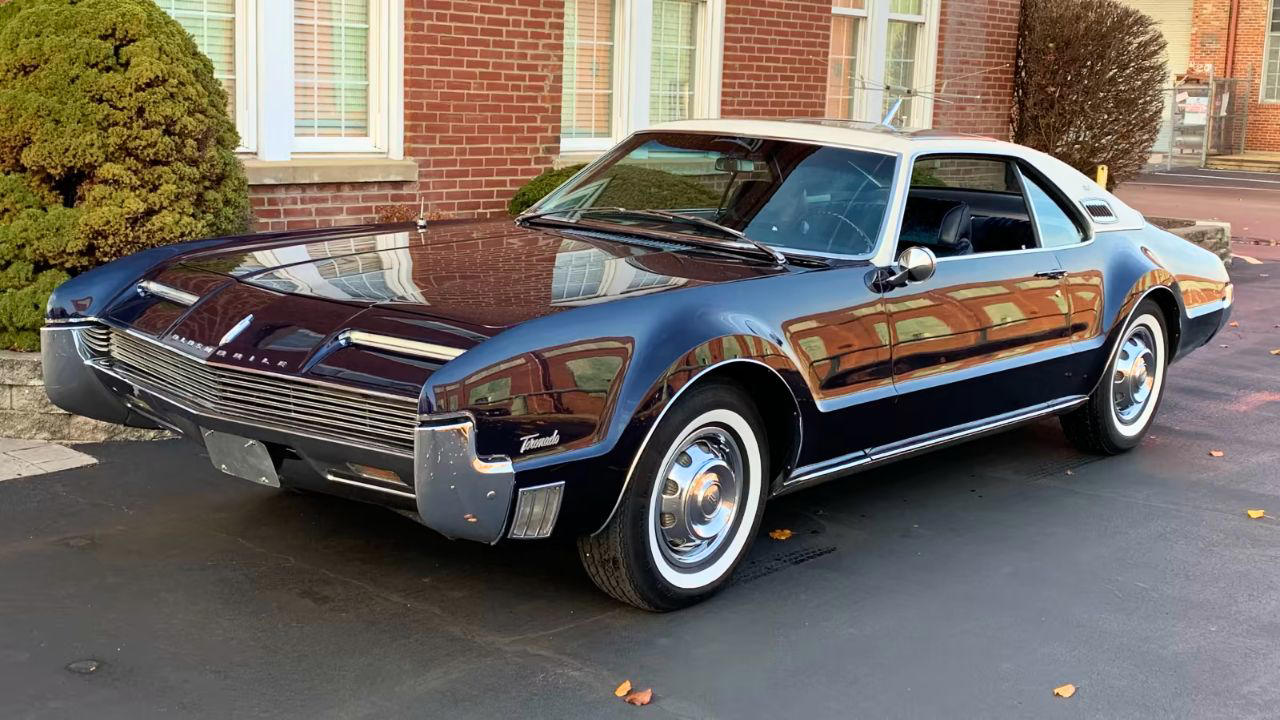
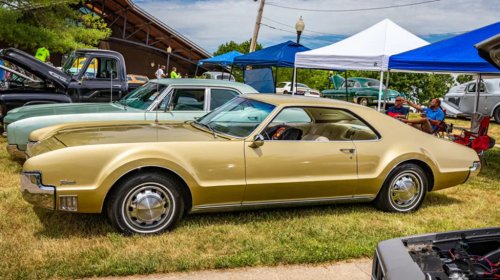
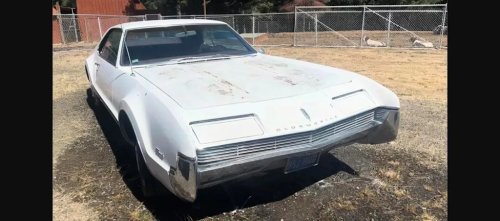
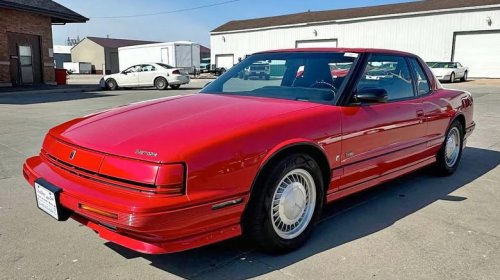
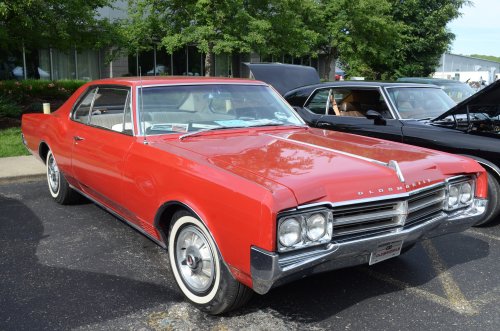
Why the 1966 Oldsmobile Toronado shocked the industry with front-wheel driveIn the mid-1960s, American automakers were locked in a familiar pattern. Most cars followed the same basic formula: a large engine in the front, power sent to the rear wheels, and styling that evolved gradually from year to year. While manufacturers competed fiercely in horsepower, luxury, and design, few were willing to take major engineering risks. Then Oldsmobile introduced the 1966 Toronado. At first glance, the Toronado looked revolutionary because of its styling. The long hood, hidden headlights, sweeping body lines, and aggressive stance made it one of the most dramatic American cars of the decade. Yet the real surprise was hidden underneath the sheet metal. The Toronado sent power to its front wheels. Today, front-wheel drive is common. Millions of vehicles use it, from compact sedans to family crossovers. In 1966, however, the idea seemed almost unthinkable for a large American personal luxury car equipped with a massive V8 engine. The Toronado wasn’t simply unusual. It represented one of the boldest engineering gambles Detroit had seen in years. Its success challenged conventional wisdom, influenced future vehicle development, and proved that innovation could still emerge from one of the industry’s most established manufacturers. Rear-Wheel Drive Was the American Standard To appreciate why the Toronado created such a stir, it’s important to understand the automotive landscape of the mid-1960s. For decades, rear-wheel drive had dominated the American market. The arrangement was straightforward and well understood. Engines sat in front, transmissions transferred power rearward through a driveshaft, and the rear wheels pushed the vehicle down the road. Manufacturers knew how to build these systems efficiently. Mechanics knew how to repair them. Customers trusted them. There seemed little reason to change. Front-wheel drive did exist, but it remained rare in the United States. A few notable vehicles, including the pioneering Cord 810 and Cord 812 of the 1930s, had used the technology. Some European manufacturers also experimented with front-wheel-drive designs. Yet no major American automaker had applied the concept to a high-volume luxury-performance vehicle in decades. Oldsmobile decided to try anyway. General Motors Wanted Something Different During the early 1960s, executives within General Motors began exploring ways to create a new kind of personal luxury car. The market for stylish premium coupes was growing rapidly. Buyers increasingly wanted vehicles that combined comfort, performance, and distinctive design. The challenge was standing out. A conventional luxury coupe might attract attention initially, but GM wanted something capable of generating excitement throughout the industry. Engineers and designers concluded that an unconventional drivetrain could help achieve that goal. Front-wheel drive offered several potential advantages. It would also give the vehicle a unique identity. The result became the Toronado project. Packaging Advantages Changed the Design One reason engineers embraced front-wheel drive involved packaging. Traditional rear-wheel-drive layouts require a transmission tunnel running through the center of the passenger compartment. A driveshaft must connect the transmission to the rear axle, consuming space beneath the floor. The Toronado eliminated that requirement. Without a driveshaft extending to the rear wheels, designers gained greater flexibility when shaping the interior. Passengers benefited from a flatter floor and improved space utilization. The absence of a conventional drivetrain tunnel also contributed to the car’s futuristic feel. Although many buyers focused on the styling, the engineering underneath allowed designers to create proportions that differed from many competitors. The drivetrain wasn’t simply a technical curiosity. It influenced the entire vehicle. The Biggest Challenge Was Torque Building a front-wheel-drive economy car was one thing. Building a front-wheel-drive luxury coupe powered by a large-displacement V8 was something else entirely. The Toronado’s engine produced enormous amounts of torque. Transmitting that power through the front wheels created engineering challenges that few manufacturers had attempted to solve. Many industry observers questioned whether the concept could work reliably. Would the drivetrain survive? Could the front wheels effectively handle both steering and propulsion? Would durability suffer? These concerns were legitimate. Oldsmobile engineers needed an entirely new approach. The Innovative Unitized Power Package To make the Toronado possible, engineers developed one of the most sophisticated driveline systems of its era. The setup became known as the Unitized Power Package. Instead of placing the transmission directly behind the engine in the conventional manner, engineers designed a chain-driven arrangement that allowed the transmission to sit alongside the engine. A heavy-duty chain transferred power between components. The design solved critical packaging issues while maintaining durability. The chain itself became one of the most discussed features of the vehicle. Many observers worried that it might prove fragile. In reality, the system demonstrated remarkable strength and reliability. Oldsmobile had created a solution capable of handling substantial V8 power while preserving the benefits of front-wheel drive. The Styling Was Just as Revolutionary The Toronado’s engineering might have attracted headlines, but its styling ensured people paid attention. The car looked unlike virtually anything else in American showrooms. A long hood stretched forward from the windshield. Pronounced wheel arches added visual drama. Hidden headlights contributed to a clean, futuristic appearance. Many enthusiasts still consider the Toronado one of the most beautiful American designs of the 1960s. The styling reflected confidence. Oldsmobile wasn’t interested in blending into the market. The company wanted a halo car that demonstrated what its designers and engineers could achieve when given freedom to experiment. The Toronado delivered exactly that. Performance Defied Expectations One reason the Toronado impressed journalists was that it performed far better than many skeptics anticipated. Critics had assumed front-wheel drive might compromise acceleration, handling, or overall driving dynamics. Instead, road tests frequently praised the car. Its large V8 delivered strong performance, while the front-wheel-drive layout provided excellent traction under many conditions. The Toronado wasn’t a sports car, but it felt surprisingly capable for such a large luxury coupe. Many reviewers came away impressed by how normal—and effective—the front-wheel-drive system felt in everyday driving. That reaction helped validate Oldsmobile’s engineering gamble. The technology wasn’t merely functional. It was genuinely competitive. Competitors Took Notice The Toronado’s success quickly attracted attention throughout the industry. Manufacturers watched closely to see whether buyers would accept such an unconventional drivetrain arrangement. The answer was yes. Customers responded positively, and the car generated significant publicity. Its success also influenced another important GM product. For 1967, Cadillac introduced the front-wheel-drive Cadillac Eldorado, which shared many engineering principles with the Toronado. The fact that Cadillac adopted the technology demonstrated how seriously General Motors viewed the concept. The Toronado had proven that front-wheel drive could work in premium American automobiles. The Market Was Ready for Innovation Part of the Toronado’s success stemmed from timing. By the mid-1960s, consumers were increasingly receptive to technological innovation. The Space Race captivated public imagination. Jet aircraft represented the future. Electronics and advanced engineering seemed poised to transform everyday life. The Toronado fit perfectly within that cultural environment. Its front-wheel-drive system felt modern. Its styling looked futuristic. Its engineering story captured the public’s attention. The car appealed to buyers who wanted something different from traditional luxury coupes. Oldsmobile gave them exactly that. A Legacy Beyond Sales Numbers Although the Toronado never became a high-volume seller, its impact extended far beyond production figures. The vehicle demonstrated that American manufacturers could still take risks. It proved that consumers would embrace unconventional engineering when the benefits were clear. Most importantly, it challenged long-standing assumptions about drivetrain design. Front-wheel drive would eventually spread throughout the industry, becoming one of the dominant automotive layouts of the late twentieth century. The Toronado wasn’t solely responsible for that shift, but it played an important role in proving the concept’s viability. Its influence reached far beyond Oldsmobile showrooms. Why the 1966 Toronado Still Matters Today, the 1966 Toronado remains one of the most respected engineering achievements of the muscle car era. Collectors admire its styling. Historians appreciate its technical innovation. Enthusiasts recognize its willingness to challenge convention. The car succeeded because Oldsmobile chose a different path when most competitors were content to follow established formulas. Rather than building another rear-wheel-drive luxury coupe, the company created something genuinely original. That decision changed perceptions throughout the industry. The Car That Rewrote the Rulebook The 1966 Oldsmobile Toronado shocked the industry because it dared to do something few believed practical. It combined a large American V8 engine with a sophisticated front-wheel-drive system at a time when nearly every domestic manufacturer relied on rear-wheel drive. The concept seemed risky, complicated, and unconventional. Yet Oldsmobile made it work. The result was a vehicle that delivered impressive performance, striking design, and a glimpse into the future of automotive engineering. More than half a century later, the Toronado remains a reminder that some of the most important innovations arrive when companies are willing to challenge accepted wisdom. In an era defined by horsepower wars and styling battles, the Toronado won attention through engineering. And that’s exactly what made it so remarkable. More from Fast Lane Only Unboxing the WWII Jeep in a Crate 15 rare Chevys collectors are quietly buying 10 underrated V8s still worth hunting down Police notice this before you even roll window down