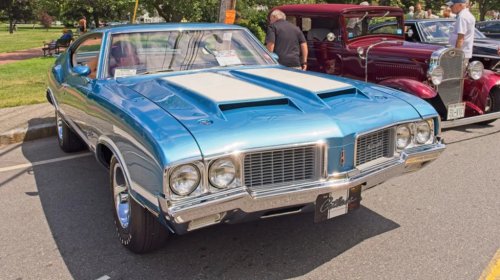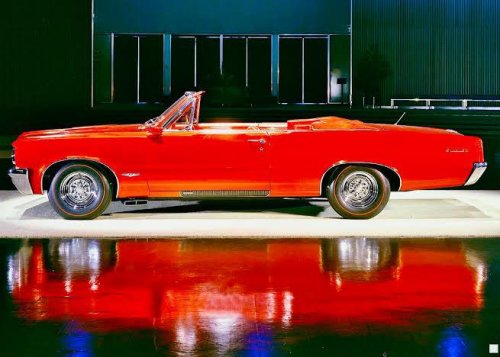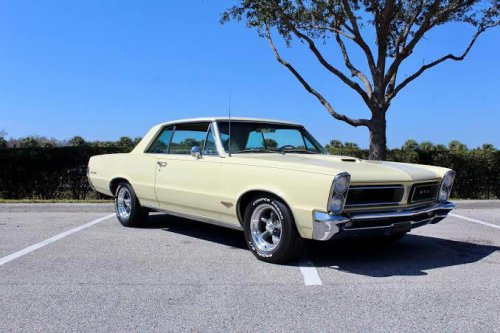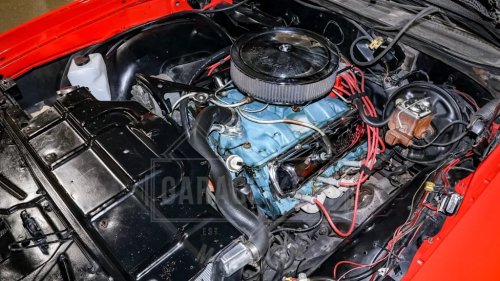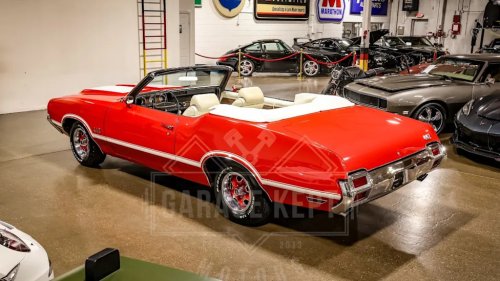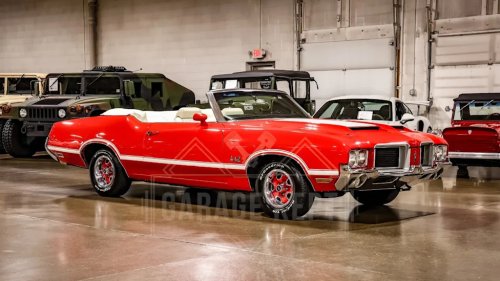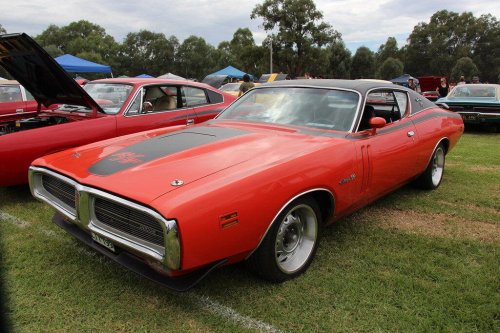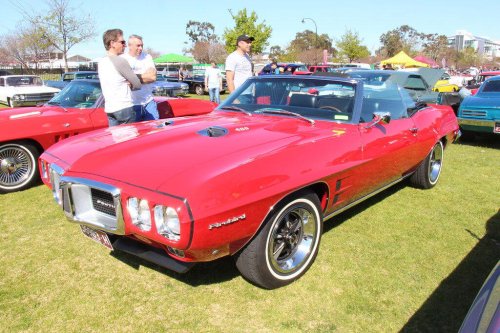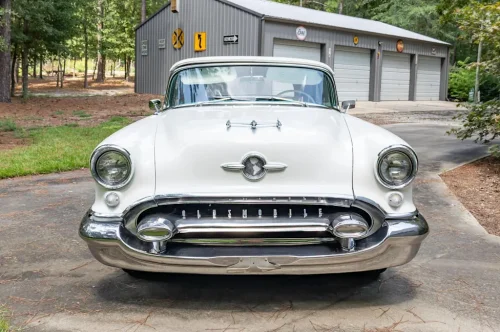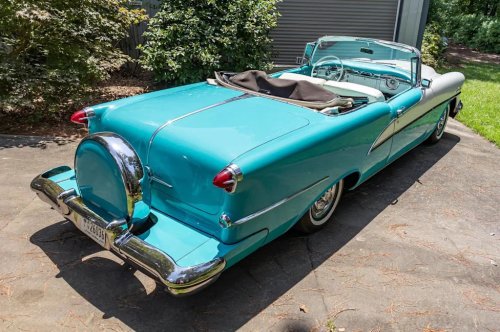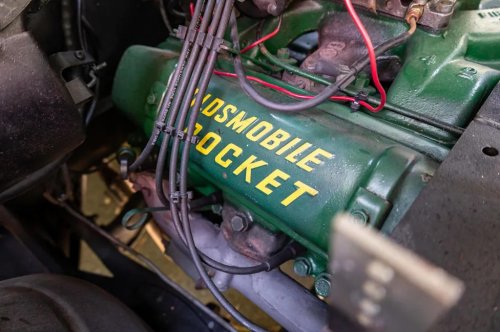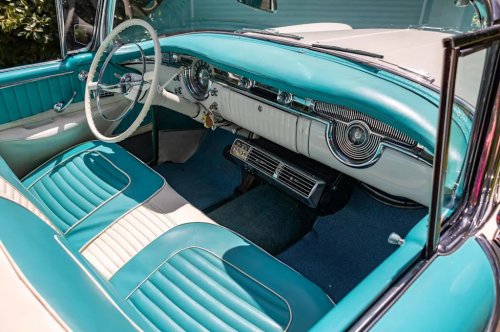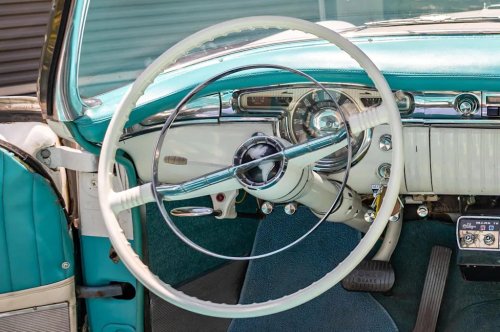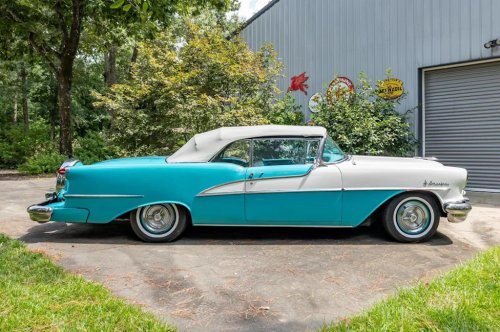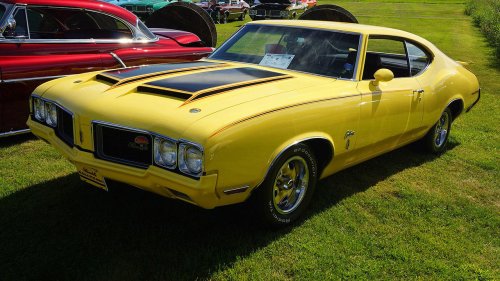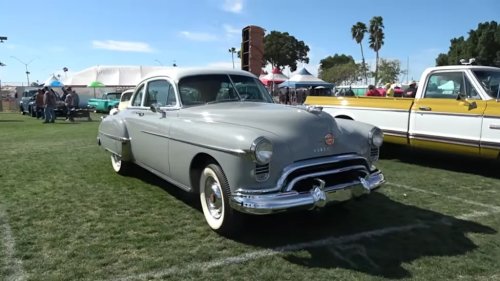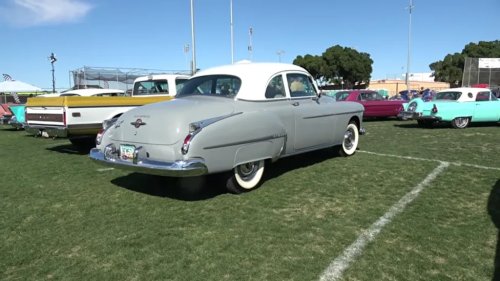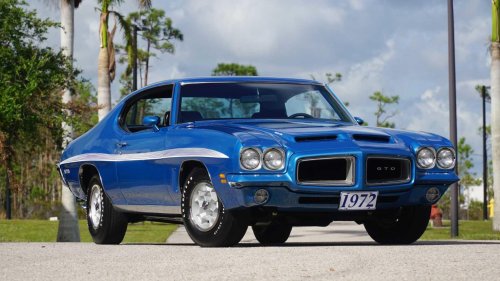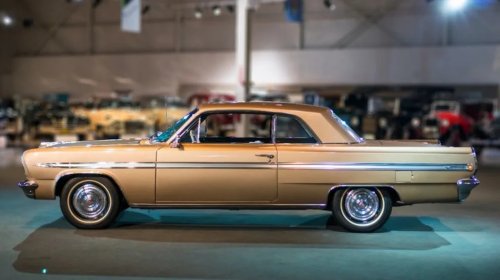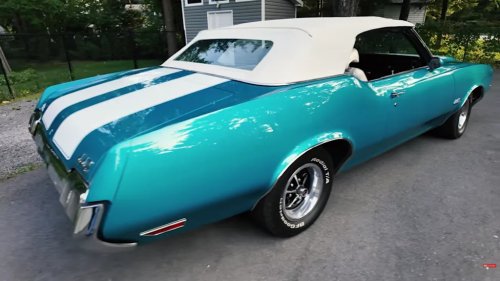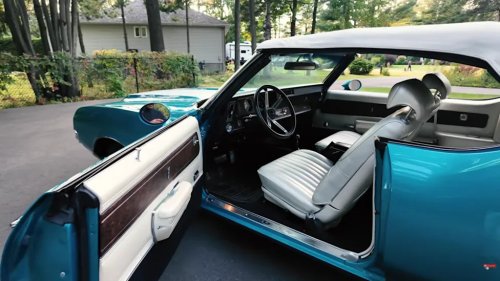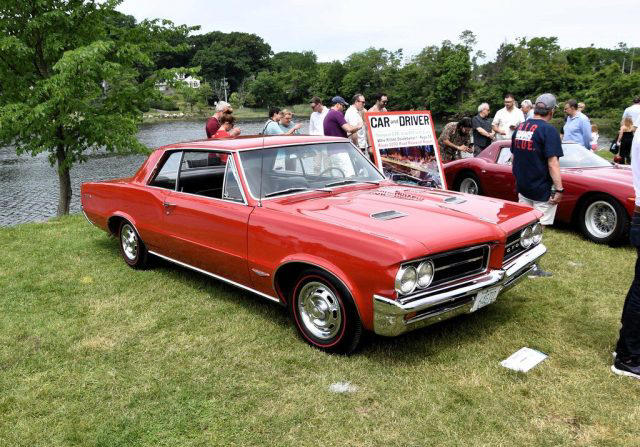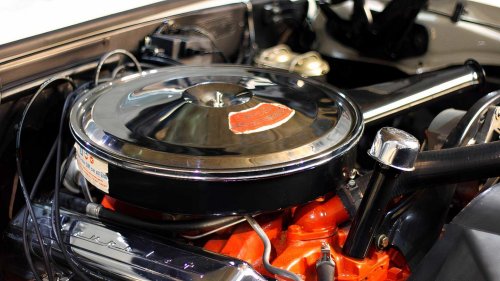
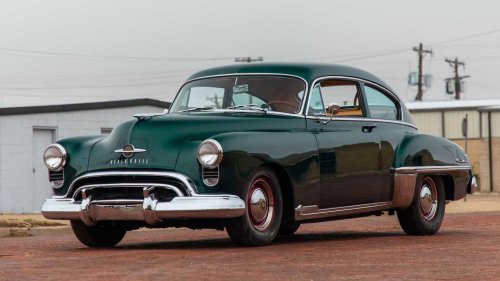
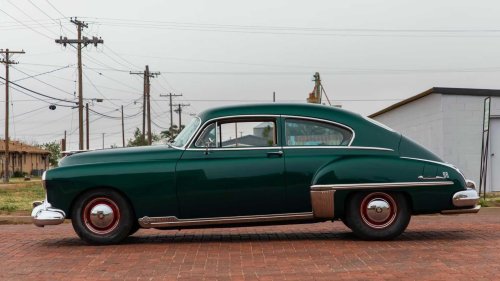
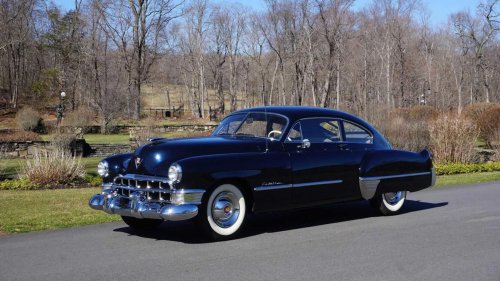
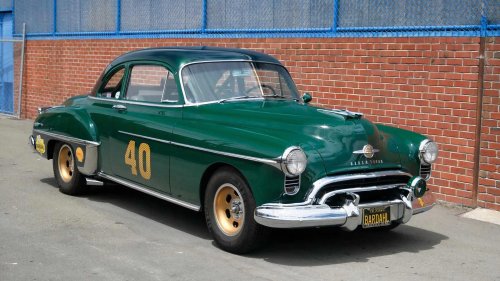
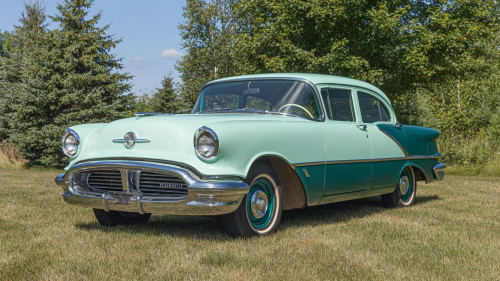
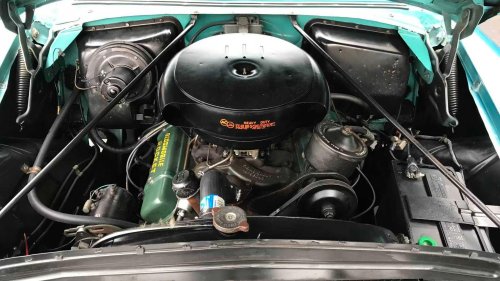



















When was the muscle car invented? It's a topic fans could talk about for hours, with many settling on the original Pontiac GTO. When this groundbreaking model arrived in 1964, fitted with a 389 V8 and four-speed transmission, the automotive press quickly coined the new phrase: muscle car. But one lesser-known model predated the iconic Pontiac by some 15 years, and has all the ingredients to make it a muscle car, even if the term hadn't been invented when it hit the showrooms. Is this forgotten Oldsmobile actually an early pioneer of the genre? The US Performance Car Market Was Changing In The '40s Jaguar Following the end of World War II, the US economy was changing along with buying habits. In the late '40s postwar America, GIs were returning, the auto industry was retooling, and there was a pent-up customer demand for interesting products. With the onset of war, automakers had switched from building advanced, luxury cars, to tanks, airplanes, Jeeps, weapons, and even military safety gear. With production of commercial cars resuming in 1945, innovation was key to getting customers back in showrooms, and car designs started to have both advanced-looking fins from the aero industry, but also tons of chrome that caught your eye as you walked past.Features like power windows were being quickly adopted to make the modern car an effortless experience, rather than hard work to get from A to B. With these innovations came a need for speed. Returning soldiers were entering the hot rodding scene, and cars like the 1948 Jaguar XK120, with a top speed of 120 mph, whetted the appetite for ever faster cars. Oldsmobile decided to enter this new, fast-moving arena. The Oldsmobile Rocket V8 Was A Muscle Car Before Muscle Cars Existed Mecum The Oldsmobile 88 arrived in 1949, powered by one of the first postwar overhead valve V8 designs, rather than an antiquated prewar side-valve eight-cylinder. What Olds had actually done with this car was take a lighter 70 Series chassis and fit it with the engine from the luxury 98 Series car. This combination of a smaller, lighter (A-Body) platform and massive, top-tier luxury mill is something that tends to typify muscle car thinking, or at least it would when the name arrived a decade and a half later. The Olds 88 Was One Of The Fastest American Cars On The Road In 1949 Mecum This factory hot rod was naturally incredibly quick for its day, the 303-cubic-inch (5.0-liter) developing a healthy 135 horsepower. The sprint to 60 mph could be taken care of in 12.2 seconds, and the 88 needed 19.9 seconds to cover the quarter mile. 1949 Oldsmobile 88 Rocket Specs To put this into perspective, a racy Porsche 356A coupe with a 1600 engine could only manage 60 mph in 14.4 seconds and a quarter mile of 19.3 seconds. The 88 Series Olds flew out of the showrooms, with about 100,000 units built, making it a sales hit, and the company had an instant hit on its hands. Cadillac Had A Challenger Too Bring a TrailerCadillac pipped Olds to the post by bringing its own 331ci (5.4-liter) OHV V8 to the market in late October 1948, a month before the 98 Series was fitted with the rocket. This modern new engine replaced the previous lumbering 346-ci side-valve unit. The Caddy engine had more power than the Olds Rocket, packing 160 hp. It was rumored that the Olds engine was deliberately detuned not to offend the more upmarket Cadillac at the time. However, Cadillac fitted its engine into a larger, heavier luxury chassis, distinguishing it from the more sporty 88 and giving Olds more of a claim to the early muscle car title. The Rocket Was As Good On The Track As It Was On The Road Bring a Trailer It made sense that the 88 would be successful on the track. After all, it was relatively light and at launch one of the fastest new American cars on the road. An 88 convertible wowed the public as the Indy 500 pace car in 1949, and the same year (the first year of the NASCAR Strictly Stock Division, now Cup Series), Oldsmobile 88 Coupes won five of eight races in the series.The 88 dominated NASCAR racing in the early '50s, winning 10 out of 19 races in the 1950 season alone. Olds earned its second Manufacturers’ Championship in 1951, winning 20 of 41 races. The car then went on to score a whopping 20 wins out of 41 races in the 1952 season. In 1950, Oldsmobile 88 also scooped the demanding 2000-mile-plus Carrera Panamericana road race in Mexico. How The Rocket Evolved Bring a Trailer The Rocket kept the 303 from 1949 to 1954, with a bore of 3 ¾ inches and the stroke was 3 7/16 inches. For 1954, the bore was increased to 3 7/8 inches and the stroke left at 3 7/16 inches, which led to a 324ci displacement and power increase. The standard Rocket, with a 2-barrel carb had 170 hpp, but the Super 88, with a 4-barrel carburetor, produced 185 hp and 300 lb-ft. The Super 88 (1955) had 202 hp through camshaft and intake revisions, and the 1956 car produced 240 h. For 1957p, the bore was increased to 4 inches and the stroke stretched out to 3 11/16 inches for 371ci, good for up to 300 hp. These later cars could crack 8.5 seconds to 60 mph. Was The Rocket The First Muscle Car? Bring a TrailerThere are plenty of people that will say that the Rocket 88 is arguably the first true American muscle car, not least the NASCAR Hall Of Fame. The Olds 88 ticks most of the right boxes for being a muscle car too. Firstly, it was affordable compared to the Cadillacs of its day, coming in at just over $2,000 new. It is also front-engined, rear-drive, and comes in a two-door coupe bodystyle — all prerequisites for muscle car entry normally. The Rocket V8 also had exotic internals such as a forged crank and aluminum pistons, which made it a cut above standard V8 cars of the time. So why is it that we look to the Pontiac GTO of 1964 as the first muscle car, not the Olds 88? This really is a debate that could keep forums in business for centuries to come.There is a good argument that it comes down to image. The GTO was a car almost specifically marketed at a young, rebellious '60s demographic, and even John DeLorean was still in his '30s when he helped devise it. The Olds 88, on the other hand, was designed more for modern, upwardly mobile professionals and suburbanites, which is a slight but noticeable difference. We could also just put it down to the name that had been dreamed up for the GTO. Whatever side of the fence you sit, there is no denying that the Olds 88 and the Pontiac GTO are both great cars to own.Sources: Hagerty, Hemmings, General Motors, NASCAR