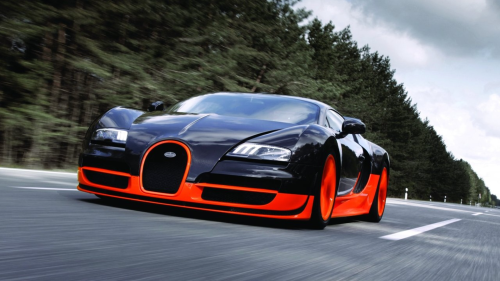
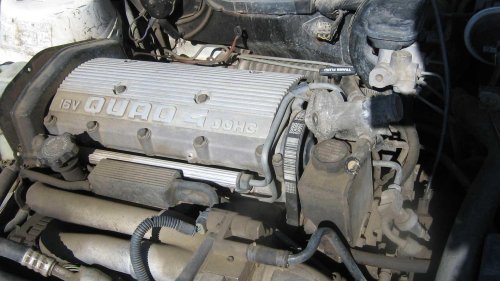
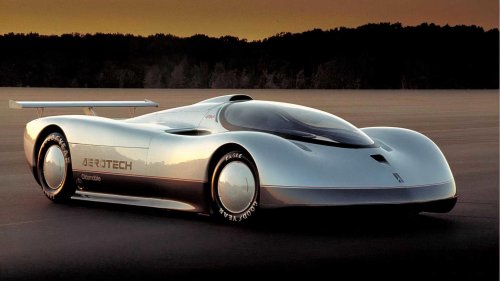
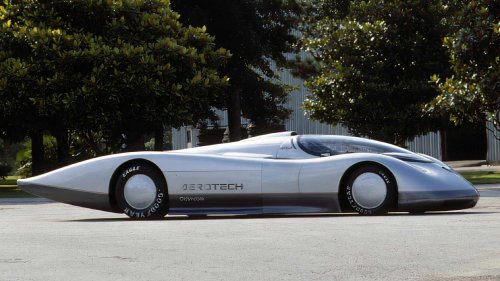
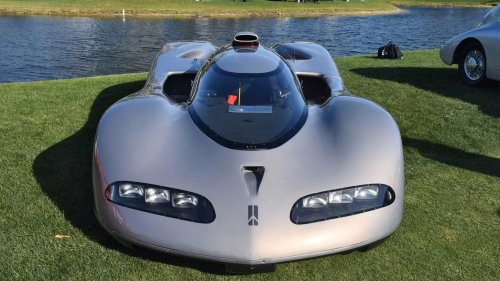
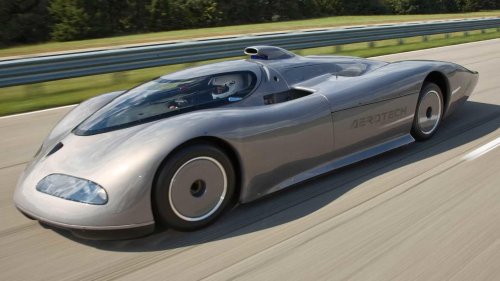



















Companies targeting a top speed record never let it go unnoticed. They’ll reference it at every opportunity, run marketing campaigns about how they achieved it, and, in the most self-congratulatory instances, release limited-run editions touting the record that the car set. What companies never do is set a record and just move on. But that’s exactly what General Motors did in the 1980s, with what could have been one of their coolest-ever cars. Top Speed Runs Have Long Been Marketing Ploys BugattiThe automotive world is awash with claims of something being “the fastest” or “the quickest accelerating” or “the most”. It’s an easy headline generator, and something to stick on the advert to give statistics nerds something to quote when talking about cars. And while these superlatives are all well and good, they don’t really have any relevance in real life. When has anyone ever been able to use the extra 0.1 seconds to 62 mph that their car promises over a competitor, or truly pushed it to the claimed top speed? Better yet, when has anyone who bought a car because of its Nürburgring time ever even got close to the 'Ring itself, let alone tried to hit that time?Their limited real-world application never stops companies from setting or claiming them, though, and the marketing wheel spins on as automakers compete for vanity numbers. Take the Bugatti Veyron Super Sport’s 267.8 mph record for example. It's cool that the car could hit it, but that's a car that will more likely sit in a climate-controlled garage for years until being sold for a profit. Koenigsegg’s Agera RS hit 277.8 mph in 2017 along a closed highway in Nevada, which is a devastatingly quick speed for public roads but does nothing for the 99.99% of drivers who could never dream of owning one.Arguably cooler than making a fast car go fast for the sake of being fast is proving that your everyday engine can hit speeds you’d never expect and, in the 1980s, that’s exactly what General Motors did. GM Had An Engine They Wanted To Showcase Wikimedia via Dave_7Public opinion of GM was mixed in the mid-1980s. Buyers appreciated the company’s affordable, practical cars and strong V8 performance offerings, but critics felt that GM’s styling and engineering was becoming dated compared to Japanese and German counterparts.In response, GM developed the Quad 4 engine, which was a modern 2.3-liter, four-cylinder engine making 150 hp in early versions. Rather than focusing attention on traditional V8s, GM used the Quad 4 as the foundation for some of its sportier cars, like the Buick Skylark and Oldsmobile Cutlass Supreme. While these were fine, GM wanted to further prove its performance. And what better way than with a top speed record. The Oldsmobile Aerotech Was A Record-Setter You’ve Never Heard Of via GM Media ArchiveWith the Quad 4 being its new baby, GM wanted to show it off. Rather than taking the normal route of putting it into a road car that consumers could buy, though, in 1985 they began developing a completely new prototype car around the engine. That car would be the Oldsmobile Aerotech.The Aerotech was a futuristic-looking spaceship of a vehicle, with styling reminiscent of the Le Mans-winning Porsche 917. A long-tail version was proposed (and built alongside a short-tail) to help provide lower drag for the planned Indianapolis Motor Speedway speed record run, which was the plan behind the car from the outset. To this end, it also used a modified March 85C CART chassis similar to 1985 Indy 500 winner Danny Sullivan's, with carbon fiber bodywork surrounding it and the Quad 4 engine placed toward the rear of the car.That Quad 4 engine also underwent some changes from the norm. The standard 150 hp version was clearly not going to be enough to impress, so two engines were developed - one with a single turbocharger (made by Batten Engineering, who had made aftermarket aluminum cylinder heads for Oldsmobiles in NHRA and NASCAR), and another with two turbochargers (made by Feuling Engineering, who now specialize in Harley-Davidson parts). The single-turbo version could make up to 900 hp, while the twin-turbocharged engine (which was used in the long-tail car) made around 1,000 hp.Oldsmobile A sufficiently crazy car needed a sufficiently crazy driver to pilot it to that desired speed record, so Oldsmobile hired 1967 24 Hours of Le Mans and four-time Indy 500 winner A.J. Foyt to sit in the car’s enclosed cockpit. On August 26, 1987, Oldsmobile and Foyt took the cars to the Fort Stockton test track. The target to beat was 250.958 mph, set in 1979 by the Mercedes C111-IV which itself was an experimental prototype made to test engines and aerodynamics.That first day proved the car had potential, falling just short of the required mark, but that record would fall the next day as Foyt took the short-tail version to 257.123 mph, setting a new closed-course record. The long-tail version would actually travel faster, averaging 267.399 mph in flying-mile runs, but it's that 257 mph closed-course record that it became known for. Despite Its Success, GM Let It Wither Oldsmobile ForumOldsmobile understandably used the Aerotech in its marketing efforts, featuring it in advertisements, TV spots, and even creating around 70 Aerotech-inspired go-karts for dealerships. However, the company stopped short of producing a road-going version, seemingly putting the car into storage once it had served its purpose. The Aerotech would only reappear a handful of times afterward, including at the 1989 North American International Auto Show in Detroit and again in 1990.The Quad 4 engine that the Aerotech was built to promote would go on to power a wide range of GM vehicles. Production ultimately ended in 2002 after a 15-year run, as the engine developed a reputation for harshness, noise, reliability concerns, and weak low-end torque. Oldsmobile itself would not survive much longer, as General Motors discontinued the brand in 2004 due to declining sales and increasing overlap with other GM divisions. The Aerotech Was A Hypothetical Made Real HagertyThe Aerotech is that most rare of cars in the automotive world - an incredibly exciting, fast, beautiful car that never made it to production. In Oldsmobile's defense, it was never intended to be a production car, as costs would have been extremely prohibitive and the design, as interesting as it may have been, would have required extensive changes to get it past public safety boards. But it’s a shame, given the car doesn’t look too dissimilar to the Jaguar XJ220 of the early 1990s, or the McLaren Speedtail of today.While the car was most famous for its Quad 4 engine, in 1992 GM swapped out the Quad 4 for the 4.0-liter Oldsmobile Aurora V8 in 1992 and took the three existing cars to Fort Stockton again. They'd set 47 speed records in eight days. But it wasn’t enough to earn a reprieve, and the cars would become museum pieces, one of which sits in Foyt’s museum today. And while it’s good that the car has a safe, permanent home, it’s always going to be a “what if." Oldsmobile was clearly capable of creating exciting, forward-thinking cars, yet is mainly remembered for churning out bland, boring sedans. The Aerotech proved that they could make incredible cars, which only leaves you wondering what could have happened if they’d been allowed to make more.