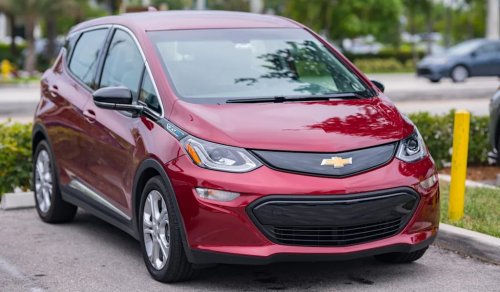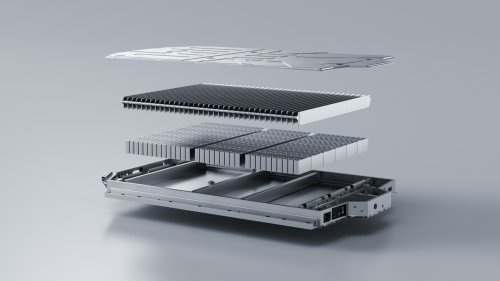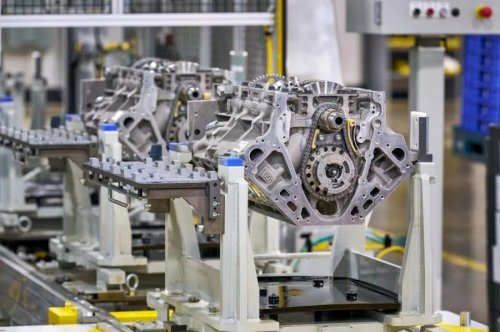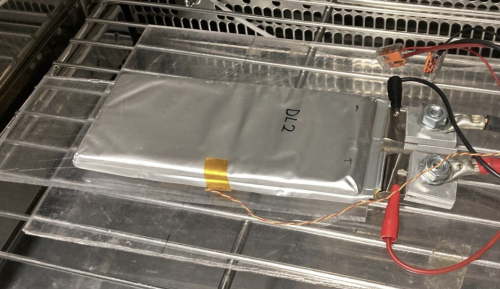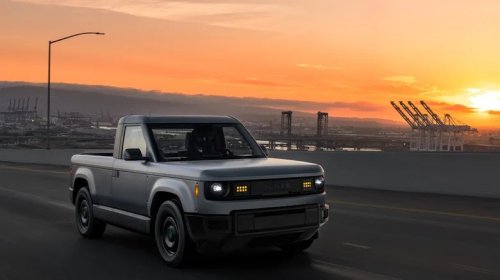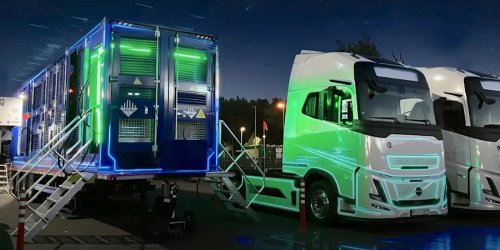
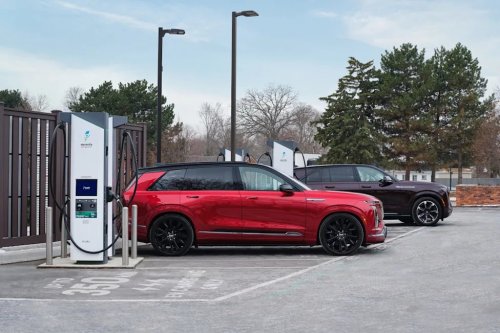
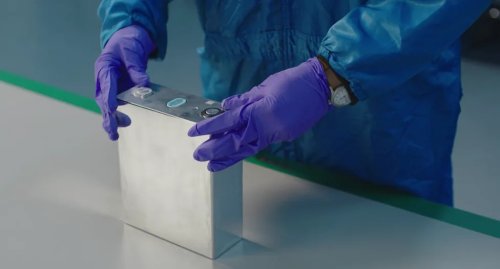
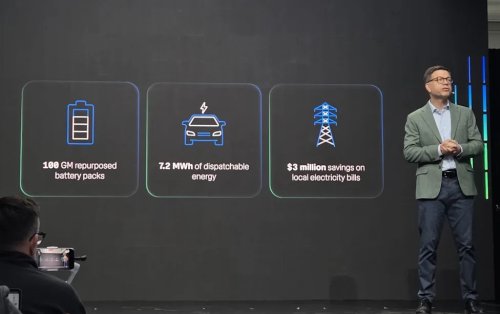

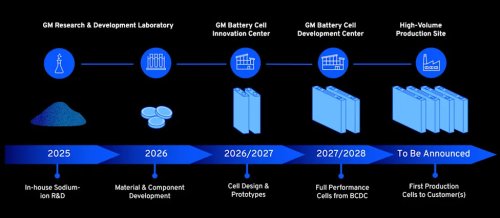



















GM Will Develop Sodium-Ion Battery CellsGeneral Motors (General Motors)GM said today that it's adding a fourth battery chemistry: sodium-ion, being developed and built with partner Peak Energy.The technology will be used to create huge batteries, in bunkers or boxes, to store energy for various uses.Those of us following EVs should care because this effort promises to help GM lower the cost of its EV batteries faster.If three cell chemistries are good, are four better? Today, General Motors unveiled plans to develop and build sodium-ion battery cells in partnership with a startup called Peak Energy. The plot twist is that those cells—at least in the short and medium term—won't go into EVs.Instead, they're intended for stationary battery energy storage systems, or BESS: effectively large containers or bunkers full of battery cells that store energy for a wide variety of uses. The energy-storage business has gained much recent attention from the surging growth of data centers across the country, and the growing amount of wind and solar energy powering electric grids.General Motors (General Motors)EVs from Cadillac, Chevrolet, and GMC today use cells based on nickel, manganese, cobalt, and aluminum (NMCA) chemistries, produced by its Ultium Cells joint venture with LG Energy Solutions. The rebooted 2027 Chevrolet Bolt is its only model to employ lithium-iron-phosphate (LFP) cells, sourced from China's CATL. The third chemistry, known as lithium manganese rich or LMR, is said to offer the low cost of LFP with much higher energy density, significantly lowering the cost of its largest electric pickups and SUVs. So sodium makes four.AdvertisementAdvertisementGM plans to use existing and new battery development capabilities to offer commercial energy-storage systems in a big way. But unlike crosstown rival Ford, which announced a similar plan last month, it's not simply pointing the excess output of underused cell production factories toward a new use while it waits for EV demand to resume its growth.Lower Lifetime Costs for Batteries in BunkersInstead, GM says it will develop sodium-ion cells for energy storage because they offer users a cheaper and more robust battery over the 20-to-25-year life expected from an energy storage system. Lower lifetime costs, even, than lithium-iron-phosphate, the current low-cost cell chemistry, the one used in most Chinese EVs.General Motors (General Motors)In an exclusive interview with GM's vice president of battery and sustainability, Kurt Kelty—Tesla's battery czar from 2006 to 2017—and longtime battery engineer Andy Oury, Car and Driver dug into the background of GM's newest battery effort and why it will help the company lower the cost of its EV batteries faster.GM's Kurt Kelty discusses the new battery plans on June 9.John Voelcker - Car and Driver (John Voelcker - Car and Driver)Sodium-ion cells have both advantages and drawbacks. As a battery material, sodium is cheap and abundant. Crucially, production of sodium-cell precursor materials is not controlled by Chinese companies. That control is a major drawback for North American production of both lithium-ion chemistries used today in EVs.AdvertisementAdvertisementSodium cells also have better low-temperature performance and are far more heat-tolerant than any lithium-ion chemistry. Even low-cost LFP cells need liquid cooling to keep them in the right temperature range, whether in an EV or a battery storage system. Sodium cells need only a small heater, for the very coldest of temperatures—and no cooling. That radically reduces the complexity and lifetime cost of sodium-cell storage, a critical factor for utilities and data centers. There's even a de facto cell package for the ESS industry: a rectangular box measuring 207 mm x 174 mm x 72 mm, which is sometimes called the "2.6-liter format."A sodium-ion cell.General Motors (General Motors)Downsides to sodium cells include lower energy density even than LFP cells, which themselves are roughly 30 percent less energy-dense than the best NMCA cells. That's much less a drawback for battery storage than it is in the confined footprint of an EV. And in the short and medium term, it's the reason we won't see sodium-ion cells in EVs any time soon.(Yes, there are a handful of sodium-battery cars already on sale in China now. It's unclear they've made a dent in the market or are suited to North American uses, though Chinese battery makers will clearly work as hard to evolve sodium cells as they have LFP and other chemistries.)But perhaps the most appealing feature of sodium-ion cells, Kelty said, is that there's a great deal of headroom yet to be exploited in refining them. Historically, the cost-performance of NMCA cells improved at an average of 8 percent a year through chemistry tweaks, higher yields, and economies of scale. That improvement has now fallen to just 1 or 2 percent a year, he said. The same story applies to 20-plus years of LFP cells: big improvements are far harder to find.General Motors (General Motors)From Cell R&D to Honing ProductionSodium cells and LMR chemistries, on the other hand, offer rich opportunities for improvements for those companies willing to put in the time, effort, and money to find them, Kelty said. And one major contributor to faster R&D at GM will be the company's newly opened Battery Cell Development Center, or BCDC, at its sprawling technical center in Warren, Michigan. It's the next step in launching a cell, following the basic R&D on new chemistries coming out of the Wallace Battery Cell Innovation Center opened in 2022. Together, the two units total almost 800,000 square feet.AdvertisementAdvertisementThe goal for the BCDC is to optimize production processes and recipes for scaling up to huge volumes, before transferring production to battery production partners. Those would include Ultium Cells, as well as other partners. Kelty suggested the BCDC's combination of virtual modeling, physical test capabilities, and small-scale production lines will let GM shave up to a year off production of promising new cell chemistries—LMR for EVs among them, but also sodium cells at far earlier stages of refinement. "It's the critical bridge from lab to production," he said.Will we see EVs powered by sodium-ion cells from GM? Kelty was firm: No, not in the short or even medium terms. The energy density is too low, and LMR offers better opportunities far sooner. GM said last year its first LMR cells will come from a pilot line next year, and it remains on that schedule, with LMR cells entering volume production in 2028.On the other hand, never say never. The global EV transition is really just getting started outside China, and it's a national-security imperative for the U.S. and its allies to control technologies than don't have Chinese chokepoints in any phase of the mining, processing, and cell manufacturing process and its associated intellectual property.So, About Those Next EVs . . .Finally, with a brand-new battery lab for faster prototyping and pre-production testing, reasonable minds might expect GM to have a new EV platform underway. One that might, for example, be roughly akin to Ford's Universal Electric Vehicle platform, the entirely rethought way of designing and building cars that it says will let it launch a mid-size electric pickup truck with 300 miles of range, starting at only $30,000.AdvertisementAdvertisementAsked about that possibility, Kelty and Oury said nothing. They neither confirmed nor denied that a new platform might be able to take advantage of their expanding development work on new batteries and chemistries. We can only conclude that all things will come in their time. Stay tuned.➡️ Skip the lot. Let Car and Driver help you find your next car.Shop New Cars Shop Used CarsYou Might Also LikeGift Guide: Best Ride-On Electric Cars for KidsFuture Cars Worth Waiting For: 2025–2029