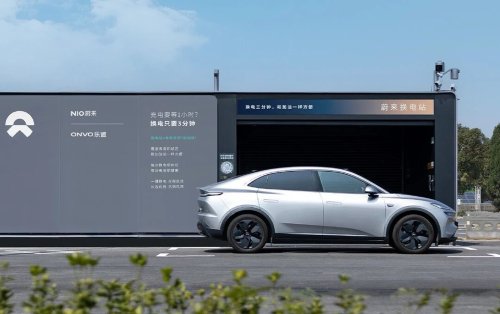
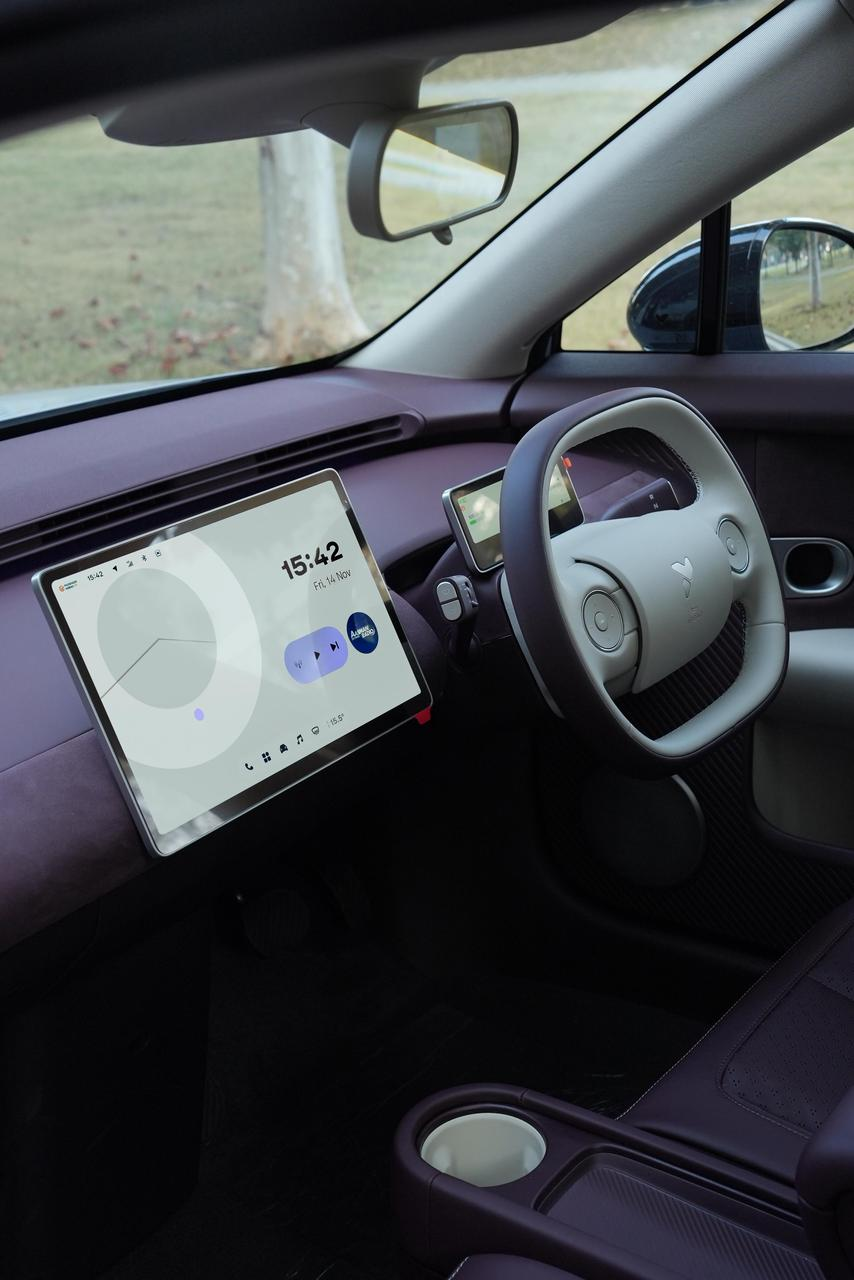
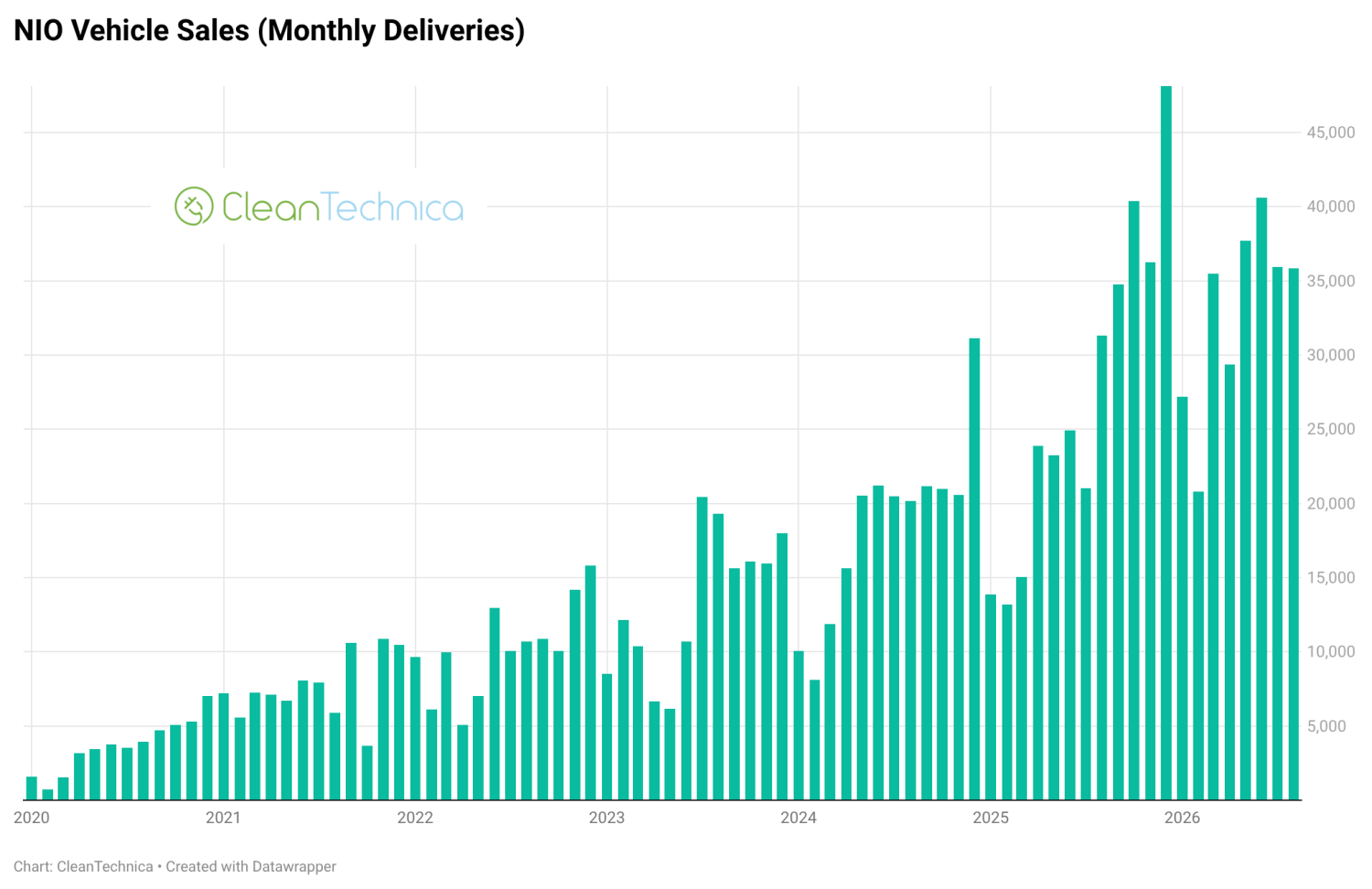
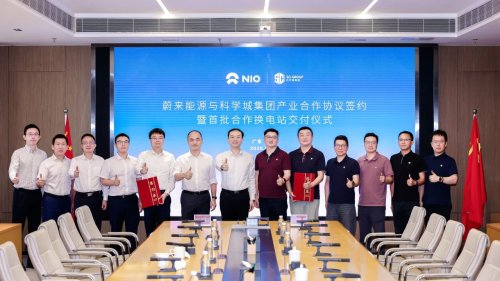
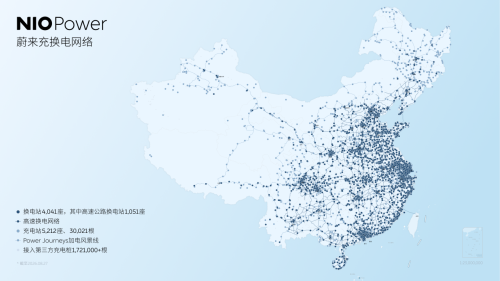
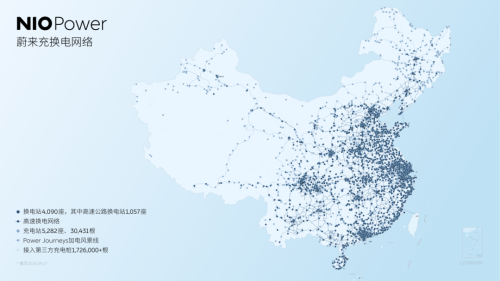
Nio (NYSE: NIO) put its first batch of fifth-generation battery swap stations into operation on August 7, 2026, across seven Chinese cities, formally connecting its compact Firefly brand to the swap network for the first time. The stations opened in Beijing, Shanghai, Guangzhou, Suzhou, Hefei, Chengdu and Quanzhou.The Quanzhou site, installed at the Qiaoxiang Gymnasium in Fujian province, doubled as Nio's 4,000th battery swap station in China and its first fifth-generation installation. Founder, chairman and chief executive William Li attended the launch ceremony, saying the buildout had reached a new milestone since the company's first swap station opened in 2018 and that the charging and swap network had achieved network effects at scale. Firefly, Nio's entry-level hatchback brand launched in 2025, had been marketed around battery-swap capability from the start but was shut out of the existing network because its 4.003-meter wheelbase was too short for the third- and fourth-generation stations, which were built around the larger Nio and Onvo lineups. The fifth generation removes that constraint.Employees celebrate outside NIO's Quanzhou station on August 7, 2026 (NIO)The new platform, developed in-house, adjusts its internal configuration and locates fastening bolts in real time to fit different chassis and battery-pack dimensions, according to a Nio statement. It supports wheelbases up to 3.5 meters, a range wide enough to cover both the 5.3-meter ES9 flagship SUV and the much smaller Firefly within a single mechanism.Swap speed and throughput also improved. A standard swap on the fifth-generation stations takes 1 minute and 48 seconds, 36 seconds faster than the fourth generation, and each station can now hold 28 battery packs. Nio has said the added capacity lifts daily throughput by about 20%, to as many as 500 swaps per station per day, which the company says will help the network absorb peak-season demand around holidays such as Golden Week. Firefly's own swap process is slower than that of its larger siblings. A full swap takes about three and a half minutes, Firefly brand chief Daniel Jin has said, nearly double the fifth generation's fastest recorded time for a Nio or Onvo vehicle. Jin said the car "still feels a bit bumpy" as the station's battery-bay door extends to fit Firefly's smaller frame, though he added that reliability held up through extensive testing. A Nio statement tied to the Quanzhou launch described the Firefly experience as a roughly three-minute "full charge and departure," supporting automatic parking and single-button swapping from inside the cabin, with each swap accompanied by a full health scan of the battery pack.Firefly's swap compatibility followed a software update earlier this year that added the feature to the brand's Aster operating system. The rollout also reflects a broader expansion in the battery formats Nio's network must now support: Firefly's pack is rated at 42.1 kWh, well below the 75 kWh and 100 kWh packs common across the main Nio brand, while the company has said it stopped production of its 150 kWh semi-solid-state pack after a few hundred units due to weak demand.Nio's cumulative battery swaps passed 120 million at 8:09 a.m. Beijing time on August 7, the company said, just six months after crossing 100 million on February 6, 2026, a sign that usage is accelerating as the network grows. As of the same day, Nio operated 9,166 charging and swap facilities across China, including 4,006 swap stations, 5,160 charging stations and 29,801 charging piles, with 1,049 of the swap stations positioned along highway corridors linking nine north-south and 11 east-west routes across 16 major city clusters and more than 550 cities. Roughly 80.1% of users now have a swap station within three kilometers of home or work. Nio also released usage figures alongside the milestone. Users have drawn a cumulative 6.35 billion kWh through swaps, equivalent to a year of electricity use for 3.17 million households, and the company says swapping has saved users a combined 99.91 million hours compared with charging, an average of 83 hours per user. Measured against gasoline vehicles, Nio put the cumulative savings at 31.2 billion CNY (c. $4.6 billion), or about 26,000 CNY per user. The company has kept a target of adding more than 1,000 swap stations in 2026, following additions of 679 in 2024 and 681 in 2025, and signed a deal with Anhui's Zhongan Energy in June to build 500 more stations within a year.The expansion comes as Nio faces a more crowded charging and swapping landscape in China. CATL has built more than 700 stations for its own Choco-SEB swap standard, while BYD, Geely and FAW have pushed ultra-fast DC charging systems that claim to add hundreds of kilometers of range in minutes rather than requiring a swap at all. Nio has also cooled on opening its own network to outside automakers: eight companies, starting with Changan in November 2023, have signed swap-alliance agreements with Nio, but none has yet launched a compatible vehicle, and Li told a media roundtable in May that serving third-party brands was "not our strategic focus" for now, favoring completion of in-house coverage across Nio, Onvo and Firefly instead. The Firefly rollout arrives alongside broader sales momentum for Nio's three-brand structure. The main Nio brand delivered 21,872 vehicles domestically in June 2026, up 46.5% year-on-year, while Onvo delivered 11,739 units and Firefly moved 6,914, both posting year-on-year growth in the 70% to 80% range. Whether full swap access accelerates that pace for Nio's smallest and newest brand, against a domestic market where rivals are betting on speed-of-charge rather than swap infrastructure, is likely to become clearer as the fifth-generation rollout extends beyond its first seven cities.Conversion rate: 1 USD = 6.7904 CNY as of August 7, 2026.